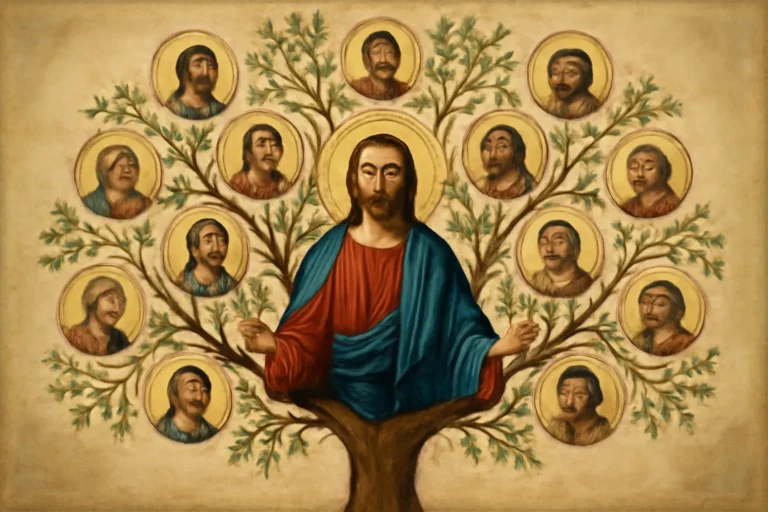

Leading with Humility is not a modern slogan but a timeless curriculum drawn from the Nativity narrative. In the story of the birth of Jesus, leadership emerges not from loud decree or centralized power, but from patient service, courageous discernment, tender stewardship, and costly obedience. This long-form exploration invites readers to deepen their understanding of what it means to lead with humility in religious communities, families, organizations, and public life. By examining the Nativity through a leadership lens, we encounter a mosaic of figures—Mary, Joseph, the infant Christ, the shepherds, the Magi, and even Herod—each offering distinctive insights about governance under the conditions of vulnerability, trust, and transcendent purpose. The aim is not merely to retell a sacred event but to trace a theology of humble leadership that can inform interpretation, education, and practice across theological fields, church life, and ethical leadership discussions.
Foundations of Humility in the Nativity Narrative
At the core of the Nativity is a paradox: greatness revealed in smallness. The divine plan comes to fruition through a poor, unassuming family in a crowded, often unforgiving setting. This paradox invites leaders to rethink what makes leadership effective. The Nativity presents a number of foundational themes that can guide contemporary leadership ethics and practice:
- Service before status: The King of kings is laid in a feeding trough, signaling that true leadership serves vulnerable life first, then is recognized by others.
- Discernment through humility: Sacred visitors and challenging omens call for quiet listening and patient consideration rather than hasty assertions.
- Hospitality as governance: The act of welcoming outsiders—shepherds, travelers, and Gentile visitors—embodies a form of leadership that expands the table beyond comfort zones.
- Courage in crisis: The flight to Egypt, the improvisation of shelter, and the protection of a child require leadership that adapts without surrendering core values.
- Stewardship over control: Care for another life involves responsibility, not domination, over the conditions of another’s growth.
In these motifs, leaders encounter a double vocation: to nurture human flourishing in particular persons and to witness to a transcendent purpose that redefines what counts as success. The Nativity thereby offers a theology of leadership grounded in humility, mercy, and fidelity to a higher call.
Mary: Woman of Quiet Authority and Discernment
Mary’s Leadership Qualities
Mary is frequently portrayed as the archetype of faith-filled leadership by virtue of discernment, obedience, and steadfast courage. Her pregnancy under precarious social conditions required ordinary leadership courage: she faced potential stigma, shared in the risk of rumor, and yet chose to respond with trust. In biblical narratives, her leadership is marked by:
- Discernment under pressure: When the angel Gabriel reveals a mission that defies expectations, Mary responds with contemplative consent, asking thoughtful questions before embracing the path ahead.
- Willing obedience: She does not assert authority; she submits to a plan greater than herself, inviting others into the story with humility and grace.
- Relational leadership: Her interactions with Elizabeth and with Jesus (even in quiet moments of motherhood) model how leadership grows in community and mutual blessing.
- Foresight with tenderness: Mary anticipates the consequences of events for her son, shaping a leadership posture that blends protection with gentle exhortation.
From Mary, leaders glean a model of servant leadership in quiet form—not loud authority but constancy, nurture, and clear alignment with a divine purpose. Theologically, Mary’s role invites followers to consider how humble influence—a mother’s intuitive care and patient witness—can shape ecclesial and social leadership in transformative ways.
Joseph: The Steadfast Protector and Servant Leader
Joseph’s Example as a Leadership Ethic
Joseph’s role in the Nativity is often summarized by his quiet fidelity. Yet behind that quiet fidelity lies a robust leadership ethic that is particularly instructive for contemporary leaders who must navigate crisis, uncertainty, and the practical demands of community life. Joseph models several leadership virtues:
- Protective stewardship: He prioritizes the safety and well-being of Mary and Jesus, offering shelter and care even when the path is unclear.
- Practice of discernment: When confronted with difficult news, Joseph chooses to listen to divine guidance through dreams, aligning action with a larger moral vision.
- Ethical restraint under pressure: Rather than lashing out or exploiting circumstances, he embodies a measured, prudent leadership that respects human dignity and divine sovereignty.
- Family-centered governance: He anchors the early Christian community in a home-based space, suggesting that leadership can begin in small, ordinary settings that nurture trust and resilience.
In Joseph’s leadership, we see a model of humble authority that commands respect not through display but through fidelity, care, and a readiness to respond to God’s prompting with quiet resolve. The theological reading of Joseph emphasizes that leadership is not about making grandiose statements but about ensuring the vulnerable have a safe passage through the complexities of history.
Leadership Among Strangers: Guests, Outsiders, and Hospitality
The Nativity narrative foregrounds hospitality as a leadership virtue. The innkeeper’s brief encounter with Mary and Joseph, the shepherds’ reception of news, and the Magi’s distant journey illuminate how leaders can cultivate spaces where outsiders are welcomed and valued.
Hospitality as Public Policy and Ecclesial Practice
In leadership terms, hospitality becomes a form of public policy: it sets conditions for the vulnerable to belong, to be fed, and to be protected. The Nativity thus invites leaders to consider:
- Inclusive invitation: A leader’s table should enlarge, not contract, to include those who may be marginalized by social or religious boundaries.
- Ethical risk-taking for the vulnerable: Opening doors to outsiders often involves risk—economic, social, or political—and true leaders demonstrate courage with compassion.
- Boundaries with discernment: While hospitality is generous, it also requires discernment to preserve safety and dignity for all involved.
The shepherds’ visitation and the Magi’s homage reveal two complementary forms of leadership hospitality: one rooted in communal vulnerability (the shepherds), and another rooted in cross-cultural curiosity and honor (the Magi). Both models broaden the leadership imagination beyond conventional power structures, suggesting that humility can widen the circle of influence in meaningful ways.
The Shepherds as Community Stewards
Shepherds and Gentle Authority
The shepherds, often outside the urban power centers, embody a form of leadership that is grounded in proximity to everyday life and care for fragile life. They receive a message that moves from the heavens to the hillside, and they respond with immediate action—sharing the good news and becoming witnesses to the events. Their leadership is characterized by:
- Acting on credible revelation: The shepherds do not demand proof; they encounter an event, respond, and report what they have learned.
- Public proclamation: They tell others what they have seen, acting as a bridge between divine revelation and communal memory.
- Service-oriented leadership: They respond to the needs of the moment by sharing the story and supporting others in their communities.
From the shepherds, leaders learn that humble proclamation—telling the story with honesty and care—can be a powerful form of leadership that builds trust and fosters a shared sense of purpose. The pastoral context of their leadership illustrates how humility can be practical and transformative in ordinary settings, reinforcing that leadership is not merely institutional but also relational and sacramental.
Wisdom from the Magi: Guidance that Transforms Leadership Strategy
The Magi bring another dimension to leadership by illustrating how wisdom and cross-cultural discernment shape paths forward. Far from the founding events of Bethlehem, these visitors model leadership that gazes beyond one’s own community to recognize broader frameworks of meaning and destiny. Key insights include:
- Seeking truth beyond borders: The Magi travel from distant lands to encounter a new revelation, demonstrating a leadership posture that is curious, academically disciplined, and spiritually open.
- Nonconformist allegiance to a higher authority: They bow to the child rather than to political power, illustrating that leadership often requires reframing loyalty around a transcendent standard rather than a conventional hierarchy.
- Gift-based governance: Their gifts—gold, frankincense, myrrh—symbolize practical, symbolic, and prophetic leadership contributions that enrich a growing community.
In their journey, leaders discover that true leadership engages with global complexity and learns from perspectives beyond one’s immediate circle. The Magi remind us that humility includes recognizing one’s limits and embracing collaborative wisdom, even when it comes from unexpected places.
The Infant as Leader: Vulnerable Power and New Possibilities
Christ’s infancy is a paradoxical school of leadership. An infant cannot command, yet Christians believe the infant is the fulcrum of a cosmic purpose. This paradox invites reflection on how leadership can be initiated and sustained through vulnerability, trust, and divine guidance. The infant Jesus, though dependent, embodies a destiny that reshapes history and redefines leadership metrics. Consider these ideas:
- Leadership through example: The infant’s early life disciplines communities to honor life’s intrinsic worth, from birth to growth and maturity.
- Subversive power of gentleness: A gentle, non-coercive presence can be more persuasive than coercive authority in shaping hearts and communities.
- Vision beyond immediate outcomes: The Nativity foregrounds a long arc—salvation history—where leadership priorities align with enduring spiritual aims rather than short-term gains.
Thus, humble leadership is not a retreat from influence but a redefinition of what counts as influence. It invites leaders to cultivate an inner formation—character, integrity, hope—that sustains trust and enables communities to endure times of uncertainty with grace and perseverance.
Principles of Humble Leadership in Practice
From the Nativity narratives described above, several transferable principles emerge for practical leadership in religious and secular domains alike. The following list presents actionable considerations, accompanied by biblical or theological reflections that can inform sermons, classrooms, and organizational development.
- Lead with service, not status: Prioritize service to the most vulnerable and marginalized in a way that clarifies leadership is a form of stewardship rather than a platform for prestige.
- Practice patient discernment: When confronted with competing demands, cultivate spaces for listening, prayerful reflection, and verification before decision-making.
- Welcome the stranger: Build inclusive communities by extending hospitality to outsiders, ensuring that newcomers find belonging and safety.
- Protect and provide: Embrace a protective role toward dependents and the vulnerable, balancing security with freedom and growth.
- Lead with integrity in crisis: Adapt to crisis without compromising core commitments, maintaining consistency of purpose even when the path is unclear.
- Honor diverse wisdom: Seek guidance from varied sources and cultures, recognizing that leadership is enriched when it is not insular.
- Center mercy and justice: Let acts of mercy, advocacy, and justice form the moral center of leadership decisions.
- Tell the truth with tenderness: Communicate honestly, but with compassion, particularly when delivering difficult news or challenging norms.
These principles are not merely theoretical; they can be translated into leadership development programs, catechetical curricula, and community governance practices that emphasize humility as strength rather than weakness.
Application in the Modern Church and Society
Applying Nativity-derived leadership insights today requires translating ancient wisdom into contemporary contexts. In churches, theological colleges, charitable organizations, and civic organizations, leaders can adopt humility-centered practices that echo the Nativity ethos. Some practical avenues include:
- Leadership development curricula: Integrate nativity-centered case studies, reflective journaling, and mentorship that centers humility, servanthood, and discernment as core competencies.
- Prayerful decision-making processes: Establish decision cycles that incorporate prayer, communal consultation, and ethical review to ensure alignment with higher principles.
- Inclusive governance models: Create leadership teams that intentionally include voices from marginalized groups, youth, and diverse backgrounds to broaden the scope of wisdom guiding the community.
- Pastoral care as leadership: Recognize that caring for people—whether in crisis, loss, or transition—is a central leadership duty and a primary form of organizational healing.
In secular settings, nativity-inspired humility can inform corporate ethics, non-profit governance, and public policy approaches that center human dignity, community wellbeing, and responsible stewardship of resources. Leaders can model restraint during success and generosity in prosperity, thereby cultivating trust and long-term resilience.
Interpretive and Theological Explorations
Beyond practical leadership, the Nativity prompts rich interpretive and theological engagement. The following themes invite scholars, pastors, and students to interrogate the deeper meanings of humility, leadership, and divine-human collaboration:
- Theology of kenosis and leadership: The emptying of divine prerogatives in order to take on human limitations is a paradox that informs leadership humility.
- Christology and authority: How the authority of Christ redefines leadership metrics—service, sacrifice, and love—as ultimate indicators of legitimate power.
- Ecclesiology of hospitality: The church as a community of welcome, where outsiders are integrated into mission and memory.
- Ethics of risk and protection: The flight to Egypt exemplifies prudent risk-taking to preserve life and mission, challenging leaders to balance risk with responsibility.
These interpretive threads contribute to theological education by connecting narrative study to ethical reflection. They encourage students and practitioners to formulate leadership theories that harmonize doctrinal beliefs with lived pastoral realities and social concerns.
Leadership Narratives as Pedagogy: Teaching by Story
Narratives from the Nativity offer a powerful pedagogical tool for leadership education. Storytelling, when anchored in the Nativity, can cultivate moral imagination, empathy, and critical reflection. Ways to use these narratives in teaching contexts include:
- Case-based discussions: Use episodes from Mary’s obedience, Joseph’s discernment, the shepherds’ proclamation, and the Magi’s journey as case studies for ethical decision-making and leadership style analysis.
- Role-playing and simulation: Students assume roles of Nativity figures to explore leadership choices under constraints and to experience the tension between security and mission.
- Comparative theology exercises: Compare nativity leadership themes with other biblical leadership models (e.g., Moses, Nehemiah, Paul) to highlight continuity and divergence in leadership ethics.
- Reflection journals: Encourage reflective writing on how humility, vulnerability, and trust shape leadership in students’ own communities and workplaces.
In this pedagogical frame, humility becomes teachable and the Nativity becomes a living curriculum for leadership formation, not merely a mystical or historical recollection.
Challenges and Critics: Navigating Tensions in Humble Leadership
Any robust exploration of humility in leadership should acknowledge potential tensions and critiques. Some challenges include:
- Perceived weakness: Critics may equate humility with passivity, overlooking the decisive, courageous, and principled aspects of humble leadership.
- Balancing humility with accountability: Leaders must remain accountable to communities, truth-telling, and ethical standards without compromising mercy or generosity.
- Cultural and contextual variation: Not all cultural settings interpret humility in the same way; leaders must adapt without sacrificing core values.
- Sustainability and boundaries: Humility requires boundaries to prevent exploitation; leadership should maintain healthy limits while remaining open to service.
Addressing these tensions involves a disciplined integration of humility with a clear understanding of responsibility, justice, and communal flourishing. The Nativity does not advocate for weak or passive leadership; rather, it champions a resilient, fortifying form of leadership that aligns power with purpose, authority with mercy, and influence with responsibility.
A Synthesis: The Nativity as a Curriculum for Leadership
Ultimately, the Nativity provides a curriculum for leadership that blends theological depth with practical wisdom. It invites leaders to:
- Seek divine guidance before strategic decisions, ensuring that plans align with a larger moral order.
- Lead with a posture of service that prioritizes care for the vulnerable, the marginalized, and the marginalized voices within communities.
- Embrace inclusive hospitality as a core organizational principle, expanding the circle to include strangers and newcomers who enrich mission and vision.
- Balance courage and restraint by taking necessary risks to safeguard life and dignity while avoiding reckless action.
- Foster communal discernment through shared prayer, dialogue, and collaborative decision-making that reflects diverse gifts.
In practical terms, this synthesis invites readers to implement policies, programs, and liturgical practices that reflect humble leadership as a dynamic, transformative force. The Nativity thus becomes not only a sacred story but a compass for leaders who want to honor God, serve people, and contribute to the common good with integrity and hope.
Conclusion: The Nativity as a Curriculum for Leadership
Leading with humility, as illuminated by the Nativity, is a multifaceted discipline that blends virtue, strategy, and spiritual longing. From Mary’s quiet authority to Joseph’s protective resolve, from the shepherds’ honest proclamation to the Magi’s cross-cultural wisdom, the Nativity offers a robust, generous, and deeply practical framework for leadership in religious life and beyond. Rather than a distant memory, these narratives become continuous lessons—accessible to pastors, educators, lay leaders, theologians, and policymakers alike. By embracing humility as a form of leadership competence, communities can cultivate stewardship that sustains life, honors conscience, and invites transformation in the face of uncertainty.
In sum, the Nativity invites us to cultivate a leadership ethic rooted in humility, shaped by discernment, and expressed through courageous, compassionate action. When leaders center the vulnerable, welcome the stranger, and listen for divine guidance, they participate in a redemptive arc that begins in a manger and reverberates through history. This is not merely an interpretation of a sacred event; it is a practical and prophetic invitation to lead with love, truth, and humility at the very heart of community life.