
The Gifts of the Magi occupy a small but profoundly symbolic moment in the Christian narrative. Seen through a theological lens, these three presents—gold, frankincense, and myrrh—become a compact manifesto of the Christian drama: kingship, priestly worship, and the looming mystery of suffering and death. In this long-form study, we explore the historicity of the Magi, the richness of the gifts, and the enduring theological meanings that have shaped preaching, liturgy, art, and devotional life for two millennia. The aim is not merely to recount a story, but to illuminate how the Magi’s offerings have been read, interpreted, taught, and applied in diverse Christian communities. This article uses variations and semantic breadth of the phrase Gifts of the Magi, including the Magi’s gifts, the wise men’s offerings, the three presents, the Magi offered, and similar expressions, in order to reflect how different Christian traditions speak about the same biblical event.
The historical and biblical setting of the Magi’s visit
The scene of the Magi’s visit to the infant Jesus comes from the Gospel of Matthew, traditionally dated to the first century CE. The narrative places unnamed travelers, often identified in later tradition as magi from the East, in the residency of Bethlehem during the time when Jesus is born. The Magi are described as seekers who observe a celestial sign—a star—that signals a remarkable birth. Their response is to undertake a deliberate, perilous journey, guided by signs, dreams, and a conviction that a royal figure has entered the world. The biblical text does not specify their number, their precise origin, or their exact occupation, yet later Christian tradition settled on three travelers representing a spectrum of gifts and meanings. In any reading, their arrival in Bethlehem signals a turning point: God enters history in a manner that invites all nations to acknowledge a new reality—the dawn of the Incarnate Word.
Several motifs in the narrative invite careful reflection. First, the Magi’s search is not casual; it is a pilgrimage of faith and curiosity. Second, their act of worship—“they fell down and worshiped him” (the canonical action that follows their entry into the scene)—frames the visit as a theophany, a revelation of the divine presence in a vulnerable, human setting. Third, the gifts themselves become a dialogue between human devotion and divine mission, offering a theological vocabulary for a growing church that would later interpret Jesus as both Messiah and Son of God. In this sense, the Magi’s journey is not merely an ancient tableau but a model for seekers today who approach the mystery of Christ with humility and reverence. The wise men’s offerings then function as a catechesis in material form: treasures offered to the infant Jesus, not merely objects with monetary value, but signs pointing toward a larger spiritual economy that will unfold in the days ahead.
To render this more concrete, consider the following elements often highlighted in discussions of the Gifts of the Magi as a historical event and as a theological symbol:
- The Magi’s origin from the East suggests a global horizon and a universal mission for Jesus’ birth.
- The timing of the visit—after the birth of Jesus—frames the event within a larger nativity narrative where the divine act meets the messiness of human history.
- The star as a guiding sign represents divine providence guiding gentile travelers toward the incarnate God.
- The dream-guided warning not to return to Herod translates into a broader biblical pattern where obedience to God sometimes necessitates a different earthly itinerary.
The gifts themselves: gold, frankincense, and myrrh
Across Christian traditions, the three gifts given to Jesus are more than ceremonial wealth; they are symbolic instruments for theological reflection. Each gift has narrative resonance and interpretive depth, which scholars and preachers have unpacked for centuries. Below, we examine the Magi’s gifts in their own right, and then consider how the combination of these treasures shapes a composite portrait of Jesus’ person and vocation.
Gold: sign of kingship and universal royalty
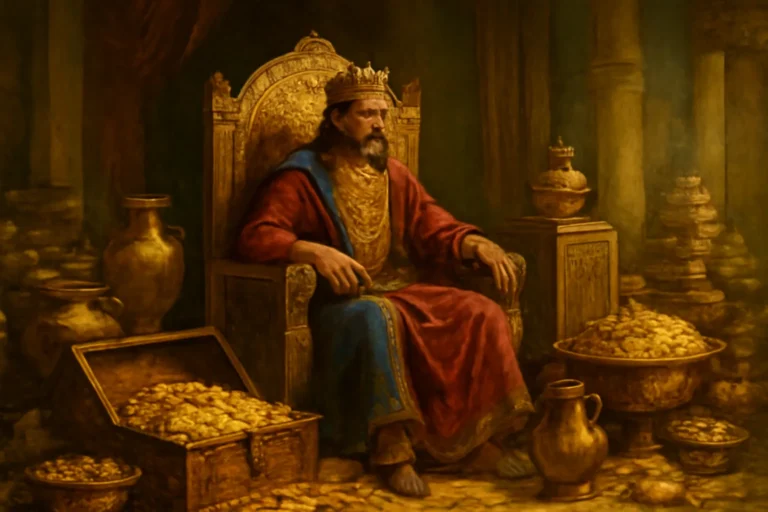
Gold has always conveyed value, authority, and enduring worth. In the Gospel context, the offering of gold is frequently interpreted as a declaration of Jesus’ kingship, not merely over a household or a tribe but over all nations and eras. The presence of gold in the infant’s cradle can be read as a proto-eschatological claim: the true sovereign is present, worthy of homage, and destined to govern with justice. The Magi’s gold therefore functions on multiple registers. It is a practical gift—a form of wealth that could sustain a refugee family on the move or fund the early Christian community’s needs. It is also a political sign, one that acknowledges Jesus as a ruler whose kingdom will challenge, transform, or supersede existing earthly authorities.
In this sense, the old Christian catecheses often link the gifts of gold with biblical portraits of kingship in the Hebrew scriptures and in the gospel’s portrayal of Jesus as King of kings. The material wealth laid at the feet of the infant does not merely pay tribute; it affirms a different axis of power—one rooted in divine sovereignty rather than human vanity. Theologically, gold invites reflection on the nature of Christ as sovereign light who commands allegiance not through coercion but through the invitation of grace. In sermons and contemplative writing, the gold is frequently paired with the ethical implications of kingship: responsible leadership, care for the vulnerable, and the redistribution of wealth in the service of justice and peace.
Frankincense: incense, prayer, and priestly worship
Frankincense is a resin burned in ancient temples and synagogues to sanctify spaces and to accompany prayer. When the Magi present frankincense to the infant Jesus, the act is read as a recognition of Jesus’ priestly dimension: not only will he rule, but he will offer himself in a priestly vocation that mediates between God and humanity. Frankincense in biblical imagery is closely tied to the cultic life of worship, the aroma of devotion, and a sense of closeness to the divine presence. Thus, the Magi’s perfume-filled gift prefigures a priestly character in Jesus who will teach, heal, and, ultimately, offer himself as a perfect sacrifice.
From a theological vantage point, the inclusion of frankincense in the trio of gifts highlights the unity of Christ’s person: he is not only the sovereign King but the eternal High Priest who prays, blesses, and intercedes. In the early church, writers often wired this symbolism into Christological teaching: frankincense as a sign of intercession and sanctification, by which human worship ascends to God through Christ’s mediating work. Liturgically, this gift fosters a deep sense of reverent prayer in Christian communities: the church’s worship is not merely a human act but participation in the heavenly scene where Christ prays for the world.
Myrrh: a sign of suffering, mortality, and anointing
Myrrh is a resin used in the ancient world to embalm the dead and to anoint the living in preparation for burial. Its presence with the infant Jesus has often been read as a forward-looking symbol of the paschal mystery: the incarnation does not bypass suffering; it enters fully into the human condition, including illness, fragility, and death. The Magi’s gift of myrrh bears a double echo: it acknowledges Jesus’ humanity—his unconditional sharing of human fate—and it foreshadows the cruciform aspect of his mission. In this light, myrrh is not a morbid preoccupation but a sober reminder that the gospel includes both life and the hope of resurrection beyond death.
Historically, Christian interpreters have linked myrrh to the anointing rituals of kings and prophets and to the preparation of Jesus’ body for burial after the crucifixion. The sign of myrrh thus weaves together themes of protection, sacrifice, and divine mercy. For modern readers, the gift of myrrh invites contemplation of the mystery of suffering as a place where God is present, not absent; where Christ’s vulnerability models compassion for the afflicted; and where Christian faith discovers in the cross a source of meaning that can inform care for the dying, the bereaved, and the oppressed in contemporary life.
Theological interpretations: how the gifts illuminate Christology and mission
Across centuries, theologians have drawn rich connections between the Magi’s offerings and the person and work of Jesus. The Gifts of the Magi become a compact theology of who Jesus is and what his life and death accomplish. Below are several major interpretive strands that scholars and preachers have developed, each showing how a single biblical episode can yield multiple layers of meaning for faith, worship, and ethical life.
Christology: the incarnate Word and the divine mission
In the broad Christian frame, the infant Jesus is the Incarnate Word, God made flesh. The gifts provide a tactile language for this mystery: gold signifies rightful sovereignty; frankincense signals divine worship and a priestly vocation; myrrh points to the reality of suffering and mortality. Together, they express a high Christology: Jesus as the one who is fully human and fully divine, whose life will restore creation and open access to blessing for all nations. The Magi’s offerings thus become a theological shorthand for the multifaceted identity of Christ and his mission to redeem through kingship, mediatorship, and sacrifice.
In sermons and catechesis, the trio is often used to teach about the unity of Christ’s person: he is the king who rules with justice, the priest who intercedes with compassion, and the suffering servant who bears pain for the sake of others. This integrated view avoids reducing Jesus to a single function, insisting instead that the gospel’s breadth is most clearly seen when the three gifts are read together as a coherent portrait of salvation history.
Ecclesiology and liturgical theology: worshiping the infant as Lord
The Magi’s act of bringing offerings and kneeling in homage has ecclesial implications. It models a posture of worship that recognizes Jesus’ lordship and invites the church to participate in a shared liturgical drama. Frankincense, as a symbol of sacramental worship, links the Magi to the priestly dimension of the church’s life. Gold’s association with sovereignty invites reflection on the church’s own mission: to proclaim the kingship of Christ in a world where many powers contend for allegiance. Myrrh’s somber note invites the church to attend to the vulnerable, to the dying, and to the marginalized, recognizing that hospitality to Christ may require costly acts of mercy and solidarity.
Missiology: a universal invitation to the nations
The Magi come from distant lands, bearing gifts that honor the newborn King. This vignette has long inspired a missionary imagination: the gospel is not a private treasure but a light for all peoples. The encounter is a model for cross-cultural evangelization, where diverse communities bring their own gifts, cultures, and questions to the altar of Christ. The wise men’s offerings thus become a metaphor for mutual enrichment: the church learns from others as it proclaims the gospel, and the nations contribute to the church’s understanding of what it means to live as people under a common Lord.
Patristic, medieval, and post-Reformation voices
From the earliest centuries to the present day, readers have sought to situate the Gifts of the Magi within broader doctrinal and devotional frameworks. Church Fathers such as Origen, Augustine, and later medieval theologians used the Magi’s offerings to teach about Christ, salvation, and the church’s mission. In patristic readings, gold becomes a symbol of heavenly treasure and the everlasting kingship of Christ; frankincense indicates prayer and the mediation of Christ’s priestly function; myrrh evokes the human condition and the anticipation of the tomb. Over time, theologians incorporated these meanings into creeds, homilies, and creedal recitations that accompanied Christmas celebrations. In the medieval era, the festival of Epiphany often featured processions and readings that foreground the universal scope of the gospel—An importante reminder that the Magi’s journey is not simply a private nativity scene but a public declaration of divine light entering the world.
During the Reformation and in subsequent centuries, the interpretation of the gifts was sometimes reframed in light of debates about church leadership, justification, and liturgical reform. Yet the core insight remained: the infant Jesus is the fulcrum of a drama that binds kingship, worship, and suffering together. In many Protestant traditions, the emphasis might fall more strongly on the witness of worship and the call to live under Christ’s lordship, while Catholic and Orthodox traditions have often highlighted the liturgical and sacramental frames of the gifts, especially the priestly symbolism associated with frankincense and the salvific horizons opened by myrrh. Across these streams, the gifts continue to offer a common vocabulary for articulating who Jesus is and what his life means for the church and the world.
Liturgical and devotional significance in various Christian traditions
The annual commemoration of the Magi’s visit—often celebrated as Epiphany—has produced a range of liturgical and devotional practices across different Christian churches. The ritual calendar helps believers humbly approach the season of Christmas through a wider horizon, moving from the nativity narrative to a public recognition of Jesus as the light of the world. The following considerations show how the Gifts of the Magi inform worship life and spiritual formation:
- In many Catholic and Orthodox traditions, Epiphany marks a feast that extends Christmas celebrations, inviting believers to contemplate the revelation of Christ to the nations.
- Here, the three gifts sometimes shape ritual actions: processions bearing symbolic items, prayers of intercession that echo the prayers of the Church, and the blessing of homes with words that invoke protection and peace for the year ahead.
- In Protestant contexts, the Magi’s journey is often used to teach about faith’s journey, discernment, and the obedience of trust in God’s guiding signs, including dreams and providence.
Devotional life can also reflect the gifts in everyday practice. For example, the gold motif invites believers to consider wealth and stewardship: how do communities use material resources to care for the vulnerable, fund mercy ministries, and resist the idols of greed? The frankincense motif invites sustained practices of prayer, contemplation, and intercession, encouraging believers to cultivate a life steeped in praise and adoration. The myrrh motif invites integrity and solidarity with those who suffer—a call to accompany the sick, the dying, and the bereaved, and to advocate for justice in the face of human brokenness. In these ways, the Gifts of the Magi become practical tools for shaping worship life, moral imagination, and community ethics.
The gifts in art, literature, and culture
Across cultures, the Gifts of the Magi have inspired a wide array of artistic expressions. Painters have pictured the entourage of the Magi crossing stark terrains toward a humble manger, sometimes with exotic robes and precious cargo. Writers have used the symbolism of the three gifts to frame scenes of encounter, sacrifice, and divine mercy. Music has many motifs linked to the Magi: lullabies that evoke the tenderness of the infant Jesus, hymns that emphasize the themes of kingship and worship, and motets that meditate on the mystery of suffering. In popular culture, the title The Gift of the Magi by O. Henry is a separate, secular tale about two lovers who each sacrifice something precious to buy a gift for the other, and the moral center of that story has sometimes been juxtaposed with Christian reflections on the spiritual economy of gifts. It is important to distinguish the biblical Gifts of the Magi from such secular works, while appreciating how the symbol of a gift can carry resonance in many genres.
Global and ecumenical perspectives on the Magi’s offerings
In the global church, Christian communities interpret the wise men’s offerings through a diversity of theological lenses that reflect local cultures, languages, and historical experiences. Some communities emphasize social justice and solidarity, interpreting the gold as a symbol of economic stewardship toward those in poverty. Others highlight the priestly function of Christ, reading frankincense as an invitation to liturgical life tuned to praise, forgiveness, and divine presence. Still others focus on the mystery of suffering implied by myrrh, urging charity toward the sick and dying, and fostering a culture of compassion that mirrors Christ’s own solidarity with humanity. Regardless of tradition, the Magi’s journey invites all believers to extend hospitality to the mystery of God and to participate in a mission that reaches beyond ethnic or national boundaries. The biblical message thus becomes a universal invitation: the encounter with the infant Jesus calls forth worship, service, and awe across cultures and generations.
Contemporary reflections: living the message of the Magi today
In contemporary faith communities, the Gifts of the Magi continue to offer a framework for ethical discernment, liturgical imagination, and devotional depth. Several lines of reflection are especially pertinent for modern readers:
- Hospitality and care: Gold can symbolize the responsible management of resources and the generosity of institutions that welcome strangers and provide support for those in need.
- Worship and prayer: Frankincense invites a renewed commitment to personal and communal prayer, acknowledging God’s presence as a guiding light, a source of comfort, and a transformative force in worship.
- Hope amid suffering: Myrrh calls believers to accompany the afflicted, to recognize mortality honestly, and to participate in acts of mercy that affirm the value of every life.
- Intercultural encounter: The Magi’s origin from the East encourages churches to welcome diverse perspectives and cultures as they learn from one another in the shared baptismal identity.
- Mission and witness: The discovery of the Child in Bethlehem can inspire a renewed missionary impulse, inviting a broader participation in God’s plan for the nations.
Common questions and scholarly debates about the gifts
Scholars, pastors, and lay readers frequently raise questions related to the Gifts of the Magi that illuminate the text and its reception. A few examples illustrate the kinds of issues that animate ongoing study:
- What is the historical basis for identifying the travelers as magi from the East, and how does that designation shape our understanding of their identity and role?
- Why three gifts, and why specifically these three items? Do numerical symbolism and the distinct meanings of gold, frankincense, and myrrh account for a complete theological message?
- How have different Christian traditions interpreted the gifts in light of their own doctrinal emphases, such as soteriology, soterio-ethical teaching, liturgical practice, or aesthetic traditions?
- How should contemporary readers balance historical-critical questions with devotional readings that affirm the text’s spiritual significance?
Each of these questions invites a careful, respectful approach that honors both historical inquiry and devotional reverence. The aim is not to settle every interpretive dispute but to illuminate how the gifts have functioned as a robust, living symbol in the church’s life.
Conclusion: the enduring relevance of the Magi’s gifts
From a compact nativity scene to a sprawling theology of worship, mission, and suffering, the Gifts of the Magi remain a rich source for understanding who Jesus is and what his life means for the world. The Magi’s offering of gold speaks to Christ’s sovereign kingship and the value of righteous leadership exercised for the common good. The gift of frankincense makes visible the priestly dimension of Jesus’ work, inviting the church to child-like trust in divine presence and to worship that is both intimate and liturgical. The inclusion of myrrh introduces the reality of mortality and the salvation that emerges through suffering and death, pointing toward resurrection and the hope that anchors Christian faith. Together, these gifts create a multidimensional portrait of the incarnate Lord—the one who rules with justice, who intercedes on behalf of humanity, and who bears human agony with compassion and mercy.
For modern believers, the Gifts of the Magi continue to offer a compelling framework for faith formation, worship, and social action. They remind us that gifts are not merely objects of exchange but signs that invite reflection about identity, vocation, and the divine economy of grace. They challenge communities to consider how wealth is used, how prayer shapes daily life, and how solidarity with the vulnerable becomes a defining mark of Christian witness. In this sense, the Magi’s journey from distant lands toward a humble crib remains a map for seekers today: a path of discernment, reverence, and generous living that gathers people from every nation, tongue, and culture into the light of Christ. The Gifts of the Magi thus persist as a living invitation to encounter the mystery of God made flesh, a mystery that invites ongoing interpretation and faithful response across generations and around the world.