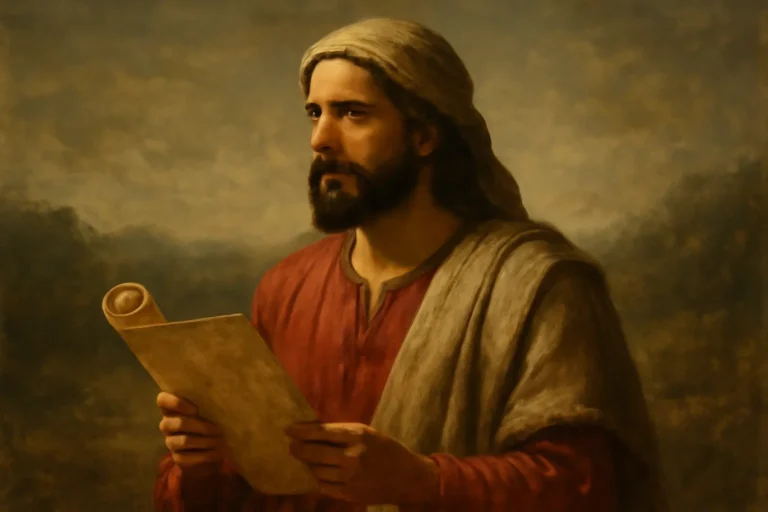

Ecclesiastes, often read as the voice of the Qohelet (the Hebrew name for the book’s speaker), stands as a towering witness within the wisdom tradition of the Bible. This long-form exploration treats the book not as a mere catalog of sayings but as a dynamic, nuanced meditation on the human condition. In many languages and traditions, the text appears under multiple names: Kohelet in Hebrew transliteration, Qoheleth in scholarly works, and The Preacher or The Teacher in various English translations. Across centuries, readers have engaged with Ecclesiastes to ask: What is truly meaningful in life when enjoyment, wealth, wisdom, and fame are all fragile, fleeting, or conditioned by time and circumstance?
Historical and Canonical Context
Authorship and Title Variations
The book is traditionally attributed to the figure Qohelet, a preacher, sage, or instructor who speaks in a tone that blends wry skepticism with pensive faith. The Hebrew title of the book is Ecclesiastes, but the first line in Hebrew is yeh, kohelet (קוֹהֶלֶת), which is often translated as “the Preacher” or “the Collector”. In many contexts, scholars refer to Kohelet as the voice behind the text, while readers in Latin, Greek, and later European languages encountered the title Ecclesiastes, derived from the Greek Ekklēsiastēs or Latin Ecclesiastes. The diversity of labels is not merely nominal: it highlights the book’s multifaceted function as a voice that questions and critiques human pursuits while inviting reverence for divine sovereignty.
In the canon of both Judaism and Christianity, Ecclesiastes sits among the wisdom literature alongside Proverbs and Job. While Proverbs personifies a practical ethic and Job wrestles with the problem of suffering, the Qohelet speaks with a distinctive cadence: a mixture of introspection, ethical meditation, and pointed observations about life “under the sun.” This label, Qohelet, is essential for appreciating the textual voice: it is not a detached sermon but a lived, experiential discourse that declines easy answers and invites ongoing inquiry.
Canonical Placement and Theological Significance
In both Jewish and Christian canons, Ecclesiastes appears within a broader matrix of poetic and wisdom literature. Its placement often signals a transition from the mostly pro-Wisdom posture of Proverbs to the more complex, reflective space of Job and Ecclesiastes. The book’s canonical position makes it a bridge between practical ethics and the more existential questions about fate, meaning, and God’s justice. The teacherly voice of the Qohelet invites readers to consider not just what to believe, but how to live with the truth that life’s meaning may resist reductive systems of thought.
Literary Structure and Genre
Poetic and Prose Blend
Ecclesiastes is distinguished by its alternating modes: prose sections that present the main arguments and lyrical, often striking poetry that intensifies the emotional resonance. This genre blend mirrors the book’s dual aim: to appraise life’s ordinary experiences—labor, pleasure, wealth, wisdom—while also pressing toward a translatable, enduring meaning beyond the immediate and the visible. The Qohelet uses refrains such as “vanity of vanities, all is vanity”, a line that appears in various forms across translations and in several important passages. The Hebrew word behind “vanity” is often hevel, which carries the sense of breath, vapor, or something elusive and fleeting—an apt term for the book’s core observation that human pursuits frequently dissolve into emptiness when scrutinized without a broader telos.
Key Discourses and Episodes
The structure includes several notable discourses and refrains. The book moves through reflections on pleasure, labor, wealth, wisdom, and justice, each framed by a recurring caveat: earthly cycles persist, yet human beings must live within them with integrity. The earlier chapters often present confident voices that extol fruitful living and prudent planning; later chapters pivot toward a more sober assessment: enjoyment and fear of God are primary, because God will bring every act into judgment (a theme revisited in the closing meditation). The final exhortation reframes wisdom not as a catalog of universal rules but as a disciplined humility before divine sovereignty.
Themes in Ecclesiastes: Wisdom, Skepticism, and Faith
Wisdom and its Limits
One of the most distinctive features of this biblical book is its persistent wrestling with wisdom. The Qohelet acknowledges the value of learning and discernment, yet he remains wary of the notion that knowledge alone guarantees triumph over life’s uncertainties. The refrain that knowledge and wisdom are tied to responsibility and moral restraint is central: wisdom requires humility, and true wisdom engages with the fear of God as a guiding principle. The variations in Qohelet’s assessment of wisdom—sometimes celebrated, sometimes critiqued as insufficient—form a nuanced picture of what it means to live prudently while recognizing the limits of human sight.
Vanity and the Human Condition
The repeated claim that vanity or futility characterizes life “under the sun” (a recurring biblical phrase meaning life from a human perspective, without reference to divine assessment) invites readers to reevaluate what they count as success. The book’s poetically charged phrase, hevel hevelim, communicates breath-like, insubstantial phenomena that pass away with time. Yet the Qohelet does not worship cynicism; rather, he uses skepticism to challenge complacent pieties and to redirect energy toward meaningful action within the fear of God.
The Fear of God and Moral Consequences
Among the most enduring theological affirmations in Ecclesiastes is the call to fear God and observe His commandments. This focal exhortation reframes the earlier episodes of doubt: obedience and reverence are not naive concessions to tradition but the proper orientation that orients all other pursuits toward a coherent life stance. In this sense, Ecclesiastes does not become an atheistic manifesto; it remains rooted in theistic realism, insisting that human beings live before a just and sovereign God who shall judge all actions.
Time, Seasons, and the Rhythm of Life
Epigraph and Chronology
One of Ecclesiastes’ most memorable chapters is its meditation on time and season. The famous passage in Ecclesiastes 3 declares that there is a season for everything—a liturgical cadence that has resonated with countless readers, artists, and theologians. The Qohelet’s catalog of appropriate times—a time to be born and a time to die, a time to plant and a time to uproot, a time to weep and a time to laugh—serves as both a poetic guide and a metaphysical claim: life unfolds within a cosmic schedule in which human beings are called to discern the appropriate response to seasons of joy and hardship alike.
Crucially, this theme invites readers to recognize that human action occurs within a divine chronology. The idea that God’s timing governs the universe helps frame Ecclesiastes’ skepticism in a constructive way: it is not a denial of agency but a call to align human choices with a broader divine timeline, acknowledging that outcomes often escape human forecasting.
Labor, Leisure, and the Finite Nature of Human Endeavor
Another prominent theme under the umbrella of time concerns work and pleasure. The Qohelet surveys labor as a meaningful activity when lived in the light of truth and right living, yet he also notes it does not yield lasting, autonomous significance. The paradox—that work can be both necessary and unsatisfying when pursued as an ultimate end—forms a rhythmic tension with the book’s call to find joy in simple blessings and in obedience to God. This tension resonates with modern questions about purpose and vocation, especially in a world that prizes productivity but often leaves questions of meaning unsettled.
Wealth, Work, and Wisdom: A Multifaceted Inquiry
The Vulnerability of Riches
Ecclesiastes warns against trusting in wealth as a durable source of security. Time and chance—often represented through natural cycles and social contingencies—can overturn the best-laid plans. The book’s cautions about riches are not mere anti-materialist gestures; they are a sober reminder that material abundance does not automatically translate into inner peace or lasting significance. Readers encounter a nuanced stance: wealth may enable generosity and opportunity, but it also can become a test of character, a potential distraction from the fear of God, and a reminder of mortality that money cannot negate.
The Value and Limits of Labor
Related to wealth is the notion of labor” as a human activity. The Qohelet weighs the toil of craft and enterprise against the certainty of a future beyond the grave and the possibility of divinely ordained justice. The assessment is not an outright rejection of work; rather, it is a caution against treating work as the sole source of meaning or the ultimate end of life. The text invites a robust theology of vocation in which practical effort is balanced by wisdom, repentance, gratitude, and fidelity to God.
Wisdom as a Double-Edged Sword
While wisdom is praised as a noble reach toward truth, Ecclesiastes also records the limits of human understanding. The book’s journey demonstrates that even the most discerning mind cannot fully unveil the mysteries that govern existence. This humility is not a license for passivity; rather, it is a map for a disciplined life that chooses ethical conduct, reverent trust, and compassionate action, even in the face of perplexity.
Death, Legacy, and the Meaning of Life in Qohelet
Confronting Mortality
Death is a central motif throughout Ecclesiastes. The inevitability of death reframes questions of achievement and fame. The Qohelet’s honest depiction of mortality invites readers to consider what endures beyond life’s fragility. In some passages, death is a leveling force that exposes the vanity of human pursuits; in others, it becomes a catalyst for a more profound trust in God’s governance and the possibility of a righteous legacy built through faithful conduct rather than conspicuous success. The nuanced approach to death is one of the most compelling aspects of Ecclesiastes’ enduring appeal.
Memory, Time, and What Remains
Memory functions as a moral and existential archive in Ecclesiastes. The Qohelet notes that later generations may forget the wise and the foolish alike, reminding readers that posterity’s memory is volatile. This realization can be disheartening, yet it also prompts a more earnest commitment to living well in the present, to treating others with justice, generosity, and humility. The text thereby encourages a spirituality of living that transcends personal gain and seeks to contribute to a meaningful, enduring pattern of human flourishing under God’s sovereignty.
Interpretation Across Traditions
Judaism: A Voice of Reverent Skepticism and Reverent Faith
Within Jewish interpretation, Ecclesiastes—standing under the varied titles Qohelet or Kohelet—has served as a profound witness to the tension between human reason and divine mystery. Jewish rabbis and sages have often read the book as a corrective to simplistic moralism: wisdom must be tempered by humility, and life’s moral order is anchored in reverence for God. In liturgical and ethical discussions, Ecclesiastes’ counsel on enjoying life’s gifts “with righteousness” is harmonized with the theological conviction that God’s justice remains a future certainty. The discussion of enjoyment and fear of God in Qohelet has often been treated as a framework for balancing earthly pleasure with cosmic responsibility.
Early Christianity: A Call to Faithful Reflection within the Gospel Context
Early Christian interpreters approached Ecclesiastes through the lens of Christ and the gospel. Some saw in the Qohelet’s honest search for meaning a shared concern with existential longing that finds resolution in the person of Jesus Christ. The sermons and letters of the Apostolic Fathers and later theologians engaged with Ecclesiastes to highlight topics such as time and eternity, the moral economy of God, and the call to live by faith rather than by sight. The book’s insistence on the fear of God and the seriousness of human responsibility found resonance with the Christian call to humility, repentance, and transformative living in light of divine revelation.
Modern Biblical Scholarship: Textual, Historical, and Theological Readings
In modern scholarship, Ecclesiastes is studied through multiple angles: authorship debates about whether a single Qohelet wrote the entire book or whether the work reflects multiple layers from different periods; textual criticism that examines how the hevel theme travels across translations; and theological readings that consider how the book negotiates divine justice in a world of empirical constraints. Some scholars emphasize its existential realism, others its philosophical depth, while many highlight its pastoral function: a guide for communities and individuals seeking faithful living amid uncertainty. The book’s persistence in academic and ecclesial circles attests to its enduring relevance for questions about meaning, justice, and piety.
Ecclesiastes in Liturgy, Pedagogy, and Spiritual Practice
Liturgy and Worship Contexts
Ecclesiastes has informed liturgical practices and religious poetry in various traditions. Its poems and refrains have been employed in contemplative prayer, meditative readings, and homiletic reflections that invite listeners to consider life’s fragile beauty. The seasonal themes and the call to fear God have provided a theological-liturgy bridge for sermons that address the day-to-day realities of congregants—work, family, aging, and mortality. Even when the text expresses doubt, many communities find in Qohelet a faithful route toward hope grounded in divine sovereignty.
Educational Uses and Bible Study
In classrooms and study groups, Ecclesiastes serves as a rigorous case study in wisdom literature analysis. Students compare Proverbs and Job with Ecclesiastes to understand different approaches to truth, ethics, and human flourishing. Teachers often guide learners through questions such as: What constitutes true wisdom? How should a faith community live when outcomes remain uncertain? What is the appropriate posture toward pleasure, work, and money? The role of Qohelet as a provocateur—urging readers to examine assumptions—becomes a powerful educational tool for biblical interpretation and character formation.
Applications for Modern Faith and Life
Personal Discipline and Humble Wisdom
For modern readers, Ecclesiastes offers a template for discipleship with humility. It invites individuals to cultivate a disciplined life that honors God while resisting the seduction of fleeting significance. The book’s insistence on balancing enjoyment with moral seriousness can guide personal ethics: celebrate the good things God provides, avoid the idolization of wealth or status, and pursue wisdom as a lifelong practice rather than a final achievement.
Social and Ethical Implications
Ecclesiastes also bears social relevance. Its critique of inequities, glimpses of justice, and calls to fair dealing in labor relations and community life challenge readers to work for justice within their spheres. Qohelet’s admonitions reveal that the social order is fragile and dependent on divine provision and human responsibility alike. In contemporary discourse, this can translate into a robust ethic of care for the vulnerable, a critique of exploitation, and a commitment to honest work and fair compensation.
Ecclesiastes and Interreligious Dialogue
Across religious traditions, the book’s themes invite fruitful dialogue about meaning, mortality, and trust in God. In interreligious contexts, the Qohelet’s tension between doubt and faith resonates with conversations about how different communities approach existential questions, the problem of suffering, and the pursuit of virtue. The shared human experience of longing for lasting significance makes Ecclesiastes a bridge text for interreligious understanding and pastoral care.
A comprehensive reading of the Bible’s wisdom literature would be incomplete without considering Ecclesiastes alongside Proverbs and Job. The three books offer complementary viewpoints on human flourishing:
- Proverbs presents a more confident portrait of practical wisdom and observed patterns of success for those who walk in the fear of the Lord.
- Job wrestles with the problem of suffering and divine sovereignty in dramatic, narrative form, inviting readers to endure the mystery beyond conventional cause-and-effect explanations.
- Ecclesiastes situates wisdom within the broader human experience, acknowledging disappointment, ambiguity, and the limits of human control, while anchoring moral life in reverence for God.
Together, these books form a robust ethic of faith that recognizes life’s complexity and calls readers to fidelity—not merely knowledge, but a transformed way of living under God’s governance.
Final Reflections and the Posture of Faith
In its final chapters, Ecclesiastes reframes the earlier disillusionments with a sober, instructive conclusion. The fear of God remains the central axis around which the book’s moral and theological vision turns. The ending urges readers to keep the commandments, to honor God through the daily rhythms of life, and to recognize that divine judgment will set all things aright. This synthesis invites believers to approach life with hopeful realism: faith is not a denial of life’s difficulties, but a response that perseveres with trust in a God who is both just and merciful.
Conclusion: Ecclesiastes as a Living Text
Across centuries, generations have returned to the Qohelet’s reflections for guidance in times of confusion and change. Ecclesiastes—under its many variants of naming, including Kohelet and Qoheleth—offers a multi-voiced meditation that engages reason, rhetoric, poetry, and moral exhortation. Its rich ambiguity does not undermine faith; rather, it sustains a robust faith that respects mystery while pursuing virtue. As a piece of wisdom literature, Ecclesiastes stands not as a final answer but as a durable invitation: to live wisely, to fear God, to enjoy the good things God provides, and to trust that beyond all fleeting efforts there is a divine order that ultimately governs the human story.
For students, pastors, and lay readers, the book of Ecclesiastes offers a practical framework for approaching life’s big questions in conversation with God. It models how to ask hard questions without dispensing with reverence, how to balance doubt with hope, and how to translate ancient insights into compassionate action in a complex modern world. In this way, the biblical Ecclesiastes remains not only a historical document but a living, breathing resource for faith communities seeking to inhabit the world with wisdom, integrity, and faithfulness to the Creator who sustains all things.
Key Terms and Phrases to Remember
- Qohelet (Hebrew name of the speaker, often translated as “The Preacher” or “The Teacher”)
- Kohelet (Hebrew transliteration variant)
- hevel (Hebrew for vanity, vapor, breath; a core concept of life’s seeming emptiness)
- The fear of God (a central ethical and theological motif)
- “Vanity of vanities” (refrain summarizing life’s frailty)
- Under the sun (human perspective apart from divine revelation)
- Time and season (the cadence of life’s cycles)
- Legacy and memory (what remains after we are gone)
In closing, Ecclesiastes—whether read as Qohelet, Kohelet, or The Preacher—offers a robust, humane pathway for approaching the myriad questions that define existence. Its insistence on a God-centered horizon for human life gives readers permission to live with integrity in the midst of ambiguity, to seek joy without illusion, and to trust in the divine order that ultimately governs all things. This is the enduring gift of Ecclesiastes: a call to thoughtful discernment, faithful worship, and a life that, even when shadowed by doubt, remains steadfast in devotion to the one true God.