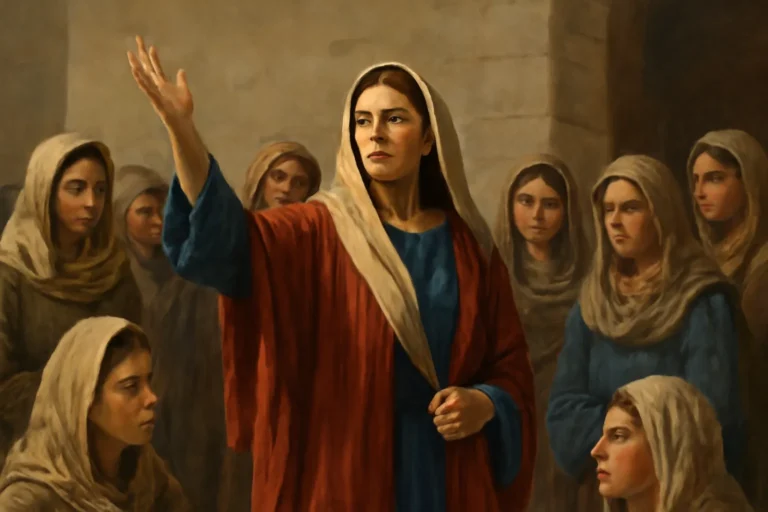

Introduction to Lesser-Known Bible Characters: A Study in Courage, Wisdom, and Faith
In the vast landscape of sacred literature, certain well-known figures often dominate our recollections of biblical narrative. Yet the Bible also presents a cadre of lesser-known personalities whose lives illuminate some of the richest corners of faith. This article turns the spotlight on five such figures: Micah, Dorcas (also known as Tabitha), Abigail, Barnabas, and Huldah. Each character—though not always center stage in popular retellings—offers profound lessons about leadership, service, prophetic insight, and divine mercy. By examining their contexts, actions, and legacies, readers gain a more textured understanding of God’s work through ordinary people in extraordinary times.
The study of these figures invites us to broaden our semantic horizon beyond the most famous biblical names. We encounter a spectrum of roles: prophetic voice (Micah, Huldah),
Micah of Moresheth: The Quiet Prophet Who Proclaimed Justice in a Turbulent Era
The minor prophet known as Micah lived in the southern kingdom of Judah during a time of political upheaval and spiritual compromise. He is not the same person as Micaiah, the prophet who challenged Ahab in a different biblical era; rather, Micah of Moresheth (often simply “Micah”) wrote from a rural, borderland vantage point that gave his voice a distinctive texture: the cry for social righteousness and humble piety in everyday life.
Origins, setting, and audience
Micah’s prophecies are embedded in a historical context marked by Assyrian pressure and internal strife. He speaks to audiences both urban and rural—confronting corruption among leaders while admonishing complacent religious practice. His message flows with a cadence that mirrors the landscapes of Judah’s hills and valleys, where the consequences of injustice ripple through households and markets alike.
Major themes and distinctive features
The book attributed to this prophetic voice centers on several enduring motifs:
- Justice with mercy: a call to act justly and to walk humbly with God (often summarized in later traditions by the phrase “What does the Lord require?”).
- Divine judgment and restoration: a sober reminder that God’s patience has limits, yet that restoration follows genuine repentance.
- Messianic anticipation: Micah 5:2 points toward a ruler from Bethlehem, a thread later woven into Christian interpretation of Jesus’ birth.
- Social critique: critique directed at exploitation, false security, and hollow religious ritual detached from ethical living.
- Humility in leadership: even when predicting grand divine acts, Micah grounds hope in the faithful response of ordinary people who pursue justice and mercy.
Scholarly and devotional insights
For scholars, Micah offers a compact handbook on the ethics of worship and social responsibility. For devotional readers, the verses invite a stringent self-examination: are the practices of a community aligned with God’s desires, or merely outward appearances? Modern theologians often draw on Micah to stress the ethical dimension of faith—how belief translates into action among the vulnerable, the poor, and the marginalized.
Practical takeaways for today
- Prioritize justice and mercy in every communal decision.
- humility in leadership, recognizing that power is stewardship rather than possession.
- Embed faith in daily life, not just in temple or sanctuary rites.
- Engage with scripture as a living critique of social harm and a map toward restoration.
Variations of the name and identity we encounter, such as speaking of Micah the prophet or Micah of Moresheth, remind us that biblical memory travels through languages and cultures, preserving the core message while adapting the linguistic surface to new communities. This semantic breadth helps readers recognize that Micah’s concerns—equity, justice, and reverence for God—remain relevant in diverse times and places.
Dorcas and Tabitha: A Model of Practical Charity in the Early Church
Dorcas, also known by her Aramaic name Tabitha, stands out in Acts for a life oriented toward tangible service. Her story is brief in narrative length but rich in implications: a devotee of good works, a person known for acts of almsgiving, and a living demonstration of how the early Christian community valued practical mercy alongside preaching.
Names and identity: Dorcas vs Tabitha
In the Greek text, she is called Dorcas; in Aramaic, Tabitha. The dual naming highlights a common feature in the biblical world: a person’s name could reflect different cultural milieus, and both names carry meaning—Dorcas conveying the idea of a graceful deer, Tabitha conveying a sense of “gazelle-like beauty” or “dove.” This bi-cultural naming underlines a universal message: the gospel speaks across languages and identities, affirming the dignity of those who serve.
The Acts account and the power of compassionate action
Dorcas’s life is described as a rhythm of generosity—to the widows, to the poor, to those in her sphere of influence. When she falls ill and dies, the faith community is moved to action: they present Dorcas’s deeds to the apostle Peter, who prays, and Dorcas is restored to life. This moment, though singular in its narrative details, resonates with early Christian understandings of resurrection hope and congregational care.
The significance of women’s leadership in early Christian communities
Tabitha’s story prompts ongoing reflection on the role of women in leadership and service within the church. While the narrative does not present a formal ecclesial office, Dorcas embodies leadership through care, compassion, and practical skill. Her example invites modern communities to recognize and value the diverse ways in which God equips individuals to contribute to communal flourishing.
Lessons drawn for contemporary faith communities
- Acts of service can be as transformative as preaching, especially when they meet immediate human need.
- Widow care and vulnerability invite a robust, communal response rooted in love and justice.
- Stories of resurrection expectation in Acts point to the shaping of a faith that trusts God to restore life and community.
- Language variation, as seen in Dorcas/Tabitha, encourages inclusive dialogue across cultures and traditions.
For readers who study the broader narrative arc of the New Testament, Dorcas/Tabitha serves as a bridge between mercy ministries in the early church and the empowering presence of the Spirit that energizes disciples to serve with both hands and heart.
Abigail: Wisdom, Courage, and Strategic Service in a Moment of Crisis
Abigail’s story is compact, yet it contains a wealth of theological and ethical insight. As the wife of Nabal, she navigates a volatile political moment with David, balancing hospitality, discernment, and bold action that averts bloodshed. Her narrative illustrates how intelligence and courage can preserve a people and redirect the course of history.
Names and nuanced meanings
The Hebrew name Avigail is often translated as “my father is joy” or more broadly as “the joy of the father.” In English versions, she is typically rendered as Abigail. The duality of her names—Avigail in Hebrew tradition and Abigail in commonly used English renderings—highlights how a single character carries both intimate familial meaning and public significance in royal and political affairs.
Context: a tense encounter with David
The narrative places Abigail in 1 Samuel chapter 25, where she confronts the potential crisis precipitated by her husband’s foolish words and actions. Nabal’s stubbornness and rough speech nearly provoke David to unleash a punitive wave of violence during a time of feast and celebration for David’s own men. Abigail, aware of the moral stakes, acts decisively—she brings a generous provision, includes wise counsel, and appeals to David’s higher calling as future king, reminding him of the ethical responsibilities of leadership.
Wisdom, diplomacy, and the theology of restoration
Abigail embodies a theology that marries wisdom and mercy. Her intervention prevents bloodshed, preserves households, and earns a place of high regard in the Davidic line. Later, she becomes one of David’s wives, suggesting that divine providence can weave discernment and courage into the fabric of human relationships in ways that shape generations.
Practical takeaways and modern applications
- Discernment in crisis involves gathering information, listening to those immediately impacted, and considering longer-range consequences.
- Peacemaking through action can defuse escalating conflict before it becomes irreversible.
- Leadership virtue is not only bold rhetoric but also practical hospitality and care for the vulnerable.
- Abigail’s legacy invites communities to cultivate women’s voices as essential strands in the fabric of faithful leadership.
Through the lens of Abigail—a figure sometimes called Avigail in Hebrew traditions—readers encounter a model for courageous, prudent intervention at the intersection of personal life and public duty.
Barnabas: The Apostle Known as the “Son of Encouragement” and the Power of Mentorship
Barnabas stands out in the early church as much for his character traits as for his organizational and pastoral gifts. A Levite from Cyprus, he appears early in Acts as a generous, trust-building leader who commits to the gospel’s expansion by fostering inclusive fellowship and mentoring others, including Paul after a dramatic conversion.
Names and linguistic variations
The name Barnabas is sometimes seen in its Aramaic form as Bar-Nabas, literally meaning “son of encouragement.” Spelling variants like Barnabas or Bar-Nabas reflect the fusion of linguistic traditions in the early Christian world. This is more than a nomenclatural curiosity: it signals the public identity of a leader whose very label communicates his mission.
Key episodes and leadership style
Barnabas’s most formative moment for many readers is his role in vouching for Paul after Paul’s conversion, bridging skepticism among the believers and enabling Paul’s later ministry. He later journeys with Paul on missionary ventures but also shows discernment by recognizing the need to separate from John Mark when appropriate, embodying mature leadership that assesses partnership dynamics with fidelity to the mission.
Theological and ecclesial insights
The figure of Barnabas reveals several enduring theological themes:
- Encouragement as a spiritual gift: the church needs supporters who bolster faith and courage in others.
- Hospitality and inclusion: Barnabas models bridging communities—Jews and Gentiles, seasoned believers and new converts.
- Mentorship and legacy: his investment in younger leaders demonstrates how mentorship accelerates the spread of the gospel.
- Economic generosity as a moral witness: Barnabas’s background as a landowner who sells property to support the church underscores that wealth can be used for communal flourishing.
Contemporary reflections and study questions
- How does Barnabas’s approach to leadership differ from the more forceful leadership styles sometimes celebrated in religious communities?
- What does it mean to lead with encouragement in today’s church, academic settings, or mission organizations?
- In what ways can mentorship principles be applied to nurture emerging leaders in a variety of faith contexts?
Huldah: The Prophetess Who Guided Reform and Verified the Sacred Text
In the reign of King Josiah, a female prophet named Huldah stands as a pivotal, though sometimes underappreciated, figure in biblical history. Her role demonstrates that prophetic voices in Israel could emerge from unlikely quarters and that the interpretation and application of divine revelation are communal processes that involve both authority and accountability.
Names and textual variants
The figure’s name appears in various forms in biblical translations: Huldah and sometimes Hulda (a common variant in some manuscripts and translations). This semantic flexibility is a reminder that the transmission of sacred texts involves linguistic diversity, while the core meaning and function of the figure remain recognizable: a trusted prophetic voice in the life of a nation seeking renewal.
Context: Josiah’s reform and the book discovered
The narrative situates Huldah in a moment when the Book of the Law—often identified with Deuteronomy—was discovered in the temple during renovations. The king and the priests sought divine guidance about what to do with this newly found revelation. Huldah’s intercession confirms the legitimacy of the book’s authority and reinforces the legitimacy of reform measures that Josiah would pursue.
Prophetic authority and communal renewal
Huldah’s response is not merely a personal exclamation but a public declaration that aligns the king’s reform with the divine plan. Her address emphasizes accountability, the need for repentance, and the promise of restoration for a people who align themselves with God’s will. In this moment, her authority is publicly recognized, and she becomes a model of how prophetic discernment serves the political and spiritual health of a community.
Impact and theological implications
- The inclusion of a woman as a recognized prophet illustrates the biblical evidence for female prophetic leadership in certain historical moments.
- The discernment of Josiah’s reform demonstrates the importance of aligning political power with the divine will, and the role prophetic voices can play in guiding faithful governance.
- Huldah’s exhortation attests to the integrity of scripture and to the responsibility of leaders to heed scriptural counsel and reform accordingly.
The figure of Hulda/Huldah invites contemporary readers to reflect on how communities respond when confronted with sacred texts: Do they hear, discern, and implement reform with humility and courage? The story of this prophetess reinforces a core theological conviction: divine communication is a gift that requires faithful reception and responsible stewardship within the life of the community.
Interwoven Themes Across the Five Figures: Wisdom, Courage, and Faith in Action
Though Micah, Dorcas (Tabitha), Abigail, Barnabas, and Huldah represent distinct domains—from prophetic literature to Acts narratives to early church leadership—their stories converge on several enduring themes:
- Leadership through service: Dorcas/Tabitha and Abigail illustrate that genuine leadership often manifests as practical care for others, strategic interventions in crises, and the ability to bridge divides with mercy.
- Prophetic courage and discernment: Micah and Hulda/Huldah reveal how prophetic voices address social injustice, spiritual complacency, and reform, urging communities to align with divine priorities.
- Mentorship and transmission: Barnabas embodies the discipline of nurturing others, enabling broader mission through thoughtful sponsorship and example.
- Identity and naming: The variations in Dorcas/Tabitha, Abigail/Avigail, Barnabas/Bar-Nabas, and Hulda/Huldah illuminate how memory travels across languages, cultures, and generations while preserving the essential call to faithful witness.
Applications for faith communities today
- Encourage humble leadership that invites participation, mentors others, and seeks governance that reflects justice and mercy.
- Cast a wide net for prophetic voices within congregations, including women and lay leaders, recognizing that divine guidance may appear in diverse forms.
- Offer intentional care for the vulnerable as a central practice, anchored in the example of Dorcas/Tabitha and Abigail’s decisive acts.
- Promote thoughtful engagement with scripture, acknowledging that its discovery and interpretation require communal reflection and accountability—much as Huldah’s guidance required Josiah’s royal acknowledgment and reform.
Conclusion: Remembering the Hidden Voices that Shaped Faith
The figures explored in this article—Micah, Dorcas (Tabitha), Abigail, Barnabas, and Huldah—invite readers to appreciate the breadth of biblical witness beyond the most famous names. Each character offers a distinct lens on what it means to live faithfully in the face of political pressure, social need, spiritual crisis, and communal opportunity. In their stories we find a radical trust in God’s purposes, a willingness to act courageously, and a commitment to how a community should live with justice, mercy, and hope.
As you reflect on these lesser-known but richly instructive biblical personas, consider how variations of their names—Dorcas versus Tabitha, Avigail versus Abigail, Bar-Nabas versus Barnabas, Hulda versus Huldah—reveal the universality of God’s mission: to call a diverse people to holiness and to equip them for ministry in every age. The legacy of these figures endures not only in the pages of Scripture but in the ongoing life of faith communities that continue to learn from their examples, applying ancient wisdom to contemporary challenges.
Study prompts and further reading
- Examine Micah 6:8 in your own words. How does the prophet’s call translate into present-day ethical action in your community?
- Read Acts 9 (Dorcas/Tabitha) and consider how acts of service empower a congregation to witness to the Gospel.
- Reflect on Abigail’s negotiation with David. What does this reveal about wisdom, courage, and the use of resources during a crisis?
- Explore the role of Barnabas in Antioch and his mentorship of Paul. How can similar mentorship relationships shape modern ministry teams?
- Discuss Huldah’s interaction with Josiah. What does prophetic consent look like when confronting newly discovered sacred texts?
In closing, the blend of prophetic voice, merciful action, wise counsel, and mentorship found in Micah, Dorcas, Abigail, Barnabas, and Huldah offers a compelling portrait of faithful living. Their lives demonstrate that the divine purpose often arrives through ordinary people who respond with courage, compassion, and fidelity. The sacred narrative invites us to join that legacy—to embody the values these figures embody and to pass on a living faith to future generations.