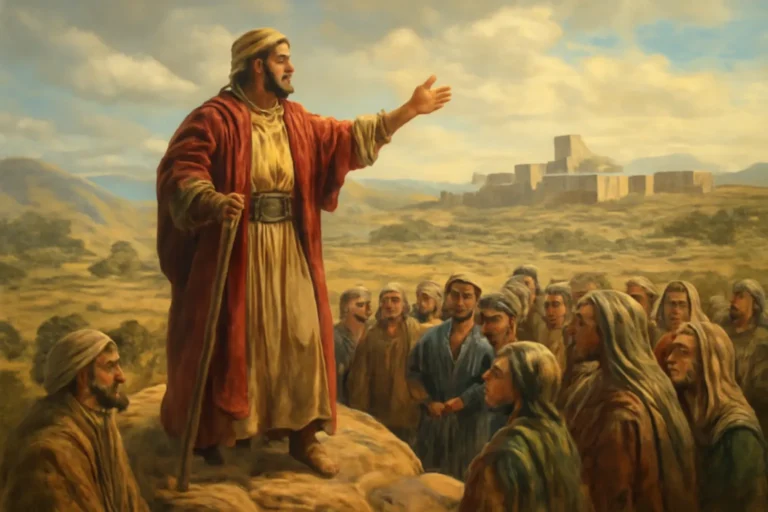
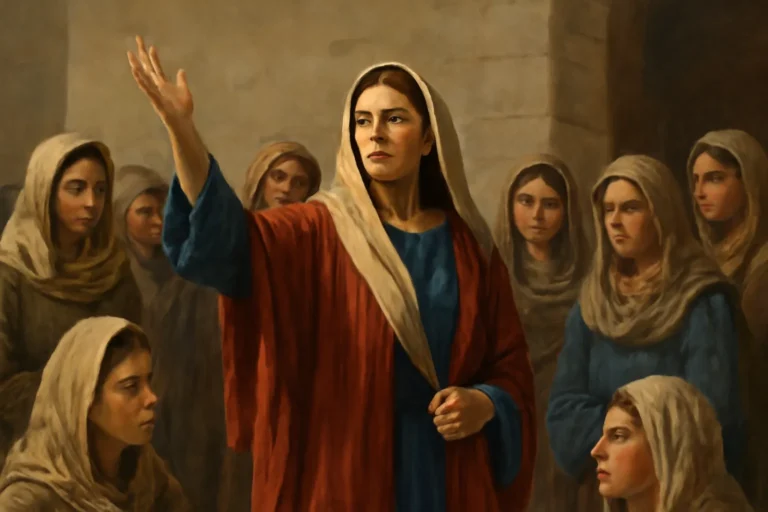
Overview of Judge Deborah and the Biblical Narrative
In the canonical corpus of the Hebrew Bible, the figure known as Deborah stands out as a multifaceted leader who
embodies spiritual authority, legal discernment, and militant courage.
Her story unfolds in the Book of Judges, most notably in chapters 4 and the poetic/lyrical chapter 5, which together
illuminate a period of unsettled tribal confederations and divine-human partnership in decision making. Deborah is introduced as a prophetess and a judge—an unusual conjunction in the ancient Near East—who sits under the palm of leadership at Ramoth in
the hill country of Ephraim, delivering and shaping national policy through the voice of divine revelation.
The episode is not merely a historical anecdote about a woman in authority; it is a narrative laboratory in which leadership,
justice, faith, and the ambiguities of warfare intersect. The story centers on the prophetess Deborah, the military commander Barak,
and the daring action of Jael, who defeats the enemy commander Sisera. This trio—Deborah, Barak, and Jael—becomes a symbolic
constellation for attending to moral complexity and public faith in a time of crisis.
In a broader hermeneutical sense, the figure of Deborah is often used as a lens to understand how divine guidance and
human agency coordinate within a community that seeks justice, peace, and fidelity to covenantal principles. The narrative also
invites readers to consider how female leadership can operate within—and challenge—the structures of power,
law, and warfare in ancient Israel. As a result, Deborah’s portrait has reverberations in later traditions that honor female wisdom, prophecy, and public service as legitimate modes of divine vocation.
Historical and Cultural Context
Understanding the Judges Era
The Book of Judges presents a cyclical pattern in which Israel alternates between fidelity to the covenant and periods of
apostasy. In this time of the Judges, charismatic leaders arise to deliver the people from oppressors, to adjudicate disputes,
and to instill memory of God’s acts. Deborah’s leadership sits within this milieu where tribal boundaries are porous, and tribal
alliances are forged in response to imminent danger.
Women in Leadership in Ancient Israel
Across biblical literature, women appear in diverse leadership roles, ranging from prophetesses and priestly figures to judicial authorities and strategic advocates. Debora is one of the most prominent, yet she stands in a larger
tradition in which female champions signify not mere exception but a pattern of God using the willing
to accomplish divine purposes. Other examples—such as Miriam leading in the wilderness, Esther guiding royal policy,
or Ruth shaping social and kinship networks—offer semantic and narrative parallels that enrich the Deborah narrative.
Deborah’s role as judge implies civil governance and legal discernment, not merely spiritual leadership.
Her prophetic dimension suggests a direct channel of divine communication, guiding strategic decisions.
Jael’s actions illustrate how courage and cunning can intersect with divine plan in life-and-death moments.
Leadership and Authority
Deborah as Judge and Prophetess
Deborah is presented as a judge over Israel, a role that in ancient Israel combined civil authority, spiritual discernment, and military insight. Her sentences are not merely legal pronouncements;
they are calls to action that resonate with the entire people. Notably, she does not exercise power in isolation; she invites Barak to assume leadership in a way that
aligns with divine prompting, thereby revealing a model of shared leadership under covenantal authority.
Barak: The Role of a Commander and Collaborator
Barak, the commander of the Israelite forces, responds to Deborah’s call with fidelity but also with human hesitation. His request that she accompany him
into battle—“if you go with me, I will go; but if you do not go with me, I will not go”—is often discussed in theological and ethical terms as a moment of
vulnerability and trust. Some interpreters read this as a concession to Deborah’s spiritual authority; others view it as a moment of political strategy that recognizes
Deborah’s prophetic legitimacy. In either reading, the episode illustrates a model of reconciled leadership in which prophetic voice and martial action cooperate under
a divine mandate.
The narrative’s dramatic turn comes with Jael, a Kenite woman who kills Sisera, the enemy general, in his own tent. Jael’s decisive action
completes the deliverance initiated by Deborah’s theological and strategic leadership. Critics and theologians often highlight Jael’s
role as demonstrating righteous cunning and grace under pressure, showing that deliverance in the biblical
story is not reserved for a single person or gender but is distributed among those who respond faithfully to God.
Judges 5, the Song of Deborah, is one of the oldest passages in the biblical record to celebrate victory and justice. The poem exults in
God’s deliverance, imparts the language of communal memory, and elevates the participants—especially the women who persisted in their
trust, prayer, and martial resolve. The hymn-microcosm reflects a theology of cosmic justice and covenant memory, where
lament and praise converge to reaffirm God’s sovereignty in the face of oppression.
Theological Themes Emerging from Deborah’s Narrative
Covenant Faithfulness and Divine Initiative
A central thread in the Deborah narrative is the way God initiates deliverance through chosen agents. Deborah’s role demonstrates that
divine fidelity to the covenant can be mediated through humble yet courageous vessels, including women who respond to
prophetic summons. The text repeatedly emphasizes that deliverance comes not only through military prowess but through obedience
to God’s call and the willingness to act in alignment with divine purposes.
Prophetic Authority and Legal Resolution
The combination of prophetic voice and legal discernment in Deborah signals a holistic model of leadership:
one that guides both the interpretation of circumstances and the concrete steps toward justice. The narrative thus treats prophecy and justice
as interlocking realities rather than distinct domains.
Justice, Mercy, and Social Memory
The Song of Deborah underscores a broader social justice ethic: the faithful community remembers God’s acts, honors the vulnerable, and seeks
to restore harmony after violence. The text invites readers to consider how memory functions as a moral force—how sung remembrance can inspire
present ethical action and future faithfulness.
Gendered Leadership and Ecclesial Reflection
The Deborah story raises enduring questions about gender and leadership in religious communities. The presence of female leadership in a
pivotal moment invites ongoing reflection about how contemporary faith communities recognize and cultivate gifts across gender lines, without diminishing
the coherence of theology, tradition, and communal order.
Comparative Perspectives: Other Biblical Female Champions
Miriam, the Prophetess in the Wilderness
Miriam, sister of Moses, appears as a prophetess whose leadership helps sustain the people during the exodus. Her story,
including the song of Miriam after crossing the Red Sea, resonates with Deborah’s emphasis on public praise, communal memory, and
the shaping of collective identity through divine acts.
Esther and the Catalysis of Courage in a Pagan-Royal Context
Esther demonstrates how sovereign power and prophetic courage can converge in a context far from Israel’s borders. Like Deborah,
Esther embodies discernment, risk-taking, and social responsibility, illustrating how women in leadership may steer
the fate of a people within complex political landscapes.
Ruth offers a different mode of female heroism—loyalty, hospitality, and the integrity of kinship networks that preserve God’s people.
While Ruth’s arena is domestic and social, the thread of steadfast commitment parallels Deborah’s insistence on fidelity to divine purposes
in public life.
Huldah, the Prophetess and Educational Voice
In post-exodus and monarchy-era narratives, Huldah serves as a crucial interpretive voice who authenticates scripture and provides
ethical exhortation to kings. Theologically, Huldah reinforces a pattern in which prophetic function complements leadership structures,
an arrangement echoed in Deborah’s combination of governance and prophecy.
Phoebe, Priscilla, and Lydia: New Testament Reflections
In the Christian canon, figures such as Phoebe, Priscilla, and Lydia illuminate how early Christian
communities recognized and valued women as teachers, patrons, and co-laborers in the Gospel mission.
Together, these figures form a semantic family of female champions whose stories illuminate different facets of leadership,
courage, and service across biblical eras. Their presence helps readers understand Deborah not as an isolated anomaly but as part of a broader
biblical archive that honors diverse expressions of godly vocation.
Exegetical Traditions and Debates
Feminist and Liberation Theologies
Debates in feminist and liberation theologies frequently revisit Deborah’s narrative to discuss how biblical texts can
empower contemporary communities to recognize and cultivate leadership among women. Some interpret Deborah as confirming the
legitimacy of women in political and juridical authority, while others caution against over-reading the text as an endorsement of gender parity
in every historical situation. The interpretive conversation, however, consistently centers on justice, covenant faithfulness, and
the dignity of leadership roles under God.
Traditional Exegesis and Patristic/Apparatus Readings
Across Jewish and Christian interpretive trajectories, Deborah’s figure has been cherished as a model of prophetic leadership
and national deliverance. Classical commentators often emphasize the harmony between Deborah’s spiritual authority and the communal
responsibility to discern and implement God’s will. In these readings, Deborah’s leadership is framed within a broader ethics of courage
and service that transcends gender boundaries.
Literary and Narrative Analyses
Literary critics highlight the dramatic structure of the Deborah narrative: the initial dream of deliverance, the call to action,
the dialogue with Barak, the crisis of Sisera’s flight, Jael’s intervention, and the culminating Song of Deborah. The poem’s imagery—boats, storms,
dams, and the march of women—offers interpretive avenues about prophetic memory, divine sovereignty, and the coalition of voices that
enact salvation. This approach foregrounds how language and song mediate theological truth.
Historical-Critical Perspectives
Some scholars situate Deborah in a genuine historical context, arguing that the text preserves memories of real leaders and events from
a proto-democratic or decentralized political arrangement in ancient Israel. Others view the narrative as a conscious literary composition
designed to recruit, instruct, and embolden communities facing oppression. Both lines of inquiry keep in view the central questions of
authority, justice, and divine purpose in political life.
Deborah in Liturgy, Education, and Faith Practice
Liturgical Readings and Musical Tradition
The Song of Deborah has long served as a resource for liturgical use in Jewish and Christian contexts. Its cadence, imagery, and
message of divine justice invite congregations to reflect on the God who saves and the human agents through whom salvation comes.
The linguistic artistry of the song also offers a model for sermons and catechetical materials that teach faith and courage in times of trial.
Educational Implications for Bible Study
In educational settings, Deborah’s narrative provides a case study for how to study biblical leadership with attention to gender, power,
and ethics. Students can compare Deborah with other biblical leaders, examine the role of prophecy in governance, and analyze the function
of communal memory in shaping present-day moral decision making.
Practical Applications for Modern Faith Communities
Modern congregations can draw from Deborah’s example in several constructive ways:
Discernment under pressure: Cultivating a space where prophetic voices can be heard and weighed in communal decision making.
Collaborative leadership: Recognizing the value of partnerships between spiritual leaders and lay leaders in delivering justice and mercy.
Public witness: Encouraging acts of courageous service that address the vulnerable and align with covenantal ethics.
Interfaith Reflections
The Deborah narrative resonates across religious traditions that honor prophetic vocation and ethical leadership. Interfaith dialogues
can explore how Deborah’s example informs understandings of women’s agency in religious life, and how communities might translate
ancient narratives into contemporary commitments to justice, peace, and human dignity.
Chronology and Key Moments: A Digest for Study
Judges 4: The Setting and People
The chapter begins with Israel’s oppression by Jabin, king of Canaan, and his commander Sisera. Deborah’s leadership is invoked
through a divine command that calls Barak to mobilize the forces of Israel. The narrative quickly foregrounds the synergy between
prophetic authority and martial action, and it foregrounds the theme that deliverance is the work of God through human agents.
The Song expands on the events of the preceding chapters, offering a communal retelling that emphasizes the courage of women and the
faith of those who trusted in God’s steadfastness. The poem details the defeat of Sisera and the subsequent celebration of deliverance,
highlighting how collective memory preserves divine faithfulness.
Debora’s leadership leaves a enduring memory in the community. The narrative asserts that God’s faithfulness sustains a people who choose
trust over despair, even amid political and military volatility. The memory of Deborah, Barak, Jael, and the Song becomes a template for
future biblical and ecclesial reflection on how to combine prophecy, justice, and courage in the life of faith.
Conclusion: The Enduring Significance of Judge Deborah
Judge Deborah emerges as a powerful emblem of faithful leadership in a contested time. Her story is both a historical account
and a theological meditation on how God works through agents who respond with trust, prayer, and action. The presence of Jael, who acts with decisive
courage, and Barak, who embodies humility and obedience, rounds out a portrait of leadership that refuses to be reduced to a single gender or a single
style of power. Instead, it presents a plural, covenantal vision in which God calls diverse voices to participate in the work of justice.
As readers and communities today seek to understand the place of women in leadership within religious life, Deborah’s narrative offers a robust
framework for evaluating vocation, spiritual authority, and public service. It invites modern interpreters to attend to the ways in which prophetic
insight, legal discernment, and courageous action can coexist, collaborate, and harmonize in the service of God’s purposes for justice and mercy.
In sum, the figure of Judge Deborah remains a source of inspiration for those who study biblical leadership,
who reflect on the ethics of war and peace, and who strive to cultivate a faith community where female champions are welcomed as
legitimate stewards of divine callings. The surrounding tradition of female leadership across the biblical corpus—Miriam, Esther, Ruth, Huldah,
Phoebe, Priscilla, Lydia, and others—enriches the conversation by showing a spectrum of gifts, seasons, and contexts in which God
may work through women to accomplish salvation, justice, and communal flourishing.