Introduction: The Reformer King and the Covenant Renewal
In the annals of Judah, the figure known in English as Josiah stands out as a towering emblem of religious reform, covenant fidelity, and a renewed consciousness of the God of Israel. This monarch—often introduced in the biblical record as the boy king who began to seek the LORD while in his youth—embodies a distinctive moment when the religious life of Judah was reshaped by a rediscovery of sacred text, a revival of worship, and an earnest attempt to reorient the national conscience toward the God of the covenants. The story of Josiah (also rendered in Latinized form as Josias) traverses the pages of the biblical books of 2 Kings and 2 Chronicles, offering a window into the interplay between liturgical renewal, political power, and prophetic witness.
This article surveys the life and reign of Josiah across biblical sources, with attention to the religious dimensions that shape his reputation within Jewish and Christian traditions. We will engage with the various transliterations of his name—including Yoshiyahu, Yehoshiyahu, and Josias—to highlight how the name travels through languages, scripts, and centuries, and how these variations illuminate the enduring significance of his religious reforms. The discussion places Josiah within the larger theological framework of Deuteronomistic history, covenantal theology, temple-centered worship, and the prophetic voices that both preceded and testified to his reforms.
Historical Context: Judah on the Threshold of Reform
Josiah’s reign occurred at a critical juncture in the history of Judah. The kingdom was navigating pressures from powerful neighbors, including the rising imperial movements of Egypt and Assyria, while facing internal religious challenges—syncretistic practices, altars on high places, and faded leadership fidelity to the covenant. The biblical narrative presents Josiah as a unifying figure who inherited a distressed spiritual landscape and sought to realign the nation with a rediscovered core of law and worship. The sources portray a king who was uniquely animated by a religious zeal that sought to restore a primordial fidelity to the God of Israel, a faithfulness anchored in the memory of the Sinai covenant and the loyalties of the sanctuary in Jerusalem.
The chronology of Josiah’s life is closely linked to a celebrated turning point often dated to the late 7th century BCE. The young king ascended the throne at a very early age, and his rule spanned several decades of intense reform. The Deuteronomistic history tradition—especially as it appears in 2 Kings and 2 Chronicles—treats Josiah as a pivotal figure who sought to reverse decades of religious drift and to re-center devotion on a single sanctuary and a single covenant code. Modern readers often read his life through two lenses: as a political reformer who confronted widespread temple corruption, and as a spiritual reformer who catalyzed a revival of fidelity to the covenant.
Names and Transliterations: The Many Forms of Josiah
Variations of the Name in Scripture and Scholarship
The figure commonly known in English as Josiah is the same person who appears under various transliterations in different linguistic and manuscript traditions. In Hebrew, his name is typically transmitted with a form that emphasizes the divine name within the name itself. Scholarly discussions often present several variations to reflect pronunciation, linguistic history, and translation choices. These include:
- Yoshiyahu or Yehoshiyahu — a widely used Hebrew transliteration that preserves some of the phonetic nuance of the original name.
- Josias — the Latinized form found in some late antique and medieval texts, as well as in certain translations.
- Josiah — the standard English rendering attested in the common English Bible translations.
- Yehoshiah or Yehoshiyahu — variants that appear in scholarly discussions referencing the Hebrew form or in textual notes distinguishing pronunciation variants.
These variations are not mere curiosities of philology because they signal how biblical names travel through language communities, influencing how readers think about the person behind the name. In some contexts, Josias speaks to the Latin lineage of the biblical text, while Yoshiyahu foregrounds the direct Hebrew mouth of the name. Each form carries with it a heritage of textual interpretation, including how prophecies, reforms, and royal deeds were understood by different audiences across centuries.
For study and reflection, it can also be helpful to note the sense of the name. The root elements of the Hebrew form often bear theological associations with salvation, support, and divine fidelity, which in turn resonates with the biblical portrayal of Josiah’s reforms as a revival of covenant faithfulness under God’s guardianship.
The Early Life and Ascension: A King at Eight
The biblical record emphasizes that Josiah began his reign at a remarkably young age. In 2 Kings and repeated in 2 Chronicles, the account presents him as a ruler who inherited a land in spiritual and political turbulence. The designation of him as a youth, and later as a king who would come to symbolize a reform movement, contributes to his enduring reputation as a reform-minded monarch.
The initial years of Josiah’s rule were shaped by the political realities of Judah’s place in a volatile Near Eastern landscape. Yet the narrative stresses that, early on, he began to seek the LORD and to pursue a life oriented toward covenant fidelity. This spiritual orientation would set the tone for his later actions—most notably his temple reforms, the purification of sacred space, and the rediscovery of a foundational text that would catalyze a widespread renewal of religious life.
Reforms and Covenant Renewal
The hallmark of Josiah’s reign is the comprehensive and audacious program of reform that sought to purge Judah of religious practices seen as apostate and to restore worship to a central, temple-centered model. The reforms were not merely political; they represented a serious religious reorientation toward the covenantal order believed to have governed Israel since the time of the Sinai covenant. These reforms had a profound impact on the liturgical life of the nation and on how the people understood their relationship with the God of Israel.
Reformation in practice included:
- Elimination of high places and altars dedicated to Baal, Asherah, and other deities found within Judah and in the surrounding regions.
- Purification of the temple precincts and the restoration of proper liturgical leadership, with new emphasis on the Levitical system and the priestly order.
- Centralization of worship in Jerusalem, moving the focal point of sacrifice, prayer, and festival observance to the temple precincts.
- Removal of idols, idolatrous objects, and sacred sites that undermined covenant faithfulness.
- A renewed emphasis on the observance of the Mosaic covenant, including the reinvigoration of annual festivals and the rededication of the people to the covenant code.
The biblical witnesses describe these reforms as the king’s personal initiative, framed as a public turning of the hearts of the people toward the God who had delivered Israel from bondage. The reforms were not merely a policy shift; they represented a conscious embrace of a religious identity that sought to rebind the nation to a shared text, a shared sanctuary, and a shared sense of divine obedience.
A central feature of this renewal is the emerging theology of the covenant. The reforms are consistently framed as obeying the commandments given at Sinai and maintaining fidelity to the law. In this sense, the king’s program can be understood as a renewal of the covenantal relationship, a reassertion of the terms by which Israel would live before God in the land. The narrative thus treats Josiah as a catalyst for a broader spiritual awakening, one that would be remembered in later prophetic and post-exilic reflections as a model of covenant faithfulness—even as circumstances would later reveal the fragility of political reforms in a complex geopolitical environment.
The Discovery of the Book of the Law and Temple Renovation
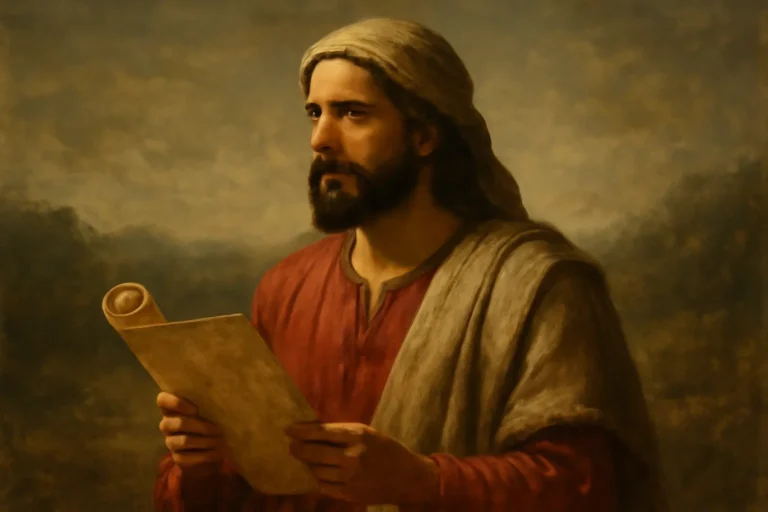
One of the most dramatic and theologically charged episodes in the Josianic era centers on the discovery of a copy of the Book of the Law during temple renovations. According to the biblical account, the high priest Hilkiah found a book in the temple while repairs were underway. The discovery of the law—often identified with portions of Deuteronomy in scholarly interpretation—served as a catalyst for a wave of religious reform. The king’s response to this discovery demonstrates a disciplined and earnest pursuit of fidelity to the covenant as expressed in the sacred text.
The discovery happens within the temple, a setting that underscores the symbolic importance of sacred space in the reform movement. The temple, which had become neglected or compromised through years of political influence and religious drift, is reimagined as the locus of divine instruction and national identity. The rededication that follows the discovery frames Josiah as a king who did not merely legislate morality but who also sought to align national life with the revealed will of God as recorded in the Book of the Law.
The event also highlights the role of the priestly and prophetic voices that guided the reform. The scribe Shaphan is often mentioned as a figure who supported and facilitated the king’s efforts to enact reform, while the prophetess Huldah provides a theological interpretation of the book’s content, confirming its authenticity and offering counsel regarding its implications for the people and the throne.
In a sense, the discovery served as a hinge in the narrative: it linked a political crackdown on idolatry with a spiritual renewal grounded in a tangible text. It suggested that the true reform was rooted in obedience to divine instruction as articulated in the covenant, rather than in the king’s personal ambitions or political calculations alone.
The Book of the Law: Content and Consequences
Scholarly reflection on the Book of the Law associated with this episode often highlights Deuteronomic themes: centralization of worship in the sanctuary, a strong emphasis on obedience to a covenantal code, and warnings against apostasy. The association of such a text with the Josianic reforms helps readers understand why the king’s program had such a comprehensive and transformative character. The law’s rediscovery provided a religious framework for the reforms and a language through which the king could call the people to repentance and renewal.
The rediscovery also raises questions about the relationship between religious texts and political authority. How did a text shape policy? How did reading the law in a public context recalibrate the nation’s priorities? In the Josianic narrative, the law does more than authorize reforms; it evokes moral accountability, calling the people to align their lives with the divine standard, even when doing so requires purification, renunciation of old practices, and a reorientation of worship.
Passover and Religious Revival
Among the most celebrated and theologically significant outcomes of Josiah’s reforms is the revival of the Passover. The Passover festival, which commemorates the Exodus and the covenantal relationship between God and Israel, is presented as having been observed “as it had not been observed since the days of Samuel.” This emphasis on a renewed festival life ties the reform to a memory of historical deliverance and to a liturgical pattern that centers the sanctuary and the covenantal relationship.
The Passover under Josiah is described as a unifying national observance, with priests, Levites, and the people participating in a way that had not occurred for generations. The revival of the Passover represents more than a series of rituals; it is a symbol of national renewal and a public recommitment to the covenant. The festival’s emphasis on remembrance, sacrifice, and communal worship makes it a focal point in the narrative of Josiah’s religious reforms and offers a template for understanding how religious festivals function as public theology—where memory and ritual become a means of shaping collective identity and vocation before God.
The Passover scene has resonances beyond its own historical setting. It is often read in theological reflections as a manifestation of genuine repentance, a turning toward God with heart and mind engaged in worship. It also contributes to the broader theme of repentance and renewal that undergirds Josiah’s reign: the sense that a people can reform at the level of worship, law, and festival, and thereby reconstitute its relationship with the divine in a way that reverberates through generations.
Death, Aftermath, and Legacy
The life of Josiah culminates in a dramatic but tragic death in battle against Pharaoh Necho II at Megiddo. The narrative places his death within a larger political struggle in which the nations of the region vied for influence and control of trade routes and strategic territories. Josiah’s death is not simply a biographical note; it signals the fragility of reform within a volatile geopolitical order. With his passing, the momentum of the reforms faced new challenges, and the political dynamics in Judah shifted in ways that would ultimately contribute to the later downfall of the kingdom.
The immediate aftermath for Judah included the rise of Josiah’s sons and successors who often struggled to sustain the religious restoration that had characterized his reign. The biblical record does not erase the reforms; rather, it presents them as a moment of covenant fidelity that, while powerful, existed within a broader arc of history in which political fortunes could change quickly. The legacy of Josiah endures in the way later generations—through prophets and chroniclers—reflected on his zeal, his devotion to the law, and his dream of a central temple-based worship that bound the people to the God who had delivered them.
In theological terms, Josiah’s death invites reflection on the relationship between reform and resilience. It invites readers to ask how communities sustain faithfulness after a reforming king passes away and how they respond when political circumstances shift. The narrative thus invites both admiration for the king’s zeal and humility in acknowledging the limits of one man’s capacity to ensure lasting spiritual renewal in a complex historical landscape.
Theological Significance and Interpretations
The figure of Josiah is central to several theological themes in biblical interpretation. The reform is often discussed in terms of covenant faithfulness, obedience to the Law, and the tension between institutional worship and personal devotion. The biblical tradition regards Josiah as a model of energetic reform, while also acknowledging the ultimate human limits of reform in the face of larger historical forces.
The covenant is at the heart of Josiah’s religious project. The king’s willingness to align the nation with the covenantal code and to redirect worship to the temple speaks to a theological vision in which fidelity to divine instruction is the supreme measure of a ruler’s legitimacy. The Book of the Law found in the temple becomes a symbol of that fidelity, a document that invites reformation through obedience rather than through political power alone.
The deuteronomistic perspective on Josiah emphasizes that the reforms, though admirable, occurred within a history of faithfulness and unfaithfulness that would continue beyond his lifetime. The biblical authors present Josiah as a figure who embodies the ideal of covenant renewal, but they also place his life within a sequence of events that culminate in exile for the people of Israel in later generations. This framing invites readers to discern what lasting spiritual renewal requires beyond a king’s policy and a found text—it requires a sustained cultural and spiritual commitment to the covenant, a community that continually seeks to walk in obedience to the divine will as expressed in the law.
In Christian interpretive traditions, Josiah’s emphasis on the law and temple devotion is frequently discussed in light of the broader biblical narrative about worship, idolatry, and the reforming impulse. Some theologians highlight Josiah as a type of prophetic reformer whose work foreshadows the ultimate reform brought about by the gospel—a movement that seeks to renew the human heart in alignment with divine truth. Others use his story as a cautionary tale about the limits of reform when not accompanied by a lasting spiritual transformation in the hearts of a people.
Josiah Across Biblical Books: Where He Appears and Why It Matters
The narrative of Josiah appears most prominently in 2 Kings 22–23 and in parallel passages in 2 Chronicles 34–35. The two books provide complementary portraits: the Kings account emphasizes political and military events, while the Chronicles portrait emphasizes liturgical reform and the religious significance of the king’s actions. This dual presentation allows readers to see how reform can be evaluated from different angles—through political outcomes, through religious fidelity, and through the memory of the people about their relation to the divine covenant.
The presence of Josiah in these texts also intersects with prophetic voices. The era features prophets and prophetic voices who speak into the reform process, guiding, challenging, and sometimes warning the king and the people. The interactions with figures such as Huldah the prophetess underscore the idea that reform is not only a managerial enterprise but also a spiritual and prophetic enterprise in which divine guidance matters deeply.
Reading Josiah in light of these two biblical witnesses invites a multidimensional understanding of religious leadership. It raises questions about how a nation can reform its worship, internalize sacred text, and sustain fidelity across generations in the midst of political change and external pressure. The texts encourage readers to consider the relationship between law, ritual practice, and the lived experience of faith within a community under covenant with God.
Comparative and Theological Reflections: What Josiah Teaches Today
Modern readers—whether Jewish, Christian, or from other theological traditions—often reflect on Josiah in light of ongoing conversations about religious reform, covenant fidelity, and the role of sacred text in shaping identity. The story invites a number of practical and spiritual reflections that remain relevant in contemporary religious communities:
- Text-centered reform: How does a community respond when a sacred text is rediscovered? What processes are in place to translate textual renewal into lived practice?
- Temple and liturgy: To what extent should worship be centralized or diversified, and how does a sanctuary-based approach shape communal identity?
- Prophetic engagement: How do prophets and prophetic voices participate in reform within a religious community, and how should leaders respond to prophetic counsel?
- Legacy and resilience: When political leadership changes or reforms fade, what mechanisms sustain fidelity to the covenant across generations?
The Josianic narrative provides a powerful case study in how religious reform can arise from a combination of sincere leadership, sacred text, and communal remembrance. It invites sustained reflection on the moral and spiritual dimensions of governance—how a ruler can steward a people toward covenant faithfulness while acknowledging the fragility of human institutions in the face of historical change.
Chronology and Key Moments: A Consolidated View
- Josiah ascends to the throne of Judah at a young age and begins a reign marked by religious interest and reform.
- The king initiates broad purification of the high places and the temple precincts, seeking to redirect worship toward the central sanctuary in Jerusalem.
- The temple undergoes repairs and renovations, during which Hilkiah the priest uncovers a copy of the Book of the Law.
- Shaphan the scribe reports the discovery to the king, who orders the law to be read publicly and interpreted in relation to national life.
- Prophetic counsel, including the voice of Huldah, affirms the authenticity of the book and outlines its implications for the people and the throne.
- A renewal of the covenant takes place, with renewed emphasis on obedience to the law and the centralization of worship in the temple.
- The Passover is celebrated in a manner described as unparalleled since the days of Samuel, highlighting a deepened communal sense of divine deliverance and covenant loyalty.
- Josiah dies in battle against Pharaoh Necho II at Megiddo, bringing an abrupt turn in the political and religious trajectory of Judah.
Conclusion: Josiah’s Place in Theological Reflection
The life and reign of Josiah offer a rich field for theological reflection on what it means to restore a people to covenant faithfulness. If his era underscores the power of rediscovered sacred text, centralized worship, and heartfelt repentance, it also reminds readers that reform is a fragile enterprise—dependent on ongoing spiritual renewal, prophetic insight, and historical circumstance. The legacy of Yoshiyahu (as some scholars render the Hebrew form) remains a touchstone in biblical memory for those who seek a deeper understanding of the interplay between law, liturgy, and leadership in a community seeking to live under divine instruction.
In the broader biblical storyline, Josiah’s reforms are remembered as a high-water mark of fidelity prior to a period of testing and exile that followed his death. The narrative does not suggest that a king’s reform alone could secure enduring faith; rather, it highlights the necessity of a people committed to living out the covenant in every sphere of life. In that sense, Josiah’s story is not only about a single reign but about a lasting invitation to readers to examine their own communities’ commitments to sacred text, worship, and moral responsibility before God.
The enduring relevance of Josiah’s journey thus rests in the ways his life invites contemporary communities to consider:
- The integration of Scripture, worship, and reform as a holistic project.
- The role of prophetic and priestly voices in guiding reform with humility and discernment.
- The tension between religious ideal and political reality, and the need for sustained spiritual formation beyond any single ruler.
- How memory of deliverance shapes present obedience and communal identity.
Whether read as a cautionary tale, a model of reform, or a source of rich liturgical imagery, the life of Josiah—whether called Josiah, Josias, Yoshiyahu, or Yehoshiyahu—remains a compelling testament to the religious impulse that seeks to return to the covenant, re-center worship on the God of Israel, and reimagine a people’s life in light of the divine instruction found in sacred scripture.