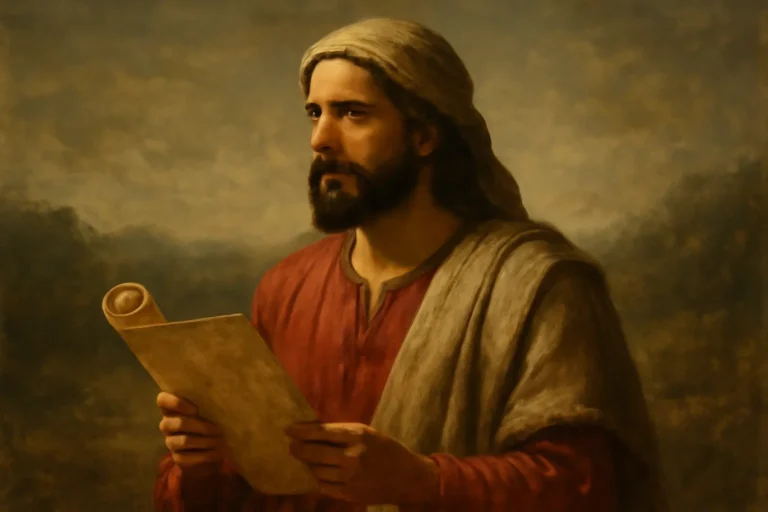

Hezekiah: A Legacy of Faithfulness
Hezekiah, son of Ahaz, stands among the biblical figures commonly cited as a model of devoted fidelity to the God of Israel. In the biblical record, his reign is framed as a time when Judah faced existential threats, religious compromise, and spiritual fatigue, yet emerged with a renewed covenantal identity. This piece explores Hezekiah a legacy of faithfulness, tracing the contours of a reign defined by reform, prayer, and reliance on the Lord. The aim is not merely to recount events, but to illuminate how the legacy of Hezekiah’s faithfulness shaped worship, leadership, and theology in ancient Israel—and why that legacy continues to speak to communities today.
Overview of the biblical portrait
From the outset, the biblical portrait presents a king who walked in the ways of the God of David, though not without human frailty. In the chronicle of his life, Hezekiah is often described as one who trusted in the Lord with all his heart, who led a national revival, and who faced siege or illness with a posture of prayer. The phrase Hezekiah: A Legacy of Faithfulness captures how the narrative treats his decisions, his reforms, and his prayers as a coherent pattern of steadfast devotion. While later chapters remind readers that no king is immune to pride or misstep, the core memory of Hezekiah remains the memory of fidelity under pressure.
The historical setting: Judah in the shadow of empire
To understand the legacy of Hezekiah’s faithfulness, we must place his reign within the larger arc of the Deuteronomistic history. The Northern Kingdom had fallen long before his day, and Judah faced a rising imperial threat from Assyria. In this context, Hezekiah and the covenant people navigated a volatile political landscape where alliances, loyalty, and religious identity were inseparable. The sources emphasize a key contrast: reliance on God versus reliance on military power or political maneuvering. This tension is central to the question, “What makes Hezekiah a legacy of faithfulness in a world of geopolitical turbulence?” The answer, in part, lies in the king’s decision to prioritize worship and prayer above expediency, even when it carried great risk.
- Historical pressures: Sennacherib’s threat loomed as a reminder that nations are fragile and spiritual choices have consequence.
- The royal duty: Hezekiah’s reforms aimed at re-centering worship in Jerusalem and purifying the national life from pre-Israelite or syncretistic influences.
- Prophetic partnership: The involvement of prophets (notably Isaiah) framed policy decisions within a larger divine purpose.
- Theological conviction: The conviction that Yahweh’s presence, not military might, guarantees safety shaped the moral imagination of the people.
Faithful reforms: Centralization of worship and purification
One of the most distinctive features of the legacy of Hezekiah’s faithfulness is his commitment to reforming religious practice. The narrative emphasizes a deliberate move away from defective worship and toward a renewed, exclusive fidelity to Yahweh. The reforms were not merely about policy but about shaping a people’s memory, ritual life, and hope for the future. In this sense, Hezekiah’s fidelity becomes a blueprint for how a faith community can recover the integrity of worship after periods of compromise.
Key reforms and their theological significance
- Destruction of high places and idolatrous symbols: A deliberate step to consolidate worship at the temple in Jerusalem, signaling loyalty to the covenant and a rejection of competing religious centers.
- Purification of the temple: Renovations and liturgical reforms to restore proper ritual order, emphasizing holiness and reverence in the house of God.
- Rededication of Passover: A national renewal of Passover observance, inviting a re-experiencing of the covenant promises and historical deliverance.
- Rediscovery of the Davidic covenant: The revival of royal piety that aligns leadership with divine instruction and dynastic trust in the Lord.
- Public accountability: The reform movement depended on the leadership’s willingness to confront internal compromise and to model repentance and obedience.
These reforms were not merely structural; they reoriented the people’s imagination toward covenantal faithfulness. They sought to cultivate a generation that would see the temple not simply as a building, but as a locus of divine encounter—a place where God’s presence shapes daily life, legal norms, and social ethics. The legacy of Hezekiah’s faithfulness in these reforms is described by scholars as a revival of true worship that anchored the people’s identity in the God who had delivered Israel from Egypt and who remained committed to his promises.
Theological themes in Hezekiah’s reign
Beyond the concrete reforms, the reign of Hezekiah presents a tapestry of theological motifs that recur in biblical literature. The way he engages with the divine—through prayer, liturgy, and humble dependence—offers a model for how a community might interpret hardship as a moment for renewal. The phrase the legacy of Hezekiah’s faithfulness is not simply about external actions but about how those actions embody a deeper trust in the God who sustains and judges with mercy and justice.
Trust and obedience as governing principles
Hezekiah’s story emphasizes trust as active reliance on God in real-world crises. This is visible in his approach to political threat, to illness, and to national loyalty. The text repeatedly notes that he “repaired the temple” and “trusted in the Lord” (a pattern echoed in other royal narratives that call kings to measure success by faithfulness rather than conquest alone). The theological claim is persistent: obedience to God inaugurates a different kind of security than the world can offer. Consequently, a true legacy of faithfulness is discernible when a community prioritizes spiritual integrity even when political calculations might suggest an alternative course.
Prayer as the hallmark of covenantal leadership
The narrative consistently frames Hezekiah as a man of prayer. Whether he faces Sennacherib’s siege or contends with personal illness, his response is to seek the divine presence through prayerful petition. The prayer of Hezekiah and the accompanying prophetic counsel demonstrate that prayer is not a private act but a public vocation that shapes policy, justice, and mercy. In this light, Hezekiah’s fidelity in prayer becomes a reliable model for communities seeking to ground decision-making in divine guidance.
The Sennacherib crisis: Divine deliverance and human agency
The siege by Sennacherib stands as a dramatic test case for the doctrine that faithfulness under pressure is a sign of true trust. The biblical account presents a sequence in which human efforts and divine action intersect. Hezekiah’s leadership, Isaiah’s prophetic exhortations, and the Lord’s intervention together form a narrative that has resonated through generations as a concrete illustration of how the legacy of Hezekiah’s faithfulness operates in crisis moments.
The prayer and the prophecy: Hezekiah and Isaiah
As the Assyrian threat loomed, Hezekiah’s response was not to strike first or to negotiate alone. Instead, the king sought counsel in covenantal terms and invited prophetic guidance. The collaboration between Hezekiah and the prophet Isaiah highlights a model of leadership that prioritizes accountability to God over mere political calculation. The text suggests that prophetic insight, when aligned with prayerful dependence, reframes strategic choices and moral priorities. Thus, the legacy of Hezekiah’s faithfulness includes the recognition that leadership thrives when personal fidelity to God is matched by communal discernment guided by the prophetic voice.
The night of deliverance and the sign of the shadow
One of the most striking episodes in this crisis is the sign given to Hezekiah regarding the reversal of the sun’s shadow as a token of divine blessing. This sign is not merely miraculous theater; it functions as a symbolic confirmation that heaven is involved in the affairs of nations. For readers and faith communities, the episode invites reflection on how God governs time, history, and human anxiety in ways that exceed human planning. The legacy of Hezekiah’s faithfulness here is a reminder that divine sovereignty remains a real and active force in the world, even when political events appear perilous.
Epilogue: Devotion, pride, and the enduring legacy
Like many biblical figures, Hezekiah wrestles with both commendable fidelity and human pride. The latter surfaces in the episode involving Babylonian envoys, where Hezekiah shows his treasures and power to foreign dignitaries. While this moment does not erase the legacy of Hezekiah’s faithfulness, it offers a sober reminder that fidelity to God must translate into humility before the nations. The biblical narrator does not erase the complexity of his character; instead, it invites readers to hold together a vision of a leader who both models steadfast trust and must be corrected for vanity. The enduring significance lies in how the community interprets these episodes: by acknowledging God’s sovereignty, learning from failures, and continuing the work of reform and devotion that marks a true legacy of faithfulness.
Lessons from the life of Hezekiah
- Faithfulness under pressure: Even in the face of annihilation, the faithful leader prays and seeks divine direction.
- Corporate renewal: Reforms are most effective when they involve the entire community in a renewed sense of covenant worship.
- Humility before divine sovereignty: Pride, especially in times of prosperity, can undermine the best reforms; humility keeps faith vibrant.
- Prophetic partnership: A leadership style that welcomes prophetic counsel can sharpen discernment and align policy with divine purposes.
- Memory and literacy of faith: The remembrance of deliverances, rituals, and covenant promises sustains a community’s identity across generations.
Hezekiah the teacher: Writings, prophets, and liturgy
Although Hezekiah was a king, the era is also a lens into how royal leadership participates in teaching and liturgical life. The record suggests that he fostered a climate in which devotion to God became public education—where the people learned to recite the covenant, observe the feasts, and honor the temple as the center of divine encounter. This aspect of the legacy of Hezekiah’s faithfulness can be understood as institutional education in the faith, turning the court into a site of worship, learning, and ethical formation. The collaboration with prophets like Isaiah helps readers appreciate how royal initiative and prophetic correction together cultivate a durable memory of covenant faithfulness.
Liturgical renewal and covenant memory
Key elements of the religious revival included renewed prayers, official rites, and public declarations of trust in Yahweh. The city’s life was re-centered on the temple, with the people learning anew to fear the Lord and to seek justice. In this sense, Hezekiah’s legacy as a teacher-king plays a crucial role in how communities understand leadership as stewardship: to guide worship toward fidelity, justice, and mercy, rather than toward self-advancement or military triumph alone.
Practical lessons for faith communities
What can modern faith communities learn from the life of Hezekiah? The following practical lessons emerge from the sustained reflection on Hezekiah a legacy of faithfulness as it appears in the biblical record. These insights are not merely historical; they offer a living anthropology of faith for congregations, seminaries, and religious institutions seeking renewal in a complex world.
Principles for congregational renewal
- Prioritize worship integrity: Reaffirm the central place of worship in the life of the community, ensuring that liturgy aligns with theological commitments.
- Encourage prophetic engagement: Create space for prophetic voices to offer discernment, correction, and vision, and cultivate a culture of humility before divine counsel.
- Promote communal repentance: Recognize that renewal requires confession, repentance, and a willingness to turn from compromise.
- Foster spiritual resilience: Learn from Hezekiah’s response to crisis—turn to prayer, seek God’s presence, and act with faith informed by divine guidance.
- Teach covenant memory: Regularly recount the acts of deliverance, covenant promises, and the historical memory that sustains faith across generations.
Educational and doctrinal implications
For theological education, Hezekiah’s life offers a case study in how leadership, worship, and theological interpretation intersect. It invites educators to engage learners in questions such as: What is the relationship between national policy and covenant obedience? How does prayer shape political decision-making? What is the role of humility in leadership, especially after moments of triumph? The chapters on the legacy of Hezekiah’s faithfulness invite ongoing dialogue about how communities interpret the past to inform current practice.
Concluding reflections: A model of faithful leadership
The story of Hezekiah offers more than a historical narrative; it presents a model for faithful leadership under God. The legacy of Hezekiah’s faithfulness offers a framework for thinking about leadership that is covenant-centered, prayer-fueled, and reform-oriented. It affirms that leadership grounded in obedience to God can endure beyond a single historical moment and become a template for future generations seeking to navigate moral complexity, political pressure, and spiritual fatigue. The enduring message is clear: genuine faithfulness is not simply a private virtue but a public commitment that shapes a people’s worship, hope, and witness.
Additional semantic variations and reframes
To emphasize the breadth of the theme, this article has repeatedly returned to variations on the phrase Hezekiah: A Legacy of Faithfulness. Beyond the explicit title, readers encounter a spectrum of synonymous expressions that illuminate the same fundamental idea:
- Hezekiah’s fidelity as a heritage for generations to come.
- The steadfast devotion of Hezekiah as a paradigm for religious leadership.
- A narrative of faithful kingship that centers worship and obedience.
- The legacy of steadfast trust in the face of invasion and illness.
- How Hezekiah’s faithfulness informs modern understandings of courage, prayer, and reform.
In each reframing, the core is the same: a life oriented toward God, a community renewed through worship, and a leadership ethos shaped by covenantal loyalty. The theological import remains that faithfulness, when tested by danger, yields a witness that can outlive the tumult of any era. The narrative invites today’s readers to observe, imitate, and expand upon the pattern of devotion that marked the legacy of Hezekiah’s faithfulness.
Final exhortation: embodying the legacy in contemporary faith life
As readers reflect on Hezekiah: A Legacy of Faithfulness, they may be moved to consider how these ancient lessons translate into modern discipleship. The core call is not nostalgia for a golden age but a living invitation to participate in a renewal of covenant faith. Whether as a pastor, a lay leader, a student of theology, or a member of a faith community, one can take practical steps to imitate the aspects of Hezekiah’s fidelity that endure: prayerful discernment, earnest worship, communal reform, courage in crisis, and humble accountability before God. In this sense, the legacy of Hezekiah’s faithfulness becomes not a relic of the past but a resource for today’s spiritual work, offering guidance on how to sustain a people’s devotion, hope, and integrity in every season of life.