
The greatest story ever told is a phrase that has echoed across centuries, cultures, and confessions. It is not a single book or a solitary moment in time, but a living reservoir of narratives, parables, and visions that shape how communities imagine the meanings of life, suffering, justice, love, and the divine. In this long-form exploration, we trace the contours of this grand narrative, sometimes called the supreme story, sometimes the grand saga, sometimes the most influential tale, and we consider how different religious traditions claim a place within a larger, shared human conversation. This article aims to be informational, interpretative, educational, and theological, offering readings that are respectful of plural voices while deeply engaged with the commitments of particular faiths. We will speak of the greatest story in many forms, yet with a common recognition: stories of salvation, justice, and mercy have shaped civilizations, and they continue to invite readers and listeners into a transformative encounter with meaning.
The Idea of a Grand Narrative: What makes a story “greatest”?
When people invoke the phrase greatest story, they are not merely claiming numbers or popularity. They are pointing to a narrative that demonstrates certain enduring features: universality, moral seriousness, existential depth, and a capacity to inspire hope in the face of tragedy. A grand narrative often encompasses a long arc — from an original act of creation or manifestation, through crises, through moments of challenge and testing, to a culmination that redefines what counts as good and true. In religious contexts, this arc is rarely linear; it is filled with interruptions, paradoxes, and invitations to faith, courage, and repentance. In many traditions, this is the reason the story endures: it continues to reframe the questions people ask about purpose, responsibility, and the nature of God.
Several semantic variations of the phrase appear across languages and schools of thought. You may hear it referred to as the greatest narrative, the grand epic, the ultimate tale, or the most enduring story. Each variation signals a readiness to see a literary and spiritual work as more than entertainment: it is a vehicle for conscience, a teacher of virtue, and a mirror in which communities reflect both their beliefs and their hopes. In this sense, the story of faith becomes a living catechesis, shaping ritual, art, and daily life as much as doctrine.
The Christian Story as Central Narrative
Within Christian faith and imagination, the greatest story ever told is often presented as a unified arc: creation, fall, redemption, and restoration. While Christian readers differ in emphasis — some highlighting grace, others justice, still others incarnation and resurrection — the core claim remains that God engages humanity in a historical and transformative drama that culminates in reconciliation and renewal. This is sometimes described as the supreme narrative that interprets all other stories through the lens of salvation history.
The Nativity, the Ministry, the Passion, and the Resurrection
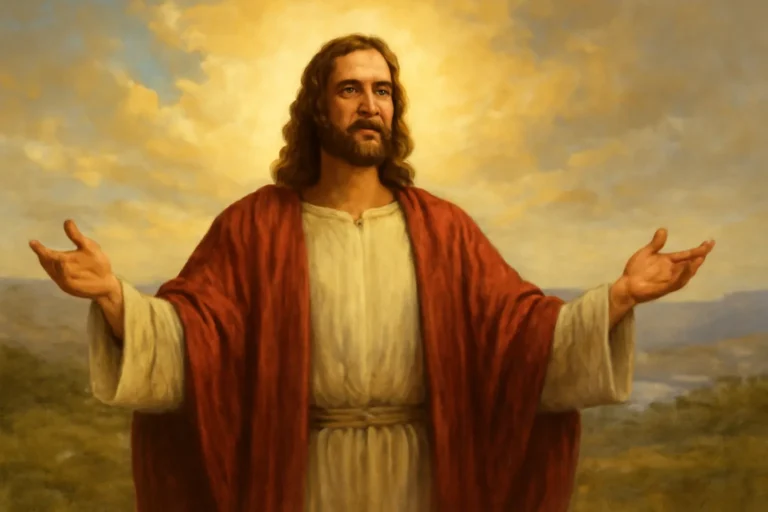
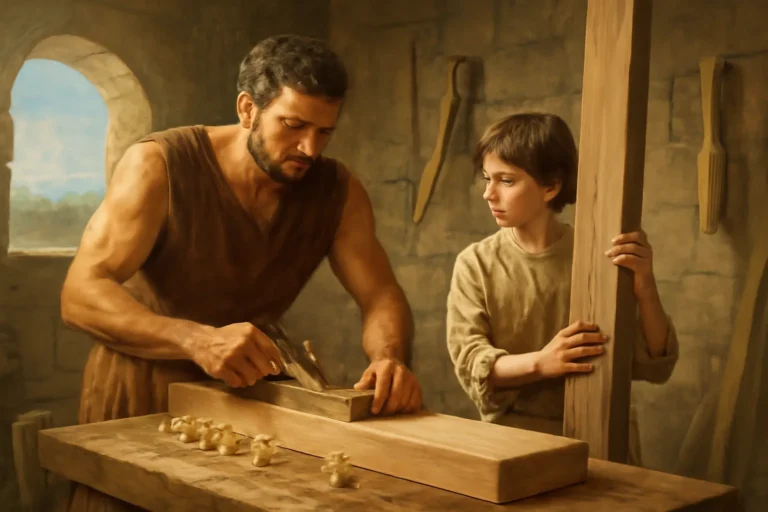
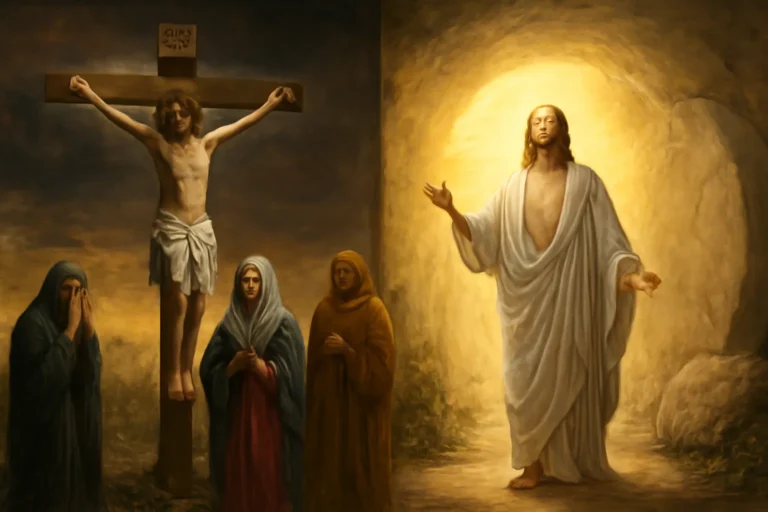
Several moments are commonly offered as milestones in the Christian story: the humble birth of Jesus, often celebrated as the incarnation of the divine love; the adult ministry characterized by teaching, healing, and the challenging work of calling people to repentance and faith; the crucifixion, which is understood by believers as an act of atonement, sacrifice, and solidarity with human suffering; and the resurrection, which is interpreted as victory over death and as a sign of God’s promised new creation. In many traditions, the gospel proclamation — the good news that life can be transformed by divine grace — is the compass that directs worship, mission, and social action. This narrative offers not only a personal relationship with God but also a vision for the kind of world God intends: a world of justice, mercy, and peace.
Within this grand Christian story, several theological themes recur with persistent force. Incarnation proclaims that the divine can become truly present in human form. Atonement invites reflection on how human brokenness meets divine rescue. Redemption gestures toward transformation of individuals and communities who have wandered away from their vocation. Resurrection anchors hope in the promise that life can overcome death, and it invites believers to participate in the ongoing work of reconciliation in history and society. The narrative thus serves as a lens through which Christians evaluate ethics, politics, and culture, not merely as abstract propositions but as lived, communal practice.
In addition to the canonical story, many readers engage with its interpretive layers: the historical Jesus of Nazareth, the theological reflection of the church, and the enduring questions that arise when doctrine meets daily life. The term greatest story in this context has also been used to emphasize how the life of Jesus intersects with the long arc of biblical revelation: creation through covenant, promise through fulfillment, exile through return, and suffering through glory.
The Old Testament and the Canonical Arc
The biblical narrative that many call the greatest story ever told in its own right begins in the opening pages of the book of Genesis and extends through the prophetic voices and wisdom literature of the Hebrew Bible. This is a grand saga of a people chosen by God to embody a life oriented toward love of neighbor, justice, and worship that is rightly ordered. The arc moves from creation to covenant, from exodus to exile, and toward a renewed hope in restoration. While Christians read this material in light of the coming of Christ, Jewish readers understand it as the unfolding story of Israel’s vocation under the one God who reveals and judges with fidelity.
Major Milestones in the Canonical Arc
- Creation and fall: The opening chapters introduce God as the Creator and as a God who holds all things together with wisdom, order, and intention. The fall reframes humanity’s relationship with God, offering a problem that the rest of the story seeks to address.
- Abrahamic covenant: God calls a nomadic family and makes promises that set the trajectory for a people who will embody blessing to the nations. The thread of faith and trust in God becomes a defining characteristic of the narrative.
- Exodus and law: The liberation from Egypt, the crossing of the sea, and the giving of the law at Sinai establish a people who are theologized to live in covenant with their God, marked by worship, justice, and communal life.
- Conquest and settlement: The entry into the land promises a place where justice can be pursued, but it also reveals the tension of living within a complicated history of power, idolatry, and faithfulness.
- Davidic covenant and temple worship: The ideal of kingship as a sign of God’s reign on earth frames later expectations about the messianic hope and the future restoration of the people.
- Prophets and exile: Prophetic voices call the people back to fidelity, warn against injustice, and sustain hope amid exile and captivity, pointing toward future restoration and the coming of a messianic era.
- Return and renewal: A remnant returns to the land, rebuilds, and reclaims a sense of vocation, inviting communities to live as witnesses to the blessing of God in history.
One might describe this arc as a narrative of covenant faithfulness, a recurrent invitation to trust God in times of abundance and times of loss. In that sense, the greatest story of the Hebrew Scriptures is not merely about rules or rituals; it is about a people learning to orient their lives toward God’s justice and mercy, even when the world around them appears to be shifting or hostile. The canon thus provides a framework for interpreting human experience — creation’s beauty, suffering, exile, and the hope for restoration — and it invites readers to participate in a drama larger than themselves.
Theological Themes Across the Narrative
Across both the Old and New Testaments, and across Christian and Jewish readings, certain themes recur with meaningful force. These themes form the backbone of what many regard as the greatest story ever told in religious traditions: the drama of sin and grace, the promise of covenant, the movement toward redemption, and the expectation of an eschatological fulfillment in which injustice is judged and justice fully realized.
- Sin, fall, and longing: The awareness of brokenness is a precondition for recognizing the need for divine intervention and the possibility of renewal.
- Grace and mercy: A central claim in many theological systems is that divine love remains active even when human beings fail; this grace often becomes the ground for forgiveness and transformation.
- Prophecy and fulfillment: The voices of the prophets and the expectation of promised events help readers see history as directed toward a meaningful end, even when present circumstances are painful or perplexing.
- Incarnation and revelation: The belief that the divine can be encountered in human form or through human history expands the possibility of intimate relationship with the sacred.
- Cruciform justice and martyr-like mercy: In some traditions, the story includes a cruciform shape — suffering endured for the sake of others — interpreted as the revelation of ultimate love and justice.
- Hope and eschatology: The promise that pain and injustice will not have the last word motivates prayer, ethical action, and hopeful anticipation of a new creation.
These themes are not merely abstract ideas; they appear in liturgy, catechesis, sermons, and devotional practices. They invite believers to evaluate their own lives in light of a larger drama, to participate in acts of mercy, and to pursue justice in communities where the marginalized are cared for and where truth is pursued with humility and courage.
The Story as Metaphor and Instruction
Beyond the literal events recounted in scripture and sacred literature, the greatest narrative tradition employs metaphor, symbol, and parable to teach. The use of metaphor in spiritual formation allows readers to inhabit characters, to hear voices from the past, and to grasp moral and theological truths in ways that rational argument alone cannot achieve. Parables and allegories are instruments for shaping conscience and for guiding behavior in situations that require discernment, empathy, and courage.
Forms of didactic storytelling
- Parables: Short stories that illuminate moral choices, often turning conventional expectations on their head to reveal deeper truths about love, mercy, and justice.
- Apocthetic and apocalyptic literature: Narratives that use symbolic imagery to point toward ultimate realities, sometimes describing judgment and renewal in vivid, transformative ways.
- Allegory: Extended narratives in which persons and events symbolize deeper spiritual realities, offering a map for ethical decision-making and spiritual growth.
- Wisdom literature and proverbs: Short, memorable sayings and dialogues that train the senses for discernment, patience, and moral deliberation.
- Ritual and liturgy: Not merely private reading but communal memory and practice that embed the story into the rhythms of worship, fasting, feast, and daily life.
In classrooms and pulpits, as well as in monasteries, mosques, synagogues, and temples, the greatest tale is not kept in a locked cabinet but celebrated as instruction in virtue and as an invitation to imagination. It challenges hearers to act with courage, to extend hospitality to the stranger, to pursue truth with humility, and to participate in the healing of communities that suffer from division, poverty, or violence.
The Greatest Story in World Religions
Although the phrase greatest story ever told arises most often within Christian discourse in the Western world, other religious traditions also claim a central, unifying narrative that answers the deepest questions of human existence. When we speak of the grand saga in a global context, we encounter a diverse set of sacred stories that speak to a shared longing for meaning, justice, and transcendence. The aim here is not to flatten differences but to acknowledge the richness of each tradition’s narrative architecture and its contribution to the human conversation about God, destiny, and virtue.
Hindu narratives: the Ramayana and the Mahabharata
In Hinduism, two great epics function as foundational stories that shape ethics, duty, and the meaning of life. The Ramayana offers a drama of virtue, fidelity, and righteous leadership embodied in the life of Rama. It presents the ideal of a king whose rule brings peace and whose personal virtue becomes a model for society. The Mahabharata, including the Bhagavad Gita, expands the inquiry to questions of duty, justice, and the moral complexity of righteous action in a world where conflicts and ambiguity persist. These narratives are not only entertainment; they are interpretive tools that guide readers toward dharma — living in harmony with cosmic order and ethical responsibility.
Islamic storytelling: the Qur’anic narratives and prophetic biographies
In Islam, the Qur’an presents a series of narratives about prophets such as Adam, Noah, Abraham, Moses, and Jesus, seen through the lens of monotheism and covenantal responsibility. These stories are treated as guidance for life, revealing both the mercy and the justice of God and emphasizing submission to God’s will (umma), justice, mercy, and care for the vulnerable. The life stories of prophets and the events of revelation are part of a cohesive narrative of divine guidance that the community is invited to live out in daily worship, ethical conduct, and social responsibility.
Jewish storytelling: covenant, exile, and return
In Jewish tradition, the biblical canon and later rabbinic writings offer a storytelling discipline oriented toward *tikkun olam* (repair of the world) and the sanctification of daily life. The parables, legends, and midrashic expansions create a living narrative that interprets law and history as a school of moral imagination. The enduring question — how to live under God’s sovereignty while bearing the burdens of exile and diaspora — remains a central preoccupation of Jewish interpretation and spiritual practice.
Other traditions and global storytelling
Many Buddhist, Sikh, Jain, and native religious traditions also offer narratives that function as moral and metaphysical maps for communities. The Jataka tales in Buddhism present the Buddha’s past lives as training for virtue; the Sikh tradition emphasizes the living memory of the Guru Granth Sahib as a guide to ethical action and spiritual devotion; indigenous traditions often weave cosmology, ancestral memory, and practical wisdom into stories that ground people in place and community. Collectively, these stories contribute to a global sense that the greatest tale is a universal story about meaning, responsibility, and hope that crosses borders and languages.
In modern classrooms, houses of worship, and public discourse, the greatest story ever told continues to be a central reference point for education, ethics, and interfaith dialogue. Teachers, theologians, and Bible and Qur’an scholars alike remind students that stories are not merely old texts but living conversations with the past and with each other. This is why many educators emphasize hermeneutics — the art and science of interpretation — so that readers might encounter the narratives with historical awareness, literary sensitivity, and theological discernment.
Interfaith dialogue and mutual understanding
- Storytelling as bridge: Narrative sharing helps communities recognize shared values while respecting differences.
- Ethical literacy: By examining how different traditions approach justice, mercy, and human dignity, learners develop a more nuanced moral vocabulary.
- Strategic imagination: Readers are invited to imagine themselves within the story’s arc, which can foster empathy and transformative action in the world.
In worship settings, the greatest tale is celebrated through liturgical seasons, feasts, and rituals that keep memory alive. Shared liturgy, whether in the form of Advent and Christmas, Passover and Shavuot, Eid and Ramadan, or Vesak and Paryushana, cultivates a sense of time as a sacred story with the potential to renew individuals and communities. The didactic aim is not simply to memorize events but to internalize values such as hospitality, care for the vulnerable, honesty, and perseverance in the face of oppression.
A Comparative Reading: What unites and what distinguishes the greatest stories?
Across traditions, several common features emerge that signal the potency of the greatest stories ever told. Yet there are also important distinctions that illuminate unique religious identities and their ethical grammars. A balanced, respectful approach acknowledges both unity and difference, inviting readers to learn from other faiths without erasing their own commitments.
- Shared questions: Why does evil persist? What is the source of life and joy? How can human beings be reconciled with the divine and with each other?
- Shared aspirations: Justice for the poor, mercy for the marginalized, truth-telling, and courage in the face of despair.
- Distinctive frames: Each tradition frames salvation, liberation, or enlightenment in ways that reflect its particular history, language, and ritual imagination.
- Textual and communal memory: The power of a story comes not only from a text but from the community that reads it, prays it, sings it, and acts upon it in the world.
In exploring the greatest story ever told across diverse religious landscapes, readers learn to honor the integrity of each tradition while recognizing the shared human longing that makes a narrative so compelling. This approach does not require erasing differences; rather, it invites a deeper listening that can enrich one’s own faith and foster mutual respect in pluralistic societies.
Conclusion: The enduring power of story in faith
In every culture and at every scale — from personal devotion to institutional theology — the classic phrase greatest story ever told has become more than a label. It is a living invitation to encounter the divine, to wrestle with moral complexity, and to participate in the ongoing work of repairing the world. The narratives examined here demonstrate that a great story is not a finished monument but a dynamic, transformative conversation. Whether approached as history, myth, allegory, or prayer, the richest tales remind communities that they are part of something larger than themselves — a movement toward truth, justice, and compassion that transcends time and place.
As readers continue to encounter these stories, they encounter questions that do not have simple answers, yet they gain access to a language capable of naming longing, offering consolation, and motivating action. The greatest tale, in its many forms, teaches that life is not a solitary voyage but a shared pilgrimage in which memory becomes guidance, prayer becomes courage, and action becomes grace. In that sense, the greatest story ever told is not finished; it remains a living scripture for each generation, inviting readers to discover anew what it means to live faithfully, wisely, and with love in a world that continues to search for meaning.