
The Abrahamic Covenant stands as one of the most influential and debated theological constructs in the religious landscape. It is not a single document or a single event, but a complex and layered *divine promise* that unfolds across biblical narrative, ethical reflection, liturgical practice, and interfaith dialogue. This long-form examination surveys the covenantal promises God made to Abraham and to his descendants, tracing its biblical contours, theological implications, historical interpretations, and enduring relevance for faith communities today. It seeks to illuminate how the Abrahamic covenant—often described in shorthand as the covenant with Abraham—shaped identity, hope, and praxis in Judaism, Christianity, and Islam, while also inviting thoughtful reflection on its reception in contemporary theology and ethics.
Overview and Significance of the Abrahamic Covenant
At its core, the Abrahamic Covenant is about divine promises made to a particular individual and, through that person, to a people and a purpose in history. The terms of this pact are not merely transactional; they express a vocation, a relationship, and a vision for the world in which God’s governance would be recognized and experienced by humanity. The covenant with Abraham is frequently described as having three primary axes: a land promise, a promise of offspring or descendants, and a blessing that would extend beyond Abraham’s immediate circle to all nations. While the language is genealogical and territorial, the deeper texture is theological and cosmic: God’s sovereignty, faithfulness, and intention to redeem, renew, and bless creation.
Within Jewish, Christian, and Islamic traditions the covenantal framework is foundational. In Judaism, the passage from God to Abraham is often read as a testament to election and responsibility—the call to bear certain ethical and ritual obligations as a community that inherits the land and embodies God’s law. In Christian readings, the covenant with Abraham is frequently interpreted as a precursor and a sign of the Gospel, pointing toward inclusion of Gentiles and fulfillment in the person and work of Jesus Christ. In Islamic tradition, the narrative of Abraham (Ibrahim) is celebrated as a model of submission to the one God, with the covenant framed in terms of obedience, faith, and the monotheistic renewal of previous revelations. Across these voices, the Abrahamic covenant with God is seen as a living conversation between the divine will and human history.
The Narrative Context: Abraham in the Biblical Timeline
Patriarchal Setting and Arrival in the Promised Land
The story of the covenant begins in a patriarchal world in which God calls a single man, Abram (renamed Abraham later in the narrative), to leave his homeland and go to a place that God would show him. This is more than an ethnic or geographic relocation; it is a transformative moment in which the divine vocation reframes the meaning of life, lineage, and belonging. The call is not arbitrary; it arises from a divine initiative, a benevolent intention toward a world that God anticipates in need of blessing and justice.
Key Episodes That Shape the Covenant
Several pivotal episodes anchor the covenantal drama:
- The call of Abraham and the promises that God declares to him, emphasizing land, seed, and blessing.
- A series of bilateral assurances in which God confirms the terms of the covenant, sometimes in expanding dimensions as faith is tested.
- Signaling moments, such as circumcision in later chapters, that translate promise into practice and identity.
- Interactions with other peoples and nations that reveal the universal scope of the divine plan—blessing that reaches beyond the immediate family to the world.
The Threefold Promises: Land, Descendants, and Blessing
The threefold structure of the Abrahamic covenant with God has been a focal point for theological reflection across the ages. Each component bears its own weight and echoes across biblical texts, liturgical practice, and interpretive traditions.
- Land – The promise of a homeland is frequently understood not merely as a piece of real estate but as a locus of spiritual life, communal integrity, and national vocation. In Genesis, the land of Canaan serves as the tangible expression of God’s faithfulness and a stage for the unfolding drama of salvation history. Yet the land is also tied to consequences: obedience to the divine will is often correlated with stability and flourishing, while disobedience correlates with dispersion and judgment.
- Descendants – A multitude of descendants signals that God’s blessing is not a private gift but a communal and generational blessing. The phrase “you shall be a father of many nations” (Genesis 17:4) places Abraham at the center of a widespread lineage. The count of offspring becomes a test of faith, and the promise of descendants is sometimes framed against the human reality of barrenness, inviting a trust that transcends immediate appearances.
- Blessing to all nations – The covenant with Abraham is not secured for the sake of one family alone but for the healing of the world. Abraham’s descendants are called to be a channel for divine blessing that extends to every people. This universality is expressed through blessings administered not only in a national sense but also in ethical and spiritual terms that invite all humanity to participate in the divine life.
In many readings, the triadic framework culminates in a sense of teleology: the divine plan unfolds through history to bring healing, justice, and peace to creation. The expansive vision invites readers to see their own time as a place where the ancient promises might be reinterpreted, re-embodied, and renewed in fresh ways while remaining rooted in the original commitments of the covenant with Abraham.
The Sign of the Covenant: Circumcision and Other Signs
One of the most distinctive features of the covenantal life in the Genesis narrative is the practice of circumcision as a sign. God commands Abraham and his male descendants to circumcise as a physical, visible reminder of the covenantal relationship. This sign serves several functions: it confesses a communal identity, marks a boundary of acceptance into the covenant community, and initiates a rhythm of regular remembrance.
Beyond circumcision, the covenant includes ritual and ethical dimensions that shape daily life. The moral and liturgical structures that emerge from the covenant narratives become the substrate for later laws, prayers, and pastoral guidance. The sign becomes a mnemonic device—an embodied reminder that the people belong to God’s purposes in history.
Different traditions interpret the sign of the covenant in nuanced ways. In Judaism, circumcision is a central rite of passage (brit milah) that maintains continuity with the biblical past while anchoring Jewish identity in the present. In Christian interpretations, the sign can be read typologically as pointing beyond a physical ritual to a spiritual reality—an indication of God’s faithfulness fulfilled in Christ and in the spiritual inclusion of all who participate in the covenant through faith. In Islam, the Abrahamic figure is revered, and while circumcision is practiced in many Muslim communities, the covenantal idea is often framed within the broader monotheistic fidelity to the one God demonstrated by Ibrahim’s submission and obedience.
Interpretations Across Traditions
Across religious traditions, the covenantal promises have elicited a spectrum of interpretations and implications. The following sections summarize some of the dominant lines of thought in Judaism, Christianity, and Islam, while noting some shared questions that surface in interfaith dialogue.
Judaism: Election, Law, and Land
In Jewish readings, the covenant with Abraham is often tied to the emergence of Israel as a people chosen for a special relationship with God. This election carries with it responsibilities—obedience to the Torah, observance of commandments, and justice in communal life. The land promise becomes a focal point of national memory and eschatological hope, while the blessing is understood as a vocation to be a light to the nations through righteous living, hospitality, and repentance. The covenant is not merely a personal pledge; it is a public, communal trust that grounds identity and destiny.
Christianity: The Fulfillment and Inclusion
Christian exegesis tends to read the Abrahamic covenant in light of the gospel. The promises to Abraham are often interpreted as foreshadowing the universal mission of the church, including Gentiles in the promise of blessing. Key New Testament texts—most notably in Paul’s letters—emphasize faith as the vehicle of righteousness and argue that the blessing promised to Abraham is realized through faith in Christ. The land motif shifts in Christian readings toward a new heaven and new earth, while the blessing transcends ethnic or geographic boundaries, inviting all nations to participate in the covenant community by faith and adoption as children of God.
Islam: Ibrahim, Submission, and Monotheistic Renewal
In Islamic tradition, the stories of Ibrahim (Abraham) and his family are celebrated as exemplars of submission to God (Islam). The covenantal idea is often framed in terms of the oneness of God, obedience, and the lineage that includes the Prophet Muhammad as a continuing line of prophetic guidance. Though Islamic thought does not view the covenant in the same legalistic or territorial terms as some Jewish or Christian readings, it nonetheless regards Abraham as a model of faithfulness and a link in a chain of revelations that culminates in a comprehensive monotheism for humanity. The covenant is thus understood as a spiritual and ethical covenant—enjoining fidelity to God and service to humanity.
Theological Themes and Concepts
The Abrahamic covenant with God raises several theological themes that recur across biblical and theological literature. These themes invite careful reflection on how divine promises intersect with human agency, suffering, and the drama of history.
Faith, Righteousness, and Covenant Faith
A central question concerns how humans enter into the covenant relationship. Faith plays a decisive role in many interpretations as the means by which individuals participate in God’s promises. The narrative arc emphasizes that trust in God’s promises, even when circumstances are implausible, becomes the ground of righteousness. This trust is not a mere interior belief; it expresses itself in courageous obedience, ethical action, and willingness to respond to God’s calling in concrete ways.
Land as Theological Space
The land in the covenant with Abraham is not simply a location; it is a theological symbol—a space in which divine promises are to be made visible, enacted, and tested. The land becomes a stage for the drama of blessing, where justice, hospitality, and prayer are tested. The movement into and out of land, as described in the biblical narrative, mirrors a larger spiritual journey: exile and return, dispersion and restoration, transformation and memory.
Blessing as a Mission to the Nations
The universal dimension of the covenant emphasizes that God’s blessing is not exclusive to the immediate lineage. Rather, the covenant is meant to function as a channel through which blessing extends to all peoples. This universal horizon has had a profound influence on humanistic and ethical reflections, contributing to interreligious dialogue and the idea that religious faith can serve as a force for peace, justice, and common good when articulated in ways that honor human dignity.
The Covenant’s Reception in the New Testament
In Christian theology, the Abrahamic covenant often becomes a key interpretive lens for understanding the relationship between Israel, Gentiles, and the church. The way the New Testament reinterprets this ancient covenant illuminates both continuity and transformation in the gospel message.
Pauline Reinterpretation: Faith as the Vehicle of Promise
Paul’s letters argue that the blessing promised to Abraham is realized not through outward markers alone but through faith in Jesus Christ. This reading reframes the covenant’s applicability, making it inclusive of non-Israelite peoples who trust in God. For Paul, the promise becomes a matter of spiritual lineage, where believers are counted as children of Abraham not by ritual enumeration but by trust, grace, and the living presence of the Spirit. This interpretation raised questions about the relationship between the Mosaic law and the Abrahamic promises, inviting ongoing debate about how law and gospel relate in the life of faith communities.
Jesus and the Fulfillment of Promises
In the Gospels, Jesus’ life and ministry are often read as fulfillment of the long arc of the Abrahamic promises. The portrayal of Jesus as the bringer of blessing to all nations resonates with the covenant’s universal dimension. Christian readers who emphasize the new covenant see Jesus not as abolishing the Abrahamic covenant but as fulfilling and deepening its significance—turning a historical-national promise into a cosmic invitation to participate in God’s reign of righteousness and peace.
Historical and Critical Perspectives
Modern scholarship engages with the Abrahamic covenant in ways that blend historical analysis, literary study, and theological reflection. Various approaches illuminate how the text emerged, how its promises intersect with ancient Near Eastern treaties, and how later interpreters reframed its meaning in response to historical circumstances.
Historical-Critical Readings
Scholars examine the covenant narratives for their sources, redaction, and historical setting. Some consider the language of covenant-making in Genesis to reflect typical ancient treaty patterns, while others emphasize the theological and ethical innovations that the text models as it moves from Abraham to Isaac, Jacob, and beyond. These studies often explore how land promises, fertility motifs, and lineage narratives function within the broader social and political landscapes of the ancient world.
Textual and Canonical Considerations
The Abrahamic covenant sits at the intersection of multiple scriptural layers. In Jewish and Christian canons, the narrative is woven through Genesis and into the later prophetic and wisdom literature, while in Islamic tradition, the Ibrahim story is integrated into the Qur’anic corpus with its own rhetorical and doctrinal emphasis. The study of how these canons situate the covenant within their respective theological systems highlights both shared roots and divergent conclusions about salvation, law, and divine loyalty.
Ethical Implications and Identity Formation
The covenantal promises have profound ethical implications for how communities conceive of justice, neighbor-love, and social responsibility. The Abrahamic covenant with God shapes identity in ways that matter for contemporary religious ethics, public theology, and interfaith relations.
Community Boundaries and Hospitality
On one hand, the covenant creates a people with specific responsibilities, including ritual practices, ethical norms, and expectations of communal fidelity. On the other hand, the universalist strand reframes this boundary as an invitation to hospitality and blessing toward all peoples. The tension between particularity and universality is a persistent theme in the religious imagination around the covenant.
Land, Justice, and Human Flourishing
The land promise raises enduring questions about justice, stewardship, and the use of territory. In modern ethical discourse, interpretations of the land covenant are often balanced with concerns about indigenous rights, refugee movements, and the responsibilities that accompany dominion over a land. The biblical witness invites readers to imagine a vision of settlement that is guided by justice, mercy, and peace rather than conquest or exclusion.
Faith, Works, and Righteousness
The debate over faith and works—how one participates in the covenant—has influenced Christian theological articulation profoundly. While some traditions emphasize faith as the primary vehicle of inclusion, others stress the importance of righteous living, social ethics, and communal integrity as the concrete expression of covenant fidelity. Jewish ethical reflection likewise foregrounds covenantal obligation as a daily practice that shapes law, ritual life, and social responsibility.
Practical Theology: Liturgy, Practice, and Devotion
The covenant with Abraham is not only a text to be studied; it is a pattern that informs worship, ritual practice, and spiritual formation. Across traditions, distinct practices echo the covenant’s themes—ritual remembrance, prayer for blessing, and acts of justice and hospitality.
Liturgy and Prayer
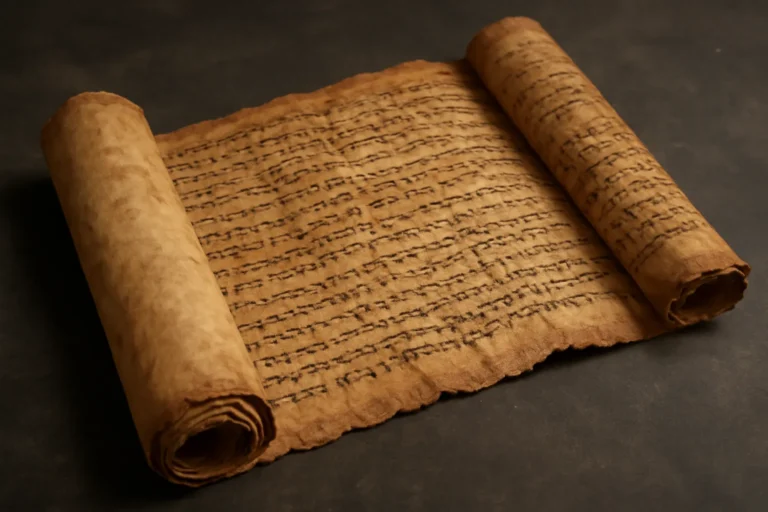
- In Jewish practice, prayers and readings in the Torah scrolls anchor the covenant narrative in daily life. The remembrance of God’s promises informs blessings, repentance, and gratitude in worship settings.
- In Christian liturgy, the narrative of Abraham often informs sermons, hymns, and readings that highlight faith, trust, and the fulfillment of promises through Christ. The idea of blessing and mission is reframed within the context of the church’s mission to the nations.
- Islamic devotion honors Ibrahim as a model of submission. Prayers and reflections about monotheism, obedience, and righteousness echo the covenantal ethos in a distinctly Muslim pattern of worship.
Ritual Life and Community Identity
Beyond formal liturgy, the covenant shapes everyday life. Blessings over meals, rites of passage, naming traditions, and communal hospitality all participate in the ongoing formation of identity as people who stand in relationship to the one God who makes and keeps promises. Even in diasporic communities, the memory of the Abrahamic covenant provides a grounding for intergenerational continuity, ethical education, and shared purpose.
Future Eschatology and Fulfillment
Many readers wrestle with how the Abrahamic covenant points toward the future. Different eschatological visions interpret the promises in light of divine sovereignty, human responsibility, and cosmic renewal. Three strands are particularly salient:
- Continuity with blessing — The blessing to the nations remains a central telos, inviting a future where God’s rule is acknowledged and enacted in justice and peace.
- Land in a renewed context — Some readings anticipate a restored land or a transformed understanding of land that is orientated toward healing, reconciliation, and the inclusion of all peoples who revere the one God.
- Fulfillment in Christ and the Spirit — In Christian interpretation, the covenant’s fullness is realized in the person and work of Jesus, and in the ongoing life of the Spirit within a community that embodies faith, hope, and love to a broken world.
How the Covenant Shapes Historical Memory and Identity
The covenantal memory of Abraham has left an imprint on literary, architectural, and cultural expressions across centuries. The promise of land, descendants, and blessing has inspired narratives of exile and return, migrations and settlements, and ongoing conversations about national identity and religious vocation. In diaspora communities, the Abrahamic covenant offers a memory scaffold that connects past commitments to present-day aspirations for justice and peace.
Contemporary Reflections and Interfaith Dialogue
In the modern era, scholars, theologians, and religious leaders engage with the Abrahamic covenant as a living tradition that speaks to questions of pluralism, ethical responsibility, and the integrity of religious belief in a diverse world. Interfaith dialogues around the covenant often explore shared moral commitments—hospitality to strangers, care for the vulnerable, and the pursuit of peace—while acknowledging differences in how the promises are understood and applied. The covenant thus becomes a forum for mutual learning, where the varied expressions of Abrahamic faiths contribute to a richer conversation about God’s purpose for humanity and creation.
Conclusion: The Living Covenant
In sum, the Abrahamic covenant with God—as it unfurls across biblical narrative, theological interpretation, and practical life—presents a robust framework for understanding God’s dealings with humanity. It is a covenant that invites trust in God’s promises, courage in the face of uncertainty, and a commitment to justice and blessing in concrete action. It is also a living conversation, not an antique relic, with new questions arising in each generation about what it means to belong to God, to live faithfully, and to work for a world where the divine intention—peace, justice, and wholeness for all creation—gradually takes shape. Whether understood through the lens of Judaism, Christianity, Islam, or secular inquiry, the covenant with Abraham remains a watershed in sacred history—an enduring call to remember, to believe, and to participate in God’s grand project of blessing all nations through a relationship grounded in faith, hope, and love.
Appendix: Glossary of Key Terms
- Abrahamic Covenant — The divine promises made to Abraham concerning land, descendants, and blessing.
- Covenant with Abraham — The direct, personal pledge God makes to Abraham and his heirs.
- Circumcision — The sign of the covenant in the male for Abraham’s descendants.
- Descendants — The offspring and progeny promised by God as a blessing to Abraham.
- Land of Canaan — The promised territory associated with the covenant’s territorial dimension.
- Faith — Trust in God that grounds righteousness and enters one into the covenant community.
- New Covenant — A Christian concept that reinterprets the old covenant in light of Christ’s work and the Spirit’s presence.
- Ibrahim — The Arabic form of Abraham, central in Islamic tradition.
- Patriarchs — The founding fathers of Israel in the biblical narrative, including Abraham, Isaac, and Jacob.
Note: This article presents a broad, cross-traditional panorama of the Abrahamic covenant with God. Readers are encouraged to consult primary scriptures and commentaries within their own faith communities to explore the nuanced theological positions that arise from different interpretive communities and historical circumstances.