
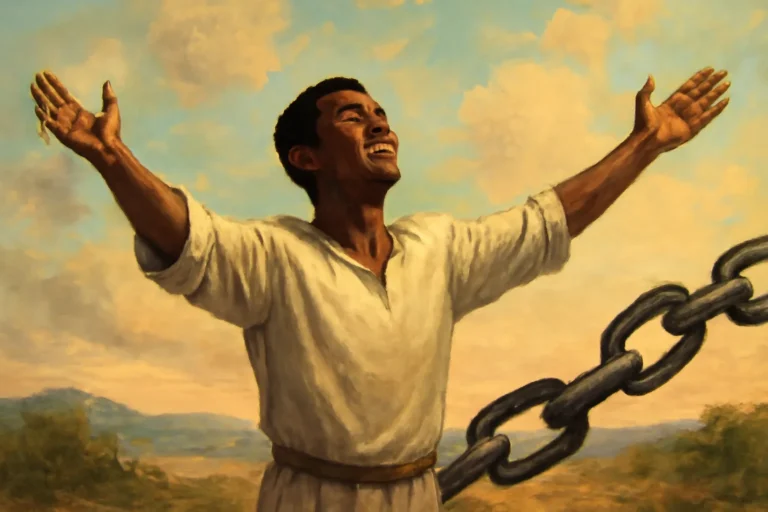
The phrase “The Truth shall set you free” resonates beyond a single verse and becomes a lens through which countless generations have sought to understand freedom in relation to God, humanity, and the moral order. In Christian thought, truth is not merely a proposition to be affirmed; it is a person to be encountered, a divine gift that unveils reality, liberates conscience, and invites faithful action. This long-form article surveys the biblical foundations and theological explorations surrounding freedom in the light of truth. It integrates informational, interpretative, educational, and devotional perspectives to illuminate how the biblical narrative wrestles with liberation, identity, and responsibility.
The Phrase and Its Context
In the Gospel of John, the saying about truth and freedom emerges in a charged conversation between Jesus and a group of listeners who claim lineage from Abraham. The background is not merely doctrinal debate; it is a struggle over who can live as a free person under God in a world marked by power, law, and fear. The immediate context centers on a declaration that invites self-examination: you will know the truth, and the truth will set you free. This is not a promise of effortless ease; rather, it is a summons to align one’s life with reality as God intends it.
John 8:32 and the Dynamics of Liberty
- Knowledge as liberation: The knowledge of truth illuminates the path of obedience and integrity rather than mere assent to a doctrinal system.
- Freedom from bondage: The bondage mentioned is often understood as slavery to sin, fear, or self-deception, rather than political autonomy alone.
- Contrasting responses: Some listening hearts resist truth, while others embrace its clarifying power, setting the stage for a lifelong journey toward righteousness.
Two complementary strands emerge from the dialogic atmosphere: a call to know truth and a call to live the truth. The one who speaks truth is not a mere teacher of facts; truth is relational and transformative, inviting disciples to reorient every dimension of their existence around divine reality. The result is liberty of conscience and a renewed capacity to love God and neighbor with sincerity and courage.
The Word Truth in Biblical Language
To appreciate the scope of liberation implied by truth, it helps to understand how the biblical authors conceive truth. In Hebrew, the word emet carries meanings that span fidelity, reliability, steadfastness, and moral integrity. In Greek, aletheia conveys not only the absence of deception but the uncovering of what is real and true. When these terms meet the Johannine claim about liberty, the result is a robust anthropology: human beings are designed to live in alignment with God’s truth, and that alignment produces freedom from self-deception and from the power structures that distort reality.
Think of truth as both a divine attribute and a practical vocation. Truth-telling is a virtue that protects relationship, sustains community, and safeguards the vulnerable. Truth-telling also guards the conscience against becoming an instrument of oppression, whether by coercive authority, cultural pressure, or personal pride. In this dual sense, truth is not only propositional but performative: it orders the way we live and the choices we make.
The Nature of Freedom in Biblical Thought
Freedom in Scripture is not a one-size-fits-all concept. It encompasses several interrelated dimensions, each bearing on how a person or a community relates to God, others, and creation. Here are several cardinal facets of biblical freedom, with attention to how they enrich one another when read together:
- Liberation from bondage to sin: The biblical story frames sin as a form of bondage that distorts the will and estranges the person from God. Truth exposes this bondage and invites repentance, renewal, and the capacity to choose obedience.
- Liberation from fear and bondage of law: Freedom involves living beyond fear-induced compliance and beyond a merely external observance of rules. The Spirit enables inner reform that fulfills the law’s deeper purposes.
- Liberty for authentic worship: Freedom includes the right and responsibility to worship God in spirit and truth, without coercive or manipulative practices that obscure genuine devotion.
- Liberty of conscience and moral agency: Individuals are invited to discern and follow God’s will, educated by Scripture and wisdom, yet accountable for their choices.
- Freedom within community: Liberties are not isolated; they are exercised within communities governed by love, justice, and accountability.
These dimensions are not contradictory but reciprocal. For example, freedom from fear reinforces freedom to love, and freedom to love deepens one’s capacity for truthful discernment. A robust biblical anthropology treats freedom as deliverance toward responsibility rather than mere license to pursue self-interest.
The New Covenant and Freedom
The New Testament depth of freedom centers on the person and work of Jesus as the liberating Messiah. The refrain “for freedom Christ has set us free” (Galatians 5:1) anchors a sustained meditation on grace, faith, and transformation. Yet freedom in this sense is never trivial; it is a dynamic gift that invites strenuous discipleship, ethical formation, and mission.
Freedom in Christ as Gift and Task
The apostle Paul emphasizes that true liberty is rooted in emancipation from the power of sin and a liberated allegiance to Christ. The paradox is striking: freedom requires discipline because it is oriented toward loving obedience. The freedom Christ provides is not emancipation from moral obligation but deliverance into a life shaped by love, service, and hope.
Two biblical principles illuminate this paradox:
- Liberty as emancipation from guilt, not emancipation from responsibility.
- Law as tutor that leads to Christ, so that liberty is anchored in relationship rather than mere rule-keeping.
In Galatians 3 and 4, the law’s function as a temporary tutor is explained, and the reader is invited to embrace the freedom of the Spirit. The freedom discussed here is not a negative freedom from obligation; it is a positive freedom toward love that mirrors the character of God.
Jesus also announces a mission that heightens freedom from oppression and injustice. The prophetic fulfillment in Luke 4:18–19 echoes Isaiah’s vision of release: the oppressed shall be set free, the brokenhearted comforted, and the year of the Lord’s favor proclaimed. In this sense, the truth about Jesus is inseparable from a liberating mission that seeks justice and spiritual renewal for communities in need.
Interpretive Traditions on Freedom
Across Christian traditions, freedom is understood through the same biblical core while reflected through the unique contours of historical experience and doctrinal emphasis. The following sketches illustrate how different streams have framed liberty under God’s truth:
- Roman Catholic and Eastern Orthodox Perspectives: Freedom is rooted in union with Christ and participation in the life of the Church. It involves freedom from sin through grace and freedom for service within a liturgical and communal framework. Freedom is sanctifying, oriented toward maturity in virtue and charity.
- Protestant and Evangelical Perspectives: Emphasis on justification by faith and the transformative work of the Holy Spirit. Freedom is liberation from the burden of legalistic righteousness and the tyranny of fear, enabling a conscience exercised by Scripture, preaching, and personal encounter with the risen Christ.
- Anglican and Confessional Traditions: A balance between the authority of Scripture and the community’s discernment through tradition, reason, and experience. Freedom is lived out in worship, reform, and social responsibility, always measured by love for neighbor and fidelity to the gospel.
Each tradition contributes a distinct note to the symphony of freedom: from the discipline of holiness to the mercy that attends justice; from doctrinal clarity to pastoral care; from liturgical depth to the boldness of mission. Yet all converge on the conviction that truth as apprehended in Christ produces the liberty that enables vibrant faith and humane living.
Freedom in Practice: Spiritual Disciplines and Ethical Life
Freedom in the biblical sense becomes tangible when it means more than an inward mood and more than a theoretical assertion. It takes shape in daily habits, communal norms, and moral decisions. The following practices commonly accompany an orientation toward truth and liberty:
- Confession and repentance: Truth-telling requires humility, courage, and accountability. Confession of sins illuminates reality, heals relationships, and removes the heavy yoke of deceit.
- Scripture-oriented discernment: Robust engagement with biblical texts equips believers to distinguish truth from error and to apply eternal principles to contemporary circumstances.
- Humility before the unknown: Liberty includes openness to correction, recognizing that one’s understanding is always partial and provisional.
- Liberative love in action: Freedom matures as it seeks the welfare of others, especially the vulnerable and marginalized.
- Worship as truth-telling: Worship rehearses the truth about God, the world, and the human vocation, shaping conviction and courage to live accordingly.
In practical terms, these disciplines nurture a life in which truth becomes a path you walk, not merely a doctrine you affirm. The result is a glad obedience that grows from gratitude for grace and the joy of responsible freedom.
Freedom, Truth, and Social Reality
Scripture’s vision of freedom extends beyond the individual to the social order. The prophetic and pastoral voices repeatedly connect spiritual liberty with social justice, care for the vulnerable, and the integrity of institutions. The idea that the truth should shape society is not a modern invention; it emerges as part of a biblical expectation that communities align with God’s justice and mercy.
- Truth as a constraint on oppression: When truth is lived, it guards against tyranny and coercive control, inviting processes of accountability, transparency, and reform.
- Justice as a dimension of freedom: The freedom God intends is not merely personal emancipation but the creation of conditions in which persons can flourish in truth and love.
- Religious liberty and conscientious objection: The biblical claim that truth frees the conscience under God supports the right to seek and practice faith with integrity, within the boundaries of public peace and civic order.
- Compassion as evidence of truth: A faith that bears the truth will manifest itself in mercy, care for the poor, and the defense of human dignity.
In this light, the Christian account of freedom is inseparable from responsibility. Liberty without accountability degenerates into self-serving license; accountability without liberty degenerates into coercive control. The gospel seeks to hold these two in a fruitful tension, guiding believers toward a life of graceful truth that heals and unites.
The Truth Shall Set You Free in Worship and Community Life
Worship is an essential arena in which truth and freedom are formed and sustained. When communities gather around the truth of God’s revelation, their worship becomes a pedagogical and liberative practice. Confession, creedal affirmation, and communal discernment anchor believers in the reality of God’s presence, enabling them to face the moral complexities of life with courage and grace.
In the church, truth-telling is not merely about doctrinal accuracy but about honest self-examination, transparent leadership, and accountable ministry. A faith community that honors truth invites courageous conversations about power, privilege, and the ways in which systems can distort truth for personal or institutional gain. In this environment, freedom grows as truth fosters trust, fosters reconciliation, and sustains hope even in the middle of suffering.
Truth in Eschatology: Freedom Fulfilled and Hope Realized
Scripture also looks forward to an eschatological horizon where freedom becomes complete and universal in the presence of God. In the biblical narrative, liberation is not only a present experience but a future hope in which all things are reconciled, and truth is perfectly revealed. In this sense, the truth frees us toward ultimate hope, not simply immediate relief.
Three theological motifs help frame this horizon:
- Full revelation: In the age to come, the partial and progressive knowledge of truth will be perfected in the face-to-face presence of God.
- Perfection of love: Freedom is perfected as love governs all relationships—between creator and creature, and among creatures themselves.
- Restoration of creation: Truth and freedom are integral to the renewal of all things, in which justice, peace, and harmony prevail.
While Christians live with the tension of already-and-not-yet, the freedom of truth remains the present-possibility that shapes ethical choices, communal life, and personal witness. The Christian hope imparts a sturdy motive to persevere in truth-telling, even when it is costly, because the end to which truth points is a profoundly good and enduring reality.
False Freedoms: The Danger of Licensing and Deception
Not all avenues that claim to be freedom lead toward truth or life. The Bible warns against an unbridled license that uses the language of liberty to excuse harm, manipulation, or neglect of justice. In many ancient and contemporary contexts, people have justified cruelty or apathy by appealing to personal freedom or spiritual autonomy. The biblical critique is not against liberty per se but against a distorted liberty that abandons truth’s obligations to God and neighbor.
- Licentiousness masquerading as liberty: When freedom becomes a cloak for exploitation, it opposes the true liberty that empowers love and justice.
- Religious coercion hidden as truth: Authority that suppresses dissent or punishes honest questions fails the test of faithfulness to God, who calls believers into honest relationship and mutual accountability.
- Truth manipulated for power: When claims about truth are weaponized to maintain control, the liberating power of truth is betrayed by pride and nationalism, rather than expressed as a service to others.
Discernment, humility, and communal accountability help communities see through distortions. The Bible’s insistence on truth as a gift invites vigilance against manipulative tactics while inviting courageous, compassionate, and truthful witness in a broken world.
Truth and Moral Formation: The Transformative Power of the Gospel
The center of Christian hope rests in the person of Christ and the gospel’s power to transform lives. The liberating truth of the gospel does not merely address abstract beliefs; it reorients the entire person, reshaping desires, motivations, and actions. The transformation is both interior and social, starting in the heart and radiating outward into families, churches, and communities.
Key aspects of this transformative process include:
- Conviction of sin and conviction of grace: Truth exposes what is unhealthy, while grace awakens and empowers growth beyond shame and defeat.
- New identity in Christ: Freedom begins with the discovery that one’s deepest identity lies in being beloved by God, not in worldly success or failure.
- Character formation: Truth fosters virtue—humility, patience, mercy, integrity—and cultivates a life ordered around love for God and neighbor.
- Mission and witness: A truthful life bears witness to the gospel, inviting others into the liberating reality God offers.
In this sense, the truth is both a gift and a discipline. It is a gift because it comes from God’s gracious revelation; it is a discipline because it requires continual growth, repentance, and a willingness to rethink assumptions in light of Christ’s lordship.
Truth, Freedom, and the Mission of the Church
The church’s mission involves proclaiming, embodying, and testing truth in love. The apostolic testimony invites communities to be a sign and instrument of liberation in a world governed by fear, injustice, and ignorance. The church is called to:
- Proclaim the truth of the gospel, including God’s mercy, the reality of sin and judgment, and the hope of new creation.
- Demonstrate the liberating power of the gospel through acts of justice, mercy, and forgiveness that address real human need.
- Cultivate communities of truth and grace, where accountability, discipline, and spiritual care sustain the vulnerable and nurture maturity in faith.
In such a framework, freedom is not only a personal experience but a shared responsibility. Believers participate with Christ in reconciling all things to God, and they do so by living out the truth of the gospel in concrete relationships, institutions, and cultural engagement.
Practical Applications: Living as People of Truth and Freedom
The biblical call to freedom through truth translates into concrete daily practices. Here are practical pathways through which individuals and communities can embody liberty rooted in divine truth:
- Honest self-examination: Regular, prayerful reflection about one’s motives, beliefs, and commitments helps align life with truth.
- Scriptural literacy and interpretive humility: Engaging with the Bible in community, allowing cross-generational wisdom to shape interpretation, prevents distortions of truth.
- Righteous justice and mercy: Working toward just structures that protect the vulnerable reflects the social dimension of truth’s liberating power.
- Truthful leadership: Leaders who model transparency, accountability, and courage create environments where truth can be spoken and heard without fear.
- Peaceful reconciliation: Truth grants the courage to pursue reconciliation with humility, seeking healing for divisions that separate people from God and one another.
In education and catechesis, churches can emphasize the multi-layered aspect of freedom: theological (what we believe about God), ethical (how we act in light of those beliefs), and communal (how we live with and for others). A well-rounded formation fosters a robust discernment—the capacity to distinguish truth from error, love from coercion, and faith from superstition.
Truth in Public Life: Freedom and Religious Liberty
As believers participate in broader society, questions about truth and freedom surface in public discourse. The biblical vision of truth as a liberating force supports the protection of religious liberty, freedom of conscience, and the right to worship according to one’s convictions, provided that such expression does not infringe on the rights and safety of others. The interplay between truth claims and pluralistic contexts requires pastoral wisdom and principled discernment:
- Respect for conscience and the legitimate liberty to seek truth through reason, experience, and dialogue.
- Advocacy for the vulnerable and the promotion of justice as an outward expression of the gospel’s truth.
- Commitment to peaceable coexistence and the refusal to coercively impose beliefs on others, coupled with a courageous proclamation of the gospel.
In practice, this means churches can engage respectfully with diverse communities, contribute to ethical debates with integrity, and offer a compelling witness grounded in love and truth. The aim is not victory in argument but transformation through truth that heals, unites, and dignifies all human beings as bearers of God’s image.
Conclusion: The Ongoing Journey Toward Freedom in Truth
The biblical invitation to freedom through truth is a lifelong journey rather than a single achievement. The truth that sets people free is a person—Christ—whose life embodies mercy, righteousness, and faithful presence. The invitation remains open to all who wish to walk in the light of truth, to be formed by grace, and to participate with others in the ministry of liberation that the gospel envisions. As believers pursue truth, they discover deep-seated freedom—a liberty that transcends circumstance, a peace that passes understanding, and a hopeful confidence that, though the road is arduous, it leads toward the God who invites all to come and live in freedom, now and for eternity.
In summary, the truth shall set you free in multiple, mutually reinforcing ways: it liberates the will from bondage to sin, it purifies perception from deceit, it grounds ethical living in divine reality, it sustains a hopeful community, and it points toward the ultimate fulfillment of God’s redemptive plan. The truth is not merely a doctrine to be memorized; it is a living reality to be embraced, practiced, and shared with courage, generosity, and faith.