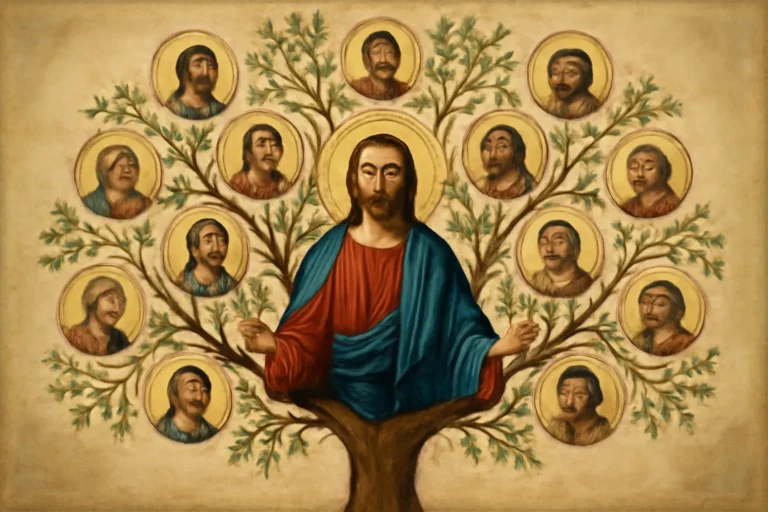

This article explores the theme of divine expectation and human history converging in a single life. It surveys the biblical narrative, theological interpretation, and practical implications of Jesus as the fulfillment of God’s long-awaited promise, often framed in Christian faith as the decisive turning point of history, salvation, and cosmic renewal. Across generations, believers have considered the coming of Christ to be not merely a biography but a grand event that redefines time itself and invites a response of faith, worship, and mission.
Understanding the Covenant Promise: From Abraham to the Messiah
To grasp the claim that the fulfillment of God’s long-awaited promise has come in Jesus, one begins with the biblical arc of God’s covenants and promises. The Old Testament presents a long trajectory in which God reveals a plan to bless all nations through a chosen people and a repeatedly promised ruler. This section surveys the core strands of that trajectory, offering a framework for why Christian authors would later describe the life of the Messiah as the decisive fulfillment of divine intention.
The covenantal roots: Genesis, Abraham, and the promise of blessing
In the opening chapters of the Bible, God calls Abraham and makes a promise that has ripple effects across history. God’s long-awaited promise to Abraham is not merely personal improvement; it is a vocation for a people whose role will bless the world. As the narrative unfolds, this promise interweaves with calls to trust, to live in righteousness, and to await a future fulfillment that would surpass anything humanly anticipated.
The Davidic strand: A throne, a homeland, and an enduring king
The promise to David introduces a royal dimension to the expectation: a throne that will endure, a king who will embody justice, peace, and steadfast love. The prophets imagine a day when this throne will be established forever, and a reign marked by righteousness will extend to all nations. In Christian reading, the coming of Jesus is not opposed to the Davidic hope but is understood as the historical moment when that royal vocation finds its embodiment in the Person of the Messiah.
Prophetic horizons: Isaiah, Jeremiah, Micah, and the harmonization of hope
Prophets like Isaiah, Jeremiah, and Micah speak of a suffering servant, a ruler who will shepherd with justice, and a light to the nations. Their words form a mosaic in which the promised one appears not simply as a conqueror but as a healer of brokenness and a bringer of liberation. In Christian interpretation, these prophecies are read as facets of one overarching arc: the arrival of God’s long-awaited promise in a single historical figure, Jesus.
The Nativity as the First Fulfillment
The birth narratives in the Gospels are often described as the initial, tangible manifestation of the fulfillment of God’s long-awaited promise. This section reflects on how the infancy stories function within the larger narrative of redemption and how they announce a new stage in salvation history.
Prophecy and incarnation: The sign of a virgin birth
In the Gospel tradition, the conception and birth of Jesus are framed as the fulfillment of prophetic expectation. The Gospel writers connect the event to passages such as Isaiah 7:14, presenting the birth of a child as a sign that God is actively fulfilling the dream of a restored relationship with creation. The phrase the fulfillment of God’s long-awaited promise appears in theological reflection when readers see how this birth inaugurates a new era of invitation, mercy, and kingdom presence.
Significance of place and people: Bethlehem and lineage
The setting—Bethlehem, the city of David—anchors the narrative in the Davidic horizon. The genealogical lineage tracing Jesus’ descent reinforces the claim that this birth is not arbitrary but a deliberate fulfillment of divine design. For believers, the combination of prophecy, place, and lineage signals that the promised one has entered history with particular purpose and authority.
Jesus as the Fulfillment of Prophecy in His Ministry
As Jesus enters public life, the question transforms from “Who is this one?” to “What is this person here to do?” The Gospel narratives present a ministry whose deeds, teachings, and signs are interpreted as the legitimate and definitive realization of God’s covenantal purposes. This section surveys how Christ’s ministry is framed as the realization of centuries of expectation.
Miracle signs and deliverance: Healing as restoration
One hallmark of the fulfillment claims rests in Jesus’ works of healing, exorcism, and restoration. Where pain, illness, and oppression have persisted, the presence of the Messiah brings mercy, freedom, and renewed community. In this sense, the fulfillment of God’s long-awaited promise is not merely future but already breaking into present reality through acts of compassionate power.
Teaching and proclamation: The Kingdom announced
Jesus’ preaching centers on the Kingdom of God, a reframing of reality around grace, justice, and reconciliation. The Beatitudes, the parables, and the authoritative interpretation of Scripture are read by many as the way in which the promised one makes God’s rule accessible. The claim that Jesus fulfills the prophetic program arises from the sense that his teaching embodies what the prophets anticipated: a right order between God, humanity, and creation.
Explicit statements of fulfillment in the Gospel narratives
Several Gospel passages explicitly link Jesus with fulfillment language. For instance, Gospel writers often note that certain events took place to fulfill what had been spoken by the Lord through the prophets. These texts are read as auditory evidence that God’s long-awaited promise is finds its precise realization in this historical figure, this itinerant preacher, this healer, and this teacher who calls people to respond in faith and discipleship.
Crucifixion and Atonement: The Center of the Promise
Many Christian theologians regard the crucifixion and resurrection of Jesus as the focal point of God’s plan to fulfill the long-awaited promise. The cross is not a tragedy to be endured; it is the climactic act through which forgiveness, reconciliation, and cosmic renewal become available to humanity. This section considers how the passion and cruciform love of the Messiah are interpreted as the definitive instrument of divine fulfillment.
Theological motifs: Atonement, substitution, and redemption
Across traditions, the atonement mystery is understood as the way in which God addresses human estrangement. The cross is anchored in the narrative of sacrifice and the biblical category of substitution, whereby Jesus bears the consequences of human brokenness so that God’s promise of restoration becomes accessible to all who believe. In this sense, the cross and resurrection are inseparable parts of the same single movement: the confirmation that the long-awaited promise has entered human history in a decisive, salvific act.
Fulfillment as fidelity: Faithful obedience to the Father
Jesus’ life is presented as a model of perfect fidelity to God’s will. The fulfillment of God’s long-awaited promise is not a matter of mere power but of trust, obedience, and self-given love. The crucifixion embodies that love in action, while the resurrection testifies to the ultimate triumph of life over death, a triumph that grounds hope for all creation.
Resurrection, Ascension, and the Outpouring of the Spirit
The events following the crucifixion—the resurrection and the ascension—are often described as the moment when the promise moves from hidden potential to public proclamation and empowerment. The outpouring of the Spirit at Pentecost is frequently understood as the ongoing, living, universalization of God’s long-awaited promise through the Church, the people of God, and the mission to all nations.
Resurrection as validation of the divine promise
For believers, the resurrection confirms that Jesus is not merely a teacher or reformer but the victorious Lord whose life conquers death. In this light, the resurrection serves as the ultimate sign that the fulfillment of divine promises is real, transformative, and reliable across generations and cultures.
Ascension and heavenly enthronement: A cosmic perspective
The ascension situates Jesus within a cosmic frame: exalted at the right hand of the Father, ruling and interceding, and preparing a place for believers. The ascension anchors the belief that the fulfillment of God’s long-awaited promise extends beyond a single life on earth; it involves ongoing mediation, hope, and the anticipation of the parousia—the return of Christ to consummate all things.
Pentecost and the Spirit-enabled church
One of the most transformative dimensions of the fulfillment narrative is the sending of the Holy Spirit. The Spirit empowers, unites, and guides believers as they bear witness to the promised one across linguistic, cultural, and geographic barriers. The outpouring is often described as the beginning of a new era in which the promise to be a blessing to all nations becomes an experiential, communal reality rather than a distant hope.
The Aftermath: The Mission and the Church
If the fulfillment of God’s long-awaited promise centers on Jesus, it also generates a mission that extends to communities around the world. The early Christian movement understood itself as the continuation of God’s work in the world, empowered by the Spirit and shaped by the witness of the apostles. In this sense, the life of Christ becomes a pattern for how communities live, learn, worship, and engage with neighbors and the poor, while staying rooted in the conviction that God’s promise remains active and personal in every era.
Great Commission: Proclaiming the fulfilled promise to every nation
The commission to go and make disciples of all nations reflects the expansive scope of the fulfilled promise. The Church is called to proclaim, teach, baptize, and model a life shaped by the values of the Kingdom. In contemporary terms, this means translating ancient truths into present-day action: justice, mercy, humility, and a radiant hope grounded in the life, death, and resurrection of Jesus.
Ecclesial life and the sacraments as signs of fulfillment
Within many Christian traditions, the Church’s practices—baptism, the Lord’s Supper, prayer, worship, and communal life—function as tangible signs of the living reality that the long-awaited promise has entered the world. These rites are not mere rituals; they are encounters with the grace that was achieved through Jesus and extended to the Church as an instrument of blessing for all creation.
Theological Reflections Across Traditions
Across centuries and confessional lines, theologians have wrestled with what it means to call Jesus the fulfillment of God’s long-awaited promise. While perspectives differ in emphasis, most traditions affirm a common core: Christ is the center of divine revelation, history, and destiny. This section highlights some of the key interpretive themes that have emerged in various Christian streams.
Christological continuity and the unity of the Covenant
Many theologians argue for a continuous narrative from Genesis to Revelation, in which Jesus stands within a divine plan that began long before his birth. The unity of Scripture supports a reading in which the old and new covenants are not opposed but are stages in the same story of God’s faithfulness to humanity. The concept of fulfillment, then, is not a break but a culmination—an intentional climax of God’s saving work through history.
Atonement theories and the scope of salvation
Different Christian traditions articulate the nature of the atonement in diverse ways—substitutionary, moral influence, Christus Victor, and others. Yet all converge on the conviction that the cross and resurrection reveal the depths of God’s love and the breadth of the promise fulfilled in Jesus. In theological reflection, the core claim remains: God’s long-awaited promise is realized most fully in the person and work of the Son, who draws creation back to its intended harmony with the Creator.
Ecclesiology and the church’s role in fulfillment
From a church-centered perspective, the community of believers is not merely a passive beneficiary of God’s promise but an active participant in its extension. The church, as the body of Christ, is commissioned to embody the values of the Kingdom, to care for the vulnerable, and to bear witness to the reality that the fulfillment of God’s long-awaited promise has personal and social dimensions. This makes ecclesiology—how the church is structured and functions—an essential lens on the ongoing realization of the promise in every culture and era.
Practical Implications for Believers Today
Beyond doctrinal formulations, the claim that Jesus is the fulfillment of God’s long-awaited promise has tangible implications for individuals and communities. This section offers practical reflections on how believers might respond, live, and participate in the ongoing story of redemption.
Faith as response to fulfillment
To encounter the promised one is to respond with trust, gratitude, and a life oriented toward love. Faith, in this sense, is not a private sentiment but a dynamic posture that shapes decisions, relationships, professions, and civic life. The realization of God’s long-awaited promise invites courage in the face of uncertainty and mercy toward those who are estranged or marginalized.
Hope in a broken world
The message of Christ’s fulfillment is a source of hope for individuals and communities enduring hardship, injustice, and division. When the gospel is proclaimed as the news that God’s long-awaited promise has come near in Jesus, it reorients desires toward peacemaking, reconciliation, and the repair of broken systems. The hope is not naive; it is a confident trust in the power of God to renew and restore creation.
Ethics and discipleship: Living out the promise
Discipleship involves practical steps—prayer, Scripture study, generosity, service, and mission. Followers of Christ are called to imitate him in humility, to serve others, and to work for justice grounded in mercy. This is part of the ongoing fulfillment involved in Jesus’ mission: to invite all people into a relationship with the living God and to shape communities according to the values of the Kingdom.
Liturgy, Creeds, and the Narrative of Fulfillment
The way communities worship and confess their faith often reflects the underlying conviction that the fulfillment of God’s long-awaited promise has happened in the past and continues to shape present practice. Liturgy, creeds, and sacraments serve as public testimonies to this conviction, weaving together memory, proclamation, and hopeful anticipation of future consummation.
Liturgy as memory and proclamation
Through weekly prayers, readings, and rituals, congregations remember the life and work of Jesus, celebrate the felt presence of the Spirit, and anticipate the return of the Son. In this sense, the liturgical life of the church becomes a disciplined practice of keeping faith with the history of God’s long-awaited promise.
Creeds as summaries of fulfillment
Historic creeds articulate succinct statements about who Christ is, what he has accomplished, and what it means for humanity. These confessions stand as durable witnesses that the narrative of God’s plan has not been abandoned but has been actively realized through the life of Jesus. They function as anchors for faith in every generation and culture, preserving the core truth that the divine promise was fulfilled in history and remains transformative for the present.
Sacraments and signs of the fulfilled promise
In many Christian traditions, baptism and the Lord’s Supper function as tangible signs of the fulfilled promise. Baptism signals entry into the new life inaugurated by Christ, while the table offers participation in the life, death, and resurrection of the Messiah. These sacraments are not mere ceremonies; they are means of grace that illuminate how the God’s long-awaited promise continues to draw people into a living relationship with God and with one another.
Variations in Emphasis Across Denominations
Across Christian communities, there are differences in emphasis and interpretation regarding the fulfillment narrative. Some traditions stress the cosmic and eschatological dimensions, while others emphasize personal conversion and social justice. Regardless of these differences, a common thread remains: Jesus is understood as the central fulfillment of God’s plan to redeem and renew all things. The phrase the fulfillment of God’s long-awaited promise thus appears in multiple tonal registers, from the expository to the devotional, from the historical-critical to the spiritually experiential.
Eastern Orthodox perspectives
The Eastern tradition tends to foreground the mystery of incarnation, the fullness of divine life in the Trinity, and the sanctification of creation. The concept of fulfillment is often articulated through the lens of theosis—humans becoming partakers in the divine life through union with Christ. In this frame, Jesus is the definitive revelation of God’s plan to reconcile creation to its Creator, a plan that reaches into everyday life and into the deepest cosmic dimensions.
Catholic and Protestant syntheses
In Roman Catholic and various Protestant theologies, the fulfillment of God’s promise is interpreted through the intertwined lenses of grace, law, and conscience. Catholic thought emphasizes the sacraments as channels of grace that confirm the reality of the fulfilled promise, while many Protestant strands highlight justification by faith and the authority of Scripture as the means by which believers recognize and live out the reality that God’s long-awaited promise has arrived in Christ.
Messianic and Jewish perspectives
Within Jewish interpretation, the figure of the Messiah remains a subject of ongoing expectation and debate. Some strands recognize the unique claims of Jesus as aligned with certain prophetic themes, while others maintain reservations about fulfillment claims. The Christian understanding of Jesus as the fulfillment of God’s long-awaited promise often invites dialogue about continuity, divergence, and the broader narrative of God’s work with humanity across evolving covenants.
Historical Horizons: How Believers Read the Fulfillment Today
Believers across time have asked how the ancient story of God’s promises relates to modern life. The claim that Jesus is the fulfillment of God’s long-awaited promise remains a living motivator for worship, study, and mission. In contemporary contexts, people read the fulfillment narrative through various lenses: scholarly inquiry, devotional practice, and the lived experience of faith in community. The result is a dynamic and ongoing conversation about what it means to say that God’s promise has come and is coming again.
Historical-critical insights and theological continuity
Scholars often examine the historical contexts of biblical texts to understand how early believers interpreted Jesus’ life in relation to expectations of a coming Messiah. Yet the theological takeaway remains that the fulfillment of God’s long-awaited promise in Jesus is not merely a historical claim but a living claim about God’s ongoing action in the world. The convergence of historical study and theological reflection often strengthens the conviction that Jesus is the decisive point in the story of salvation.
Spiritual formation in light of fulfillment
For many, this topic also shapes spiritual disciplines: prayer that centers on Christ, Scripture that foreground fulfillment themes, and ethical commitments that reflect the values of the Kingdom. The narrative of the promised one invites believers to embody mercy, justice, humility, and hope as a way of participating in God’s ongoing work of renewal.
Conclusion: The Everlasting Reign of Christ
Across centuries and cultures, the claim that Jesus is the fulfillment of God’s long-awaited promise has functioned as a source of meaning, courage, and direction. It ties together the threads of creation, fall, covenant, prophecy, incarnation, cross, resurrection, and mission into a single storyline: God’s steadfast love made visible in the person and work of the Messiah. Whether one emphasizes prophecy, doctrine, worship, or social transformation, the core conviction remains the same: the life of Christ embodies the divine promise, and the Church participates in its continuing realization through faith, hope, and love.
In the end, the claim that the fulfillment of God’s long-awaited promise has come in Jesus invites a response: to trust the one who fulfills, to walk in the light of that fulfillment, and to live in a way that bears witness to the ongoing hope of God’s kingdom. As Christians affirm, the story does not end with a cradle or a cross; it extends into a new creation, where the Son returns and the promise is fully realized in the renewed world. Until that day, the people of God continue to anticipate, proclaim, and enact the good news that Jesus is the fulfillment of God’s long-awaited promise for all who believe.
Appendix: Quick Reference Guide to Fulfillment Themes
For readers who want a concise set of reference points, here is a brief guide to recurring motifs in the narrative of Jesus as the fulfillment of God’s long-awaited promise:
- Messianic expectation: The anticipation of a divinely anointed ruler who would restore Israel and bring blessing to all nations.
- Prophetic fulfillment: New Testament narratives frequently join Jesus’ words and deeds with prophetic expectations, presenting him as the realization of ancient trajectories.
- Incarnation and presence: The coming of God in human form as the central mystery of fulfillment, introducing God’s own life into the world.
- Ministry of the Kingdom: Jesus announces and inaugurates a new order in which righteousness, peace, and mercy characterize human life under God’s reign.
- Cruciform love: The cross is interpreted as the decisive act by which the promise is accomplished, securing forgiveness and reconciliation.
- Resurrection and victory: Death is defeated, validating the divine fulfillment and opening the way to eternal life for all who believe.
- Spirit and mission: The Spirit empowers the Church to witness to the fulfilled promise across cultures and generations.
Jesus‘s life and work are thus understood in a broad, integrated manner: as the culmination of God’s patient plan, as a present reality in the life of faith communities, and as a future hope that drives transformation until all things are renewed. The narrative of God’s long-awaited promise fulfilled in Jesus invites readers to encounter grace, live in fidelity, and participate in the continued expansion of the Kingdom of God.
End of article.