
This long-form article offers a comprehensive exploration of how the biblical tradition represents
the Twelve Tribes of Israel and how that representation informs the later
formation of the Church within Christian theology. From ancient Israelite
political and religious organization to the apostolic foundation of the early Christian
community, the theme of twelve as a divinely authorized structure recurs with striking
continuity. The discussion below surveys historical, literary, and theological dimensions that help
illuminate why such a pattern matters for faith, practice, and ecclesial life today.
The Twelve Tribes of Israel: Origin, Representation, and Purpose
The notion of the Twelve Tribes has its roots in the patriarchal narratives of
Genesis, where the sons of Jacob (also named Israel) become the progenitors of distinct familial
lineages. Each son’s name and territory eventually contribute to a tribal identity, a social order,
and a covenantal relationship with the God of Israel. In its most enduring sense, the twelve tribes
symbolize a complete, divinely sanctioned people: a nation made up of many parts yet designed to function
as a unified whole under God.
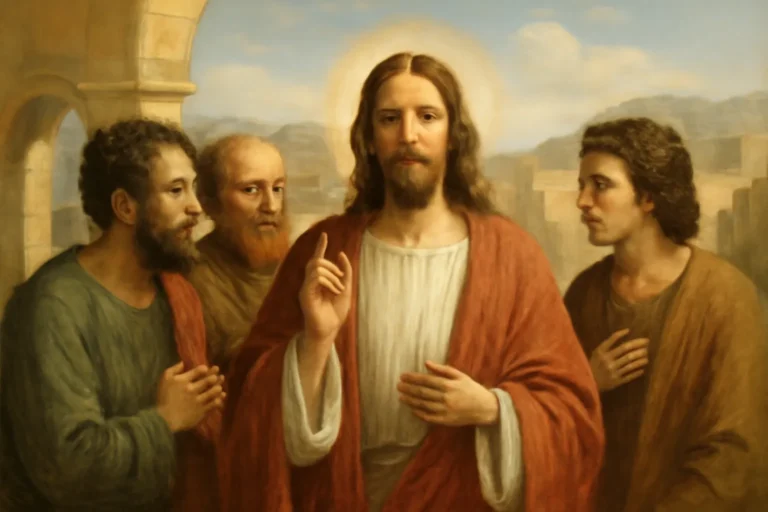
A central question often arises in biblical studies: why did Jesus choose twelve disciples?
The answer is multi-layered and instructive for both the interpretation of ancient texts and the,
by-inspiration, timeless patterns that Christians read into the life of the church. In the Jewish sapiential
and prophetic imagination, the number twelve carries nuance—indicating governance, fullness, and
a representative polity. When we speak of the Twelve Tribes of Israel, we are
describing a framework in which sovereignty, land, tribal allotments, priestly function, and prophetic
memory converge. This frame provides a meaningful context for understanding how the Church understands its
own composition and mission.
Historical overview: from patriarchs to tribal confederation
The early biblical material presents the tribes as family-into-nation expressions. After Jacob’s sons become
heads of households that later multiply into a nation, their descendants form a confederation rather than
a centralized monarchy in the earliest periods. The arrangement is not merely administrative; it is
covenantal. Each tribe bears a distinct memory, a unique blessing, and a particular duty within the
collective life of Israel.
- Judah emerges as the leading tribe in the sense of kingship and national identity, with Levi given a priestly function even while its share of land is reduced.
- Levi serves as the hereditary priesthood, emphasizing worship, sacred space, and ritual accuracy.
- Joseph is represented by the two half-tribes, Ephraim and Manasseh, who anchor the northern memory and prestige of the people.
- Other tribes such as Reuben, Simeon, Asher, Naphtali, Dan, Gad, Issachar, Zebulun contribute to the diversity of vocation and territory within the shared covenant blessings.
The biblical narrative shows that the tribes are not merely geographic divisions; they are
covenantal participants in the life of Israel. They contribute to the rhythms of worship, governance,
justice, and memory. Even when history moves toward exile and return, the memory of the twelve remains
a touchstone for Jewish identity and for Christian reflection on ecclesial representation.
Symbolic resonance of the number twelve
The use of the number twelve in ancient Israel carries symbolic weight. It suggests a complete set,
a full spectrum of governance, and a fullness of time in which God’s purposes are present in a tangible
and organized way. The tribes themselves function as a radiant mosaic: each member has a role, yet all are
included in a larger divine plan. This symbolism resonates with Christian understandings of mission, where
a small community can reflect the larger body of Christ when united under a shared purpose.
From Tribes to Covenant Community: The Transition toward a Unified People
The Exodus and wilderness wanderings reveal a shift from the loose confederation of tribes to a more
cohesive, worship-centered life. The construction of the Tabernacle, the appointment of appointed leaders,
and the establishment of ceremonial calendar forge a sense of common identity that transcends tribal
boundaries. The transition culminates in the covenant at Sinai, where ritual life becomes the visible mark
of a people bound to God.
The question of why did Jesus choose twelve disciples takes on a Christian fulfillment
dimension when seen in light of this continuity. If the twelve tribes represented a complete people of God
under a single covenant, then the twelve apostles can be understood as a new embodiment of that idea—a
living, traveling polity that embodies the presence and authority of the Messiah. In this sense, the
selection of twelve disciples can be read as both a direct link to Israel’s story and a forward-facing
invitation to the Church to participate in God’s ongoing plan for gathering a people from all nations.
The apostles as a renewed people of God
The apostles function as witnesses who carry forward the mission of Jesus after his resurrection and
ascent. Their role is not merely to transmit teachings but to establish a community with a shared
life, worship, and witness. The apostolic band—twelve in number—still carries symbolic weight today in
many Christian traditions, who see in this circle a model for church life: leadership rooted in foundational
calling, a common mission, and a governance that seeks to represent the whole people of God.
- The apostolic mandate extends beyond the original twelve as the gospel expands, yet the number twelve preserves the pattern of a completed circle of witness.
- In many creedal and confessional formulations, the apostles’ authority is the seedbed of church authority and mission.
- Church traditions often emphasize continuity with the apostolic witness in preaching, sacraments, and church governance.
Why the Number Twelve Matters for Christian Ecclesiology
The Christian church inherits a narrative scaffold that connects Old Testament symbol to New Testament
fulfillment. The question why did Jesus choose twelve disciples becomes more nuanced when
considered as part of a larger theological architecture. The twelve apostles symbolize a complete,
missional community that bears witness to the risen Christ in the world. Their selection also points to
a deliberate intention to anchor leadership in a small but representative group, enabling intimate
training, accountability, and multiplication of ministry.
Symbolic continuity: from tribes to apostles
If we trace the thread from the Twelve Tribes to the Twelve Apostles, we see a pattern of representative
diversity united under a shared vocation. The tribes reflect a nationwide, covenantal form of life, while
the apostles reflect a mission-focused, gospel-centered form of life in a new era. The continuity lies in
the belief that God designs a reliable structure for witness and authority that can be trusted to
sustain the community through trials, persecution, and growth.
- The Twelve as a symbol of inclusive witness: all nations, all kinds of people, all gifts.
- The Twelve as a foundation for a governing order that balances stability with mobility.
- The Twelve as a reminder that leadership is rooted in calling and service, not merely in status.
Establishing the Church: From the Pentecost to a Multiform Body
The establishment of the Church in the New Testament era marks a watershed moment in which a Jewish
movement begins to manifest as a truly universal community. Pentecost, with the outpouring of the Holy
Spirit, inaugurates a new era in which the Church is called to bear witness beyond the boundaries of
Palestine and Jewry. In this light, the question why did Jesus choose twelve disciples can be
read as a deliberate pedagogy: Jesus formed a small, intimate, mission-driven group to become a seed
for a worldwide movement. The connected motifs—covenant, call, witness, and mission—offer a coherent
frame for understanding how the Church grows from a handful of followers to a global body.
Founding events and early formation
The Book of Acts narrates how the apostles, empowered by the Holy Spirit, begin to proclaim the gospel at
Jerusalem, Judaea, Samaria, and to the ends of the earth. The early church becomes a living organism with
a shared life, spiritual gifts, mutual accountability, and a growing sense of mission. Throughout the
narrative, the question arises: what was the rationale for appointing twelve in the first place
and how did the early Christian communities interpret that selection as they organized around the Gospel?
- Leadership and ordination: the apostles appoint leaders, elders, and deacons to extend ministry.
- Communal life: shared property, meals, worship, and teaching as a sign of unity.
- Global mission: from the local assembly to a broader apostolic expansion, mirroring the universality of the gospel.
The Link between the Tribes and the Church: Theological Echoes
The parallel between the Twelve Tribes and the Twelve Apostles provides a rich
field for ecclesiology and spiritual formation. The church reads its life through a lens of continuity with
Israel’s story while simultaneously claiming a decisive novelty in Christ. There are several theological
lines of continuity and renewal worth noting.
- Representative community: just as the tribes represented the covenant community in Israel, the church represents the people of God in every generation and culture.
- Leadership and service: the tribal priesthood and the apostolic college both model leadership as service, holiness, and fidelity to the divine vocation.
- Worship and witness: the rituals, feasts, and temple-centered life of Israel find a new expression in Christian worship, sacraments, and mission guided by the Spirit.
The question why did Jesus choose twelve disciples resurfaces in ecumenical discussions about church
governance and mission: a small, trusted circle can anchor a movement, but the surrounding community must
be invited into the mission to reflect the fullness of God’s plan. The Church, in this sense, is not an
isolated sect but a living continuation of a covenantal people who both remembers the past and presses
forward to the ends of the earth.
The Apostolic Foundation: The Twelve as Church Builders
The New Testament provides a framework in which the apostles, particularly the twelve, are not simply
witnesses to Jesus’ life but foundational builders of the church’s structure, doctrine, and mission.
Their ministry includes preaching, teaching, healing, and the administration of the sacraments. The
apostolic formula—testimony to the life, death, and resurrection of Jesus—serves as the bedrock of
Christian credibility and continuity.
The call to leadership and the shaping of ecclesial order
A central issue in early Christian thinking is how leadership should be ordained and how authority should
be exercised in service to the church. The question why did Jesus choose twelve disciples is
not merely historical curiosity; it is a pointer to the way a church orders itself in the service of the
gospel. The twelve apostles provide a compact model of shared leadership—one that includes intimacy with
the teacher, accountability among peers, and a mandate to teach and to shepherd the flock.
- Teaching and doctrine: the apostles preserve and interpret Jesus’ teaching for later generations.
- Pastoral care: the community is shepherded through mutual care, discipline, and nurturing of faith.
- Mission and expansion: a core emphasis on evangelism and the formation of new habitations of faith.
Representing the Tribes in the Life of the Church: Theological and Practical Implications
The resonance between Israel’s tribal representation and the Church’s ecclesial life has both
theological and practical implications for contemporary Christians. One can glean insights for worship,
governance, and mission from this continuity.
- Worship: Just as the tribes gathered for temple-centered worship, modern churches gather as one body in Christ, across social and cultural lines, to offer praise and petition to God.
- Community formation: The tribal memory and social order remind the church to cultivate a sense of belonging that transcends individual differences while honoring diversity of gifts.
- Social ethics: The covenantal ethic of Israel, with its emphasis on justice for the vulnerable, informs Christian charity, mercy, and social responsibility.
The question why did Jesus choose twelve disciples continues to echo in the church’s formation and
practice. The answer is tempered by the recognition that the twelve are a seed for a much larger
ecclesial reality. Representation is not an end in itself but a means to sustain a faithful witness
to the gospel across time and cultures.
The Mission: How the Twelve and the Tribes Speak to Today’s Church
A central aim of this exploration is to connect ancient patterns to modern church life. The
Twelve Tribes of Israel provide a prophetic mirror for the church’s own task: to be a
people who live under a divine law, who are called to holiness, and who together bear witness to a
God who saves. The Twelve Apostles, in turn, provide a model for leadership, ministry, and
mission that remains relevant as churches navigate cultural change, globalization, and the challenges
of pluralistic religious landscapes.
Practical applications for contemporary ecclesiology
In practical terms, the echoes of the tribal-representative structure can inform:
- Leadership formation: a healthy church cultivates leaders who are deeply formed, accountable, and oriented toward service.
- Pastoral governance: a governance model that includes shared decision-making, clear responsibilities, and a robust system of accountability.
- Ministry plurality: recognizing a diversity of gifts and vocations—teaching, healing, mercy, creative arts—in service to the gospel.
- Missional imagination: a clear sense that local communities are linked to a universal mission, just as the tribes shared a common covenant while maintaining unique identities.
The ongoing question what was the rationale behind selecting twelve as the core cadre remains a
source of fruitful reflection for church leaders today. The number communicates a balance between
intimacy and scale: a group small enough to be intimately formed, yet large enough to represent
diverse perspectives and to undertake a broad, worldwide mission.
Frequently Asked Questions: The Twelve and the Church
Why did Jesus choose twelve disciples?
This question invites multiple layers of interpretation. One line of reading emphasizes covenantal
symbolism: the twelve disciples echo the twelve tribes as a living sign of God’s chosen people. A second line
emphasizes organizational wisdom: a small group demonstrates how leadership and apprenticeship can function
under the authority of Christ in a way that can be reproduced in many locales. A third line points to mission:
the twelve are prepared to carry the gospel to the nations, and their selection models a pattern for sending
out workers into the harvest.
What was the purpose of the twelve apostles in early church life?
The apostles were entrusted with binding and loosing, teaching, and pastoral oversight. They served as
a bridge between the historical Jesus and the living church, ensuring continuity of doctrine and
practice as the gospel moved outward. The twelve’s mission was not only to preach but to establish a
governing and sacramental life that could endure beyond their lifetimes.
How does the concept of the Twelve Tribes inform Christian worship?
In Christian worship, the idea of a unified yet diverse people can inspire liturgical inclusivity and
a bright public witness. The tribes illustrate how God’s people gather, confess, and offer sacrifice—
all within a framework of covenant fidelity. For Christians, the church’s worship is the visible
declaration that God remains faithful to his promises across generations.
Can the motif of twelve guide modern church governance?
Yes, to the extent that it emphasizes representation, accountability, and shared responsibility. A
church can model a form of governance where leadership is both rooted in a call and accountable to the
broader community. The aim is not uniformity for its own sake but a healthy, collaborative order that
reflects the ordered harmony of God’s created and redeeming purposes.
Conclusion: The Ongoing Story of Representation and the Church’s Mission
The story of the Twelve Tribes and the Twelve Apostles is not a closed chapter
but a living pattern within scripture that invites faithful reading and application. The representation
of the tribes in Israel provides a historical and theological template for understanding how God shapes
a people. The formation of the Church through the apostolic witness shows how this template can be
transfigured for a new era—one in which the gospel is proclaimed to every nation, and where the
Church continues to grow as a diverse, global family under the lordship of Christ.
Throughout Christian history, believers have drawn from the connection between the twelve and the church
a shared imagination of mission, governance, and worship. The recurring question why did Jesus choose twelve disciples
prompts ongoing reflection about leadership, discipleship, and the nature of God’s people. In every age, the
call remains: to be a community that embodies fidelity to God’s word, embodies love for neighbor, and
bears witness to the transforming power of the gospel through a life together that is faithful, hopeful,
and robust in mercy.