
Overview: Prisca and Aquila in the Early Christian Mission
The couple known in the New Testament as Priscilla and Aquila appears in the Acts of the Apostles and in Paul’s letters as a
model of faithful partnership in preaching, teaching, and house-based ministry. In many ancient manuscripts they are also rendered as Prisca and Aquila—a Latinized form of Priscilla’s name that later Christian communities adopted in remembrance of their co-workership in the gospel. The duo is primed as missionaries who combine profession and proclamation, hospitality and exhortation, and a robust, if concise, theology of mission. This article surveys their identity, their sociocultural setting, their role in the spread of the gospel, and their lasting influence on Christian practice and doctrine.
Rather than presenting Prisca and Aquila as mere auxiliaries to Paul, biblical scholars increasingly read them as co-founders of local church practice, whose home functioned as a center of assembly, teaching, and mentorship. In the pages that mention them, the couple is not simply a biographical aside but a concrete demonstration of how early Christians integrated evangelistic itinerancy, urban ministry, and domestic ecclesiology. In what follows, we will trace their arc—from diaspora to workplace, from hospitality to doctrinal mentorship, and from first-century Corinth to the ongoing memory of the church.
Origins, Identity, and Social Context
The New Testament presents Priscilla (Prisca) and her husband Aquila as Jewish Christians who share a common trade and a common mission. Acts 18 offers the first sustained biographical note: the couple is described as tentmakers by trade, a description that aligns with the broader context of polis economies in the Roman world where skilled artisans could sustain themselves while engaging in the gospel ministry.
Geographical and Historical Background
The text indicates that Aquila was born in Pontus, a region in northern Asia Minor, and that Prisca/Priscilla and Aquila had recently traveled from Italy as a result of Claudius’ edict expelling Jews from Rome. In Corinth they encountered Paul, and the three formed a working triad that combined their respective gifts and platforms. This migration pattern—Pontus to Italy to Achaia (Greece) and beyond—reflects the complex, multi-ethnic dynamics of early Christian communities scattered across the Mediterranean world.
Economic and Social Dimensions of Tentmaking
As tentmakers, Prisca/Priscilla and Aquila embody a particular model of Christian vocation that stands in conversation with Paul’s own missionary pattern. They demonstrate that economic activity and religious witness are compatible commitments. The tentmaking vocation allowed them a degree of mobility and financial stability that enabled their ministry to flourish without relying solely on ecclesial endowments. In addition, their work ethic and skilled craftsmanship served as a bridge between Jewish and Gentile communities, creating fertile ground for dialogue and persuasion.
Ministry Partnership: The Dynamics of Prisca and Aquila
The relationship between Priscilla and Aquila is often described as a dyadic partnership in ministry. In Acts and Paul’s salutations, we see a pattern in which a married couple collaborates in teaching, mentoring, and fostering Christian households. The partnership carries both pragmatic and symbolic significance: it models teamwork in mission and highlights the role of lay leadership in the early church.
Mentorship and Teaching: A Key Moment with Apollos
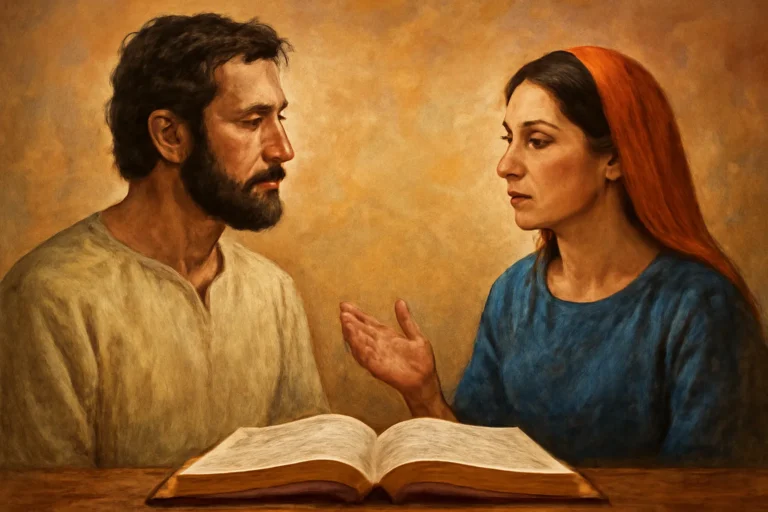
One of the most celebrated testimonies to their teaching gifts occurs when the couple encounters Apollos, an eloquent Jewish preacher who knows only the baptism of John. In Acts 18:26, Prisca/Priscilla and Aquila take Apollos aside and explain the way of God more accurately. The subtle nuance here—where the teaching is done in a private, corrective manner rather than public rebuke—suggests an encounter that is intimate, patient, and effective. Prisca’s name appears first in a sea of male leaders, which has led to scholarly discussion about gendered leadership in the early church. The core takeaway is not simply an incident of correction, but an exemplar of biblical mentorship that honors the learner while faithfully transmitting more complete Christian doctrine.
House Churches and Local Ecclesiology
Romans 16:3-5 mentions that Aquila and Prisca “greet you” and notes that a church gathered in their house accompanies their greeting. This reference to a house church provides invaluable insight into first-century church life: ministry often centered in domestic spaces, where hospitality, fellowship, teaching, and prayer were woven into everyday rhythms. Rather than a single centralized temple, the early Christian movement demonstrated a distributed ecclesiology that used homes as anchor institutions for faith communities.
Key Textual Anchors: What the Bible Actually Says
The Acts narrative and Paul’s letters provide the central textual grid for understanding Prisca/Priscilla and Aquila. While the historical details are concise, they reveal a consistent pattern of resource sharing, doctrinal teaching, and community formation.
Acts and Pauline Echoes
- Acts 18:2-3 – The couple, from Pontus and recently arrived from Italy, settle in Corinth and work together as tentmakers, opening space for ministry among Jews and Greeks alike.
- Acts 18:18-19 – Their travels with Paul to Ephesus and beyond illustrate a coordinated missionary itinerary and shared leadership in early mission teams.
- Acts 18:26 – Prisca/Priscilla and Aquila privately instruct Apollos “more accurately” in the way of God, highlighting a moment of doctrinal refinement.
- Romans 16:3-5 – Paul sends greetings to Prisca and Aquila and mentions the church in their house, underscoring their visible leadership in a local congregation.
- 1 Corinthians 16:19 – Paul notes that the churches of Asia greet the recipients, with Prisca and Aquila sending greetings from the church in their house, reinforcing the domestic church motif.
- 2 Timothy 4:19 – A later mention in the Pauline corpus preserves Prisca’s name among those who stand in a lineage of faithful ministry.
Interpretive Angles: Leadership, Gender, and Education
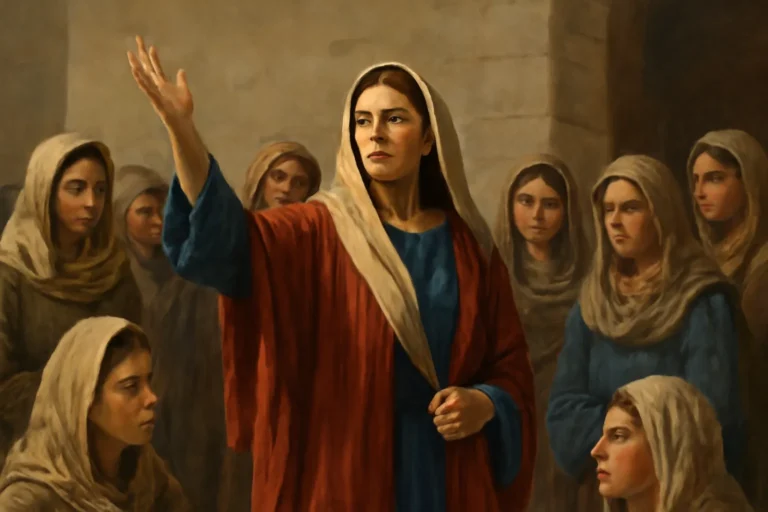
Scholarly discussion often foregrounds the issue of leadership and the place of women in earliest Christian proclamation. Prisca/Priscilla, as a named figure alongside her husband, is frequently cited in debates about whether women in the early church exercised authority or served primarily in supportive roles. The biblical data prefer a more nuanced view: Prisca is often presented in close proximity to leadership activities (teaching, correction, hospitality, house church leadership), suggesting a model of leadership that is collaborative, contextually appropriate, and theologically integrated.
Theological Significance: The Mission That Shaped a Movement
The ministry of Prisca and Aquila can be read as a concrete embodiment of some core Christian theologies that emerged early in the church’s story. Their example intersects with themes such as missionary strategy, ecclesiology, theology of hospitality, and apologetics and doctrinal formation, providing a lens through which to understand how the earliest Christians understood God’s call to all nations.
Missio Dei in Practice
The couple’s actions align with a robust reading of missio Dei in which God’s mission transcends single-gift ministry and requires a community-based approach. By combining their trade with their proclamation work, they exemplify a holistic approach to mission: the gospel is embodied not only in words but in daily living, labor, and hospitality.
Hospitality and the House Church as Theological Resource
Prisca and Aquila’s home becomes more than a social space; it is a theological resource. By hosting the church, they provide a platform where teaching, worship, and fellowship can occur in a shared, intimate space. The house becomes a microcosm of the broader Christian community, illustrating how doctrine is lived out in ordinary life.
The discussion around Prisca/Priscilla inevitably touches on questions of gender and leadership. In the first-century Greco-Roman world, public leadership among religious teachers was not unusual, but the explicit naming of Prisca alongside Aquila in a corrective teaching moment with Apollos invites modern readers to consider how early Christian communities navigated authority, authority-sharing, and the needs of learners from diverse backgrounds.
Equality in Diversity
The narrative surrounding Apollos’s refinement through Prisca and Aquila can be read as evidence of shared leadership and mutual edification. Rather than a strict hierarchy wherein men held all formal teaching roles, the text points toward a model in which households, couples, and lay leaders collaborate in doctrinal formation. This has continued resonance for contemporary Christian communities that study the Acts of Apostles and the Pauline letters with attention to gender-inclusive interpretations of ministry.
Contemporary Relevance: Lessons for Modern Mission
- House-based ministry as a sustainable model for evangelism and discipleship.
- Collaborative leadership that honors different gifts—teaching, mercy, hospitality, and businesslike organization.
- Recognition of lay leadership as a legitimate and valuable component of church life, not merely a stopgap option.
- The importance of contextual instruction—adapting doctrine for learners while remaining faithful to core apostolic teaching.
Prisca/Priscilla and Aquila’s ministry offers a case study in how early Christian communities understood mission, ecclesial structure, and doctrinal transmission. Their example intersects with several key theological threads that would shape Christian self-understanding in the centuries that followed.
Doctrine and Clarification
The episode involving Apollos illustrates a decisive moment in which clarification of apostolic teaching expands the scope of the gospel from a single-voice proclamation to a more nuanced, multi-voiced teaching tradition. This does not diminish the authority of the apostolic witness; rather, it shows that early Christians engaged in humble correction and mutual instruction as part of their shared life in Christ.
Ecclesial Architecture: The House Church as a Locus of Formation
The references to Prisca and Aquila’s house church reveal a practical ecclesiology: churches formed in living spaces, not solely within official temple precincts or designated church buildings. This model has continued to inspire modern networks of shared space, intentional community, and locally grounded leadership.
Beyond doctrinal correction and house-based ecclesiology, Prisca (Prisca) and her husband show a number of practical strategies that aided early Christian mission:
- Economic partnership that enabled travel, shelter, and sustenance for itinerant leaders.
- Hospitality as a spiritual discipline that welcomed strangers and fostered trust among diverse communities.
- Mentoring of younger leaders, as seen in the instruction of Apollos and the shaping of disciples in their circle.
- Strategic cooperation with Paul and other apostles, suggesting a networked approach to mission rather than isolated efforts.
The memory of Prisca/Priscilla and Aquila endured in early Christian memory, shaping how communities remembered faithful teamwork and the exercise of gifts within households and congregations. Their references in Paul’s letters and in Acts contributed to a theology of partnership in mission that transcended social barriers and highlighted the gospel’s ability to unite people across gender, ethnicity, and occupation.
Influence on Ecclesial Practice
In the centuries that followed, Christian communities read the Acts narrative and the Pauline salutations as evidence for a robust, inclusive approach to leadership, in which lay people—whether in business, crafts, or domestic life—could play a central role in teaching, hospitality, and church formation. Prisca/Priscilla and Aquila’s example has inspired countless house churches and small groups that intentionally combine labor with universal proclamation.
Scholarly Reflections: Reading Prisca and Aquila Today
Contemporary scholarship often emphasizes the social and gender dynamics of this partnership, while also maintaining attention to the theological core: the gospel is not merely a proclamation but an invitation to a transformed life within a community. The family-like bond between Prisca and Aquila demonstrates that mission is a shared vocation, not simply a set of acts performed by a single leader. The categories of leadership, hospitality, and doctrinal transmission appear together in a compact, early Christian form that continues to invite contemporary readers to imagine new configurations of mission in their own contexts.
In sum, Priscilla and Aquila embody a missionary partnership whose edges are sharpened by their trade, sharpened by doctrinal mentorship, and sharpened by a hospitable faithfulness that turns a household into a school, a church, and a center of witness. The early church’s use of Prisca/Priscilla as a co-teacher with Aquila, and as mentors to Apollos, reveals a model of ministry that embraces shared leadership, educational discernment, and local ecclesiology without sacrificing doctrinal integrity. Their legacy invites modern believers to reflect on how households, economies, and intimate communities can become crucibles of gospel transformation.
For readers seeking practical application from the life of Prisca and Aquila, several learning tracks emerge. The following list highlights themes that remain relevant for churches today.
- Hospitality as mission: Welcoming strangers into homes is not merely a social virtue but a missional discipline that sustains the church’s life.
- Domestic churches: Recognizing that churches can flourish in living rooms, backyards, or apartment complexes encourages more inclusive and flexible ecclesial models.
- Mutual teaching: The dynamic of Prisca/Priscilla and Aquila teaching Apollos demonstrates that mentorship can involve correction and growth, not only instruction from above.
- Economic sending: A healthy missionary movement often requires the same economy that enables workers to travel, organize, and sustain ministry partners over long periods.
- Gender and leadership: The scriptural witness invites ongoing conversation about gifting, role, and authority in diverse contexts of church life.