
The Son of Man Came to Serve: A Theological Reflection on Service as Core Mission
Across the pages of the Gospels, one refrain echoes with a clarity that is simple yet transformative: the Son of Man came to serve. This succinct claim distills the incarnational purpose of Jesus and reshapes the expectations of leadership, power, and influence within the Christian story. Far from a mere historical note, this assertion functions as a living invitation to a kingdom ethic rooted in humility, compassion, and practical acts of service. In this article, we explore the scriptural foundations, historical developments, theological implications, and contemporary applications of the teaching that Jesus modeled a leadership defined by service. We will also examine semantic variations and interpretive traditions that expand our understanding of servant leadership in religious life.
Scriptural Foundations: The Central Claim in Context
The phrase that anchors this discussion appears in multiple places within the Synoptic Gospels and is echoed in Pauline theology. The core assertion is often summarized as Jesus’ mission of service, which in the Gospel of Mark is stated with intentional overtone: “For even the Son of Man did not come to be served, but to serve, and to give his life as a ransom for many” (Mark 10:45). A closely related formulation in Matthew presents the same state of affairs with emphasis on the trajectory of leadership: “the Son of Man came not to be served, but to serve, and to give his life as a ransom for many” (Matthew 20:28).
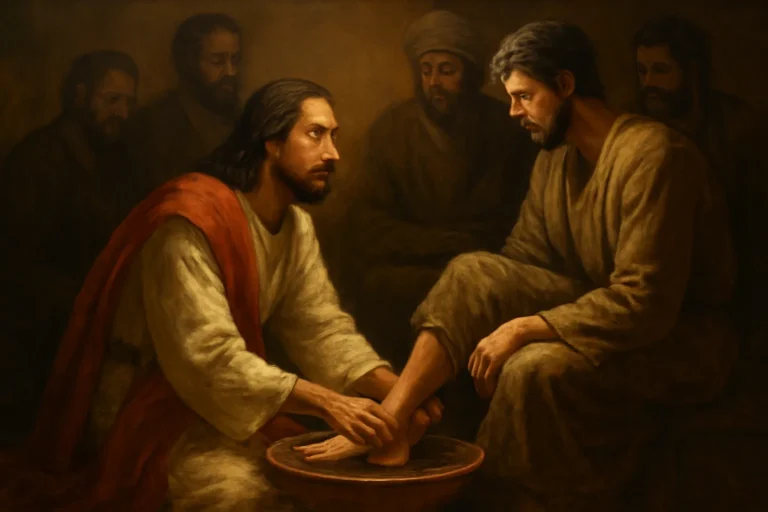
The footprint of this message extends beyond a single verse. In John 13, Jesus performs a rhythmic action of service—washing the disciples’ feet—which functions liturgically as a powerful emblem of humble leadership and mutual service. The apostle Paul later grounds the idea in the life of Christ as a model for community living: humility, obedience, and service as the posture of Christian leadership (Philippians 2:5-11).
Key terms recur in various forms to express the same theological insight. The concept of servant leadership surfaces through phrases like “the Son of Man came to serve,” “to give his life for many,” and “to ransom many.” The semantic breadth across the New Testament highlights several core ideas:
- Humility as the manner of leadership: choosing washing feet, blessing the child, and serving rather than coercing.
- Self-giving love as the organizing principle of authority.
- Redemptive purpose—service that leads to a transformative, salvific outcome.
- Countercultural authority—power redefined as service, not domination.
The scriptural pattern invites readers to see leadership not as control or prestige but as vocation and vocation as care for others. This reframing becomes a criterion against which all forms of Christian leadership are judged, exercised within the church and applied in broader social contexts.
Theological and Historical Context: From Prophecy to Practice
To understand the claim that the Son of Man came to serve, it helps to situate it within a broader theological arc. In Jewish and Christian traditions, the figure known as the “Son of Man” carries layered meanings: it is a messianic designation that also connotes the human agent who participates in divine purposes. In the prophetic literature, service and suffering are not alien to salvation; rather, they are the path through which healing and restoration occur. The Servant of the Lord in Isaiah 53, for example, embodies submission, suffering, and obedient service on behalf of many. While the New Testament reframes this imagery in the person of Jesus, the continuity of redemptive action through service remains central.
The historical development of early Christian leadership also reflects this ethic. The earliest followers of Jesus did not inaugurate a “glorious palace-based” authority system; instead, they organized around service-oriented roles, such as deacons (diakoni) who were commissioned to meet practical needs and to facilitate the community’s mission. This practical dimension of leadership—a serving governance—grew into a robust ecclesial culture in which authority is measured by fidelity to the care of the vulnerable, the proclamation of the gospel, and the maintenance of communal unity.
The contrast with worldly leadership is intentional and instructive. In the surrounding Hellenistic and Roman cultures, authority was typically exercised through status, rank, or coercive power. Jesus’ ministry reinterprets power as service rendered to others, thereby transforming the social logic of leadership. This reframing is not a rejection of legitimate authority but a redefinition of it: service becomes the credential of true leadership, and authority is tested by the capacity to lay down one’s life for others in concrete acts of love and sacrifice.
The Model of Jesus: From Teaching to Practice
Foot Washing: The Night of Humble Service
The gospel narrative of John 13 presents a dramatic microcosm of Jesus’ leadership ethos. In a household setting that should have upheld the dignity of the guests, the teaching of the Master comes to life in a servant’s action: Jesus washes the feet of his disciples. This act is not merely a ritual gesture; it is a symbolic enactment of what it means to lead by service.
- The act begins with a question: will the one who leads also serve in the most basic tasks?
- Jesus sets a pattern: humility precedes instruction, and love is demonstrated through concrete action.
- Peter’s hesitation gives way to a deeper teaching about belonging and purification in community — an image of sanctification through serving love.
- The disciples are taught a practical ethic: responsibility to act for the sake of others, even when it costs them something personally.
The foot-washing narrative thus functions as a living catechesis. The takeaway is not merely the removal of dirt but the exposure of a leadership spirit that denies hierarchy by service. Jesus’ words that follow—“If I then, your Lord and Teacher, have washed your feet, you also ought to wash one another’s feet” (John 13:14)—undergird the claim that greatness in God’s kingdom is measured by one’s willingness to serve, not by one’s ability to command.
Teachings on Authority and Responsibility
Beyond the feet washing event, Jesus repeatedly reframes authority in terms of service. When the disciples argue about who among them is the greatest, Jesus redirects with a pedagogy of humility: “If anyone would be first, he must be last of all and servant of all” (Mark 9:35). In this framing, leadership is a vocation of service that requires a posture of openness to others, a readiness to listen, and a commitment to the wellbeing of the community.
The Heidelberg or Westminster-type catechetical questions that often accompany Christian instruction are aligned with this theme. They ask believers to consider not merely what they believe but how that belief translates into acts of service. The Sermon on the Mount, while focusing on righteousness, also points toward a leadership ethic grounded in mercy, purity of heart, and peacemaking—virtues that generate a culture of service-minded leadership.
Leadership in the New Testament Church: From Concept to Structure
In the early Christian communities, leadership took shape through offices and ministries whose primary aim was service. The diakonos (deacon) role emerged as a practical provision for caring for widows and the needy, enabling the apostolic band to devote themselves to prayer and the ministry of the word. Elders (presbyters) provided governance and oversight, but their authority was exercised in service to the community and in shepherding the flock toward Christ.
Diakonos and Presbyteroi: Two Lanes of Service
The New Testament vocabulary highlights two complementary streams of service. The term diakonos is often translated as “deacon” and carries the sense of service, ministration, and task-oriented ministry. The role emphasizes practical acts of compassion, organizational care, and logistical support for the church’s mission. The presbyteroi (elders) provide spiritual leadership, teaching, and pastoral oversight. Yet in the mind of Jesus, both offices serve a single telos: to emulate the Savior’s posture of servant leadership.
- Examples of diaconal service include mercy ministries, feeding programs, shelter assistance, and care for the marginalized.
- Examples of elder leadership include teaching, safeguarding doctrinal integrity, and guiding the community in discernment and prayer.
- Both offices are oriented toward the health of the body and the expansion of the mission.
Throughout church history, this model has informed a robust ecclesial ethics that resists the temptation to equate leadership with coercive power. Instead, leadership is defined by a willingness to serve first and to suffer gladly for the common good, always with the aim of drawing others toward Christ’s love.
Theological Implications: Why Servant Leadership Matters
The assertion that the Son of Man came to serve carries several important theological implications that shape how Christians think about God, humanity, and the purpose of governance in community life.
- They reveal the nature of God as gracious, self-giving, and other-centered. Jesus’ actions reveal the heart of God’s character in compassionate service.
- Salvation and service are braided: redemption is not a private consolation but a communal vocation, inviting believers to participate in God’s mission through acts of mercy and social transformation.
- Ethics before power: true authority is measured by the capacity to lay down one’s life for others, an ethic that transcends cultural definitions of success.
- Christological center: the person and work of Jesus remain the standard by which leadership and ministry are judged; the Son’s servanthood grounds a Christian anthropology that esteems humility and solidarity.
The broader theological unity—between Jesus’ person, his redemptive work, and the church’s social mission—offers a cohesive picture: service is not ancillary to Christian life; it is constitutive of who Jesus is and what his followers are called to become.
The ancient claim has pressing resonance for modern believers. If the Son of Man came to serve, then Christians are invited to practice a leadership that is energetic in mercy, patient in adversity, and unafraid to bear the costs of service.
- In the home: families can model servant leadership through hospitality, shared decision-making, and the discipline of listening before speaking. Parents lead by example in education, discipline, and sacrificial care.
- In the church: congregations organize around service ministries, an emphasis on mentorship, and structures that empower lay leadership to participate in the work of ministry (e.g., children’s ministry, outreach, worship, and social services).
- In the workplace: Christian professionals may bring a service-centered ethic to their roles, prioritizing employee wellbeing, ethical decision-making, and stewardship over self-promotion.
- In society: public leadership can be evaluated by how it serves the vulnerable, honors human dignity, and advances justice—echoing the Gospel’s call to service as a public good.
A servant-leadership ethic also calls for a spiritual practice: humility, confession, repentance, and accountability. These disciplines keep leaders from becoming isolated by power and instead continuously reorient them toward the needs of others.
Variations of Teaching on Servant Leadership: Semantics and Significance
Across the biblical canon and subsequent tradition, the teaching on servant leadership appears in several semantic shapes. Some scholars and pastors highlight the humility paradigm, others emphasize the self-giving love paradigm, while still others stress the cross-bearing paradigm—the idea that service may entail personal cost, risk, and even suffering for the sake of others.
- Humility-driven leadership emphasizes posture, listening, and lowly acts that dignify others.
- Service as mission links practical acts of mercy to the proclamation of the gospel and the transformation of communities.
- Cross-bearing leadership foregrounds sacrifice, resilience, and endurance in the face of hardship or persecution for the sake of justice and truth.
- Relationship-centered leadership places care for people—especially the vulnerable—at the center of organizational culture.
In preaching and teaching, the semantic breadth is a strength, not a problem. It allows for diverse pastoral applications: empowering laypeople, guiding missionary work, organizing social ministries, and shaping church governance around service. The central thread remains the same: leadership is fulfilled in service, and service is fruitful when oriented toward the renewal of persons and communities in Christ.
Educational and Liturgical Implications: The Sermon, the Classroom, and the Pulpit
The message of the Son of Man’s servanthood has a place in both pedagogy and worship. For educators in Christian settings, the story invites curricular design that centers on ethical formation, character development, and service-learning projects. For preachers and theologians, it provides a lens through which to interpret Scripture and to illustrate how the gospel translates into concrete practice.
Curricular and Pedagogical Implications
- Design courses and modules that explore the relationship between leadership, ethics, and ministry in both historical and contemporary contexts.
- Incorporate case studies on service-based leadership in church, nonprofit, and civic organizations.
- Encourage students to engage in service projects that reflect Gospel commitments to mercy, justice, and reconciliation.
- Foster reflective practice: journaling about leadership experiences, failures, and growth in light of Christ’s servanthood.
In worship contexts, the motifs of foot washing, servant-hearted prayers, and the liturgical enactment of service can be incorporated to remind the gathered community that kingdom leadership is service enacted in love.
Homiletic and Catechetical Approaches
- Use parables and miracle narratives to illustrate how service transforms communities.
- Invite speakers who model servant leadership in various settings—pastors, educators, healthcare workers, and social activists.
- Provide catechetical materials that tie doctrinal confession to ethical action: belief that God became human leads to compassionate action toward neighbors.
- Encourage congregational involvement in service-oriented ministries as a living expression of faith.
A sustained emphasis on servant leadership is not anti-royal; it reframes the royal vocation as a calling to heal, reconcile, and liberate. The Son of Man came to serve, not to enthrone Himself over others; thus, the church’s education and practice must reflect this vocation in both word and deed.
Challenges, Misunderstandings, and Critiques
No examination of servant leadership in a Christian context would be complete without attending to potential misreadings and obstacles. Some common concerns include the fear that servant leadership is merely passive or weak, or that it devalues legitimate authority. Others worry about the potential for burnout, as service can demand sustained personal cost. Yet the biblical model offers a robust response to these concerns:
- Strength through vulnerability: true strength in leadership often manifests as vulnerability to love and to others’ needs, not as domination over them.
- Authority under accountability: elders and leaders operate within a framework of accountability and shared responsibility, preventing abuses of power.
- Mission-driven service: service is not mere retreat from influence; it is a strategy for effective mission—the proclamation of the gospel through loving actions that reveal God’s character.
- Balance of mercy and justice: servant leadership includes advocacy for the vulnerable, as mercy without justice can be shallow; justice without mercy can be harsh.
Critics sometimes ask how a servant leadership model interfaces with institutional structures, doctrinal boundaries, and strategic aims. The answer lies in a thoughtful integration: leadership remains accountable to Christ and to the community’s mission, while practical governance ensures the church can sustain its work amidst changing social realities. The goal is not to minimize leadership but to redefine its core currency—from control to care, from status to service.
Contemporary Case Studies: Illustrations of Service in Action
Across history and geography, numerous examples illustrate what it means to practice servant leadership. Although each context is unique, the underlying principle remains consistent: leadership that serves builds trust, nurtures resilience, and advances the common good.
- Pastoral care as a central practice: pastors who embody service by visiting the sick, comforting the grieving, and supporting families in crisis model leadership that prioritizes presence over performance.
- Community-centered mission: churches that partner with local organizations to address poverty, hunger, and housing illustrate how leadership translates into tangible social good.
- Education and mentorship: teachers and mentors who invest in long-term the development of their students reflect a service-oriented governance of influence.
- Global service and reconciliation: missions and development work that emphasize dignity, empowerment, and sustainable transformation reflect a broad, communal understanding of leadership as service across borders.
These case studies underscore a timeless truth: servant leadership is not a remove from power but a reorientation of power toward healing and restoration. As communities experience the truth of Jesus’ words in daily life, they become witnesses to the transformative potential of service.
Conclusion: The Enduring Call to Serve
The claim that The Son of Man came to serve is not merely a doctrinal statement about Jesus’ ministry; it is a pervasive invitation to imitate him in the way we lead, love, and live. When Christians embody servant leadership, they enact the gospel in concrete, meaningful ways. They demonstrate that leadership is a form of covenantal care—care for one another, care for the weak, care for the neighbor near and far. In the cruciform logic of Christian faith, service is not a secondary virtue but the very heart of discipleship.
As this long-form reflection has shown, the phrase “the Son of Man came to serve” opens up a vast landscape for theological reflection, moral formation, and practical application. It invites an ongoing conversation about what it means to lead biblically in church life, in family, in education, and in public life. The call remains: to enter deeply into the mindset and method of Christ—to lead by service, to heal through humility, and to witness through everyday acts of love. In doing so, communities can embody the transformative power of the gospel, shining as lights in a world hungry for authentic, humble, and steadfast leadership.