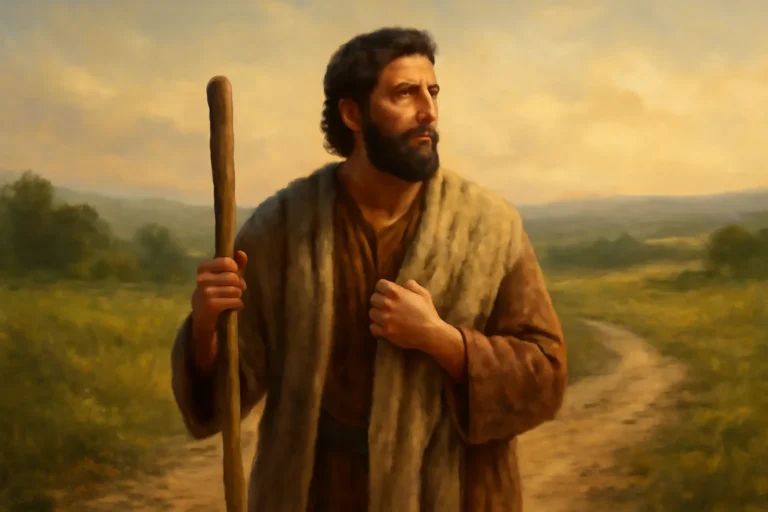
In the biblical story set within the fields of Bethlehem during a period of struggle and resilience, one man stands out not merely for wealth or influence but for a pattern of leadership that repeatedly goes beyond the minimum requirements of duty. Boaz, the elder of the lineage that would eventually produce David, embodies a form of leadership often described in religious discourse as going the extra mile. This article explores Boaz as a leader who consistently rises above the ordinary expectations of a landowner, a relative, and a citizen, showing how compassionate initiative, steadfast protection of the vulnerable, and a willingness to redeem what is broken can shape a people and a faith. The aim is not only to recount a narrative but to extract a theology of leadership—one that honors fidelity to law while embracing mercy, justice, and kinship. What follows is a comprehensive examination of Boaz’s leadership in its historical, theological, and practical dimensions.
The examination will proceed through historical and theological context, a close look at Boaz’s specific actions, an analysis of the kinsman-redeemer motif, and a set of lessons for contemporary religious communities. Throughout, the language will reference semantic variations of the idea that Boaz is a leader who went the extra mile—phrases such as the extra-mile leader, generous leadership, redeeming leadership, and compassionate stewardship will recur to illustrate recurring patterns in this biblical figure. By the end, readers should gain a robust sense of how Boaz’s choices function as an archetype for leadership that transcends mere compliance with norms and moves toward redemptive action.
Historical and Theological Context
To understand Boaz’s leadership in full, one must situate him in the world of Ruth, Naomi, and the social-religious laws of ancient Israel. The Book of Ruth situates Boaz as a wealthy landowner in Bethlehem of Judah, a man who navigates issues of land, kinship, and hospitality in a context where social vulnerability—especially for widows and foreign-born residents—was acute. The period is characterized not by abstract ideals but by real, everyday life: gleaning laws, agricultural cycles, and the fragile hope of family restoration after famine and loss. In this ecosystem, the call of leadership is listened for in how one treats strangers, how one shares resources, and how one uses influence to repair broken relationships. The image that emerges is of a leader who understands that power is best exercised when it serves the vulnerable and binds a community more tightly to covenant obligations.
The theological frame adds another layer: the narrative foregrounds not merely human virtue but the way God’s purposes unfold through acts of mercy and fidelity. Boaz’s actions are often read as modeling sanctified leadership, a practical theology in which religious duty and human compassion walk hand in hand. In this sense, Boaz is not simply a benevolent patriarch but a figure who embodies a form of leadership that is both legally grounded and pastorally attentive. This convergence—lawfulness paired with mercy—becomes a hallmark of the extra-mile leadership, a phrase that captures the dynamic of operating within the covenant framework while expanding its reach to encompass the needs of Ruth, Naomi, and the larger community.
The Law of Gleaning and Its Ethical Significance
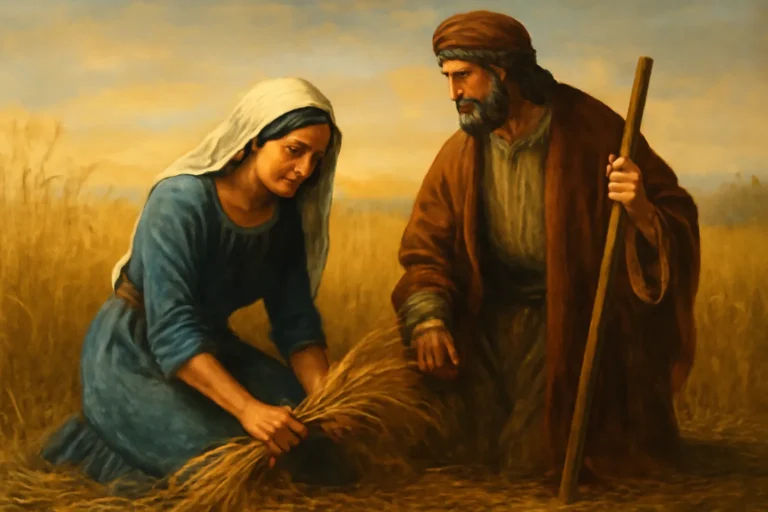
Central to the world in which Boaz operates is the Levitical and Deuteronomic framework that permits, even enshrines, social protection via gleaning. The legal right of a poor person or widow to glean in the fields is not mere charity; it is an ethical mechanism for ensuring dignity and basic sustenance. Boaz’s awareness of this law is the seedbed for his extraordinary leadership. He does not merely tolerate Ruth’s presence in the field; he creates conditions in which Ruth can glean safely, be treated with respect by the workers, and be protected from harm. This is the protective leadership that marks his persona as a leader who goes above and beyond current expectations.
The social fabric of Boaz’s world revolved around kinship, property, and the obligation to preserve a family line. The concept of the kinsman-redeemer is central to the narrative: a nearer relative has the right and responsibility to redeem a family’s land and, if necessary, marry the widow to continue the lineage. Boaz’s intervention in Ruth’s case is not a casual gesture; it is a deliberate fulfillment of legal and ethical duties that require courage, discernment, and foresight. In stepping forward to redeem Naomi’s land and marry Ruth, Boaz demonstrates that leadership sometimes means placing the good of the community and the vulnerable above personal convenience. This is a quintessential example of an extra-mile approach to redemptive leadership.
Boaz in Action: Acts that Marked the Leader’s Path
When one surveys the narrative, a consistent pattern emerges: Boaz acts in ways that reflect not only compliance with the letter of the law but an expansive compassion that fulfills the law’s deeper intent. He is a leader who protects Ruth, extends hospitality, and guides the community toward justice. These actions can be categorized and analyzed to reveal the hallmarks of leadership beyond duty, i.e., the extra-mile leadership Boaz models for others.
Protection and Hospitality as Core Instincts
Boaz’s decisions at the field function as practical demonstrations of protective care. He welcomes Ruth, a foreigner and a widow, and provides for her safety and sustenance. He instructs his young men to treat her kindly and to allow her to glean among the sheaves, rather than in the margins. This is not merely a passive tolerance; it is an active extension of hospitality—an outreach that transcends social boundaries. The leader who goes the extra mile here is one who interprets cultural norms through the lens of mercy, thereby bridging divides and cultivating communal trust.
Provision, Responsibility, and Economic Ethics
Beyond daily protection, Boaz’s leadership carries with it a robust sense of responsibility for economic justice. His actions in the field are complemented by a deliberate generosity: he greets Ruth with warmth, offers water, and—perhaps most notably—ensures that Ruth receives an abundance from the harvest. The message is clear: economic stewardship in leadership includes ensuring vulnerability is not exploited and that the necessities of life are accessible to the most marginalized. This aligns with a wider Hebrew Bible ethic that generous provision for the poor is a sign of a just society.
Public Leadership at the Gates: Integrity Under Scrutiny
The culminating public act—Boaz’s negotiation at the town gate to redeem Naomi’s land and to marry Ruth—highlights leadership under public scrutiny. The gate is a formal arena where deals are weighed and witnessed by elders. Boaz’s approach to this moment reveals not only strategic vision but a disposition toward transparency and accountability. He does not conceal motives; rather, he invites the closer relative to participate in the redemptive process, thereby preserving communal integrity. This is leadership that goes the extra mile in moral courage, modeling how leaders should navigate complex social contracts while honoring the vulnerable and upholding the law.
The Kinsman-Redeemer Narrative and Leadership Ethics
The Boaz-Ruth-Naomi story is frequently discussed for its romance and family restoration, but a deeper reading reveals a layered exploration of leadership ethics. The kinsman-redeemer motif is more than a legal device; it is a case study in responsible power. Boaz’s role in this motif demonstrates how leadership, when aligned with covenant faithfulness, can restore what is broken and reconstitute a community’s future.
Boaz remains within the letter of the law, yet his actions show that moral imagination is essential for leadership fidelity. He does not suppress the law’s provisions to assist Ruth; instead, he harnesses the law to accomplish a greater good: the preservation of Naomi’s family line and Ruth’s inclusion in Israel’s story. This is a powerful reminder to religious leaders that moral imagination—imagining how laws can serve justice in concrete ways—is a hallmark of strategic, compassionate leadership.
The narrative also highlights leadership as a public witness, not a private virtue. Boaz’s actions ripple across generations: Ruth becomes the great-grandmother of David, and the line ultimately connects to the Messiah in Christian interpretation. The leadership that goes the extra mile thus becomes a vessel through which a community witnesses to God’s faithfulness across time. For contemporary faith communities, Boaz’s example invites leaders to consider how present acts of justice and hospitality might shape future generations in ways we cannot predict.
Theological Significance and Typology
The Boaz narrative is frequently read as a theological type, a picture that points beyond its own historical setting to broader spiritual truths. In Christian typology, Boaz is often seen as a foreshadowing of Christ’s redemptive work: a righteous man who acts to redeem, heal, and integrate the outsider into God’s people. This typology does not diminish Boaz’s humanity or his historical role; instead, it illuminates how his leadership resonates with a divine pattern: mercy operating within covenant fidelity, and mercy expanding the circle of belonging.
Boaz as a Type of Christ
Several resonances stand out. First, Boaz acts as a benefactor to Ruth and Naomi in a way that mirrors the pastoral care attributed to shepherd-leaders in biblical literature. Second, Boaz’s actions demonstrate a redemptive purpose—to restore, to heal, and to inaugurate a lineage with a salvific horizon. Third, Boaz’s willingness to redeem the land and marry Ruth embodies the principle that love seeks the welfare of the vulnerable and the marginalized, even when it incurs personal cost. While it would be anachronistic to equate Boaz with Christ in every aspect, the narrative intentionally invites readers to see Boaz as a vivid exemplar of redemptive leadership within a covenantal framework.
Genealogical Significance and Covenant Continuity
The genealogical arc traced in Ruth 4 situates Boaz as the father of Obed, who is the father of Jesse, the father of David. This lineage anchors leadership in a continuity that binds generations. The story thus anchors a theological claim: leadership that goes the extra mile, when lived out by one generation, can become the seedbed for a lineage that expands God’s purposes in history. For readers who study biblical humanities, Boaz’s role is a reminder that faithful leadership is often invisible in its immediate consequences but decisive in its long-range outcomes.
Leadership Lessons for Modern Faith Communities
The figure of Boaz offers a reservoir of practical insights for contemporary religious life. The underlying question for today’s leaders is this: How can institutions cultivate the kind of leadership that reliably goes beyond the call of duty to serve the vulnerable, uphold justice, and foster communal restoration? The following lessons translate the ancient narrative into actionable principles for modern congregations, seminaries, and faith-based organizations.
Commit to hospitality across difference. Boaz’s protection of Ruth—an outsider—invites communities to broaden the circle of belonging beyond ethnic or social boundaries.
Protect the vulnerable with public, practical generosity. Like Boaz, leaders should create systems that ensure food security, safety, and dignified treatment for the poor and marginalized.
Use authority to elevate others, not dominate them. Boaz’s leadership is marked by empowerment—giving Ruth access, inviting closer relatives to participate, and ensuring her voice is heard within the process.
Balance law with mercy. The extra-mile leader honors the letter of the law while uncovering its deeper, redemptive purposes—justice and restoration in tandem with obedience.
Model courage in decisions that require sacrifice. Redeeming land and marrying Ruth required Boaz to risk personal and social costs for a greater good.
Center governance on covenantal commitments. Boaz’s actions are anchored in fidelity to God’s covenant community and its shared responsibilities.
Practical Applications for Churches, Nonprofits, and Leaders
For churches and faith-based organizations seeking to embody the extra-mile leadership Boaz exemplifies, consider these practical steps:
Establish a culture of volunteer protections and neighborly care for newcomers and marginalized members.
Develop clear, compassionate programs that bridge gaps in food security, housing, and social support, akin to the gleaning ethic.
Encourage decision-making processes that involve stakeholders from varied backgrounds, including those who are vulnerable, ensuring transparency and accountability.
Interpret scripture through the lens of justice and mercy, inviting practical action that aligns with biblical covenants of care.
Invest in leadership development that emphasizes ethical courage, not only organizational success.
While Boaz’s example is compelling, it also invites careful discernment. Leaders in contemporary settings must navigate issues such as cultural sensitivity, the complexity of legal systems, and the potential for misinterpretation when powerful figures intervene in the lives of vulnerable people. A nuanced reading of Boaz shows that leadership that goes the extra mile does not bypass accountability; rather, it demonstrates how accountability, mercy, and justice can cooperate to produce a more humane and spiritually faithful outcome. The extra-mile leadership described here is not a license for unilateral action but an invitation to collaborative, covenantal decision-making that honors all parties.
Contemporary Interpretations and Debates
Across scholarly and pastoral circles, debates about Boaz focus on how far leadership should extend beyond legal obligations. Some argue that Boaz’s actions are an idealized portrait—romanticized even—that may not translate cleanly into every modern context. Others insist that the core truth remains intact: leadership that truly serves the vulnerable will often require stepping beyond the narrow confines of duty to enact justice, compassion, and communal healing. This discourse resonates with broader questions in religious ethics: How can religious leaders faithfully apply ancient law and wisdom to modern issues such as immigration, economic inequality, and social segregation, without compromising the integrity of the faith tradition? The Boaz story is a fertile ground for such reflection, offering a concrete model that invites ongoing interpretation and application.
Integrating Law, Mercy, and Public Witness
The tension between law and mercy in Boaz’s case is not a contradiction but a synthesis. The faith community is encouraged to reflect on how to teach this synthesis in sermons, classrooms, and counseling. The goal is not to waive moral standards but to embody them in ways that make compassion tangible—so that law becomes a vehicle for liberation rather than a gatekeeping mechanism that excludes the vulnerable. The Boaz narrative, read in a modern light, becomes a guide for how religious institutions can structure outreach, advocacy, and social services in a way that preserves integrity while advancing justice.
In our increasingly interconnected world, Boaz’s leadership offers a universalizable pattern: welcome the other, protect the vulnerable, and act with sacrificial generosity. While Boaz’s context is ancient Israel, the ethical trajectory it offers—leading with mercy within a covenantal framework—has resonance across faith traditions and national boundaries. The principle of redeeming leadership invites communities to pursue peace, reconciliation, and mutual flourishing, even when those aims require a leap beyond what is comfortable or conventional.
Conclusion: The Enduring Call of Boaz’s Extra-Mile Leadership
The figure of Boaz endures not merely as a character in a narrative but as an archetype of leadership that goes the extra mile. He does not merely perform his duties; he expands their reach to embrace Ruth, Naomi, and the future lineage of Israel. His actions illustrate a deep connection between faithfulness to the law and fidelity to persons—between covenant obligation and compassionate risk. In Boaz, we find a model of generous leadership that is both prudent and bold, socially aware and spiritually oriented. He shows that leadership in the religious domain can be holistic and transformative: protective, restorative, and redemptive all at once.
For modern readers, Boaz’s example invites a practical question: How will we embody a leadership ethic that honors the marginalized while remaining faithful to the communities we serve? The answer, drawn from Boaz’s life, is not a single policy or program but a posture of leadership—a readiness to walk with the vulnerable, a willingness to redeem what is broken, and a steadfast commitment to the common good. May this model inspire a new generation of leaders to become the leaders who go the extra mile, not as a dramatic gesture but as a durable discipline of character, mercy, and covenant fidelity.