Overview: Who is the Gospel’s Author and Why It Matters
Matthew, known in early Christian tradition as the Apostle Matthew or St. Matthew, stands at a remarkable crossroads in the formation of the New Testament and the shaping of Christian identity. The figure, described in the canonical Acts of the Apostles and the Synoptic Gospels, is presented as a tax collector who becomes a disciple of Jesus and then a chronicler of the life, teaching, death, and resurrection of the Messiah. In the Gospel according to Matthew—the text attributed to the gospel writer who bears his name—this intimate transformation becomes a theological program: to present Jesus as the long-awaited fulfillment of Jewish scripture, to articulate an ecclesial vision for communities gathering around the risen Lord, and to teach a moral and liturgical way of life for the Jesus-following movement.
To speak of Matthew the Apostle is to engage with layers of tradition, manuscript history, and interpretive currents that have shaped Christian faith across centuries. In the pages that follow, we will trace the tradition of authorship, the canonical placement and literary characteristics of the gospel that bears his name, and the broad spectrum of theological reflection that has understood the writer of the Gospel according to Matthew as both witness and interpreter. We will also attend to how the evangelist shaped early Christian communities’ self-understanding, liturgical practices, and ethical norms.
Identity, Tradition, and Naming: How the Apostle Matthew Came to Be Known
Names, roles, and early identifications
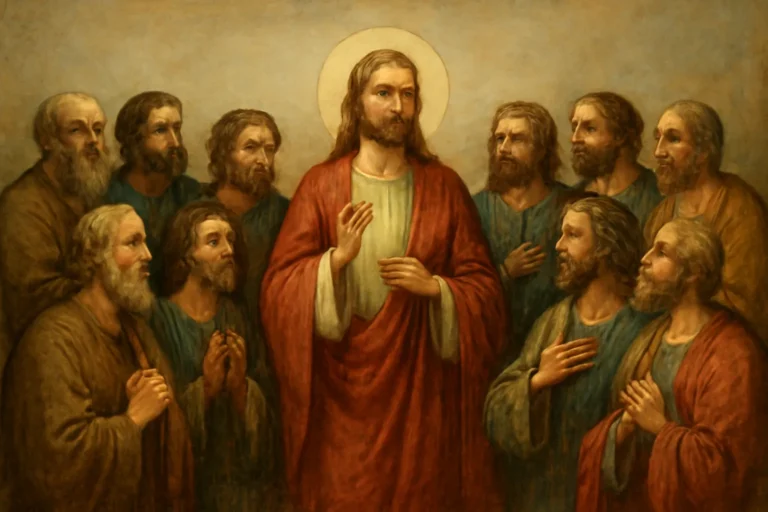
In early Christian memory, the figure commonly called Matthew the Apostle appears as one among the Twelve, a group chosen by Jesus to witness his ministry and to bear the mission forward. The designation the tax collector foregrounds a dramatic personal conversion: a publican, a social outsider from the perspective of some segments of Jewish society, is invited to be a disciple. The Gospel of Mark and the Gospel of Luke recognize a man named Matthew, described as a son of Alphaeus and a collector of duties at a toll booth. In the Gospel according to Matthew itself, the name Matthew is closely associated with the authorial persona, and the tradition soon harmonizes the roles of apostle, evangelist, and scribe within the same figure of witness.
Over time, the broader Christian community assigned a more developed identity to the writer of the Gospel according to Matthew, distinguishing him as the author of the Gospel that bears his name and as a representative of the apostolic witness in the early church. This identification was reinforced in artistic, liturgical, and patristic contexts, where St. Matthew became a patronal figure for communities and congregations seeking to recall the gospel’s explicit focus on Jesus as the Messiah described in Scripture.
The place of Matthew in the Synoptic portrait
The three Synoptic Gospels—Matthew, Mark, and Luke—form a distinctive triad in early Christian literature. The figure known as the writer of the Gospel according to Matthew is often perceived through the lens of his relationship to Mark’s Gospel and, in some scholarly circles, the hypothetical Q source. The third gospel’s author is understood by tradition and by many modern scholars to have written a narrative that both incorporates Mark’s earlier account and expands it with unique material that foregrounds fulfillment of prophecy and a structured teaching discourse. For this reason, the gospel writer is frequently seen as a mediator who translates the apostolic witness into a form accessible for Jewish-Christian and Gentile-Christian readers alike.
Authorship and Dating: Traditional Beliefs versus Scholarly Perspectives
Early tradition and the claimed authorship
Early Christian writers such as Papias, Irenaeus, and Eusebius attached the name of the Apostle Matthew to the Gospel according to Matthew and asserted that he directed the community’s memory about Jesus from his own firsthand recollections or from those of others who had heard him. In many patristic accounts, the evangelist is described as a former tax collector who left everything to follow Christ and who then became a teacher and reporter of the apostolic witness. In this framework, the gospel writer is not merely a collector of sayings but an organizer of the church’s transmission of faith, offering a narrative that would shape worship, preaching, and catechesis for generations.
Scholarly evaluations: dating and authorship debates
Modern biblical scholarship often treats the question of authorship with a critical balance. Some scholars emphasize the traditional attribution to the Gospel’s author as persuasive testimony that links the text to an eyewitness or a companion of eyewitnesses. Others argue that the work is primarily the product of a later Gospel writer, writing in a presumably late first century context (roughly 80–90 CE or later in some views), drawing on Mark, a hypothetical source known as Q, and unique material not found in Mark. This scholarly stance does not erase reverence for the evangelist who wrote Matthew; rather, it invites us to recognize the text as a crafted composition in a particular historical and ecclesial moment. For faith communities, the question of authorship often yields to the question of authority: does the gospel’s claim about Jesus’ identity and mission endure regardless of the exact name attached to the author? The answer offered by tradition and by many readers is a confident yes: the gospel attributed to the writer of Matthew remains a foundational source for understanding Jesus, the Kingdom, and the church’s mission.
Date and context: conceptual boundaries
Traditional dating places the composition in the late first century, with estimates ranging from around 70 CE to the 90s. The context would have included tensions between Jewish-Christian communities and those outside the synagogue, a Christian movement negotiating identity after the destruction of the Jerusalem temple, and an increasing emphasis on mission to Gentiles. The text’s content—block after block of teaching discourse, the narrative of Jesus’ life arranged around significant events, and a pronounced emphasis on righteous living in response to the Kingdom of Heaven—reflects a community that sought to interpret Jesus’ life as the fulfillment of Hebrew scripture and to articulate a moral and liturgical way to live in light of the risen Christ.
Literary Structure and Theological Mission: What the Gospel According to Matthew Seeks to Do
Overall architecture: a gospel shaped by fulfillment and invitation
The Gospel of Matthew is often described as carefully structured around five blocks of teaching discourse (paralleling the five books of Moses in the Hebrew Bible) interwoven with narrative episodes about Jesus’ ministry. This arrangement emphasizes both the proclamation of the Kingdom of Heaven and the ethical demands of following Jesus. The narrator, often identified with the gospel writer or with the Evangelist Matthew, anchors episodes in specific geographic and social settings while repeatedly pointing to Old Testament prophecy that finds its “yes” and “amen” in Jesus. In this sense, the author of the Gospel according to Matthew crafts a document that invites readers to interpret Jesus as the fulfillment of Torah and Prophecy and to live accordingly within the church’s worshiping assembly.
Key discourses and their theological significance
Among the most influential sections are the Sermon on the Mount (Matthew 5–7), the Mission Discourse (Matthew 10), the Parables of the Kingdom (Matthew 13), the Community Instructions (Matthew 18), and the Eschatological Discourse (Matthew 24–25). Each discourse serves a distinct purpose: to instruct, to empower, to reveal the nature of the Kingdom of Heaven, and to prepare the community for trials and ultimate judgment. Throughout these sections, the Gospel’s author deploys repeated motifs—righteousness that exceeds legalistic piety, genuine piety over external show, mercy, humility, and steadfast faith—that encourage a concrete, lived faith. The figure of the tax collector turned follower becomes an emblem for the church’s universal outreach and for a transformative encounter with divine grace.
Narrative arc: from predawn call to post-resurrection commissioning
The narrative arc culminates in the commissioning of Jesus’ followers to go and make disciples of all nations, baptizing and teaching in his name (the Great Commission). This cosmic horizon reframes the gospel’s center from a local Jewish audience to a global community of faith. In this arc, the Apostle Matthew shows a church that learns to worship Cristo as Lord and to live as a people summoned to mercy, justice, and mission. The author’s stylistic choices—how parables are framed, how healings are recounted, how the passion narrative unfolds—are not mere literary devices; they are theologically charged means to reveal the identity of Jesus as Savior and to call communities into a transformative life in light of that confession.
Themes: Core Doctrines and Ethical Demands Present in the Gospel
Christology: Jesus as Messiah and Emmanuel
Across the gospel attributed to the gospel writer, Jesus is consistently presented as the long-awaited Messiah who fulfills prophetic expectations. He is portrayed not only as divine Son but as the one who bears the burden of salvation through suffering, death, and resurrection. The title Emmanuel—“God with us”—appears in the narrative as a theological statement about God’s initiative in history and Jesus’ vocation to redeem humanity. For the writer of the Gospel according to Matthew, the Incarnation is not merely a moment of divine revelation; it is a redemptive event that redefines the people of God, the nature of worship, and the mission of the church.
Kingdom of Heaven: ethics, eschatology, and community life
A central motif in the gospel author’s presentation is the Kingdom of Heaven (or Kingdom of God). The gospel’s portrayal of the Kingdom blends present experience with future hope: the kingdom is at hand, yet its fullness awaits the consummation at the end of the age. The gospel writer emphasizes that entering the Kingdom requires righteousness that exceeds that of the scribes and Pharisees, a reliance on divine grace, and a willingness to imitate Jesus in humility and mercy. This emphasis on ethical transformation is inseparable from the proclamation of the gospel’s message; the two are woven together by the voice of the evangelist who urges readers to live in light of the King’s rule.
Church and community: ecclesiology in narrative and discourse
From the outset, the gospel attributed to the Apostle Matthew appears to shape a nascent ecclesiology: a community bounded by confession, baptism, worship, and discipline. The text includes explicit instructions about church order, forgiveness, and reconciliation, suggesting that the author wants to show how the church should organize itself in light of Jesus’ authority. This ecclesial vision is reinforced by parables and teachings that describe the nature of true discipleship, the duties of leadership, and the responsibility of the gathered community to care for the vulnerable and to pursue justice in society.
Scriptural Fulfillment and Hermeneutics: Matthew and the Hebrew Bible
Fulfillment citations: reading Jesus through the prophecies
A hallmark of the gospel writer is the repeated formula of fulfillment: “This happened so that what was spoken by the prophet might be fulfilled.” For readers of the Gospel according to Matthew, Jesus is consistently cast as the reader of Israel’s sacred texts and the one who accomplishes what the prophets foretold. The connection between Jesus’ life and the Hebrew scriptures is not simply literary; it is a hermeneutical stance that seeks to interpret Jesus as the culmination of a divine plan announced to Israel. For many, this makes the gospel by the evangelist a bridge between Judaism and the emergent Christian faith, presenting Jesus as the Messiah who transcends traditional boundaries while fulfilling them in new, salvific ways.
Typology, law, and ritual: strategies of interpretation
The Gospel according to Matthew employs typology and methodical readings of the law to show continuity with Torah and prophets while introducing a transformative interpretation under the new covenant. The reader encounters typological readings—persons, events, and institutions in the life of Jesus that recall earlier biblical patterns. In these moments, the writer of the Gospel according to Matthew invites communities to see continuity between the old covenant and the new, yet to understand that the Messiah’s work inaugurates a new era of relationship with God, the church’s worship, and the mission to the nations.
Parables, Teachings, and the Ethical Life of the Community
The Parables of Matthew: instruction through vivid imagery
Parables occupy a central place in the Gospel of Matthew, serving as accessible vehicles for moral instruction and for the revelation of the Kingdom’s mysteries. The parabolic material—such as the Sower, the Wheat and the Tares, the Pearl, and the Net—invites readers into contemplation about receptivity, judgment, growth, and the complexity of life within the Kingdom. The evangelist crafts these stories to challenge complacency, to reward humility, and to discern true righteousness from mere outward piety. In this sense, the author of the Gospel according to Matthew is not only a reporter of miracles but a spiritual guide who uses parables to shape a community’s conscience and imagination.
Instruction and ethos: laws of love and the ethics of the Kingdom
Beyond the parables, the Gospel according to Matthew presents a sustained set of ethical exhortations. The Sermon on the Mount remains the most influential locus of these teachings, but the gospel continues to embed ethical instruction in narrative scenes: care for the marginalized, integrity in speech, forgiveness, mercy, and solidarity with the afflicted. The Gospel Writer demonstrates how Jesus’ teachings translate into concrete moral decisions—how to pray, how to relate to enemies, how to judge rightly, and how to live with a posture of generosity and justice in a fallen world.
Relation to the Other Gospels: Intertextual Dialogues with Mark and Luke
Relationship to Mark: dependence, expansion, and differentiation
Among the most discussed questions is how the writer of the Gospel according to Matthew relates to the Gospel of Mark. The common scholarly view is that Matthew used Mark as a primary source, expanding and clarifying Mark’s account with additional episodes and commentary. In this light, the gospel writer becomes a skilled interpreter who honors Mark’s narrative while supplying unique material that highlights his distinctive theological concerns—namely, the foregrounding of Jesus as the divine Messiah grounded in Jewish expectation, the institution of the church, and the global scope of salvation.
Relation to Luke (and the hypothetical Q source)
In the broader synoptic discussion, the inclusion of material common to Luke but not found in Mark raises questions about common literary sources and intertextual exchange. The Gospel writer whose name is associated with Matthew contributes to a milieu in which the early church’s understanding of Jesus’ life is shaped by shared traditions and individual editorial choices. This dynamic underscores the sense in which the apostolic witness to Jesus was a living conversation—an ongoing process of hearing, preaching, and interpreting the good news in diverse communities.
Tradition and Canon: The Reception of Matthew Across Christian Traditions
Patristic exegesis and liturgical imagination
In the patristic era, the Evangelist Matthew was read not only as a historian of Jesus’ life but as a pastor of the church’s conscience. Fathers of the church cited fulfillment passages, interpreted the Sermon on the Mount in ways that guided spiritual formation, and used the gospel’s narrative to teach about the church’s worship, sacraments, and discipline. The figure of the tax collector turned apostle served as a powerful symbol of God’s grace and the possibility of renewal for any person who answers the call to follow Jesus. In liturgical settings, the gospel stored in the memory of communities through prayer, preaching, and ritual formation, helping to shape the rhythm of Christian life across centuries.
Eastern and Western Christian reception
Both in the Western and Eastern Christian traditions, the Gospel according to Matthew has occupied a central place. In Catholic thought, for example, Matthew’s gospel informs Marian devotion, Christological reflection, and ecclesial teaching. In the Eastern Orthodox tradition, the gospel is celebrated for its practical wisdom and its reverence for apostolic succession, while also highlighting its prophecies and typological readings. Protestant traditions have emphasized Matthew’s moral teaching, the clarity of the Sermon on the Mount, and the gospel’s call to discipleship and mission. Across these diverse streams, the author of the Gospel according to Matthew remains a shared reference point for understanding Jesus, the church, and the moral life of believers.
Historical and Social Context: Interpretive Lenses for Matthew
Jewish-Christian milieu and the emergence of a universal mission
The gospel attributed to the apostle Matthew emerges from a milieu in which Jewish identity, religious practice, and evolving Christian faith intersect. The text’s insistence on Jesus’ fulfillment of Torah and prophecy speaks to a community wrestling with how to preserve continuity with the covenant while embracing a new life in Christ. The mission section, which exhorts believers to go to the nations, signals a widening horizon: the writer of the Gospel according to Matthew sees the church’s vocation as universal without losing the roots in Israel’s story. This hermeneutic invites readers to consider how early Christian communities interpreted their own history in relation to the Hebrew Bible and how they understood themselves as inheritors of a divine call to justice, mercy, and witness.
Socio-political pressures and the shaping of message
In the late first century, Christians faced skepticism, opposition, and sometimes persecution. The author of the gospel bearing Matthew’s name seems to respond to these pressures by emphasizing a robust ethical life, a clear confession of Jesus as Messiah and Lord, and a faith that remains anchored in a divine promise. The social texts in the gospel—teachings about forgiveness, mercy, and care for the vulnerable—offer practical guidance for communities navigating complex social landscapes. For students of theology, the work attributed to the gospel writer demonstrates how religious communities articulate hope and responsibility in a world of political change and cultural plurality.
Art, Liturgy, and Educational Use: The Matthew Tradition in Practice
Artistic depictions of the apostle and the gospel writer
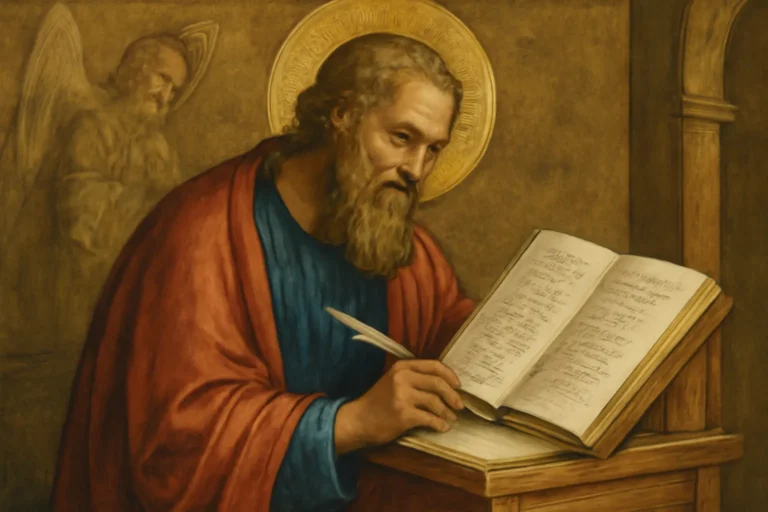
From medieval to modern times, artists have depicted St. Matthew as a central figure in scenes of call, transformation, and teaching. Visual representations often reflect the gospel’s emphasis on the divine authority of Jesus, the call of Matthew as a model of conversion, and the mission to the nations. These depictions contribute to a broader, lived theology in which the gospel’s author is celebrated as a witness whose life and writings call believers to deeper faith and service.
Liturgy, preaching, and catechesis
In churches across traditions, readings from the Gospel according to Matthew appear in worship, catechetical materials, and sermons. The teaching sections—the Sermon on the Mount, the Beatitudes, and the moral directions—are frequently the focus of homilies and instructive study. The gospel writer’s emphasis on righteousness, mercy, and faithful discipleship provides a framework for spiritual formation, ethical reflection, and communal practice. Contemporary Christian education often uses Matthew as a gateway to exploring topics like ethics, eschatology, the kingdom, and the church’s mission, all anchored in the witness of the gospel’s author.
Legacy: The Influence of the Gospel from Antiquity to Modernity
Impact on Christian worship and life
The theological and moral emphases found in the Gospel according to Matthew have influenced the way Christians worship, teach, and live out their faith. The gospel’s insistence on Jesus’ authority, the call to righteousness, and the church’s mission to the world has shaped liturgical practices, catechetical curricula, and social ethics. The figure of the evangelist who wrote Matthew thus stands as a model of how an early Christian communicator could fuse narrative, doctrine, and pastoral instruction into a coherent Christian vision.
Scholarly and ecumenical dialogue
In the twenty-first century, scholars and faith communities continue to engage with the gospel attributed to the apostle Matthew through historical-critical study, literary analysis, and theological reflection. Dialogues across denominations often highlight how different communities interpret Jesus’ words, commissions, and parables in light of modern concerns such as social justice, interfaith engagement, and ethical dilemmas. The enduring value of the Gospel of Matthew is evident in its capacity to provoke thoughtful exegesis, constructive debate, and faithful living among readers who seek to know Jesus more fully and to follow him more closely.
Key Figures and Episodes: A Quick Reference
- Matthew the Apostle as tax collector and disciple: his personal transformation forms a central narrative image in the gospel’s portrayal of grace.
- The calling of Matthew: an episode that dramatizes the invitation to follow Jesus and the inclusive reach of the gospel.
- The Sermon on the Mount: a foundational block of teaching that defines righteousness, prayer, and life in the Kingdom.
- The Beatitudes and the ethical imperative: a concise program for living in light of God’s reign.
- The Passion and Resurrection narratives: the passion of Jesus, his crucifixion, and a triumphant proclamation of resurrection.
- The Great Commission: a global mission mandate that defines the church’s identity and purpose.
Conclusion: The Witness of the Gospel’s Author and Its Ongoing Call
In sum, the figure known as Matthew the Apostle—and the writer of the Gospel according to Matthew who bears his name—offers a singular witness to Jesus as the Messiah, the fulfillment of Israel’s scriptures, and the founder of a renewed people of God. Whether one reads the text as a product of an eyewitness circle, as the work of a carefully crafted evangelist, or as a canonical document shaped by communities in conversation with tradition, the Gospel of Matthew remains a living, dynamic document. It asks modern readers to consider who Jesus is, what it means to follow him, and how a community can live out the values of the Kingdom under his lordship. The legacy of the gospel writer continues to inspire worship, ethical reflection, catechesis, and mission—a testament to the enduring relevance of Matthew’s witness in the church’s life across generations.