
Mary Magdalene, also known as Mary of Magdala or Mary the Magdalene, stands as a central figure in Christian religious history. Her life, ministry, and especially her role in the resurrection narratives have profoundly shaped theology, liturgy, and devotion for centuries. This long‑form article invites readers into a careful, reverent exploration of her identity, her encounters with the risen Christ, and the enduring significance she holds for faith communities today. The focus here is not merely historical affixation but a sustained engagement with how her presence nourishes theological reflection, pastoral practice, and spiritual imagination across diverse Christian traditions.
Identity and Name: Who Is Mary Magdalene?
Origins, Geography, and Names
The figure commonly called Mary Magdalene is widely associated with the town of Magdala on the western shore of the Sea of Galilee. In ancient sources her place of origin is sometimes rendered as Magdala, a fishing town that had grown into a hub of commerce and life in the first century. Scholarly discussion emphasizes that the name Mary was one of the most common feminine given names in Jewish communities of that era, while Magdala identifies a geographic tie that anchors her story in the tangible landscape of Galilee. Consequently, some contemporary readers render her as Mary of Magdala or Mary the Magdalene, a formulation that foregrounds both her identity and her locale.
Across the centuries, many devotional and doctrinal traditions have attached additional descriptors to her name: she is sometimes styled as the Apostle to the Apostles for her role as the first witness of the resurrection, and she appears in various manuscripts and rites with honorific terms that reflect her status as a model of contemplative faith, courage, and steadfastness. It is important to distinguish Mary Magdalene from other prominent biblical women named Mary, such as Mary, the mother of Jesus, and Mary of Bethany (the sister of Martha and Lazarus). The distinctiveness of Mary Magdalene’s narrative arises not only from her proximity to Jesus but from the particular witness she provides to the central mystery of Christian faith: the resurrected Lord alive among his followers.
In the Gospels: A Snapshot
Within the canonical Gospels, Mary Magdalene appears as a devoted disciple who accompanies Jesus and supports his mission, often alongside a company of women. Her presence in multiple Gospel accounts—Matthew, Mark, Luke, and John—highlights a consistent pattern of fidelity, intercession, and vulnerability before God. While the four Gospels present overlapping portraits, they also invite readers to attend to distinct emphases: some highlight her as a witness at the tomb, others emphasize her role in the early movement of women who accompany Jesus from Galilee toward Jerusalem, and still others frame her within a broader narrative of divine mercy and transformed vocation.
Scholars often note that the name-literalness of her identity side-steps a purely mythic portrayal and invites a careful engagement with historical memory. In this light, Mary Magdalene emerges not merely as a passive recipient of events but as an active agent in the early Christian story—a seeker, a learner, and a messenger whose experience of encounter with Jesus becomes a template for following him after the resurrection. Theologically, this means her life is read not only as an emblem of repentance or devotion but also as a crystallization of discernment, witness, and mission within the early church.
The First Witness: The Resurrection Encounter
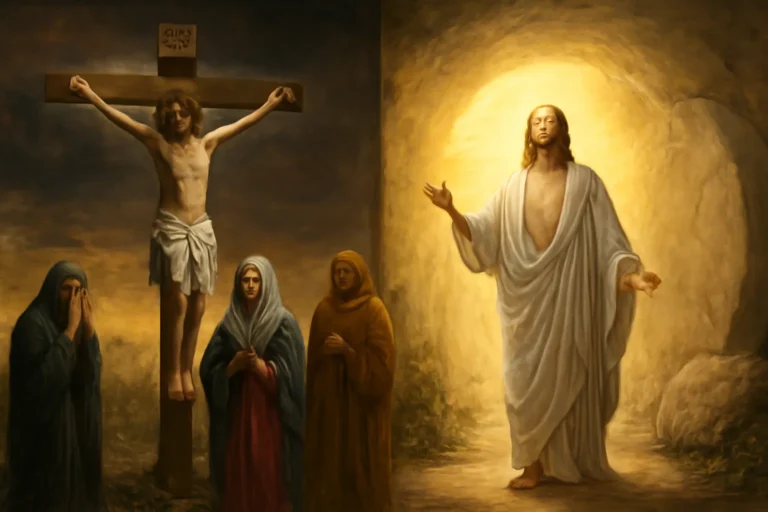
One of the most resonant segments of Mary Magdalene’s narrative concerns the moment when she encounters the risen Christ. In the Gospel of John, the scene unfolds with quiet drama: Mary Magdalene arrives at the tomb, discovers the stone rolled away, and, in the absence of the body, encounters a divine revelation that redefines her understanding of death, life, and identity. The risen Jesus engages her in a personal address that has echoed through centuries of Christian devotion: he calls her by name, and in that intimate moment she recognizes him—though initially through a veil of tears and confusion.
From this encounter emerges a cascade of theological and pastoral reflections. The narrative asserts several important truths: first, that the risen Lord is approachable and relational even after death; second, that the first witness to the resurrection is a woman, which has been taken as a sign of the inclusive nature of God’s saving work; and third, that the commission given to Mary Magdalene to tell the other disciples is a model of proclamation that invites the church to bear witness in an urgent and faithful manner. The phrase in the text often highlighted by readers—“Mary,” spoken by the risen Jesus—signals a personal recognition that transcends general doctrine and enters into intimate relationship. This encounter, then, becomes a theological hinge: the God who raises Jesus from the dead also seeks to draw human beings into a living, communicative relationship with the divine mystery.
Across translations and traditions, the core motifs of this resurrection encounter are preserved while accepting the interpretive insights of different communities. The emphasis on personal recognition—Jesus knowing Mary by name—underscores a central biblical principle: God’s self-disclosure often happens in the concrete language of relationship. The effect is not merely cognitive assent to an extraordinary event; it is an invitation into a renewed way of living, a reorientation of hopes, and a reconfiguration of what it means to be a disciple in a world that longs for good news. In sermons, catechetical classes, and spiritual retreats, this encounter is cited as a model of how the divine presence meets us at the point of our longing, our tears, and our longing to see life beyond loss.
Other Women and the Resurrection Narrative
- The other Mary who accompanies Mary Magdalene to the tomb and shares in the discovery of the empty space, an early signal of the cooperative nature of witness in the Gospel narrative.
- The group of women followers who visit the tomb after the Sabbath, who perform acts of devotion, and who receive the angelic message that Jesus has risen.
- In some Gospel traditions, the women are the first to receive the commission to report the resurrection to the male disciples, highlighting a radical reconfiguration of social expectations in the proclamation of good news.
- Across the synoptic sources and the Gospel of John, the risen Christ’s appearances to women emphasize that the new creation begins with veridical witness that transcends gendered norms and cultural barriers.
It is instructive to note that the varieties of encounter with the resurrected Jesus include not only Mary Magdalene but also the broader community of women at the tomb. These moments are often read as a theological statement about the scope of divine mercy and the accessibility of the risen life to those who trust the testimony they have received. The collaborative dynamics—women sharing a message that becomes a mandate—reframe how early Christian communities perceived authority, leadership, and the reception of divine truth in community life. In this sense, Mary Magdalene’s experience is a focal point for reflections on witness, proclamation, and the formation of a shared faith community.
Appearances to the Apostles and Disciples
To Peter and the Apostles in Jerusalem
In many theological reflections, the resurrection appearances unfold as a sequence that moves from a powerful personal encounter to a public commissioning. The risen Lord’s appearance to Peter and the other disciples in Jerusalem is a turning point that consolidates their memory and invites them to bear witness with renewed courage. The narrative emphasizes reconciliation, restoration, and the reconfiguration of leadership for the post-resurrection church. The way the disciples are drawn into the widening circle of testimony—often framed as a shared mission—echoes the social patterns of early Christian communities, wherein trust, mercy, and shared discernment became the scaffolding of a new religious movement.
To Thomas and the Disciples in the Upper Room
The encounter with Thomas is another crucial moment in the resurrection accounts. Thomas’ request for tangible evidence—“see my hands, put your finger here; reach out your hand and place it in my side”—is frequently discussed in theological discourse as a doorway to a broader understanding of faith that does not disdain evidence but asks for a trustworthy encounter with the living God. The risen Jesus responds with patience, inviting a more intimate and robust faith that moves beyond doubt toward confession: “My Lord and my God” becomes a high confession and a powerful ethical directive for the community that follows. The implications for Mary Magdalene, who witness the risen one earlier, include a shared point of contact with those who require their own experiences reframed in the light of resurrection reality.
To Cleopas and the Companion on the Road to Emmaus
Though Mary Magdalene is not part of the Emmaus story in most canonical accounts, the Emmaus narrative expands the palette of post-resurrection appearances that shape Christian memory. Jesus joins Cleopas and another disciple on the road, opens their minds to understand the scriptures, and reveals himself in the breaking of bread. This encounter, in which recognition and interpretation are coupled with sacramental imagery, provides a template for ecclesial reading of Scripture and the discovery of Christ’s presence in ordinary meals and shared life. It broadens the sense that the risen Christ appears wherever his community gathers in trust, prayer, and hospitality, including the circle of Mary Magdalene’s own witness and the church’s shared mission to announce life beyond the tomb.
To the Galilean Apostles by the Sea of Tiberias
Another pivotal resurrection appearance occurs by the Sea of Galilee, where Jesus appears to several apostles during a fishing expedition and gently restores Peter’s leadership after a moment of failure. The narrative invites reflection on vocational restoration, communal nurture, and the patient re‑formation of followers who are sent out to “feed my lambs” and “tend my sheep.” Mary Magdalene’s role in the broader network of witnesses—though not present at every appearance—is central to the theology of witness: her standing with others who have seen the risen Lord anchors the apostolic witness of the church in a real, embodied, communal memory.
In sum, the patterns of these encounters with the resurrected Jesus—Mary Magdalene’s intimate moment, the apostolic engagements in Jerusalem, the Emmaus-inspired encounters, and the Sea of Galilee reunions—collectively inform a robust theology of testimony, mission, and pastoral care. The diversity of these appearances underlines an important theological principle: the risen Christ continues to meet people where they are, with words that address their names, their doubts, their longing for meaning, and their desire to live faithfully in a world that longs for resurrection life.
Mary Magdalene in Early Church Tradition and Theological Reflection
Patristic Appraisal: A Model of Faithful Witness
Early church writers and theologians offered a high regard for Mary Magdalene as a model of steadfast devotion in the face of trial and uncertainty. The patristic tradition frequently celebrated her as a figure who embodies contemplative faith and courageous evangelism. In some hagiographical writings, she is portrayed as an intimate listener who receives revelations from Christ and becomes a trusted conduit for sharing the divine word with others. Across regions and centuries, her memory blooms in sermons, liturgical prayers, and devotional writings that emphasize fidelity, humility, and a deep interior communion with God. Theologically, she contributes to a broader understanding of vocation: not all callings are identical, but all are legitimate avenues through which the church bears witness to the gospel and participates in God’s redemptive work.
Penitence, Mercy, and the Controversy of Identifications
Over the centuries, some traditions conflated Mary Magdalene with the “sinful woman” who anoints Jesus’ feet in Luke 7:37–50, or with Mary of Bethany in later interpretive layers. Modern biblical scholarship generally distinguishes Mary Magdalene from those other figures, arguing for her distinct role and identity within the gospel narratives. Nevertheless, this conflation has been influential in shaping popular piety and theological imagination. Contemporary readers are invited to read Mary Magdalene with careful attention to textual context, historical-cultural background, and the diversity of early Christian communities, which helps to illuminate how memory and doctrine interact in meaningful ways. The ongoing dialogue between tradition and scholarship thus serves not to erase her significance but to deepen it—revealing how a single life story can yield multiple ethically and spiritually instructive fields of reflection.
Mary Magdalene and the Language of Mission
Within the broader load of Christian mission, Mary Magdalene’s memory is often invoked as a symbol of faithful proclamation. The phrase “apostle to the apostles” recurs in the tradition as a shorthand for the idea that the first herald of the resurrection also models the humility and courage required to bring a transformative message to those who most need to hear it. This memory has informed preaching and catechesis about what it means to bear witness to divine mercy, to proclaim good news, and to participate in the life of the church as a community of learners who become messengers of hope. Theological reflections on Mary Magdalene’s witness thus intersect with broader questions about the nature of apostolic testimony, the shape of leadership in the church, and the ways in which women’s voices contribute to the theological and pastoral life of Christian communities.
Mary Magdalene in Apocryphal Texts and Modern Scholarship
Gnostic and Non-Canonical Texts
Beyond the canonical Gospels, Mary Magdalene appears in a number of early Christian writings that circulated in diverse communities. In some Gnostic texts, she is depicted as a prominent teacher or even a spiritual partner of Jesus. The Gospel of Mary (a text from the 2nd century) presents Mary as a teacher who enjoys a privileged role in interpreting Jesus’ sayings for the apostles; in other instances, she is portrayed as a figure of deep spiritual knowledge and moral authority. The Gospel of Philip speaks of Mary Magdalene as Jesus’ companion in a way that has historical and theological significance for discussions about intimacy, discipleship, and the nature of spiritual friendship. Readers should approach these texts with discernment, recognizing their value for understanding the theological landscape of early Christianity while also acknowledging their lack of canonical status for most Christian communities.
Scholarly Trends: Historical Memory and Theological Significance
Modern biblical scholarship often situates Mary Magdalene within a spectrum of early Christian memory that includes diverse perspectives on discipleship, gender, and religious authority. Critics and historians examine how later traditions shaped her portrayal, sometimes elevating her to a central place in the drama of salvation and sometimes narrowing her role to conventional stereotypes. Contemporary scholars call for careful reading that respects historical context while honoring the enduring spiritual authority of her witness. This approach helps modern readers appreciate how Mary Magdalene can be both a historical figure and a symbol—a living emblem of trust in the risen Christ and of the church’s ongoing mission to bear witness to life beyond the tomb.
Iconography, Liturgy, and Devotional Life
Artistic Representations Across Traditions
From medieval altarpieces to modern icons, Mary Magdalene has been depicted in visual art as a figure of penitence, longing, and transformation. Some depictions emphasize her contemplative posture and long contemplative gaze, while others highlight scenes of encounter with the risen Christ or scenes of care for the community as a faithful disciple. The iconography of Mary Magdalene invites believers to reflect on the dimensions of discipleship: listening for God’s voice, responding with mission, and remaining steadfast in the face of loss. Across cultures, she has appeared with different attributes—often holding a jar of perfumed oil or other symbols that evoke acts of devotion and preparation for the dawn of Easter. These images serve as didactic tools for contemplation, prayer, and catechesis, helping the faithful visualize the interior life of surrender and the outward life of service to others.
Liturgy, Prayer, and Devotion
In liturgical settings across many Christian traditions, Mary Magdalene is honored through readings, prayers, and hymns that foreground her courage, fidelity, and witness. In some communities, her memory is commemorated on a specific feast day or included in annual cycles of devotion to the Easter narrative. Theological reflections on her life contribute to a broader spiritual vocabulary: mercy as a divine posture toward humanity; repentance as a turning toward new life; and witness as an invitation for others to encounter the risen Christ. Institutional and lay communities alike draw upon her example to discuss how to respond to loss with hope, how to offer intercessions for those who seek healing, and how to sustain a life that is marked by gratitude for divine mercy and the courage to proclaim it in the world.
Theological Reflections on Mary Magdalene’s Vocational Identity
- Witness and proclamation: Mary Magdalene’s role as the first to encounter the risen Jesus makes her a paradigm of courageous testimony that invites Christians to bear witness in hopeful, truthful ways.
- Contemplation and action: Her life suggests a balance between contemplative devotion and active service—an integration that many communities strive to emulate in pastoral ministries and lay leadership.
- Mercy and transformation: The theme of mercy—God’s willingness to heal, forgive, and empower—runs through her narrative, offering a pastoral lens for ministry to marginalized or wounded people.
- Ecclesial memory: Her memory invites the church to nurture inclusive leadership and to honor diverse expressions of discipleship, particularly from communities historically marginalized within ecclesial life.
Historical and Cultural Impact
The figure of Mary Magdalene has left an imprint far beyond the pages of the Gospels. In art, literature, music, and religious education, she serves as a point of mediation between memory and faith. Her story has stimulated questions about what it means to seek truth, to encounter the divine in ordinary settings, and to persevere in mission despite confusion or grief. In many communities, her memory inspires ministries of hospitality, care for the marginalized, and acts of mercy that mirror divine compassion. In ecumenical and interfaith dialogues, Mary Magdalene also provides a bridge for discussing topics such as women’s leadership, the dynamics of witness, and the interpretation of sacred texts across diverse spiritual traditions.
Moreover, Mary Magdalene’s prominence in the resurrection narratives challenges readers to consider how the earliest followers of Jesus experienced the pivot from death to life and how that pivot shapes modern Christian ethics, particularly in relation to forgiveness, reconciliation, and the transformation of social relationships. The scales of influence are broad: from catechesis and preaching to social outreach and spiritual formation. The ongoing relevance of her story is found in its capacity to invite believers into a lived encounter with grace—an encounter that invites response, mission, and communal memory that remains vibrant across generations.
Modern Interpretations and Interfaith Perspectives
Women’s Leadership and Ecclesial Roles
Contemporary discussions about Mary Magdalene often intersect with debates about women’s leadership in church and society. In many Christian communities, her memory is invoked in support of expanded participation in governance, teaching, and pastoral care. The sense that a woman could be a primary witness to the resurrection offers a compelling scriptural basis for arguments that leadership should reflect the diversity of the church’s body. This does not diminish the significance of male leadership but invites a fuller, more inclusive understanding of how spiritual authority can be exercised in different voices and gifts within the community of faith.
Contemporary Theologies of Resurrection
In systems of contemporary theology, Mary Magdalene’s testimony is sometimes invoked to illuminate the nature of divine life and the meaning of resurrection in a modern context. This includes reflections on how new life might emerge in personal conversion, community reconciliation, and social transformation. Her witness is used as a lens to examine how religious communities interpret the resurrection as not only a past event but a living reality that continues to shape ethics, worship, and public witness. In this sense, Mary Magdalene remains not only a historical figure but also a living symbol of the church’s ongoing encounter with the risen Christ in the world.
Conclusion: Mary Magdalene as a Figure of Faith and Witness
Mary Magdalene embodies a range of theological themes that remain central to Christian faith: fidelity in discipleship, longing for divine truth, courage in witness, and a steadfast reliance on God’s mercy. Her life invites readers to ask hard questions about what it means to follow Jesus after the Resurrection, how personal encounter with the divine reshapes one’s identity, and how communities are called to respond to the good news with both tenderness and bold proclamation. By considering Mary Magdalene—in her own words and within the wider matrix of resurrection appearances, apostolic testimony, and ecclesial memory—we gain a richer understanding of the living faith that has sustained Christians for two millennia and continues to nurture hope in the heart of every seeker who longs for life abundant, even after the tomb has been seen as a boundary rather than a gateway.
As readers and communities reflect on the many facets of Mary Magdalene’s story, may they be guided toward a more nuanced, respectful, and prayerful engagement with sacred memory. The feminine witness she represents, amplified through generations of interpretation, remains a summons to live out a faith that is both contemplative and active; a faith that recognizes the risen Lord, calls others to encounter him, and participates in the transformative work of God’s kingdom—today, tomorrow, and in the ages to come.