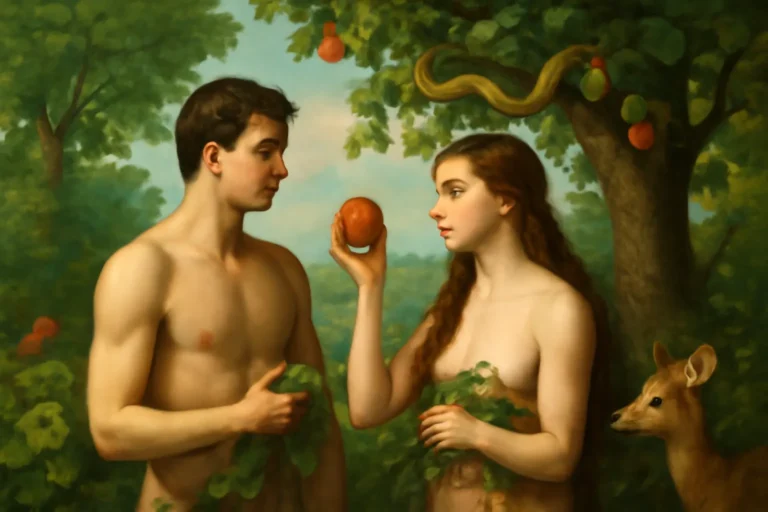
The Garden of Eden stands as one of the most enduring symbols in the religious imagination. Far more than a geographical location in a ancient text, the Edenic garden represents a locus of divine-human encounter, a threshold between innocence and knowledge, hospitality and judgment, presence and exile. In many traditions, Eden is not only a place but a theological category—an archetype of paradise, a model of divine benevolence, and a lens through which humanity reads its own history, vocation, and longing for communion with the Creator. This article surveys the Garden of Eden from multiple angles: its biblical roots, its symbolic meanings, its reception in Judaism, Christianity, and Islam, and its continuing relevance for ethics, liturgy, art, and personal devotion.
Origins and Names: Eden, Paradise, and the Edenic Garden
The biblical tradition employs several terms to refer to the same sanctuary-like space where humanity first dwelt in friendship with God. In the Hebrew Bible, the term commonly translated as Garden (גן, gan) and the proper name Eden (Even also rendered as Delight) convey the idea of a cultivated, blessed place prepared by God. Across translations, the Edenic designation often appears in pairs that emphasize both place and blessing: the Garden of God, the Paradise of God, and the terrestrial Paradise.
In later religious literature and in broad popular usage, the terminology expands to include the Garden of Eden, the Edenic garden, and simply Paradise. For readers and worshippers, these variations signal a shared conviction: the story is about more than land or landscape. It is about access to divine life, about friendship with God, and about the fragile human vocation to steward creation in reverent dependence.
A further semantic expansion occurs when the Eden narrative is read in light of other scriptural what-ifs and other sacred traditions. In rabbinic and medieval Jewish interprets, Eden is sometimes described as a world of righteousness that lies beyond time—an eschatological anticipation rather than a single historical locale. In Christian theology, Eden often comes to symbolize the first covenantal home of humankind, prefiguring the ultimate restoration found in the eschaton. In Islamic readings, the adjacent concept of Jannah or Paradise shares motifs of bliss, rivers, and divine favor, yet with its distinctive theological contour and emphasis on prophetic guidance.
The layering of terms and concepts—Garden, Eden, Paradise, Edenic paradise—invites readers to notice both continuity and distinction across traditions. It also invites careful philological attention: the rivers named in Genesis 2–3, the prohibition given to Adam, and the appearance of the serpent all serve as a framework for a larger drama about knowledge, obedience, and grace.
The Genesis Narrative: A Garden Home and The Fall
Overview of Genesis 2 and 3
The opening chapters of Genesis present an intimate drama staged in a lush, meticulously prepared setting. In Genesis 2, humanity—represented by the first man (Adam) and, in some traditions, the first woman (Eve)—is placed in a cultivated land that is both a gift and a charge. The text emphasizes relational abundance: a garden that bears fruit, a decisive boundary, and the divine presence that visits in the cool of the day. The central command is explicit: do not eat from the tree of the knowledge of good and evil.
Genesis 3 introduces the pivotal disruption. A cunning serpent questions the command, plants doubt, and entices the humans with the prospect of becoming like God—knowing good and evil. The act of disobedience unfolds, and the consequences unfold with severity: shame, division between parties, and ultimately the expulsion from the Edenic precincts. Yet even within the Fall narrative, the text gestures toward mercy: the promise of eventual restoration, the making of garments, and the care of God for a world in revolt.
The Fall, Knowledge, and the Wound of Innocence
The Eden story is often read as a study in the acquisition of knowledge and the transformation of innocence into responsibility. The gardener’s mandate—tend the garden and steward its fertility—becomes intertwined with the moral education of humankind. The Tree of the Knowledge of Good and Evil functions on multiple levels: it is a test, a sign of the fragility of human freedom, and a catalyst that awakens moral discernment, with all of its burdens and possibilities.
The consequences of the Fall are often described with a typology that includes labor pains, toil, mortality, and a new awareness of shame. Yet the narrative also preserves a thread of grace: garments of skin, an ongoing relationship with the divine, and a hint of redemptive trajectory that points toward a broader biblical arc. In this sense, the expulsion from the Edenic garden is not merely punishment; it is a transition to a history in which human beings can exercise moral agency in a fallen world while still seeking and sometimes experiencing divine presence.
Geography, Flora, and the Rivers of Eden
The Edenic setting is described in terms of its geography and its rivers, which symbolize both abundance and the order of creation. The text references four rivers that flow from a single source: Pishon, Gihon, Tigris (often called the Hiddekel in older translations), and Euphrates. The exact geography of the Garden has been the subject of scholarly discussion and imaginative interpretation for centuries. For many readers, the Eden narrative invites contemplation of creation’s beauty and the sacred architecture that sustains life.
Within this section, we can distinguish several thematic layers:
- Abundance and fertile humidity—the Garden is a place of continuous fruitfulness.
- Water as life—rivers nourish the land, signaling divine provision for creatures and crops.
- Boundaries—a guarded tree and a command define the edge of human freedom and trust.
- Geographical memory—the rivers anchor Eden in a cosmos where geography matters for ritual and identity.
Later traditions tend to reflect on Eden’s topography as a symbolic landscape rather than a precise map. Some commentators speak of Eden as a temple garden, where godward possibility and human vocation converge, while others read the rivers as emblematic of divine providence and cosmic order.
Characters and Covenant: Adam, Eve, Serpent, and the Cherubim
The Eden story is populated by a small cast whose actions reverberate far beyond the borders of a single chapter. Central among them are Adam and Eve, who represent humanity in relation to God. The serpent, a figure often interpreted as a symbol of temptation within a broader field of spiritual adversaries, engages them with a persuasive argument to disobey the divine command. The sacred beings in the wings—often described as cherubim—guard the garden after the Fall, a visible sign of the new distance between God and humans and a reminder of the cost of disobedience.
Some theological reflections emphasize the covenantal dimension of the scene. In the earliest chapters of Scripture, God’s words to the couple constitute a form of provision and boundary: care for creation, fruitfulness, and companionship are part of the vocation. The command not to eat from the tree of knowledge of good and evil is not merely a prohibition but a call to trust the divine wisdom. The results of disobedience—shame, exile, and pain—then become occasions for the reordering of the human condition and the preparation for future acts of grace.
Expulsion and Aftermath: Consequences, Mercy, and Hope
The moment of exile from the Edenic garden marks a turning point in salvation history. It is important to note that the expulsion is not only punitive; it also preserves human life, invites self-examination, and sets the stage for a redemptive arc that runs through the rest of the biblical narrative. The narrative emphasizes the presence of God as shepherding even in a world marred by sin. In some traditions, a path back to life is foreshadowed, whether in the allegorical sense of moral restoration or in the eschatological longing for the reunion of humanity with the divine presence.
The figure of the living presence—God walking in the garden—persists as a model for human aspiration. The promise of eventual reconciliation, both in Jewish prophets and Christian writers, underscores a key theme: Eden is not simply a place to be missed; it is a symbol of the intimacy we crave with the Creator and the integrity of creation when it is aligned with divine purposes.
Interpretive Traditions: Judaism, Christianity, Islam, and Beyond
Across major religious families, Eden is interpreted in ways that align with broader doctrines and liturgical life. Each tradition emphasizes a different aspect of the Eden narrative while recognizing its core motifs: gift, command, temptation, fall, judgment, and hopeful restoration.
Judaism: A Garden Pastoral, Covenantal Context, and Ethical Exhortation
In Jewish interpretation, Eden is often regarded as a paradigm for first humanity’s innocence and the divine trust placed in humankind to steward creation. The Eden story speaks to moral responsibility, the governance of desire, and the consequences of disobedience within a world of covenant promises. Some rabbinic texts discuss Eden as a place that exists beyond time—an ideal field of righteousness that the faithful labor toward in repentance and virtue. The Eden flag remains a symbol of human vocation and the possibility of returning to an intimate walk with God, even after misstep and exile.
Christianity: The Fall, Grace, and Restoration through Christ
In Christian theology, the Eden story is closely tied to the doctrine of original sin and the need for a savior. The fall is not only a historical event but a theological diagnosis of the human condition. The Tree of Knowledge and the Tree of Life become symbolically linked: disobedience disrupts access to life, while divine mercy makes possible a new kind of life in Christ. The Christian reading often emphasizes the obedience of Christ as the true obedience that restores humanity’s relationship with God—an obedience that reopens the way back to the presence of God and, ultimately, to a renewed creation where Edenic bliss is fulfilled in the eschatological era.
Islam: Jannah, Guidance, and the Test of Creation
In Islamic tradition, the Garden of Eden shares kinship with the notion of Jannah—the final paradise granted to the faithful. Although the Qur’an does not narrate the Genesis story in the same sequence or with identical details, the themes resonate: divine favor, human accountability, the temptation of disobedience, and the mercy that sustains life despite fault. The Edenic or Eden-like garden in Islam often appears as a model of divine bounty and a setting for patient trust in God, guided by prophets who remind humanity of moral boundaries, gratitude, and steadfast devotion.
Theological Themes in the Eden Narrative
Across traditions, several central theological themes recur in discussions about the Garden of Eden. These themes shape how believers understand creation, human freedom, and divine mercy.
- Divine hospitality—God’s provision for every need creates a space of relationship and trust.
- Freedom and responsibility—the command placed before humans is a test of trust and moral discernment.
- Knowledge and innocence—the knowledge of good and evil introduces moral agency and its consequences.
- Temptation and disobedience—the serpent’s rhetoric highlights human susceptibility and the site of moral choice.
- Judgment and mercy—exile from the garden is balanced by garments of grace and a proleptic invitation to reconciliation.
- Hope and restoration—the a priori expectation of a future redemption that culminates in broader cosmic renewal.
The Garden as Theology: Liturgy, Ethics, and Spiritual Practice
Beyond historical-critical readings, many readers encounter the Eden narrative as a living resource for theology and daily devotion. The garden becomes a metaphor for the soul’s delight in God, the discipline of sobriety and gratitude, and the practice of stewardship over creation.
A few focal points that frequently recur in devotional and ecclesial contexts include:
- Sacramental imagination—seeing ordinary elements of life as windows into divine life.
- Ethical formation—the Eden story challenges readers to cultivate virtues that align with divine intentions for creation.
- Interiority and contemplation—the garden invites a cultivated inner life in which one learns to hear the divine voice in the ordinary.
- Ecological stewardship—the garden model underscores responsibility to care for crops, animals, and ecosystems with reverence and justice.
Eden in Art, Literature, and Liturgy
The imaginative reach of the Eden narrative extends far beyond scripture into art, poetry, sculpture, music, and liturgical symbolism. Masterworks of Western and non-Western art have sought to render the beauty of the Garden—its verdant trees, luminescent rivers, and the serene cadence of divine presence. In literature, Eden becomes a site of allegory: a place of harmony that invites the reader to reflect on human longing, the fragility of relationships, and the hope of reconciliation. In worship, Eden imagery can be employed to frame prayers for sanctification, renewal, and the restoration of all things.
Comparative Reflections: Eden’s Global Resonance
While the Garden of Eden originates in a particular ancient Near Eastern context, its motifs echo across cultures and faiths. This universality lies not in a single location but in a shared human experience: the tension between freedom and responsibility, the longing for a harmonious relationship with the divine, and the search for a world in which love, justice, and peace prevail.
- Common motifs—blissful beginning, moral test, divine instruction, and a desire for return or restoration.
- Ethical implications—the Eden narrative invites readers to consider obedience, trust, and the ethics of care for others and the created order.
- eschatological trajectories—for many, Eden points forward to a redeemed cosmos where the divine presence dwells with humanity in uninterrupted fellowship.
Modern Reflections: Eden and Contemporary Life
In contemporary religious discourse, the Eden narrative remains a compelling resource for addressing questions about human nature, moral responsibility, and ecological ethics. Some theologians read Eden as a map for human vocation in a technological age: a reminder that our inventions and capacities require vigilant moral discernment, accountability to the divine will, and a commitment to the flourishing of all creatures. Others emphasize restorative justice, seeing Eden as a paradigm for communities that strive to live in peace, justice, and mutual care—an earthly mirror of the divine intention for creation.
The Edenic motif also serves as a touchstone for interfaith dialogue. In conversations across Jewish, Christian, and Muslim lines—as well as in areas of shared ethical concern—Eden invites participants to consider what it means to cultivate cosmic harmony, to guard the sanctity of life, and to pursue reconciliation in a world marked by division and pain.
The Eden story, while ancient, remains practical for spiritual formation and community life. It can be engaged in personal devotion, catechesis, sermon preparation, and theological reflection. The following points offer a framework for living in light of Edenic themes:
- Hospitality and care—tending the garden of one’s relationships and communities with generosity and responsibility.
- Discernment of desire—recognizing when longing becomes manipulable by manipulation and choosing paths of humility and truth.
- Stewardship of creation—ethical engagement with the natural world, environmental justice, and sustainable practices.
- Hope amid exile—cultivating resilience and faith that restoration remains possible and promised.
The Garden of Eden continues to function as a living narrative because it binds together the themes of creation, fall, judgment, mercy, and future restoration. The story challenges readers to see the world as a sanctuary—a place given for harmony with God, with others, and with all creatures. It invites humility about human limits while encouraging bold trust in divine purposes. The Edenic drama remains a powerful lens through which to read not only sacred texts but the presses of daily life—the choices we make, the communities we steward, and the kind of world we seek to inhabit.
In its oldest and richest forms, the Eden narrative is a gift that keeps inviting readers to reimagine the human vocation: to live in humble dependence on God, to cultivate a just and flourishing creation, and to hope for a future where the divine presence dwells with humanity once again in unbroken communion. The Garden of Eden thus remains more than a historical account; it is a theological invitation to participate in the ongoing drama of redemption, to tend the world with wisdom and care, and to pursue a life in which every moment is a chance to live closer to the God who created and sustains all things.
Glossary of Key Edenic Terms
- Eden
- The place of delight and blessedness in which humanity was first formed and sustained by God.
- Garden
- A cultivated, fruitful space reflecting divine provision and order.
- Paradise
- A term used across traditions to describe a state of blessed life in the presence of the Creator.
- Tree of Life
- A tree symbolizing ongoing life and intimate relationship with God.
- Tree of the Knowledge of Good and Evil
- A tree representing moral knowledge and the boundary of human autonomy within creation.
- Serpent
- In the Genesis account, a figure associated with temptation and inward rebellion against God’s command.
- Expulsion
- The removal of Adam and Eve from the garden, signifying broken relationship and a new reality of labor and mortality.
- Cherubim
- Angelic beings placed to guard the garden after the Fall, emblematic of divine holiness and boundary.
Selected Readings and Textual Variants for Further Study
For readers who wish to deepen their understanding, the following entries can be useful starting points. Be aware that translations and interpretive traditions may color phrasing and emphasis while the core themes retain their universality.
- Genesis 2–3 (key events: creation of humanity, command, temptation, fall, curses, exile)
- Prose and poetry in rabbinic literature discussing Eden as a paradigm of righteousness and the afterlife
- Patristic and medieval exegesis on the Tree of Life and the Tree of the Knowledge of Good and Evil
- Islamic exegesis on Jannah, the signs of divine mercy, and the prophetic guidance that guards humanity from harm
- Contemporary theology addressing ethics, ecology, and human vocation in light of Edenic motifs