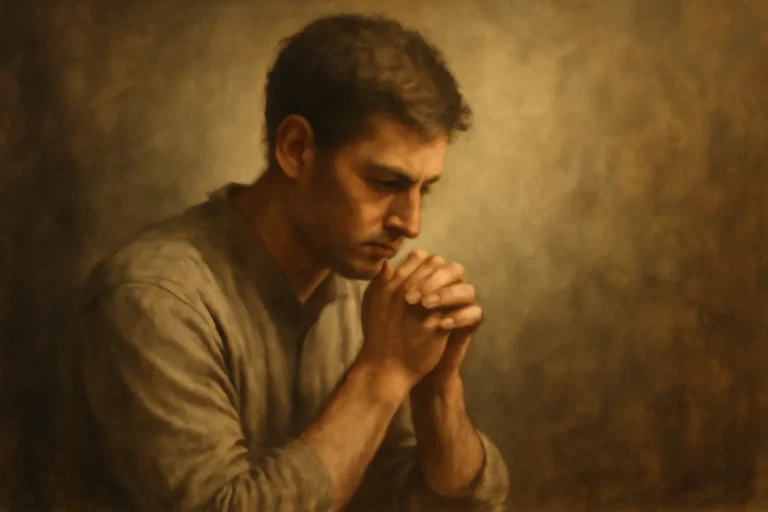

In the vast landscape of religious life, praise is a dynamic practice that names the sacred
realities believers hold dear. This long-form exposition presents a structured,
ecumenical meditation on what could be called the Ten Prompts of Praise.
Rather than offer a single ritual or creed, the prompts serve as flexible gateways—open to
interpretation across traditions, liturgical styles, and personal devotion. Each prompt invites
reflection on the character of God, the meaning of salvation, and the call to live in
accordance with divine purposes. Readers will encounter theological insights, historical
context, and practical exercises designed for individuals, families, schools, and faith communities.
The aim here is not to prescribe a uniform form of praise but to offer a robust framework that can
be adapted to different contexts. Education and theology meet in
the practice of praise when communities study scripture, engage in liturgy, and respond with
gratitude to God’s mercies. Throughout this article, you will encounter repeated references to the
ten prompts—different angles of praise that, together, form a resilient, life-giving practice.
Overview of the Ten Prompts of Praise
The following list presents a concise map of the ten prompts, each a distinct path toward worship,
gratitude, reverence, and ethical formation. The prompts are designed to be explored in any order,
though some traditions favor starting with creation and moving toward eschatology. The list below
uses a variety of phrases to highlight semantic breadth while preserving the unity of the project.
- Prompt One — Praise God as Creator and Sustainer.
- Prompt Two — Praise through Scripture and Tradition.
- Prompt Three — Praise in Creation and Nature.
- Prompt Four — Thanksgiving as a form of worship.
- Prompt Five — Confession and praise together in a holy economy.
- Prompt Six — Praise in lament and hope.
- Prompt Seven — Corporate or communal praise within the people of God.
- Prompt Eight — Praise expressed through music, art, and liturgy.
- Prompt Nine — Ethical and compassionate life as praise in action.
- Prompt Ten — Eschatological praise and the anticipation of God’s Kingdom.
Each of these ten prompts has a set of sub-themes, historical resonances, and practical
applications. The following sections expand each prompt into theological reflection, liturgical
sensibilities, and concrete exercises that can be adapted to different religious traditions.
Prompt One: Praise as Acknowledging God the Creator and Sustainer
The first prompt grounds praise in the most foundational claim of the theistic world: God is the
Creator and Sustainer of all that exists. This prompt invites believers
to recognize the order, beauty, and vitality of the cosmos as a series of signs pointing toward
the divine intention. It also invites a stance of stewardship, since creation is not merely a
backdrop for human life but a divine gift entrusted to human responsibility.
Core themes and theological anchors
- The cosmic sovereignty of God who spoke creation into being.
- The idea that created order reflects divine wisdom and goodness.
- The responsibility of humans as stewards who care for the earth and its creatures.
Practical expressions of this prompt
- Engage in nature-centered prayer walks or contemplative outdoor meditation, noting the glory of creation.
- Incorporate blessing rites that acknowledge rain, sun, wind, and soil as gifts with a holy purpose.
- Foster acts of environmental justice and care for the vulnerable as expressions of praise in action.
Historical and liturgical reflections
Across Christian, Jewish, and Muslim traditions, the creation narrative has nourished a
particular kind of praise—one that celebrates the order of the natural world and the
intimate relationship between Creator and creation. In scriptural exegesis, praise for the Creator
is often paired with reflections on creation’s sanctity, urging communities to protect
habitats, defend the vulnerable, and pursue ecological justice as a form of worship.
Variations across traditions
- In some liturgies, this prompt manifests as a dedications of the day to God’s purposes.
- In others, it appears as a seasonal celebration of God’s generative power through harvest and renewal.
- In contemplative traditions, the focus is on beholding the majesty of the cosmos and humbly
acknowledging one’s place within it.
Prompt Two: Praise through Scripture and Tradition
The second prompt emphasizes the power of Word as a primary medium of praise. Scripture
and sacred tradition preserve the voices of saints, prophets, apostles, and teachers who have
witnessed to the character of God. To praise through the Word is to engage in a dialogical
encounter with living truth, and to let established teachings shape contemporary worship and
devotion.
Why sacred texts invite praise
- Scripture often presents God’s acts of mercy, faithfulness, justice, and love, inviting the
reader to respond with gratitude and praise. - Tradition preserves the accumulated experience of faith communities and provides a
vocabulary for worship across generations.
Ways to practice this prompt
- Daily devotion using a curated subset of scriptural passages that highlight praiseworthy attributes, such as faithfulness, mercy, and righteousness.
- Teachings and reflections on theological virtues and the fruits of the Spirit as a basis for praise.
- Responsive readings in communal worship drawn from sacred texts and traditional creeds.
Educational considerations
For students and lay readers, this prompt supports a disciplined approach to theology: how to read the
sacred text in light of worship, how to transmit the meaning of the Word across culture, and how to
cultivate a habit of prayerful hearing that leads to joyful proclamation.
Prompt Three: Praise in Creation and Nature
Beyond the Creator-Sustainer frame, the third prompt invites believers to encounter God in the
natural world. Creation becomes a catechism: stars teach wonder, rivers reveal mercy, and
mountains disclose the grandeur of the divine purpose. This prompt fosters a reverent curiosity
about the created order and a humble posture toward life in a cosmos that transcends human
control.
Key ideas and reflections
- The beauty of landscapes as a theophany—a manifestation of the divine presence.
- Natural law as a sign of order and benevolence that invites trust and praise.
- Creation as a school for virtue, including patience, stewardship, and gratitude.
Liturgical and devotional practices
- Seasonal rites that mark cycles of growth, harvest, and renewal with prayers of thanksgiving.
- Ecotheological education programs that connect ecological stewardship with disciplines of worship.
- Natural world-inspired art and music that reframe praise as a shared encounter with beauty and truth.
Examples from diverse traditions
Many faith communities celebrate the created order through pilgrimages to sacred landscapes, garden
sanctuaries, or water-centered rites. The underlying aim is not merely appreciation but
forming a responsive life that honors God in all creatures and ecosystems.
Prompt Four: Thanksgiving as a Form of Worship
Thanksgiving stands as a distinct mode of praise—an intentional act of gratitude for God’s
mercies, gifts, and blessings. This prompt recognizes gratitude as a core spiritual discipline that
shapes character, relationships, and communities. Thanksgiving becomes a
practiced virtue rather than a mere sentiment.
Theology of gratitude
- Gratitude acknowledges dependence on divine generosity rather than autonomous achievement.
- Thanks is oriented toward the giver rather than the gift alone, transforming
how one treats others.
Ways to cultivate a habit of thankfulness
- Keep a daily gratitude journal documenting at least three things for which you are grateful.
- In corporate worship, add periodic testimonies of gratitude that name specific mercies from God.
- In preaching and teaching, center sermons on stories of provision, healing, and conversion as acts of praise.
Rituals and rituals-as-praise
Thanksgiving cycles can include meals blessed with words of blessing, seasonal feasts, and Latin
or vernacular doxologies that elevate ordinary moments into occasions of praise. The aim is to
reframe daily life as a continual act of giving thanks to the divine source of all good.
Prompt Five: Confession and Praise Together in a Holy Economy
The fifth prompt recognizes that praise often goes hand in hand with confessing human frailty
before divine holiness. In many theological traditions, confession and praise share a
kinship because both acknowledge God’s holiness, seek mercy, and reaffirm trust in
divine grace. The discipline of confession does not diminish praise; it reinforces its authenticity
and urgency.
Confession as a form of praise
- Confession enactments name sins and express dependence on God’s mercy, turning shame into a path toward grace.
- God’s character—especially attributes like mercy and forgiveness—is affirmed in the act of confession.
Practical expressions
- In corporate worship, include a reflective confession followed by a robust doxology.
- Offer personal journaling prompts that connect confession with gratitude for redemption.
- Design liturgies that move from lament to praise, showing continuity between sorrow and hope.
Education and formation
In seminaries, churches, and catechetical settings, students learn to integrate confession with
praise by exploring biblical texts such as lament psalms and prophetic calls to restoration. The union
of truth-telling and gratitude deepens spiritual maturity and fosters a humble, worshipful life.
Prompt Six: Praise in Lament and Hope
This prompt centers the paradox of praise amid suffering. Lament is not the opposite of praise;
rather, lament becomes a pathway to hope when voiced with fidelity. In many traditions, the path
from lament to praise traces a trajectory from honest struggle toward trust in God’s faithful presence.
Pathways from lament to praise
- Naming pain honestly before God, a practice that honors the fullness of the human experience.
- Remembrance of past mercies as a foundation for future hope.
- Participation in communal lament that moves toward collective reassurance and renewal.
Liturgical formats
- Include psalms of lament in daily prayers, followed by refrains of praise.
- Use responsive laments that allow the congregation to articulate grief and then declare trust.
- End gatherings with a benediction of assurance and with songs that celebrate God’s steadfast love.
Theological reflection
Theologically, the dance between lament and praise reveals a robust theology of God’s
presence in sorrow. It proclaims that God is not distant in suffering but intimately near to the
afflicted, offering grace, comfort, and a future rooted in divine promises.
Prompt Seven: Corporate or Communal Praise within the People of God
The seventh prompt highlights the social dimension of praise. Worship is not merely an
individual act but a communal practice that creates solidarity, forms identity, and signals
allegiance to God. In this frame, praise is a shared enterprise—one that binds voices, gifts, and
lives into a coherent expression of faith.
Community dynamics and theology
- Corporate praise builds communal memory and continuity with past generations.
- Shared worship fosters accountability and mutual encouragement in living out faith.
- Worshiping together models the unity of the body and nourishes mission in the world.
Practices for corporate praise
- Regular congregational songs, responsive readings, and collective blessings.
- Inclusion of diverse musical styles to reflect the mosaic of the community while preserving doctrinal integrity.
- Community arts and performance spaces where members contribute poetry, drama, dance, or visual art as expressions of praise.
Pastoral considerations
Leaders nurture a climate where diverse voices can participate in praise, ensuring that
language used in worship is accessible, inclusive, and theologically careful. The goal is to
cultivate a worshiping community where praise shapes ethics, relationships, and public witness.
Prompt Eight: Praise Expressed through Music, Art, and Liturgy
The eighth prompt attends to the arts as vehicles of praise. Music, visual art, symbols, and liturgical
forms provide powerful avenues to encounter the divine. The integration of beauty and doctrine helps
worshipers to articulate beliefs and to feel the warmth of grace in multisensory ways.
Artistic modalities of praise
- Choral anthems, hymns, and spiritual songs that confess faith and offer adoration.
- Iconography, sacred images, and symbolic gestures that invite contemplation and wonder.
- Ritual architecture, incense, banners, and vestments that make the invisible reality present in tangible form.
Practical applications
- Develop worship playlists that span languages and genres while maintaining theological integrity.
- Engage in arts-based education that teaches theology through creative expression.
- Curate liturgical seasons with color, sound, and ritual rhythm to lift the heart toward God.
Cross-cultural and interfaith note
While rooted in particular religious traditions, this prompt encourages respectful exchange where
music and art become bridges for shared reverence. It promotes an appreciation for diverse
expressions of praise that illuminate common aspirations toward the divine.
Prompt Nine: Ethical and Compassionate Life as Praise in Action
The ninth prompt reframes praise as not only spoken or sung but lived. A life marked by
compassion, justice, mercy, and service becomes a continuous act of worship—an outward expression
of an interior devotion. In this sense, ethical living is a form of praise that testifies to the
transformative power of faith.
Ethical principles as expressions of praise
- Pursuing justice for the marginalized as a form of reverent action.
- Practicing mercy and forgiveness as living praise to the God who forgives.
- Demonstrating integrity, humility, and generosity as daily acts of worship.
Implementation strategies
- Develop service projects that address needs in the community with dignity and solidarity.
- Incorporate ethical reflection into sermons and catechesis with practical pathways for impact.
- Promote advocacy for the vulnerable, while maintaining temperance and love in advocacy work.
Educational implications
Schools and faith-based organizations can frame ethics as praise in motion by teaching how
beliefs translate into concrete deeds. Students learn to connect doctrine with compassionate action,
ensuring that praise informs daily decisions and long-term commitments.
Prompt Ten: Eschatological Praise and the Hope for God’s Kingdom
The final prompt looks toward what is to come—the promised fulfillment of God’s reign and the
ultimate triumph of love over every form of brokenness. Eschatological praise centers on hope,
patience, and faithfulness as burdens are carried forward in trust that God’s purposes prevail.
What eschatology contributes to praise
- Anticipation of justice, peace, and restoration that transcends present pain.
- A forward-looking orientation that anchors worship in God’s final victory.
- The assurance that present acts of worship participate in the unfolding plan of God’s Kingdom.
Ways to cultivate eschatological hope in worship
- Include prophetic readings and apocalyptic themes that reveal God’s ultimate purposes with clarity and awe.
- Implement liturgical timings and seasons that lean into expectation, repentance, and renewal.
- Offer hopeful songs and hymns that bridge current realities with future glory.
Pastoral and communal discernment
Communities are invited to explore how eschatological hope shapes worship, ethics, and mission.
The aim is not to escape from the world but to sustain courage and fidelity as the people of God
move forward in patient trust, radiating light in the midst of darkness.
Conclusion: The Living Practice of Ten Prompts of Praise
The Ten Prompts of Praise form a comprehensive map for worship, devotion, and moral life. They
invite believers to move through recognition of God as Creator, engagement with the Word, a love
of creation, thanksgiving, confession, lament and hope, communal worship, aesthetics of praise, ethical
living, and eschatological longing. Each prompt does not stand alone; rather, they weave together
into a coherent spiritual ecology in which praise shapes knowledge, virtue, community, and service.
For educators, pastors, and laypeople, the project provides a framework for pedagogy and practice.
It encourages a rhythm of study, prayer, and action that can be adapted to diverse contexts. By
embracing semantic variation of the ten prompts—by naming them in multiple ways and
applying them across disciplines—the faith community can foster depth and resilience in worship.
If you wish to implement this approach in a local setting, consider forming a “Ten Prompts
of Praise” curriculum or cycle in your congregation or classroom. Each prompt can be assigned a
season or month, with suggested readings, songs, art projects, service activities, and liturgical
patterns. The practical exercises, doctrinal reflections, and communal practices described above are
intended to be adaptable, allowing for rich, diverse expressions of praise that honor the sacred
while inviting thoughtful engagement with the world.