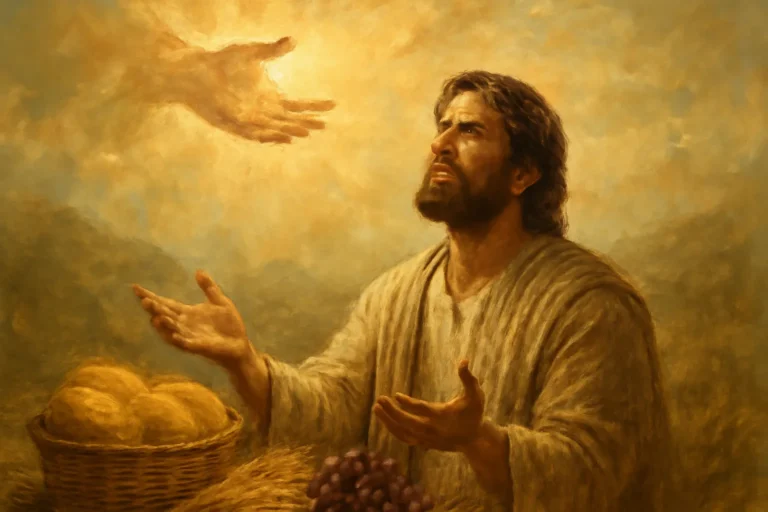
Introduction: Providence Provides as a Living Testament
Providence provides not as a distant doctrine but as a lived experience that gathers faith, memory, and hope into a single, sustaining trajectory. In this long-form reflection, we explore a testament of faith centered on the conviction that God will provide, in ways seen and unseen, in ordinary days and extraordinary crises alike. This article does not pretend to settle every mystery about divine care, but it seeks to illuminate how a robust understanding of divine provision shapes character, community life, and ethical witness. From ancient scriptures to contemporary testimony, the work of recognizing that the Lord will supply invites believers to cultivate discernment, resilience, and generosity as expressions of trust.
The phrase Providence provides appears in many voices—scriptural, liturgical, contemplative, and personal. It calls readers to attend to signs of care, to interpret moments of absence as occasions for deeper faith, and to respond with practical mercy. In this tapestry, the idea that God shall provide becomes a motor that moves believers toward service, justice, and care for the vulnerable. The testament here is not merely a statement about individual needs being met; it is a proclamation about a worldview in which God provides meaning, direction, and communal steadiness amid uncertainty.
The journey through Providence Provides invites multiple vantage points: biblical exegesis, theological reflection, pastoral practice, and personal witness. It also invites readers to consider how language about God’s provision shapes moral imagination. When we say the Creator provides, we commit to a posture of gratitude, responsibility, and humility before the vast good that can exceed our plans. Whether you are a student of theology, a pastor, a layperson seeking spiritual formation, or someone exploring the meaning of faith in a changing world, this testament offers language, stories, and practices that may nourish your own sense of being held by divine provision.
Theological Foundations: What Providence Means
To speak of Providence is to engage with a term that spans scripture, tradition, and lived religion. At its core, Providence provides refers to the aware and benevolent governance of the universe by a divine mind that cares for creation. The claim is not that life becomes effortless once faith anchors itself in this belief, but that the order of reality is intelligible through a theological lens in which God will provide in proportion to need, possibility, and divine wisdom.
Biblical Foundations
Across biblical narratives, the assurance that God will provide emerges in many forms. In the wilderness, manna becomes a daily practice of trust: a reminder that God provides daily bread for those who hunger with faith. In the prophetic tradition, the call to remember God’s faithfulness anchors communal hope even in exile. And in the patient line of the Psalms, the refrain that the Lord will provide becomes a refrain for the soul that laments and then sings again.
In classical Christian theology, Providence is sometimes distinguished into particular and general providence: God provides for individuals in intimate, personal ways, and divine provision extends to collective horizons through creation, order, and the moral economy of community. Theologians have wrestled with how human freedom interacts with divine governance, yet the core impulse remains: our hope rests not in wealth or power, but in the faithful care of a benevolent Creator who will provide what is truly good for the flourishing of beings formed in love.
The Language of Provision: Phrases and Their Significance
Language about God’s provision carries weight because it shapes perception, expectation, and action. Within this reflection, we track semantic variations that broadens the horizon of understanding while remaining rooted in a shared conviction: God will provide in faithful fidelity.
Providence provides emphasizes ongoing, sustaining care that underwrites life beyond immediate need.
God will provide foregrounds personal trust and the assurance of a benevolent deity who enters the daily narrative.
God shall provide has a future-oriented nuance, inviting patience and hope across trials.
The Lord will provide anchors provision within covenant language and communal memory.
Divine provision broadens the frame to include the possibility that meaning, purpose, and justice are integral to care, not merely material sustenance.
These phrasing variations are more than stylistic; they reflect a theology that interacts with time, suffering, and communal responsibility. When we say the Creator provides, we acknowledge dependence on transcendent generosity as the source of all that exists. When we declare Providence provides for the vulnerable, we extend the ethic of care to neighbors who bear heavy burdens. And when we name divine provision as a framework for discipleship, we invite practical steps: forgiveness, generosity, and courageous service in the face of scarcity.
Providential Timing: Faith, Patience, and Waiting
A central dynamic of Providence provides is timing. The conviction that God will provide does not erase the reality of waiting; it invites a patient trust that values discernment and readiness. Theodicy—how to reconcile suffering with benevolent care—enters the conversation here, not as a denial of pain but as a claim that timing, in the divine economy, can transform hardship into growth, humility, and communal solidarity.
Waiting as a Spiritual Practice
Waiting well requires cultivating inner steadiness and external acts of reliance on the divine. It means prayer that names needs and gratitude, listening that attends to the still, small voice within, and obedience that translates belief into concrete acts of mercy. The practice of waiting aligns with the belief that God will provide in patience through seasons of concealment and seasons of revelation.
Alignment with Action
Providential timing calls for alignment between aspiration and action. When individuals or communities sense a divine nudge toward a particular good, they are invited to respond with readiness rather than delay. God shall provide opportunities that require courage to move toward justice, mercy, and reconciliation. The result is a dynamic faith that pairs trust with responsibility, so that people become instruments of grace in a world of unpredictability.
Biblical Case Studies: Stories Where Provision Becomes Witness
The Bible provides rich case studies in which Providence provides in surprising and transformative ways. Each story offers theological texture: a reminder that the Lord will provide not solely to satisfy needs but to form faith and to catalyze witness.
Case Study: The Manna in the Wilderness
In the wilderness, the community discovers daily bread as a gift and a discipline. The pattern—gather enough for the day, trust for tomorrow, gratitude in the midst of constraint—models a theology in which God will provide while inviting responsible stewardship. The manna teaches dependence on divine provision without cultivating waste or undervaluing daily labor.
Case Study: Elijah and the Widow at Zarephath
A widow’s barrel of meal and a jar of oil become signs that God provides even where scarcity seems most acute. The narrative reframes poverty as a field for miraculous care and communal generosity. It also underscores that provision often arrives through relationships that require faith, hospitality, and shared risk—reminding us that the Lord will provide through neighbors as well as through miracle.
Case Study: Jesus Feeds the Five Thousand
The feeding of the multitude is a powerful demonstration of divine provision in abundance when human generosity meets divine grace. The miracle unfolds within a context of listening, sharing, and communal trust—an explicit lesson that God will provide in ways that exceed expectation and invite gratitude that becomes mission.
Experiences of Community: The Church as Vessel of Providential Care
Across generations, communities of faith have borne witness to the way Providence provides through shared life. Churches, monasteries, and lay communities become living laboratories for trust, reciprocity, and the practical outworking of belief that God will provide. The communal dimension of provision is often the most transformative, because it moves from private assurance to public action.
Mutual aid networks that mobilize resources for neighbors in distress, embodying a practical trust that God shall provide through human generosity.
Food ministries, shelters, and care ministries that translate belief into mercy, so that the Lord provides nourishment for body and soul alike.
Pastoral care that accompanies people through loss and hardship, helping them to discern signs of providence amid pain.
In these settings, the refrain God will provide becomes a shared discipline: to name need honestly, to offer resources boldly, and to trust that the Spirit can multiply little things into meaningful outcomes. The church, in its best expressions, lives as a sign of divine provision, inviting others to glimpse a reality where mercy, justice, and faith intersect.
Personal Testimony: A Narrative of Providential Provision
Personal testimony is a powerful genre within the religious life because it makes tangible the claim that God shall provide in moments that test the core of a person’s trust. Consider a hypothetical but representative vignette: a student facing overwhelming debt, a family navigating unemployment, a pastor seeking discernment for a ministry pivot. In each case, the arc moves from anxiety to encounter, from fear to faith, from scarcity to a sense of divine provision at work.
The turning point is rarely dramatic in the sense of a single event; more often, it is a sequence of small, faithful steps—someone offers a listening ear, a neighbor shares a meal, a grant or opportunity appears at a timely moment, and a sense of vocational clarity emerges. In such narratives, the phrase the Lord will provide ceases to be a mere utterance and becomes a lived rhythm of life: practice gratitude, seek justice, extend mercy, and trust that God will provide in a way that deepens love for neighbor and loyalty to God.
Our own experiences of providence are often braided with times of great uncertainty. Yet even in those times, the theological claim remains: God provides not as a magic solution but as a trustworthy presence that invites accountability, gratitude, and communal responsibility. The personal testimony thereby becomes not only a record of needs met but a narrative of growth in faith, shaped by the conviction that God shall provide in the fullest sense: with meaning, purpose, resilience, and shared humanity.
Practical Theology: How to Discern Providence in Daily Life
If Providence provides as a steady claim about creation and grace, then believers are called to cultivate discernment—an active, prudent, and compassionate practice. Practical theology here is less about formula and more about habits that sustain faith in ordinary life while remaining attentive to the extraordinary.
Pray with specificity: Bring to God both need and gratitude, inviting a posture of openness to how God will provide in ways beyond expectations.
Practice spiritual discernment: Reflect on events that feel meaningful or timely, asking how they align with values such as justice, mercy, and truth.
Cultivate grateful generosity: Respond to perceived provision with acts of mercy toward others, reinforcing a culture of mutual aid that demonstrates trust in divine provision.
Build resilient communities: Invest in networks of care—families, congregations, and civic groups—that can withstand pressure and sustain hope that God will provide.
Study sacred texts: Engage with narratives of provision across scriptures and traditions to widen the imagination for how the Creator provides in countless forms.
A practical approach to discernment acknowledges mystery without surrendering responsibility. It invites action aligned with faith: to work for justice, to alleviate suffering, and to act with integrity when resources are scarce, all while trusting that God shall provide the strength needed for faithful living.
Ethics and Society: The Implications of Providence for Justice
The conviction that Providence provides has transformative implications for ethics and social life. If the divine economy is characterized by care, mercy, and justice, then human communities are called to imitate that pattern. This means prioritizing the vulnerable, challenging systems that perpetuate deprivation, and recognizing that care is not a private luxury but a public responsibility sustained by trust in God will provide.
Equity and access to resources reflect a belief that every person bears the imprint of the divine image and deserves dignified provision.
Policy debates gain moral depth when anchored by a conviction that the Lord provides opportunities for flourishing beyond mere survival.
Economic practices—honest work, fair wages, and stewardship of creation—derive legitimacy when grounded in a theology of divine provision.
The ethical horizon is broad: it includes care for refugees, justice for the marginalized, and a refusal to allow scarcity to excuse cruelty or indifference. In practice, communities that hold fast to the claim that God shall provide are compelled to build networks of solidarity, to advocate for structural reform, and to embody mercy as a public virtue.
Interfaith and Comparative Perspectives: Providence Across Traditions
The theme of providence is not exclusive to one tradition. Across faiths, the conviction that a benevolent order undergirds life appears in varied idioms. In Islam, for example, the belief that God will provide (Allah’s sustenance and mercy) is entwined with trust in divine wisdom and a call to generosity in the ummah. In Hindu and Jain thoughts, the idea of cosmic order (dharma) and divine care (Ishvara’s grace, or the protection of deities) can be read as forms of providential trust, expressed through ethics, ritual practice, and social responsibility. A robust dialogue about Providence provides can enrich understanding by showing how different communities name, test, and live out the conviction that care, nourishment, and meaning exceed human calculation.
In ecumenical and interfaith settings, recognizing common ground about providential care invites mutual enrichment: shared commitments to feed the hungry, shelter the stranger, defend the oppressed, and cultivate wisdom. The phrase God will provide thus becomes a bridge across traditions, a reminder that care for creation and neighbor is a universal vocation when anchored in reverence for the transcendent.
Challenges and Tensions: Suffering, Mystery, and Theodicy
No reflection on providence is complete without acknowledging the pain and puzzles that accompany human life. Suffering, natural disaster, and unjust systems can tempt skepticism: if God provides, why do so many struggle? The answer is not a tidy guarantee but a faithful posture that holds together mystery and trust. The teaching of Providence provides invites theologians and laypeople to wrestle with theodicy in ways that affirm divine benevolence without denying pain.
Redemption through suffering: Some understand trials as opportunities for spiritual deepening and for the dramatic display of grace that reveals God will provide in unexpected ways.
Solidarity in scarcity: When resources are scarce, communities that believe in providence often respond by sharing more, reflecting a conviction that care is a core divine attribute.
Humility before the unknown: Acknowledging the limits of human knowledge, while maintaining confidence that the Lord will provide in due course, can foster intellectual and spiritual honesty.
The tension between human responsibility and divine sovereignty invites continuous reflection. Believers are called to engage in brave action—advocating for justice, practicing charity, pursuing reconciliation—while sustaining a trust that God shall provide in ways that may go beyond human planning, yet always aim toward universal flourishing.
Settlement and Synthesis: Living into a Covenant of Provision
If we were to synthesize the threads of Providence provides into a lived discipline, it would center on three movements: memory, practice, and expectation. Memory grounds faith in stories where God will provide, practice translates belief into acts of mercy and justice, and expectation holds onto the hope that divine care will sustain, guide, and transform. In this sense, providence becomes a covenantal habit rather than a mere doctrine.
Memory and gratitude: Regularly recount stories of provision to strengthen trust and to pass on a heritage of faith to younger generations.
Practice of generosity: Cultivate generosity as a response to perceived provision, not as a legalistic obligation.
Hopeful discernment: Keep a stance of hopeful discernment—trusting that the Lord will provide while remaining attentive to practical steps that reduce suffering and bondage.
In such a synthesis, the phrase Providence provides is not an abstract claim but a way of living: a life marked by gratitude, responsibility, and a commitment to the flourishing of all beings under the care of a benevolent Creator who will provide according to timeless wisdom and compassionate immediacy.
Conclusion: A Testament for the Journey
The testament offered here is not a final word but an invitation to ongoing reflection. It invites readers to test the claim that God will provide against the realities of life—its joys, its trials, its uncertainties. It asks communities to be faithful stewards of resources, to practice solidarity with the vulnerable, and to cultivate a spiritual economy in which every act of mercy reflects a larger truth: Providence provides, not only for personal relief but for the healing of communities, the vindication of justice, and the renewal of creation.
As we close, let us remember that the language of providence is a language of hope, of action, and of worship. It is a language that grows richer when spoken across generations and traditions, inviting us to say with humility and confidence, the Lord will provide in ways that awaken hearts, transform paths, and sustain the world with mercy. May this testament of faith endure in practice, in prayer, and in the quiet acts of kindness that reveal a reality greater than ourselves: that God will provide, and through this divine provision, all things may be made new.