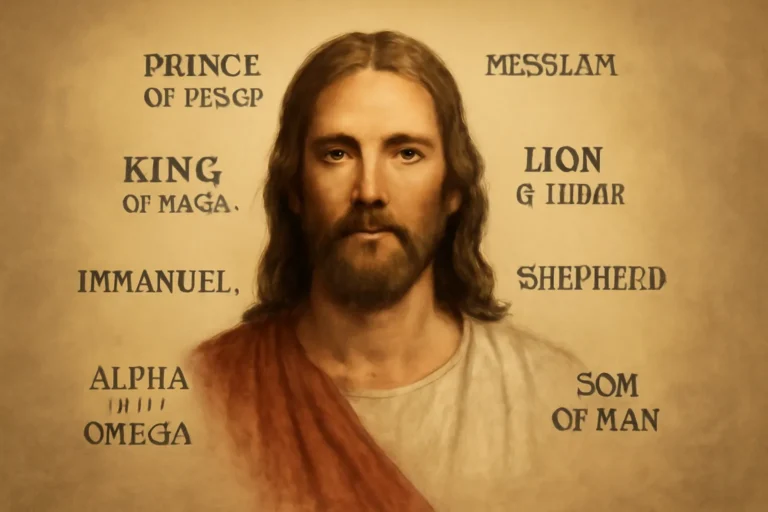

Introduction: Jesus Christ in Religious Life, Thought, and History
Jesus Christ stands at the center of a vast constellation of religious belief, history, and spiritual practice. Across generations and cultures, his figure has been interpreted in diverse ways: as a historical teacher who lived in first‑century Palestine, as the Messiah awaited by Jewish hopes, as the Divine Word made flesh in the Gospel of John, and as a living presence in the hearts and communities of believers. This article surveys the multifaceted portrait of the Son of Man—a title with rich biblical resonance that appears in different forms across canonical texts—and surveys how Christians, scholars, theologians, and lay readers have understood his life, work, and significance.
The aim here is not to adjudicate every debate with one final verdict, but to illuminate the major strands of thought, to highlight the textual and doctrinal anchors, and to explore how Jesus the Christ functions within liturgy, ethics, and daily faith. The narrated material moves from historical and literary contexts to theological reflection, and then to contemporary implications, always mindful of how the figure is experienced as a source of meaning, inspiration, and challenge for communities around the world.
Historical and Cultural Context: Palestine under Empire
To approach the Son of Man with historical clarity is to situate him within a specific place and time: first‑century Judea and Galilee under Roman rule, with diverse Jewish groups, such as Pharisees and Sadducees, as well as non‑elite settlements, fishermen, farmers, and urban workers. The social and political milieu shaped the questions people asked about the Human One, especially questions about authority, kingdom, justice, and hope.
In this milieu, a few themes recur across gospel narratives and later Christian reflection:
- The expectation of a future restoration of Israel and a sovereign figure who would bring justice and peace.
- An intricate relationship between Jewish law, temple worship, and the day‑to‑day life of ordinary people.
- Roman imperial power and the ideological concerns it raised about loyalty, identity, and resistance.
- A growing interpretative conversation about what it means for God to act in history, especially in a figure who speaks with authority in parables and deeds.
Within this framework, the term the Son of Man is used in ways that invite both humility (emphasizing humanity and dependence) and exaltation (emphasizing divine mandate and cosmic authority). Across the Gospel writings, this phrase resonates with prophetic memory from Daniel and with Jesus’ own self‑presentation as one who embodies both the vulnerability of humanity and the sovereignty of God.
Portraits in the Gospels: Synoptic Emphasis and Johannine Distinctiveness
Synoptic Gospels: Matthew, Mark, and Luke
In the Synoptic Gospels, Jesus often speaks and acts within the cadence of itinerant teaching, healing, and confrontation. The phrase the Son of Man appears as a self‑designation that anchors his mission and destiny in a way that is controversial, provocative, and deeply meaningful to his listeners.
Some salient features across these Gospels include:
- Authority and teaching: Jesus teaches with a distinctive authority that unsettles religious leaders and captivates common people, often in parabolic form. The Son of Man motif is visible where Jesus speaks of his own role in relation to God’s plan, sometimes predicting suffering and at other times announcing the arrival of God’s rule.
- Crucial motifs: The Kingdom of God, reversal of social expectations, and service as the path to glory emerge as core concerns in the ministry of the Human One who walks the Galilean roads.
- Prophetic identity: The Son of Man is portrayed as a figure who bears witness, who suffers, and who ultimately embodies faithful fidelity to God in a context of opposition.
A characteristic feature in Mark is the emphasis on the suffering aspect of the mission, where the divine plan unfolds through sacrifice and trust. In Matthew’s Gospel, the language often expands into ethical instruction and community formation, while Luke’s account foregrounds mercy, social concern, and prayer, highlighting how the human one interacts with marginalized groups.
Gospel of John: The Word Made Flesh and the Cosmic Connection
The Gospel of John presents a distinct theological frame in which Jesus is portrayed as the Logos—the Word through whom all things were made and who becomes incarnate to reveal God’s character and to reconcile humanity to the Creator. Within this narrative, the Son of Man figure recedes against the luminous backdrop of divine preexistence and mission that culminates in the crucifixion and the resurrection.
In John, the identity of Jesus is elaborated through I AM sayings—“I am the bread of life,” “I am the light of the world,” and other self‑expressions that reveal a deep continuity between the eternal God and the human agent who enters history. The Christology here is less about political expectations and more about an intimate union with the Father, a theme that presses readers toward faith, trust, and surrender.
Christological Titles and Identity: Who Is Jesus?
The Messiah and the Anointed One
The term Messiah (Hebrew) or Christ (Greek) signals the expectation of an anointed king or deliverer within Jewish tradition. For early Christians, Jesus is understood as the fulfillment of these messianic hopes, not simply as a political liberator but as a Savior who inaugurates a new era of God’s relationship with humanity. This understanding intersects with political realities and spiritual longing, producing a layered and sometimes contested interpretation within Jewish and Christian communities.
The Messiah concept in the New Testament does not always align with every historical expectation of a conquering ruler. Instead, the figure of the Messiah is reframed in light of Jesus’ life, death, and resurrection, which together reveal a style of kingship rooted in service, suffering, and redemptive love.
The Son of God: Identity and Relationship
The title the Son of God is deployed with theological depth in the New Testament. It includes claims about the divine nature, intimate communion with the Father, and mission that extends beyond human limits. Within the Synoptic Gospels and the Johannine writings, the designation challenges hearers to discern the meaning of divine sonship—whether it is a unique incarnation of God in the man Jesus or a claim about Jesus’ special authority within a divine economy of salvation.
The phrase often crystallizes in moments of recognition by others (such as Peter’s confession) and in Jesus’ own pronouncements about his unity with the Father. The interplay between divine identity and human life is central to how churches throughout history have articulated the doctrine of the person of Christ.
The Son of Man: A Canonical and Theological Thread
The recurring figure of the Son of Man in Christian scripture serves as a unique rhetorical and theological bridge between humility and glory, between suffering and sovereignty. The phrase echoes a prophetic memory of Daniel’s vision, in which a heavenly figure is given authority, glory, and an eternal dominion. Jesus’ self‑presentation as the Son of Man has been understood in multiple ways:
- As a symbol of humility and solidarity with the human condition, representing the mortal life with which people identify.
- As a figure who bears God’s authority to judge and redeem, especially in eschatological settings.
- As a link between the divine sovereignty and the lived experience of frailty, illness, and oppression.
Across traditions, the Son of Man is read as a figure who embodies God’s plan in history—an embodiment that is both accessible to ordinary people and profound in divine purpose. In many interpretive traditions, this title points toward a mystery of identity that calls listeners to faith, repentance, and discipleship.
Ministry, Teachings, and Miracles: The Father’s Mission through the Son
Teaching on the Kingdom of God
Central to Jesus’ ministry is the proclamation of the Kingdom of God. This domain is not merely a future political order but a present reality that reshapes relationships, values, and daily life. The Human One goes about preaching, healing, and inviting people into a new way of living—one that overturns expectations, blesses the poor, and calls for mercy, justice, and faith.
The parables in this section of the narrative literature offer vivid pictures of grace, generosity, risk, and transformation. Through stories about seeds, farmers, wedding feasts, and the prodigal, listeners learn how a community can live under God’s rule, even when the old structures prove resistant.
Miracles, Compassion, and Sign‑Acts
The miracles performed by the Son of Man are not simply displays of power but signs that reveal the inward reality of God’s reign. Healings, exorcisms, restorations, and acts of provision point to the inbreaking of divine life into a world marred by pain, fear, and scarcity. Each sign invites faith, invites questions about authority, and challenges observers to discern the deeper meaning behind outward phenomena.
Crucifixion, Death, and Resurrection: The Paschal Core
The Cross as Atonement and Revelation
The crucifixion of Jesus is understood in Christian thought as a pivotal moment in which the Son of Man bears the consequences of human sin, offering a path to reconciliation with God. The cross is simultaneously a mark of suffering, a testament to fidelity, and a conduit of grace. Theological interpretations of how the death accomplishes salvation vary, but common themes include offering redemption, satisfying divine justice, and revealing the depth of God’s love.
Resurrection and Witness: Hope Beyond Death
The resurrection is the foundational event by which Christians interpret Jesus’ identity and the steadfastness of God’s promises. The risen Jesus appears to disciples, breakfasted with them, and commissions them to continue his work. This event confirms the authenticity of the proclamation that the Man from Nazareth is more than a remembered teacher; he is alive as Lord and Savior, guiding the community of faith through the ages.
Theological Interpretations Across the Ages
Early Christology and Ecumenical Councils
The early centuries of Christian reflection grappled with questions about the divine and human natures in the person of Jesus. Debates about how God could become human, while preserving the fullness of divine nature, led to important doctrinal formulations. Council debates culminated in affirmations about the unity of the divine Logos with a fully human life in Jesus, expressed in terms like consubstantial with the Father (homoousios) and the two natures (divine and human) persisting without mixture.
These theological moves aimed to safeguard reverence for Jesus as the Son of God while acknowledging his full humanity in life, temptations, pain, and death. The theological vocabulary developed in this era remains influential in many Christian traditions, shaping sacraments, creeds, and liturgical practice.
Modern Theologies and Scholarly Approaches
In more recent centuries, scholars have engaged with Jesus from historical‑critical, literary, ethical, and interfaith perspectives. Questions about historical reliability, the social setting of the gospel narratives, and the interpretation of miracles have invited nuanced understandings. Meanwhile, ethical theologians have explored how Jesus’ teachings on love, mercy, and justice speak to contemporary issues such as poverty, violence, and human rights.
In addition, contemporary interfaith dialogue has explored how Jesus is regarded in Islam, Judaism, and other religious traditions. For some, Jesus is a prophet or revered teacher; for others, the insistence on divinity raises distinct theological questions. Across these conversations, the figure of the Son of Man or the Christ becomes a site where different faith communities can seek understanding, respect, and common ground.
Ethical Teachings, Parables, and Spiritual Practice
Loving God and Neighbor: The Core Commandments
A consistent thread in Jesus’ teaching centers on love as the core obligation—to God, to neighbors, and even to enemies. The Sermon on the Mount in the Synoptic Gospels articulates a vision of righteousness that goes beyond formal observance to embody the spirit of mercy, humility, and integrity. This ethical horizon is connected to the figure of the Human One, who models a life oriented toward compassion and justice.
Parables as Doors to Wisdom
Parables function as doors into a deeper wisdom about the Kingdom of God. They invite listeners to examine their own hearts, to consider how wealth, status, fear, and hope shape moral choices, and to see the world from God’s perspective. In these stories, the Son of Man acts as a storyteller who calls for repentance, trust, and a transformed life.
Prayer, Discipleship, and Spiritual Formation
Jesus models and teaches a life of prayer, dependence on the Father, and daily discipleship. The example of prayer in his life calls believers to seek communion with God, to participate in God’s mission in the world, and to cultivate virtues that sustain faith through trials. Theological reflections often connect this practice to the idea that God’s life is infused into human lives through the Spirit, enabling communities to embody love, reconciliation, and peace.
Jesus in World Religions and Interfaith Dialogue
In Islam
In Islamic tradition, Jesus (often referred to as Isa) is revered as a prophet who brought a message from God, performed miracles, and will return at the end of time. The portrayal emphasizes Muhammad as the final messenger and presents Jesus within the broader axis of monotheism. Debates about the nature of Jesus’ divinity are central to Christian‑Muslim dialogue, while many Muslims affirm a high level of respect for Jesus as a righteous and exalted figure.
In Judaism and Other Traditions
Within Jewish thought, Jesus is not recognized as the Messiah in the way Christian faith asserts, and his life is typically read within the context of first‑century Jewish movements. Yet, there is ongoing interest in how the figure of the Son of Man can be understood in relation to Second Temple Jewish expectations, the messianic movements of the period, and the broader history of religious ideas about God’s reign.
Other religious and secular traditions engage with Jesus as a teacher, healer, social reformer, or symbolic figure. The breadth of interpretation across traditions highlights the enduring impact of a life interpreted through the different lenses of faith, culture, and history.
Contemporary Relevance: Faith, Community, and Social Life
Worship, Liturgy, and Spiritual Identity
Across Christian communities today, the figure of the Son of Man or the Christ remains central to worship and devotion. Creeds, prayers, hymns, and sacraments draw believers into a shared memory of Jesus’ life, death, and resurrection. The Divine Word becoming human informs liturgical poetry, Christmas and Easter celebrations, and the ongoing experience of grace in the life of the church.
Ethical Action and Social Justice
The teachings and example of Jesus have inspired countless movements for social justice, human dignity, and mercy. From care for the poor and the marginalized to peacemaking and reconciliation, followers often link the ethical dimensions of Jesus’ life to concrete acts of service and advocacy. In this sense, the human life of the Man from Nazareth has a persistent, transformative effect on contemporary moral imagination.
Personal Faith and Discipleship in a Global Context
People encounter Jesus through personal faith, communal study, and lived experiences of grace. The personal dimension of belief—trust in the Father, response to the call to discipleship, and participation in a community that seeks to imitate Christ—has remained a central feature of spiritual life across cultures. The figure of the Son of Man invites both introspection and outward outreach: to know God more deeply and to love one’s neighbor more fully.
Literary and Theological Interpretations: A Rich Mosaic
Symbolism and Narrative Techniques
The Gospel writers employ a range of literary strategies to portray Jesus. Narrative focus, symbolism, and rhetoric help convey the paradox of power and vulnerability that characterizes the divine-human figure. The Son of Man motif functions as a theological hinge, connecting prophecy, memory, and gospel proclamation.
Doctrinal Reflections and Creedal Language
Doctrinal formulations have sought to name the mystery of Jesus in precise terms so that communities can worship faithfully and live coherently. Creedal language often highlights the roles of Jesus as Son of God, Messiah, and Lord, while also honoring the human experiences that anchor the story in history. The aim is to guard faith, preserve truth, and nurture devotion that remains relevant in every era.
Conclusion: Remembering, Reinterpreting, and Walking Forward
Across centuries and continents, the figure of Jesus Christ continues to evoke awe, challenge, and inspiration. From the historical contours of his first‑century life to the theological depths of his incarnation and the transformative power of his death and resurrection, the name “the Son of Man” points to a mystery that remains open to faithful exploration. The diverse ways in which scholars, theologians, and believers read his life—whether as a solitary preacher, a reconciler, a cosmic savior, or a model of faithful living—testify to the enduring relevance of Jesus for spiritual formation, moral reflection, and communal life.
As you reflect on the Man from Nazareth, consider how the biblical portrait invites you to engage with questions of identity, purpose, and hope. How does the call to discipleship shape your own values? In what ways can the teachings of Jesus inform contemporary concerns about justice, mercy, and peace? The narrative of the Son of Man is not only a historical story to study; it is a living invitation to encounter God, grow in character, and participate in a world touched by grace.