
Introduction: A Song of Ascent for the Seeker
Across the pages of sacred scripture, few lines capture the ache and assurance of longing for divine accompaniment quite like Psalm 121. This psalm, often grouped among the Songs of Ascents (Psalms 120–134), speaks with a traveler’s cadence—the pilgrim lifting eyes from a difficult landscape to the horizon where the divine presence is believed to dwell. The central motif is presence: the belief that God is near, attentive, and active in the life of the traveler who trusts in the Maker of heaven and earth.
In modern terms, Psalm 121 invites every reader to consider what it means to seek God’s presence in a world full of noise, risk, and rapid change. It offers not merely a philosophical statement about God’s existence, but a practical assurance that God is present with us in daily life—whether we are on a hill road, at the threshold of a new job, facing illness, or navigating grief. The language is ancient, yet its aim is enduring: to orient the heart toward a trustworthy relationship with the divine and to cultivate confidence that God’s care, protection, and guidance accompany the one who calls on the name of the Lord.
Understanding Psalm 121: An Introduction
Text and Context
Psalm 121 is a compact composition that begins with a defining question and culminates in a confident proclamation: “The Lord watches over you; the Lord is your shade at your right hand; the sun will not harm you by day, nor the moon by night. The Lord will keep you from all harm; He will keep your life. The Lord will watch over your coming and going both now and forevermore.” (paraphrased in various translations). The Hebrew texture preserves a rhythm of movement—eyes rising, prayer offered, and the blessing of divine protection.
The broader context places this psalm among the Songs of Ascents, a collection that accompanied pilgrims as they ascended toward Jerusalem for festivals. This is not merely a geographic ascent; it is a spiritual arc—from uncertainty or danger toward the presence of God in the temple and the covenant community. For readers today, that ascent remains a template for moving from fear to trust, from distance to nearness, and from self-reliance to divine reliance.
Literary Features
The psalm employs crisp, parallel lines and concise imagery that invite meditation and memorization. Its structure can be described as a chain of assurances, each clause reinforcing the central claim: God’s watchfulness and care extend over all hours and all avenues of life. The imagery of shading and protection from the sun and moon evokes a God who shelters his people from harmful forces—both visible and invisible.
The repetition of concepts—watching, keeping, guarding—emphasizes a sustained divine activity rather than a temporary intervention. In the psalmist’s world, the city gates, the road, and the night’s darkness posed real perils. The text reframes those dangers by asserting that the divine presence renders them navigable, and that the traveler’s steps are under continual divine surveillance.
Historical Context and Theological Outlook
While the exact dating and authorship of Psalm 121 remain debated among scholars, the themes resonate with the lived religion of ancient Israel. The idea of God as keeper—a protector who shelters and sustains—fits the broader biblical narrative in which God is not distant but actively involved in the safety and well-being of the covenant people. Theologically, the psalm’s message aligns with the conviction that God’s presence is a resource for daily living, a source of courage in times of trial, and a horizon toward which one continually moves in prayer.
The Theme of God’s Presence
Presence as Proximity
The central claim of Psalm 121 is the presence of God as a lived reality. It’s not merely a doctrinal assertion; it is a matter of daily experience. The text speaks of a God who is not aloof but intimately near, whose nearness acts as a shield and a sustaining force. The presence of God is described as a protective companionship—one that accompanies the traveler on every path and at every hour.
Presence as Guidance
Alongside protection, the psalm points to divine guidance. The question—“Where does my help come from?”—narrows into the confident affirmation that the helper is the Lord, the Creator of heaven and earth. This implies a God who knows both the terrain and the traveler’s needs, who can direct footsteps and illuminate the way when the road is unclear.
Presence as Sustenance
The language often interpreted as “shade” or “covering” carries overtones of physical relief and spiritual refreshment. To dwell in God’s presence is to receive a form of sustenance that renews courage, steadies the mind, and consoles the heart. When the sun beats down or the night grows cold, the divine presence offers both safety and solace.
Presence and Trust
A key dimension of seeking God’s presence is the cultivation of trust. The psalm models a posture of reliance rather than vigilance alone. The traveler’s eyes become a metaphor for spiritual attention—turning from the self and the world toward the giver of life. Trust grows as one remembers that God’s care is not selective or limited by human categories; it extends to the comings and goings of every moment, now and forever.
The Pilgrim’s Journey: I Lift My Eyes to the Hills
Imagery of the Hills
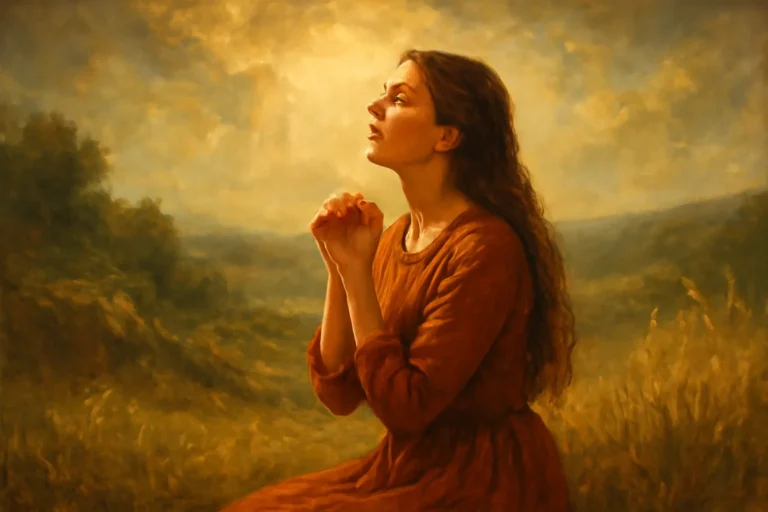
The opening lines—“I lift up my eyes to the hills”—invite readers into a vivid scene. The hills are not merely geological features; they symbolize ascent, pilgrimage, and dependence on a transcendent reality higher than ordinary life. In the ancient Near East, hills often bore religious associations, refuges, or landmarks for travelers. The pilgrim’s gaze toward the hills becomes a gesture of seeking help beyond one’s own strength.
Where Does My Help Come From?
The implied question—“From where does my help come?”—is a rhetorical cue for spiritual reflection. The psalm’s answer—“My help comes from the Lord, the Maker of heaven and earth”—establishes who is the source of aid. The hills, in this reading, point beyond themselves to the one who created them. This reframing moves the reader from a landscape of potential fear to a confidence rooted in divine sovereignty.
Practical Significance for the Believer
For contemporary readers, the image of looking to the hills can be a mnemonic for turning attention away from anxiety and toward prayer. The act of lifting one’s eyes becomes a spiritual discipline: a deliberate shift of focus, a renunciation of self-reliance, and an invitation to encounter the divine presence that guard and sustain the traveler.
Protection and Keeping: The LORD as Keeper
Divine Protection Across Time
A prominent motif in Psalm 121 is protection. The text speaks as if a protective watcher stands over the traveler’s life, guarding against harm and shielding the heart. This protection is not abstract armor; it is a personal, knowing, continual care that covers the whole spectrum of daily life.
Night and Day: The Lord as Shade and Shield
The imagery of shade at noon and protection by night emphasizes the thoroughness of God’s guardianship. The psalmist writes of God as shade at your right hand, a way of saying that every exposure, risk, or vulnerability is met by divine steadfastness. The metaphors extend to both sunlit journeys and nocturnal passages, reminding readers that danger can appear at any hour, but God’s presence remains constant.
Guarding the Life: The Lord as Keeper
The promise that the Lord will keep you from all harm and will guard your life communicates a comprehensive care. It is not a guarantee of pain-free life, but an assurance that God’s oversight does not abandon the traveler to fate. In Christian reflections, this is sometimes interpreted in the light of Christ’s ongoing presence, and in Jewish interpretation as a steadfast covenantal care that binds God to the people across generations.
Guarding the Path: Coming and Going
The closing lines emphasize the continuity of God’s watchfulness: “The Lord will guard your coming in and your going out from this time forth and forevermore.” This phrasing captures a life lived under divine surveillance and blessing. The traveler is never outside the reach of God’s protective custody, whether at home, on the road, in a communal gathering, or in solitude.
Practical Ways to Seek God’s Presence Today
Quiet Reflection and Scriptural Engagement
The spiritual practice of meditative reading of Psalm 121 can nurture a sense of God’s nearness. Read slowly, perhaps in three distinct sittings: first to hear the words, second to sense the emotional content (fear, trust, gratitude), and third to listen for how God might be addressing your particular situation. In daily life, repeat phrases such as “The Lord will keep you” and “The Lord watches over your going and coming” as anchors for your day.
Prayer Practices Centered on Presence
Consider a daily or weekly rhythm that foregrounds God’s presence. Examples include:
- Morning invocation: Ask God to accompany you in the day’s work, decisions, and conversations.
- Midday renewal: Pause to acknowledge God’s ongoing care and to recalibrate your heart toward trust.
- Evening gratitude: Reflect on moments when you sensed God’s protection and guidance, naming them aloud or in writing.
Community Worship and Liturgical Use
In the context of worship, Psalm 121 lends itself to responsive readings, choruses of trust, and congregational prayers for safety and divine providence. When the community gathers to seek God’s presence, the psalm’s repeated assurances strengthen shared faith, reminding people that divine watchfulness is a communal reality as well as a personal blessing.
Contemporary Applications
In today’s world, the concept of God’s abiding presence can inform ethical decision-making, mental health, and resilience. Recognizing that the divine presence accompanies us in workplaces, schools, hospitals, and homes can shape attitudes toward rest, mercy, justice, and service. It can also provide language for lament—trusting that God is present even when circumstances are painful or confusing.
Theological Reflections: Trust, Hope, and Divine Protection
Trust as a Dimensional Practice
The call to trust in God’s protection is not merely a sentiment; it is a practice that shapes action. In the life of faith communities, trust translates into courage to serve, forgiveness, patient endurance, and a commitment to pursue justice with confidence in God’s governance of history.
Hope in Divine Presence
Hope, in the biblical sense, is not a vague optimism but a confident expectation grounded in the character of God as Creator and Keeper. The psalm’s insistence on God’s constancy provides a theological anchor for hope in times of trial, whether illness, loss, or upheaval. The presence of God becomes a steady ground on which people can stand and move forward.
Protection and Covenant Faithfulness
The protection described in Psalm 121 fits within the larger biblical overture about covenant faithfulness. God keeps the inhabitants of the covenant, even as humans must keep faith and remain in alignment with God’s will. The psalm thus invites readers to respond with fidelity, gratitude, and a renewed commitment to seek God’s presence in every sphere of life.
Psalm 121 in Liturgy and Worship
In Jewish Tradition
Within Jewish liturgical use, the Songs of Ascents are associated with pilgrimage and rejoicing before God at the Temple. Psalm 121, with its theme of divine guardianship, offers comfort during travel and risk, while reinforcing trust in God’s everlasting care. It is sometimes recited or sung on occasions of travel, transition, or communal fortification, inviting the community to align their hearts with the divine presence as they move through life’s stages.
In Christian Tradition
Christians have long found in Psalm 121 a resource for personal devotion and corporate prayer. The image of God as keeper has found resonance in hymns, prayers, and sermons that emphasize God’s faithfulness through trials. In churches that observe the Psalms as part of the lectionary or seasonal worship, Psalm 121 is a reminder that God’s presence accompanies believers not only in times of triumph but through the long arc of daily life.
Ecumenical and Interfaith Resonances
While traditions differ in interpretation, the central claim—God’s nearness to the human condition—has a broad appeal. The concept of seeking divine presence, the assurance of protection, and the hope born of trust can resonate across faith communities, inviting shared language about care, mercy, and the sacred in everyday experience.
Common Questions and Misconceptions
Does Psalm 121 promise a pain-free life?
No. The psalm emphasizes divine presence and protection, but it does not guarantee exemption from hardship. Rather, it asserts that God accompanies the believer through hardship, preserving life and guiding the journey. The presence of God can provide perspective, courage, and meaning even in suffering.
Is the “protection” in Psalm 121 magical or absolute?
The language is figurative and covenantal rather than a literal shield from every risk. The sense is that God’s closeness and care extend beyond mere physical safety to include spiritual well-being and eternal significance. The renewed phrase “The Lord will watch over your life” points to a holistic sense of protection that includes health, vitality, and purposes fulfilled in alignment with God’s will.
How can we translate ancient imagery into modern practice?
Translating imagery into practice involves retaining the core meaning—God’s ongoing presence, care, and guidance—while adopting contemporary forms. This can mean cultivating stillness in prayer, recognizing divine assistance in daily decisions, and integrating gratitude for God’s companionship into relationships, work, and service.
Variations and Semantics: Variants on “Seeking God’s Presence”
Across translations and theological traditions, the theme of seeking God’s presence is expressed in varied but complementary ways. Some key phrases and their semantic relatives include:
- Divine nearness: God’s closeness in daily life and crisis alike.
- Where does my help come from?—a question turned into a confident answer about the Creator’s role.
- Guarding presence and watchfulness—active care that covers all hours and paths.
- Keeper of life—a personal, covenantal guardian who preserves well-being.
- Shade and shelter—metaphors for relief from danger and an experience of rest in God.
The semantic breadth also invites readers to explore related biblical expressions of God’s presence, such as Emmanuel (God with us), the promise of Jesus’ presence in the New Testament, and the Pauline assurance that the Spirit of God dwells within believers. Each variation reinforces the same core conviction: God is not distant; God is near, active, and engaged in human life.
Conclusion: A Life That Honors the Presence
Psalm 121 remains a timeless guide for anyone who seeks to orient their life toward the divine presence. Its compact promises invite readers to trust in God’s protection and to embrace a daily practice of seeking the Lord, whether in quiet moments of prayer, in the pace of travel, or in the rhythm of ordinary life. The psalm’s wisdom is not merely an emotional reassurance but a theological invitation: to live with the awareness that the Maker of heaven and earth is present, attentive, and committed to the well-being of those who call on His name.
In a world that often communicates through speed, noise, and distraction, Psalm 121 offers a countercultural posture: to pause, lift the eyes, and acknowledge the God who keeps and guides, the God who guards your life from the first breath to the last. As you continue this meditation, you may discover that the truth of God’s presence reshapes not only your beliefs but your habits, your relationships, and your sense of purpose. The journey toward God’s presence is a pilgrimage of the heart—one that can begin anew today, with a simple, steadfast prayer: Lord, be with me; be my keeper; guide my steps; and let your presence endure forevermore.
If you wish to continue exploring the themes of Psalm 121, consider reading related passages that echo the same heartbeat: the longing for God’s nearness in Psalm 23 (The Lord is my shepherd), Psalm 27 (One thing I ask of the Lord), and Matthew 28:20 (I am with you always). In each tradition, the core claim persists: God’s presence is the ultimate harbor of hope, the light in the path, and the enduring source of life.