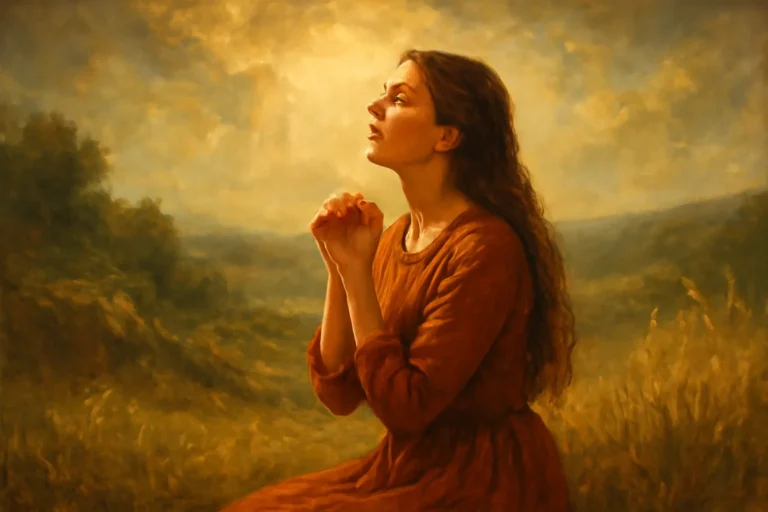
Introduction: Psalm 63 and the Path to Total Surrender to God
Total surrender to God is not merely a momentary decision but a lifelong posture that shapes thoughts, desires, and actions. In the biblical collection of songs, Psalm 63 stands as a luminous articulation of longing, fidelity, and consecration. Traditionally attributed to David during a period of exile or in the wilderness, this psalm invites readers and worshippers to examine what it means to surrender one’s heart fully to the divine. It is not a call to deny humanity’s needs, but a declaration that the supreme longing of the human person can be directed toward God alone. In this long-form exploration, we will trace the threads of total surrender, examine the imagery of thirst and pilgrimage, and offer theological, pastoral, and practical reflections on how Psalm 63 can guide believers toward a life that is wholly yielded to God.
Psalm 63 in Focus: A Portrait of Loving Dependence
Psalm 63 opens with a bold claim and an intimate petition: a cry for God as the primary, sustaining breadth of life for the soul. The words reveal a paradox that runs through biblical spirituality: in a wilderness or harsh place, the deepest worship can be born and sustained. The psalm presents a soul that seeks God with uncompromising longing, finds delight in God’s presence, and expresses confidence that God will be gracious to the faithful in the day of trouble.
Historical and Canonical Context
While the exact historical moment of Psalm 63 is debated among scholars, most agree that it belongs to the collection of Songs of Ascent (Psalms 120–134) or to the broader corpus of Davidic psalms. The setting—likely the wilderness or a place of trial—frames the psalm as a compelling model of how a person can remain trustful and hopeful even when circumstances are demanding. The theological core remains constant across eras: fellowship with God is the highest good, and surrender is a daily practice that shapes perception, speech, and action.
The Theological Core: What Does Total Surrender Mean?
To speak of total surrender to God is to describe a convergence of devotion, obedience, love, and trust. In Psalm 63, surrender is not a passive resignation but an active, dynamic relationship with the divine. The believer’s heart, often described in the biblical witness as skeptical of self-sufficiency and increasingly oriented toward divine purpose, expresses both longing and loyalty. This section explores several facets of surrender that Psalm 63 embodies, with attention to how they translate into contemporary faith practice.
Definitions and Distinctions
- Yielding the will to God’s purpose, not merely assent to doctrinal propositions.
- Affection for the divine as the governing motive of life—desiring God above all other desires.
- Trust amidst uncertainty—the conviction that God’s presence carries even through difficult seasons.
- Active obedience—a willingness to adjust life, schedule, and priorities in light of God’s leading.
- Liturgical and internal transformation—worship that refines the inner life and shapes outward conduct.
Three Dimensions of Surrender in Psalm 63
- Desire for God: The psalmist’s foremost hunger is for God’s person—“my soul thirsts for you, my flesh faints for you.”
- Delight in God’s presence: The psalmist finds “better than life” the nearness of God, a perspective that reorders all other joys.
- Dedication in worship and service: The life of surrender extends from private devotion to public praise and steadfast faithfulness.
Imagery of Thirst, Hunger, and Pilgrimage
A dominant motif in Psalm 63 is thirst—for God’s presence, for righteousness, for spiritual sustenance. The ancient imagery of a desert, a wilderness, and a dry land communicates the reality that the soul’s life is sustained by God’s gracious coming. The psalm’s language invites readers to consider whether their own life reflects such thirst and whether their longing has found its proper Object.
Thirst as Theological Yes
The cry, “O God, you are my God; earnestly I seek you; my soul thirsts for you” is not a mere metaphor. It is a confession that life’s deepest sustenance comes from communion with the divine. In a culture that often equates fulfillment with achievement or pleasure, Psalm 63 reframes fulfillment as intimate proximity to God. This is the heart of total surrender—not an abandonment of human longing, but the reorientation of longing toward God.
Desert Geography and Spiritual Geography
The wilderness in Psalm 63 is both a physical and spiritual landscape. It signifies testing, humility, and dependence. Yet even in this harsh terrain, the psalmist discovers an inner oasis—the divine presence that refreshes, protects, and guides. When the heart is wholly surrendered, the desert becomes a tutor, teaching discernment, gratitude, and perseverance.
Practical Pathways: How to Cultivate a Life of Total Surrender
If the aim is total surrender to God, what steps can believers take to cultivate this posture in daily life? Psalm 63 provides a cadence for devotion that can translate into modern spiritual practice. The following sections outline habits, disciplines, and attitudes that help to ground a life in surrendered trust.
Daily Habits for a Surrendered Life
- Prayerful honesty: Start the day with a candid conversation with God about hopes, fears, and areas that require surrender.
- Scriptural nourishment: Meditate on Psalms and related portions that articulate longing for God and trust in Him.
- Quiet listening: Create space for listening to the divine voice through Scripture, stillness, or contemplative prayer.
- Acts of service: Demonstrate surrender through practical love for neighbors, especially those in need.
- Repentance and humility: Regularly recalibrate motives and confess departures from God’s will.
Rituals and Worship as Expressions of Surrender
Worship that embodies surrender is neither theatrical nor perfunctory. It is a form of ongoing consent to God’s lordship over every sphere of life. Whether through private devotion, family prayer times, or gathered worship, sincere praise acknowledges God’s sovereignty and invites His direction.
Love, Faith, and Fidelity in Practice
The life of surrender is sustained by a triangle of love (affections rightly ordered toward God), faith (confidence in God’s promises and character), and fidelity (steadfast steadiness in obedience). Psalm 63 models how these elements interweave: desire becomes devotion; devotion fosters trust; trust leads to courageous obedience and witness.
Historical and Theological Reflections
Across Christian history, Psalm 63 has stirred pastoral imagination and theological reflection on the nature of surrender. From early church writers to modern theologians, the psalm has been a touchstone for contemplating the relationship between longing for God and practical holiness. This section surveys some enduring interpretations and their implications for contemporary faith.
Patristic and Medieval Perspectives
Early Christian interpreters often read Psalm 63 in the context of Christ’s own path and the Christian life of discipleship. The desert motif has resonances with the experience of the people of Israel and with Jesus’ wilderness temptations. The psalm’s emphasis on God’s steadfast love and right worship offered a framework for understanding the believer’s journey as a pilgrimage toward the refreshing presence of God.
Reformation and After
In Reformed and Protestant traditions, Psalm 63 has been cited as a model of heartfelt psalmody—where private devotion and public proclamation reinforce a life of obedience. The psalm’s clear assertion that God alone can satisfy the soul’s deepest longing aligns with the call to trust in God rather than in earthly security or prestige.
Modern Theological Reflections
Contemporary theologians emphasize how total surrender includes both a personal interior transformation and a social vocation. The psalm’s balance of intimate worship and public praise invites readers to consider how surrender translates into justice, mercy, and community-building. The concept of surrender today often intersects with spiritual formation, discipleship, and the church’s mission to be a light in a world marked by spiritual hunger.
Comparative Readings: Psalm 63 in Conversation with Other Scriptures
To appreciate the breadth of meaning around total surrender to God, it is helpful to read Psalm 63 in conversation with other biblical passages. Similar themes appear in Psalm 42, which also speaks of longing for God in the face of discouragement, and in Isaiah’s visions of God’s sustenance and guidance in times of trial. The juxtaposition of thirst, hope, and divine refuge helps readers recognize a coherent biblical theology of surrender.
Psalm 42 and the Question of Desolation
Both Psalms 42 and 63 acknowledge a sense of desolation and longing, yet both redirect the soul toward God’s presence as the ultimate remedy. The question “Where is your God?” becomes a prompt to reorient the heart toward the God who draws near in mercy and faithfulness.
New Testament Echoes
In the New Testament, themes of surrender echo in Jesus’ calls to discipleship—“If anyone would come after me, let him deny himself and take up his cross” (paraphrase of Matthew 16:24). The inner posture of Psalm 63—earnest seeking, fervent worship, and confident trust—finds a fulfillment in Christ who leads the church into the truth of God’s presence and purposes.
It is one thing to articulate the ideal of total surrender to God; it is another to practice it within a family, a church, or a community. The following case studies illustrate how the psalm’s spirit can inform real-life situations, encouraging seekers and believers to pursue a surrendered life with integrity, compassion, and courage.
Case Study A: A Pastor’s Call to Humility and Dependence
A pastor facing burnout reflects on Psalm 63 and learns to recalibrate leadership through surrender. By prioritizing prayer, transparency with the congregation about vulnerability, and renewed dependence on God’s guidance, the pastor models a kind of leadership that is not self-promoting but God-glorifying. The outcome is deeper worship in the church, with members feeling safe to confess struggles and seek God together.
Case Study B: A Family’s Path toward Spirit-Rooted Priorities
A family in a fast-paced urban setting adopts rhythms that cultivate surrender: shared morning prayer, weekly acts of service, and a focus on gratitude. The desert imagery in Psalm 63 becomes a metaphor for teaching children that true nourishment comes from God’s presence, not consumer abundance. The family learns to say no to distractions that threaten devotion, choosing instead to pursue what nourishes the soul.
Case Study C: Student Life and the Hunger for Meaning
A university student grapples with existential questions and peer pressure. Psalm 63 helps reframe the student’s longing as a search for the divine—“my soul thirsts for you.” By integrating study, worship, and meaningful community, the student discovers a durable sense of identity anchored in God’s love and purposes, rather than fleeting social approval.
The phrase “Are you completely surrendered to God?” might appear challenging, yet it is also a doorway to conversation. The form of surrender in Psalm 63 invites believers to examine not guilt or shame but alignment—aligning desire with the divine will. Throughout the text, scholars and pastors have used variations of this question to invite deeper devotion, greater trust, and more courageous obedience.
- Are you wholly yielded to the divine will, though the path is uncertain?
- Is your heart truly set on God, above all other loves and loyalties?
- Do your days display a longing for God that shapes your decisions and relationships?
- Is your worship grounded in reality—both private devotion and public praise—so that surrender becomes life?
- Are you prepared to endure hardship with hope because you trust God’s purposes?
Surrender in Psalm 63 is more than a private spiritual mood; it bears ethical consequences. A life fully surrendered to God should inform how one treats others, how one handles power and resources, and how one participates in the world. The psalmist’s confidence in God’s faithfulness becomes an impetus for compassion, justice, and stewardship. If the soul is truly satisfied in God, then generosity, hospitality, and truth-telling become defining habits.
Ethical Implications of a Surrendered Heart
- Generosity: Not clinging to wealth or status, but sharing resources as a sign of trust in God’s provision.
- Justice: Advocating for the vulnerable and pursuing fairness in communities where power dynamics can oppress the weak.
- Truthfulness: Living openly before God, acknowledging needs, doubts, and the ongoing work of grace in the soul.
- Hospitality: Welcoming the stranger as an expression of God’s own hospitality extended to the faithful.
- Peaceableness: Cultivating a posture of gentleness and reconciliation that reflects God’s character in a fractured world.
Worship plays a central role in sustaining total surrender to God. Psalm 63 is itself a worshipful document—an anthem that moves from aching longing to confident praise. The worshiping life integrates private devotion with public proclamation. When worship is sincere, it becomes a training ground that shapes motives, decisions, and relationships, so that surrender extends beyond the prayer closet into the marketplace, the classroom, and the home.
- Begin with confession and gratitude—acknowledge God’s goodness and your dependence.
- Move into praise for who God is—character, faithfulness, and steadfast love.
- Offer intercession for others—turn the gaze outward in mercy and petition.
- End with a commitment to live out what has been received—obedience as a daily act of surrender.
For educators, pastors, and mentors, Psalm 63 can be a powerful tool to teach the spirituality of surrender. Its structure—an ardent opening, a contemplative center, and an affirmative conclusion—offers a natural framework for instruction. Lessons can emphasize desire for God, delight in God’s presence, and dedication in service, with activities designed to cultivate personal and communal surrender.
- Memory work: Encourage the psalm’s verses as anchors for daily devotion.
- Journaling: Invite learners to write about moments when they felt distance from God and how surrender reoriented their lives.
- Group discussion: Explore how thirst for God impacts choices in school, work, and relationships.
- Creative worship: Compose prayers, songs, or liturgical responses that reflect the themes of longing and trust.
- Service projects: Translate the interior posture of surrender into outward acts of mercy and justice.
A central arc in Psalm 63—and in any mature life of surrender—moves from longing to resting in God’s presence, culminating in confident praise that God is trustworthy in all seasons. The narrative mirrors the journey many believers experience: initial ache or need, disciplined pursuit, transformation through encounter with the divine, and a life that joyfully proclaims God’s faithfulness to others.
The invitation of Psalm 63 is not to a one-time decision but to a way of living. Total surrender to God means allowing God to shape one’s desires, guiding choices, and sustaining the soul in both abundance and scarcity. It means recognizing that longing for God is not a deficit but a divine invitation to companionship, a invitation to know God more deeply, and to be known by God in return. In a world of shifting loyalties and fragile assurances, the psalm offers a stable center: God’s steadfast love endures, and a life yielded to God remains robust, hopeful, and profoundly human.
To ask whether you are “completely surrendered” is to ask about the alignment of your heart, mind, and will with God’s purposes. Psalm 63 answers with a resounding yes to the possibility of a soul that longs for God, finds sustenance in God’s presence, and chooses to worship and live in obedience because of God’s abiding care. The journey toward total surrender is ongoing, but the psalm shows that surrender is not a sterile negation of self—it is a courageous, life-affirming relationship with the God who loves us, guides us, and sustains us in every season.
May your days be marked by a growing and enduring hunger for God, mirroring the heart of Psalm 63. May you discover that true nourishment comes not from outward success but from the nearness of the divine. May your worship rise from private devotion to public witness, and may your life become a continual offering to the One who accepts the surrender of the whole person. In every season—whether desert or feast—may you declare with the psalmist: God is your God, and in Him you find your life, your strength, and your everlasting joy.