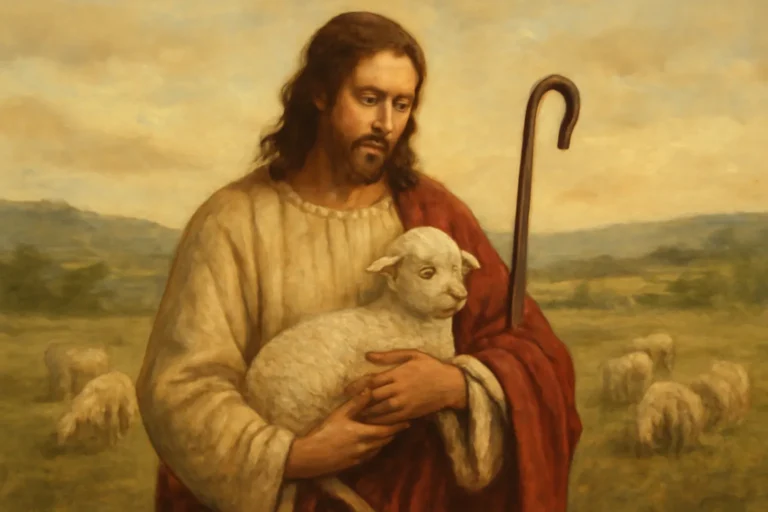

The Lord is my shepherd — a concise, evocative proclamation that opens a doorway into a vast landscape of faith, devotion, and interpretation. This long-form article explores the phrase from multiple angles: its biblical roots, theological significance, liturgical usage, pastoral implications, and its enduring power to shape how believers understand care, guidance, and divine presence in daily life. Throughout the discussion, we will reference various semantic variants of Psalm 23 and offer reflective interpretations suitable for study, teaching, or personal devotion. The purpose is not only to recount words but to engage with their meaning, their imagery, and their persistent relevance in congregational worship and private prayer.
Introduction: The Timeless Proclamation and Its Spiritual Weight
When a believer asserts that The Lord is my shepherd, they articulate a relationship rather than a mere belief. They declare that the divine presence operates as a shepherd to a dependent, guided forness, a protector, a provider, and a companion through life’s terrain. The metaphor of a shepherd conjures images of intimate knowledge, steadfast care, and moral accountability. In biblical worlds, a shepherd is not a distant administrator but a caregiver who knows the sheep by name, leads them to nourishment, guards them from danger, and disciplines when necessary for their well-being. The line anchors a worldview in which human beings are understood as recipients of divine governance and mercy, secure under the watchful eye of a benevolent guide.
Beyond its literary beauty, the phrase carries practical implications for how individuals live. It invites believers to trust in divine leadership, to rest in green pastures of peace, to drink from still waters of restoration, and to follow paths of righteousness—paths that align with the good of the community and the glory of the divine name. In this sense, the opening declaration is not a private comfort alone but a public invitation to social imagination: a life that flourishes under the shepherd’s guidance becomes a blessing to others as well.
Psalm 23: Textual Variants, Translation, and Semantic Richness
Canonical Text and Public-Domain Traditions
Psalm 23 is among the most beloved poems in the biblical canon, a compact composition that bears layers of meaning in a compact form. In the King James Version (KJV), the opening lines read, “The Lord is my shepherd; I shall not want.” This brief clause sets the tone for the entire psalm, establishing a balance between divine care and human need. The KJV phrasing has colored countless generations of worship and meditation, shaping how readers imagine God’s leadership as both provision and protection.
Across translations, the core idea remains stable even as the diction shifts. The phrase The Lord is my shepherd is echoed in modern translations as “The Lord is my shepherd; I shall not want” (KJV), “The Lord is my shepherd, I shall not be in want” (NRSV), “The Lord is my shepherd; I lack nothing” (NIV), and so forth. Each variant preserves the essential claim: the divine guide furnishes what is necessary for life with dignity, mercy, and care. In many ways, the variations are a reminder that the shepherd’s provision is more than material sufficiency—it is the continuous presence of the divine in the journey itself.
Some readers highlight a fuller sense of the shepherd’s role by translating or paraphrasing the opening line as “The Lord is my guardian, caretaker, and guide.” While this is a paraphrase rather than a literal translation, it captures the extended sense of security and direction embedded in the shepherd image. A broader semantic field emerges when we consider green pastures, still waters, and paths of righteousness as domains where the shepherd operates. The semantic breadth allows for a richer meditation on what it means to live under divine governance in daily life, not only in crisis moments but in ordinary hours of work, family life, worship, and service to others.
Additional Variants and Theological Nuances
- Adonai ro’i (Hebrew: “the Lord is my shepherd”) is the ancient, foundational expression. The word ro’i evokes a skilled shepherd, one who tends with attentiveness.
- In some liturgical contexts, Psalm 23 is reframed to emphasize God as Provider, Guide, and Restorer, highlighting different facets of the same relational dynamic.
- Some paraphrases stress the communal dimension: a shepherd guides a flock, and the flock itself participates in a shared journey toward peace and blessing.
Semantically, the text cycles through a sanctuary-conscious vocabulary: green pastures and still waters signal nourishment and peace; paths of righteousness signal moral orientation; the valley of the shadow of death invites courage and trust; the rod and staff symbolize guidance and correction; the table set in the presence of enemies signals blessing amid trial; oil upon the head and overflowing cup signify an abundance of grace. Each image invites a distinct but connected reflection on what it means to live with God as shepherd in every season of life.
Theology of the Shepherd Motif: From Antiquity to Christian Thought
The Shepherd in the Ancient Near East
In the historical milieu of Psalm 23, the shepherd figure would have carried concrete associations for an agrarian society. The shepherd was a reliable guardian who watched for danger, found pasture for lambs, and led them in known, carefully traversed routes. The death-defying dangers of night, predator threats, and uncertain terrain were realities for shepherds and their flocks. When the psalm speaks of green pastures and still waters, the audience envisions not a pastoral postcard but a robust, tangible sense of safety amid hardship. The shepherd’s rod and staff symbolize discipline and direction—acts of care that preserve life and align the flock with a meaningful path. Christians read these images as foreshadowing the care of God in Christ, where divine leadership becomes palpable in both mercy and correction, guidance and grace.
Shepherd Imagery in Christian Scripture and Tradition
For Christians, the shepherd motif extends beyond Psalm 23 to a broader theological frame. Jesus is frequently pictured as the Good Shepherd in the Gospel narratives, who willingly lays down his life for the sheep (John 10). This Christological expansion deepens the Psalm 23 metaphor: the divine shepherd not only leads and provides in the abstract but enters history to enact salvation. In liturgical and devotional life, the shepherd theme serves as a bridge between creation-centered care and redemption-centered action. It invites believers to recognize Christ’s leadership as present in preaching, sacraments, pastoral visitation, and community life, not merely in private contemplation.
Verse-by-Verse Exegesis: A Theological Reading of Psalm 23
Verse 1: “The Lord is my shepherd; I shall not want.”
Interpretive note: The opening assertion is a declared trust, not a promise of unbroken ease. It proclaims that under divine oversight, the soul experiences provisioning that transcends mere wealth. The claim is not about wealth accumulation but about sufficiency and security for the journey. The verb shall not want can be read as shall not be in lack, meaning that God’s care addresses essential needs. Theologically, this introduces an anthropology of dependence and a theology of grace: human longing is met by a generous shepherd who knows what is required for the journey.
Verse 2–3a: “He maketh me to lie down in green pastures: he leadeth me beside still waters. He restoreth my soul.”
These lines pair nourishment with rest and renewal. The imagery of green pastures and still waters is not merely pastoral scenery but a crafted environment where the flock gains physical rest and spiritual refreshment. The phrase He restoreth my soul emphasizes a deeper restoration: renewal of inner life, hope, and identity. In theological terms, this restoration is a transformative work that realigns desires toward God, enabling trust and courage for the road ahead. The pastoral shepherd does not merely feed the sheep but tends to the entirety of the person—body, mind, and spirit.
Verse 3b–4: “He leadeth me in the paths of righteousness for his name’s sake. Yea, though I walk through the valley of the shadow of death, I will fear no evil.”
The paths of righteousness invite ethical living and communal harmony. The navigation of moral terrain—often challenging and contested—requires a faithful guide. The phrase for his name’s sake grounds ethical action in the glory of God’s character. The following verse introduces a crucible moment: the valley of the shadow of death, a symbol of danger, danger, and the unknown. The response is not panic but fearless trust because the shepherd’s presence dispels fear. This juxtaposition—secure guidance and peril confronted with faith—forms a core dynamic of the psalm’s spiritual psychology.
Verse 5: “Thou preparest a table before me in the presence of mine enemies.”
In the ancient economy, a guest host who prepares a table for a guest demonstrates conspicuous blessing and protection. The paradox of abundance amid adversaries becomes a proclamation: divine favor cannot be curtailed by external threats. The image also conveys divine hospitality—a sign that God’s care extends beyond necessity to generosity, feasting, and communal joy even in the face of hostility. The oil upon the head further signals anointing, honor, and consecration, while the cup overflows represents abundant grace and blessing cascading into life.
Verse 6: “Surely goodness and mercy shall follow me all the days of my life: and I will dwell in the house of the Lord forever.”
The closing verse anchors the individual’s life within a trajectory of blessing that persists through time. The dual terms goodness and mercy capture a Christocentric and Trinitarian sense of divine action—generosity and steadfast faithfulness. The speaker’s confidence about dwelling in God’s house forever shifts the psalm from a seasonal experience of care to an eternal horizon of relationship and worship. The eternal dwelling is not merely a place but a quality of life characterized by presence, gratitude, and communion with the divine shepherd.
Pastoral Care, Spiritual Guidance, and Practical Implications for Believers
The shepherd metaphor has practical resonance for Christian ministry and personal discipleship. It invites reflection on how a community organizes itself around the care of vulnerable members, how leadership embodies safety and nourishment, and how the church embodies hospitality and mercy. Some practical applications include:
- Pastoral visitation as a form of providing green pastures in times of distress.
- Spiritual direction as a guided walk along the paths of righteousness—the believer learning to discern God’s will in daily decisions.
- Celebration of the Lord’s Supper as a table prepared in the presence of enemies, a sign of spiritual sustenance amid struggle.
- Anointing with oil in certain traditions as a sign of healing, blessing, and commissioning for mission.
- Confession and forgiveness as a restoration of the soul and the re-entry into the shepherd’s fold after sin and failure.
In these ways, Psalm 23’s imagery translates into concrete pastoral practice: a church that offers nourishment, rest, moral guidance, courage in danger, hospitality amid conflict, and a hopeful horizon beyond the present moment. The shepherd motif thus becomes a program for community life, not only a private consolation.
Liturgical Use and Devotional Practice: Psalm 23 in Worship
Liturgical Function
Psalm 23 appears in a variety of liturgical contexts and devotional practices. It is a staple in times of worship, funerals, and spiritual retreats because its tone weaves comfort with challenge, assurance with exhortation. In many church traditions, the psalm is read as a responsive text between leader and congregation, allowing participants to proclaim trust in God’s leadership and presence. The text’s balance of consolation and courage makes it adaptable for both daily devotion and profound rites of passage such as bereavement or ordination.
Personal Devotion and Private Prayer
For individuals, Psalm 23 can be a daily instrument of meditation. Reciting or journaling the lines fosters a rhythm of gratitude, trust, and ethical reflection. The phrase The Lord is my shepherd is a claim of intimate relationship that invites ongoing dialogue with God: asking for guidance, seeking restoration, requesting protection, and cultivating a faithful posture in the face of life’s uncertainties. People often vary their practice by praying through the psalm as a progression—from rest and provision to guidance, protection, and thanksgiving for blessings that continue beyond the present moment.
Ethical and Doctrinal Reflections: What It Means to Be Led
The shepherd figure implies a responsibility for the flock: to follow, to obey, and to imitate the shepherd’s care. In doctrinal terms, the Psalm 23 motif intersects with Christian ethics in several ways:
- Trust in divine provision as a foundation for generosity toward others, especially the vulnerable.
- Righteous living as a guided path that aligns with God’s character and purposes for creation.
- Courage amid danger by recognizing God’s companion presence in moments of fear and hardship.
- Hospitality and blessing as a hallmark of life that reflects the abundance of God’s grace.
- Lament and hope in the valley of the shadow of death, acknowledging suffering while sustaining faith in the shepherd’s companionship.
These reflections underscore a holistic vision of Christian life: a life of spiritual formation grounded in trust, ethical conduct grounded in love of neighbor, and a liturgical memory that continually returns to the shepherd’s care as the source of ongoing grace.
Influence on Art, Music, and Culture
As one of the most quoted biblical passages, Psalm 23 has significantly influenced culture, art, and music. Visual artists have depicted the shepherd and the flock on canvases or mosaics, translating the psalm’s tenderness into color, form, and light. Composers have set its lines to music in plainchant or modern idioms, weaving the psalm’s cadence into worship, films, and theater. In literature, the shepherd image often appears in allegories and parables that explore leadership, care, and moral accountability. When readers encounter the phrase The Lord is my shepherd, they may recall a lineage of artistic and spiritual expressions that elevate the ordinary experience of life into a sacramental encounter with the divine presence.
Interfaith Perspectives and Shared Themes
While Psalm 23 is a biblical text within the Judeo-Christian tradition, its imagery resonates with universal themes of care, protection, and healing that cut across religious boundaries. In some interfaith contexts, the shepherd motif is explored as a symbol of leadership and responsibility toward vulnerable beings. Even when theological specifics differ, the impulse to seek a benevolent guide—someone who leads through danger to safety and who offers nourishment for the soul—appears in diverse spiritual ecosystems. This shared resonance can foster dialogue about the nature of spiritual care, community resilience, and the ways in which a people understand divine presence in times of crisis and calm alike.
Common Doctrinal Questions and Scriptural Clarifications
Readers commonly ask questions about interpretation, application, and continuity with other scriptural themes. Here are a few representative inquiries and concise responses that can help deepen study or classroom discussion:
- Is Psalm 23 primarily about individual salvation or communal care? Both. The psalm speaks to individual trust in God’s leadership, but the imagery of the flock, the table before enemies, and the hospitality extended to the entire community demonstrates a communal dimension of care and blessing.
- What does “the valley of the shadow of death” signify in modern life? It is a symbolic space of danger, loss, and fear—an ever-present possibility in human existence. The psalm frames the journey through such spaces as one undertaken with divine companionship, rather than alone.
- How does the shepherd motif relate to Christology? Christians often read Jesus as the Good Shepherd who fulfills the Old Testament imagery by guiding, protecting, and laying down his life for the sheep. This Christological reading enriches both hermeneutics and devotion by linking mercy, sacrifice, and leadership.
Conclusion: The Enduring Promise of Divine Guidance
In closing, the declaration The Lord is my shepherd stands as a compact, robust confession of trust that invites ongoing reflection, prayer, and action. It is a call to live with an awareness that divine care is not distant or abstract but near, active, and transformative. The psalm’s imagery teaches that life travels through diverse terrain—meadows and streams, valleys and trials, tables set in the presence of adversity—yet each step is under the shepherd’s watchful, loving direction. The goodness and mercy promised by the shepherd are not ephemeral moods but a sustained orientation toward flourishing for life in this world and hope beyond it. As readers and listeners engage with the psalm—whether in private devotion, in public worship, or in communal service—that same shepherd continues to guide, renew, and accompany, turning fear into courage, scarcity into generosity, and despair into thanksgiving.
Thus, the phrase The Lord is my shepherd remains a living invitation: to trust in the divine guide, to follow with integrity, and to embody mercy and justice in the community. In this sense, Psalm 23 is not merely a relic of ancient liturgy but a continuing charter for faithful living—a timeless map for navigating the complexities of human existence while remaining anchored in the character of a shepherd who knows and loves his flock.