
The Nativity: An Overview of the Birth of Jesus
The Nativity is more than a single moment in a single gospel. It is a constellation of events, interpretations, liturgical memories, and artistic renderings that have shaped the conscience of Christian communities for two millennia. At its core lies the announcement of a remarkable truth: the Word became flesh, and in that mystery the divine and human meet in the birth of the Savior. In this long-form reflection we attend to the birth narratives, their theological meanings, their historical horizons, and their enduring significance for faith, worship, and daily life. We will explore not only the literal sequence of events that the gospels relate but also the symbolic resonance, ethical implications, and pastoral implications of the Nativity. We will use a careful, reverent, and critically attentive approach, keeping in view the distinct perspectives presented in the canonical accounts while noting how later tradition has drawn out their deepest meanings.
Throughout this article we will refer to the birth of Jesus with several semantic variations to highlight breadth and nuance: the Nativity, the birth narratives, the birth of Christ, the incarnation in the manger, the birth of the Messiah, and the Christ child’s arrival. These variations are not mere stylistic differences; they reflect the multifaceted way the church has read the event across time and cultures. In what follows, the focus remains squarely on the religious domain—on doctrine, pastoral reflection, liturgy, and spiritual interpretation—while also acknowledging historical questions and literary features of the gospel texts.
The Historical and Scriptural Foundation
To understand the Nativity, one must begin with the two canonical accounts that present the most detailed narratives of Jesus’ birth: the Gospel of Matthew and the Gospel of Luke. Each uses distinct literary strategies, emphasizes different characters, and situates the birth within a broader arc of salvation history. Taken together, they offer a composite portrait of the birth of Jesus that invites contemplation rather than a single, definitive chronology.
Canonical Gospels and their distinct emphases
The two primary sources for the birth narratives share certain shared elements—an expectation of a divine intervention, the setting of Bethlehem, and a sense of fulfillment of prophecy—even as they diverge in the particulars. In Matthew, the birth is linked to the genealogy of Jesus and to the figure of Joseph, whose dream directs him to take Mary as his wife and to name the child Jesus. In Luke, the annunciation to Mary by the angel Gabriel, the journey to Bethlehem, and the proclamation to shepherds together form a continuous strand emphasizing humility, pastoral care, and social vulnerability. A careful reading reveals:
- Matthew’s narrative emphasizes the legal lineage of Jesus, the fulfillment of prophetic texts, the danger posed by hierarchical powers, and the extraordinary visitation of wise men from the east who symbolize the Gentile inclusion of the Messiah’s light.
- Luke’s narrative highlights the humble circumstances surrounding Jesus’ birth, the role of Mary and John the Baptist as foreshadowing figures, and the proclamation to shepherds as a sign of God’s closeness to the lowly and the marginalized.
Both accounts, while not identical in every detail, convey a theological proclamation: the birth of Jesus inaugurates a new era in salvation history, in which God intervenes in human affairs in ways that overturn expectations and invite faith. The humility of the scene—the stable, the manger, the choir of angels, the shepherds, the infant—transforms religious imagination, inviting believers to see God’s work in small, ordinary settings as well as in grand, cosmic events.
Theological Significance of the Birth of Jesus
The Nativity yields a wealth of theological themes that theologians have articulated across centuries. Among these, a few stand out as central: the incarnation, the Virgin Birth, the fulfillment of prophecy, and the reversal of human expectations that accompanies the arrival of the Messiah. Below, we outline these themes with attention to their doctrinal weight and pastoral implications.
The Incarnation: God’s self-emptying and dwelling among humanity
One of the most profound bedrocks of Christian faith is the doctrine of the Incarnation: in Jesus Christ, God takes on human nature while remaining fully divine. The Nativity is the dramatic moment when the eternal Word enters time and space, not by coercion but by consent and love. The infant in the manger embodies not weakness alone but the strength of divine solidarity with the vulnerable. The statement “the Word became flesh” (John 1:14) is not only a cosmic claim but a pastoral invitation: God chooses to be near, to suffer, and to redeem by identifying with human condition at its most intimate level—the birth of a child. The Nativity thus grounds a theology of kinship between God and creatures, between the Creator and the created order, and between heaven and earth.
The Virgin Birth and the Mystery of Birth Conception
The belief in the Virgin Birth encodes a claim about the child’s origin that transcends ordinary human processes. It is not a theological assertion about biology as much as a declaration about identity and mission: Jesus is not merely a prophet or a moral teacher. He is the God-Man whose arrival marks the decisive intervention of grace. The Natal mystery serves to distinguish Jesus from all other births, while at the same time affirming his full humanity. The Nativity, including the divine role in the conception and the human response in Mary’s faith, lays out a theological rhythm of trust, obedience, and wonder that becomes a model for believers facing God’s unexpected calls in their own lives.
Fulfillment of Prophecy and the Governance of History
Both Matthew and Luke frame the birth narrative within a larger expectation that God has not abandoned creation to chaos but is actively bringing about a new order. The birth of the Christ child is presented as a fulfillment of long-prophesied hopes—promises that God would raise up a deliverer, a ruler who would shepherd with justice and mercy. The Nativity, in this light, becomes a hinge point in salvation history: a sign that God’s action is not distant but intimately involved in the ordinary and the extraordinary alike. The star of Bethlehem, the angelic proclamations, and the glory to God in the highest chorus are not mere embellishments; they signify the historical and cosmic dimensions of the event, inviting interpretation on multiple planes—personal, communal, liturgical, and scholarly.
Reversal, Humility, and Welcoming the Marginal
A recurring motif in the Nativity is reversal: the powerful are not the primary agents here, but rather the meek, the humble, and the poor. The shepherds, the livestock, the stable, and the lowly settings become places where God’s favor is revealed. In this sense, the Nativity is not only about the birth of a child but about a social and moral reorientation. It invites Christian communities to nurture hospitality, care for the vulnerable, and imagine power through service rather than domination. The Christ child becomes a model for self-giving love, and the church reads this model as a call to practical mercy and social justice rooted in faith.
The Nativity in Matthew and Luke: A Closer Look
To appreciate the depth of the Nativity narratives, it helps to examine the structural and thematic emphases in the two primary gospel accounts. While both accounts center on the birth of Jesus, they present different vantage points that illuminate complementary truths about who Jesus is and why his birth matters for humanity.
Matthew: Royal lineage, dream-ward guidance, and Gentile recognition
In Matthew’s account, the Nativity is embedded within a narrative of kingship, prophecy, and divine protection. The opening genealogy connects Jesus to Abraham and David, stressing that the birth of Jesus is the fulfillment of a divine plan for the nation of Israel and the world. The angelic warning to Joseph in a dream—“Do not fear to take Mary as your wife”—frames the event as a family vocation under divine supervision. Matthew then tells of the encounter with the Magi, a journey guided by a stellar sign that suggests a revelation extending beyond Jewish boundaries to Gentiles who come to worship the baby king. The adoration of the Magi culminates in a cautionary warning to flee to Egypt and a return to Nazareth, thereby linking the Nativity to the wider story of exile and return that will recur in Matthew’s portrayal of Jesus as the new Moses and the fulfillment of messianic expectations. In this gospel, the Nativity is a narrative of governance, international recognition, and the beginnings of a public mission that transcends the boundaries of a single people.
Luke: The annunciation, shepherds, and a social horizon of grace
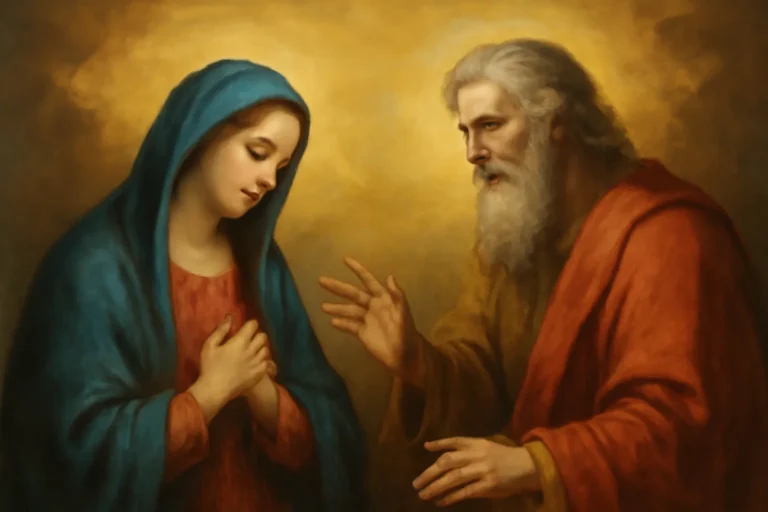
Luke’s birth narrative, in contrast, foregrounds the annunciation to Mary, the journey to Bethlehem, the humble setting, and the shepherds who receive the angelic proclamation. Luke presents a dramatic inversion: God chooses Mary, a young woman in a modest setting, to bear the Son who will be called Savior. The angels announce peace on earth, good news to the poor, and a release for the oppressed, with shepherds as the first recipients of the heavenly message. Luke then shifts to the gratitude of Mary in the Magnificat, a theological hymn that echoes the themes of reversal and mercy. The Nativity in Luke thus emphasizes the personal, relational, and communal dimensions of God’s action: God is near to households, to families, to ordinary life, and to the social margins. The narrative’s pastoral imagination invites the reader to encounter God in daily life, in family faith, and in communal worship.
The Nativity Narratives: Characters, Symbols, and Meanings
Beyond the main cast and scenes, several recurring figures and symbols in the Nativity narratives invite interpretation. Each element can be read as a sign pointing to deeper spiritual truths and liturgical meanings. Here are some key components and their typical theological readings.
- Mary and her Fiat: The consent of Mary to God’s plan is a model of faith and obedience. Her willingness to bear the divine Word invites believers to respond to God’s call with trust, relationship, and courage, even when the path is uncertain.
- Joseph and his dream-episodes: Joseph stands as an exemplar of righteous restraint and protective care. His dreams guide him to safety for the holy family and to accept the divine vocation imposed upon him, sometimes in unexpected ways.
- Angels and their proclamations: The angelic announcements declare peace, joy, and the gracious intervention of God. The chorus of angels signals the cosmic scope of the event and invites hu-man beings to join in adoration and praise.
- Shepherds and their testimony: The shepherds represent the pastoral class and symbolize God’s closeness to the ordinary people. Their awe and witness highlight the accessibility of Jesus to the humble and to the faithful who come with wonder and joy.
- Magicians/wise men and the reception of Gentile recognition: The travelers from the east symbolize the universal reach of the gospel and the inclusion of all nations in the salvation story, even as the child’s early danger points to the need for divine protection.
- The manger and the feeding trough: The humble cradle becomes a symbol of nourishment, hospitality, and the feeding of souls by the bread of life. It also signals the paradox of divine glory hidden in poverty.
- Prophetic echoes and scriptural allusions: The Nativity is studded with allusions to Old Testament expectations, foreshadowing the suffering, triumph, and mission that will unfold in the life of Jesus.
Symbols that shape devotion and doctrine
In reading the Nativity, many theologians emphasize the signs and symbols as windows into deeper truth. The star over Bethlehem points to a guiding light for searching hearts. The angelic chorus proclaims a kind of cosmic well-being—glory to God in the highest—that is heard by those who attend to divine messages. The incarnation in the manger invites contemplation of God’s solidarity with the vulnerable and the invitation to see God’s work in unexpected places. In liturgical and devotional settings, these symbols invite believers to a posture of humility, adoration, and mission, recalling that the Nativity is not a closed memory but an ongoing invitation to participate in God’s redemptive plan in the present age.
The Birth of Jesus in Liturgy, Tradition, and Spiritual Practice
Across Christian history, the Nativity has generated a plethora of liturgical practices, devotional prayers, and cultural expressions. The various strands of tradition enrich the understanding of the birth narratives and offer pathways for worship and contemplation. Below are some ways in which the Nativity has lived in the life of churches and families around the world.
Liturgy and the liturgical calendar
In most Christian calendars, the Nativity is linked to Advent and Christmas. The period of Advent begins the preparation for the coming of the Christ child, with themes of expectation, repentance, and hopeful anticipation. The celebration of Christmas then marks the actual birth and the Incarnation—God becoming flesh. Many traditions include a procession, carols, and readings that retell the Nativity story, often accompanied by nativity scenes that invite contemplation of the humble surroundings in which Jesus arrived. The Nativity scene, or crèche, has become a centerpiece for worship spaces and family devotion, serving as a visual catechesis about God’s presence among humans.
Patristic and medieval reflections
From patristic commentators to medieval mystics, the birth episodes were read as a first-hand encounter with mystery. Fathers of the church often highlighted the moral and spiritual implications of the Virgin Birth, Mary’s fidelity, and the Magi’s worship as signs of faith, humility, and universal reverence for the divine gift. In medieval devotional poetry and art, the Nativity was portrayed as a drama in which Christ’s humanity and divinity are at once made visible and transfigured by love. These reflections provided spiritual nourishment for communities facing hardship, oppression, or spiritual drought, reminding believers that Christmas is a feast of hope anchored in God’s steadfast love.
Liturgical texts, prayers, and practices
Across Christian cultures, the Nativity has inspired a wide array of prayers and readings. There are canticles and prayers that extol Mary’s obedience, that thank God for mercy shown to the humble, and that ask for the peace that Jesus, the Prince of Peace, came to offer. The Nativity also informs meditative practices: contemplations on the mystery of the Incarnation, devotion to the Christ child as a model of tenderness, and prayers for reconciliation and justice in a broken world. The repeated refrains of Christmas carols—both classic and contemporary—carry the theology of the Nativity into popular worship, ensuring that the birth narratives remain living and transformative for communities of faith.
The Incarnation and the Birth of the Savior: Doctrinal Reflections
The Nativity is inseparable from the broader doctrine of the Incarnation and the mission of the Savior. As theological reflections have shown, the birth of Jesus is not a private event but a theological event with public implications. When Christians speak of God becoming flesh, they are articulating a claim about divine love, human destiny, and the possibility of transformation through grace. Here are some doctrinal reflections that arise from the Nativity story.
God’s proximity and initiative
The Nativity testifies that God does not remain distant from human experience but enters into it with tenderness and intentionality. This is not a distant myth; it is a claim about God’s preference for the vulnerable and the lowly, a reminder that in the innermost moment of birth, God chooses to be with us in our most intimate spaces. The Nativity thus challenges believers to cultivate hospitality, solidarity, and care for the marginalized, recognizing that God’s presence often arrives in mundane moments that become holy through grace.
Christology and the unity of person
Throughout Christian theological discourse, the birth of Jesus is a focal point for discussions about the person of Christ—fully divine, fully human, yet one person. The Nativity underscores the paradox of unity in the hypostatic union: a divine nature and a human nature united in one person. This mystery helps believers articulate that salvation involves both God’s initiative in creation and human participation through faith and response. The historical church has wrestled with how best to say this in language that honors both thedivine and the human, and the Nativity remains a central touchstone for such Christological reflection.
Redemption, reconciliation, and the possibility of peace
The proclamation of peace on earth, embedded in the Nativity account, is not merely political rhetoric. It is a theological claim about the reconciliation of humanity with God and the healing of human relationships. The Christ child’s arrival inaugurates a period in which mercy, forgiveness, and justice become possible through the power of divine love. The Nativity thus invites Christians to pursue peace in concrete ways—through reconciliation, charitable works, and advocacy for the vulnerable—and to trust that God’s grace can transform even the most divided societies.
The Nativity Across Christian Denominations
Different Christian traditions emphasize various aspects of the Nativity while remaining anchored in a shared confession about Jesus’ birth. While the core event is acknowledged across the branches of Christianity, the interpretations, devotional emphases, and liturgical expressions can differ in meaningful ways.
Roman Catholic and Orthodox perspectives
In Roman Catholic and Orthodox churches, the Nativity is celebrated with rich liturgical cycles, iconography, and sacramental life. The feasts of Christmas and Theophany (Epiphany) are occasions for highlighting the incarnate presence of God among people, the sanctity of Mary and the saints, and the universal implications of Jesus’ birth. Icons and liturgical colors, as well as processions and night vigils, contribute to a multisensory experience of the Nativity that aims to deepen reverence and contemplation.
Protestant reflections
Many Protestant communities tend to emphasize the biblical narratives as sources of faith and doctrine, often focusing on the gospel accounts themselves, the proclamation of Jesus as Lord and Savior, and the call to personal faith. Hymns, sermons, and congregational readings highlight the salvific significance of the birth and its implications for salvation history, the lordship of Christ, and the call to discipleship. In some traditions, Advent and Christmas also include a subtle critique of consumer culture by keeping the focus on worship and gratitude rather than mere festivity.
Orthodox and Oriental Orthodox articulations
In Orthodox and some Oriental Orthodox communities, the Nativity is deeply integrated with iconography, liturgical chant, and the succession of feasts that trace the mysteries of Christ’s life. The theological emphasis on incarnation and hypostatic union is reflected in hymns and prayers that celebrate God’s drastic step toward humanity, while liturgical acts remind the faithful of the cosmic significance of the child’s birth.
The Nativity in Art, Music, and Literature
Artistic and literary traditions have long translated the Nativity into visual and sonic forms that widen access to its mysteries. Paintings, sculptures, murals, and stained glass have sought to render the scene in ways that invite meditation and awe. Composers have turned to Christmas cantatas, motets, and orchestral works to capture the emotional arc of the Nativity, from anticipation to adoration. Writers and poets have used the Nativity as a motif for exploring themes of hope, grace, and the human encounter with the divine. In diverse cultural contexts, the Nativity has been adapted to reflect local sensibilities while preserving the essential message: God has come near in an unexpected place, as a child who embodies both vulnerability and hope.
The Nativity in Historical Context and Scholarly Discourse
Scholarly work on the Nativity engages questions of historical context, literary structure, intertextuality with the Hebrew Scriptures, and the ways early Christian communities remembered and transmitted these accounts. Critics and theologians alike recognize that the Gospel writers wrote within specific communities, with particular aims, and that their narratives must be read with care. Yet there is broad consensus that the Nativity accounts, despite their theological aims, preserve memory of a real-blood world in which a young family faced danger, poverty, and uncertain times, and in which a divine invitation broke through in the form of a child.
Scholarly discussions may address topics such as: chronology and dating of the gospel narratives, historical corroboration and limits, the reception of the Nativity in early Christian worship, and the relationship between sacred memory and later traditions. The aim is not to discredit faith but to illuminate how memory functions in shaping belief, practice, and ethical imagination. In this sense, the Nativity remains a living field of study where theology, history, and spirituality meet.
The Nativity and Christian Hope Today
In contemporary Christian life, the Nativity continues to serve as a source of hope, a call to charity, and a reminder that the divine acts in ways that redefine power, wealth, and status. For families, congregations, and individuals, the birth of Jesus invites:
- Hospitality toward strangers and the vulnerable, modeled by Mary’s welcoming of God’s plan.
- Mercy and social justice, reflected in the shepherds’ and angels’ message of good news to the poor and the marginalized.
- Worship that honors the infant Christ and his divine mission, expressed in prayers, carols, and liturgical acts.
- Hope that God’s plan for peace and reconciliation remains active in history, even in times of conflict and despair.
- Reflection on identity as Christians consider what it means to be children of God in a world that often prizes power over mercy.
A Practical Guide to Approaching the Nativity today
For readers who seek to engage with the Nativity in a thoughtful, spiritually enriching way, here are practical approaches that can deepen understanding and devotion:
- Read the core texts with attention to context, paying special attention to how Matthew and Luke differently frame events surrounding the birth of Jesus. Compare their genealogies, settings, and calls to faith, and reflect on what those differences teach about the nature of revelation.
- Study the theological motifs—incarnation, virgin birth, fulfillment of prophecy, and the universal scope of salvation—and notice how these themes recur across other biblical books and creedal formulations.
- Explore liturgical practices tied to Advent and Christmas in different traditions, and consider how these practices shape belief, memory, and ethical living.
- Engage with art and music as acts of contemplation. View nativity scenes, icons, or paintings with attention to the symbolism and the reminders they provide about God’s presence with humanity.
- Reflect on social implications of the Nativity, including how communities care for the vulnerable, how hospitality is extended, and how justice and mercy can be pursued in real life.
Conclusion: The Nativity as a Living Mystery
The Nativity, or the birth narratives, remains one of the most enduring and formative teachings in Christian faith. It proclaims that the Creator of the world, in an act of profound humility, enters human history in the form of a child born in a stable. This event signals that salvation is not an abstract ideal but a concrete, personal, and communal reality. It invites believers to respond with faith, love, and service, to see God’s presence in the ordinary, and to participate in God’s plan for renewal and reconciliation in the world.
As this comprehensive exploration has shown, the birth of Jesus is not a single, isolated moment but a multilayered, dynamic narrative that continues to speak across cultures and generations. Whether one reads it through the lens of doctrine, devotion, or pastoral practice, the Nativity remains a transformative invitation to trust in the God who chooses to dwell with humanity, even in the most humble circumstances, and to carry that trust into every corner of life.