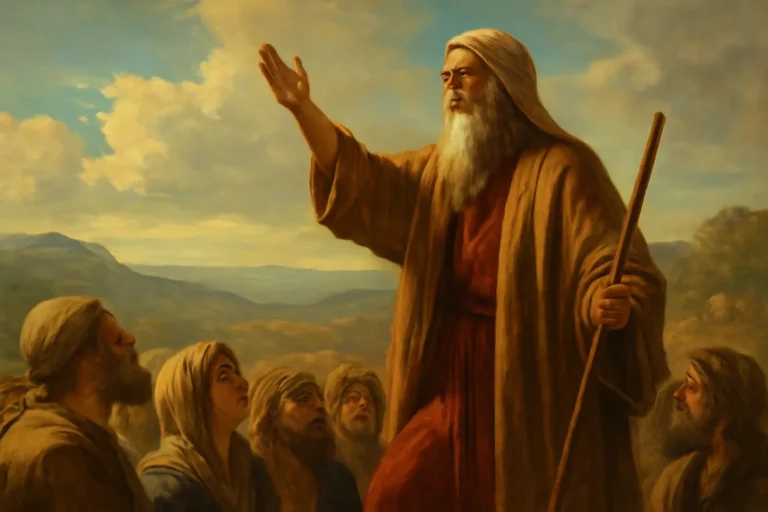
Introduction to the Pentateuch: The Five Books of Moses
The Pentateuch is among the most influential textual collections in world religious literature. Comprising the first five books of the Hebrew Bible, this corpus is traditionally attributed to Moses as a central human conduit of revelation. In religious communities, the collection is often referred to by several interrelated names: the Torah, the Law of Moses, or simply the five books. Each designation emphasizes a distinct facet of the same corpus: its sacred origin, its legal and liturgical content, and its enduring story about God’s interaction with humanity. For scholars, believers, and students, the Pentateuch (or Pentateuchal literature) presents a foundational narrative framework that explains origins, covenants, rituals, ethics, and the formation of a people entwined with divine promise.
This long-form article offers a comprehensive exploration of the pentateuchal corpus from multiple angles: its composition, historical formation, theological themes, literary structures, and practical implications for faith communities. We will explore the five individual books—Genesis, Exodus, Leviticus, Numbers, and Deuteronomy—as well as the broader concept of the Pentateuch within Judaism, Christianity, and Islam. The aim is not only to recount events but to illuminate how this collection shapes belief, practice, and identity in religious life.
Scope, Names, and Significance
- Scope: The Pentateuch covers creation, early human history, patriarchal narratives, liberation from oppression, emergence of the Israelite people, and the establishment of covenantal laws and institutions.
- Names:
- The Pentateuch (Greek for “five scrolls”)
- The Torah (Hebrew for “instruction” or “law”)
- The Law of Moses (traditional designation emphasizing Mosaic revelation)
- The Book of Moses (a phrase sometimes used in Christian traditions)
- Significance: The Pentateuch forms the theological, liturgical, and ethical heart of Judaism; it informs Christian scripture and reverberates through later theological reflections, philosophical thought, and liturgical practice. For Muslims, some portions of these books are acknowledged within the Qur’anic narrative and associated traditions, underscoring a shared sense of scriptural reverence across faiths.
Origins, Formation, and Theological Context
The question of authorship and composition of the Pentateuch has long engaged scholars and clergy. While traditional faith communities have upheld Mosaic authorship as a central assumption—that Moses himself wrote or dictated the core material—the modern scholarly consensus often speaks in terms of a complex process of redaction and compilation. The Documentary Hypothesis, for example, suggests that multiple source strands—historically designated as J (the Jahwist), E (the Elohist), P (the Priestly), and D (the Deuteronomist)—were woven together over centuries to produce the unified text we now encounter. This approach seeks to explain stylistic variation, duplicate stories, and the changing emphases across the five books.
Regardless of whether one emphasizes traditional authorship or critical analysis, the Pentateuch presents a cohesive theological project. It narrates how a people is formed under divine revelation, guided by institutional structures, moral laws, ritual practices, and a shared memory of deliverance. Theologically, the Pentateuch centers on the concept of covenant, a binding relationship in which God promises blessing and protection in response to fidelity and obedience. This covenant framework is not merely a historical memory; it shapes religious identity, ethical norms, and communal memory across generations.
The Five Books of Moses: An Overview
The Pentateuch is commonly divided into five distinct but interrelated books. Each book has its own literary voice, thematic concerns, and narrative arc, yet they form a cumulative story that moves from cosmic creation to covenantal renewal. Below is a concise overview of how the five volumes together construct a theological and historical panorama.
Genesis (Bereishit): Creation, Primordial History, and the Patriarchs
Genesis opens with the primal acts of creation and then traces the human family through a succession of pivotal episodes. The book is often considered a bridge between mythic or ancient Near Eastern narratives and the historical memory of a people who would become Israel. Central themes include creation and fall, divine promise, covenant with the patriarchs, and the evolution of faith communities amid testing circumstances.
Key narratives include:
- The Creation and the Fall narratives, which set the stage for human responsibility, divine sovereignty, and the moral arc of humanity.
- The Flood story, illustrating divine judgment and mercy, along with a promise never again to destroy the earth by flood.
- The Babel narrative, which contends with human pride and divine dispersion, yet remains connected to blessings and a universal purpose for humanity.
- The Patriarchs—Abraham, Isaac, and Jacob—whose journeys reveal faith, testing, and the formation of a people who will carry divine purposes into history.
- The Joseph narrative, which, set within the Egyptian setting, explains the dispersion and eventual return of a chosen people to their ancestral homeland.
The book of Genesis also introduces the covenantal motif, which recurs in later books as the means by which God maintains relationship with the descendants of Abraham. This foundation will become decisive for Israel’s self-understanding as a people called to a special mission in the world.
Exodus (Shemot): Liberation, Covenant, and Sacred Space
Exodus tells the story of liberation from oppression, the revelation at Sinai, and the founding of liturgical and priestly institutions. It is often described as the turning point where a community moves from a loosely defined group into a people with a divine vocation, a structured legal code, and a concrete sanctuary in which to encounter God.
Important motifs include deliverance, sacralization of law, and the establishment of the tabernacle as a portable center of worship. The revelation at Sinai presents a holistic package: divine instructions about moral conduct, ritual purity, and the social order, all anchored by the binding covenant motif.
- The liberation from Egyptian bondage demonstrates that the God of Israel acts in history to secure freedom for the oppressed.
- The giving of the Decalogue (the Ten Commandments) and a broader collection of laws shapes how the community relates to God and to one another.
- The construction of the tabernacle and the establishment of priestly service codify a rhythmic life of worship and sacrifice.
Leviticus (Vayikra): Holiness, Priesthood, and Ritual Life
Leviticus is often recognized for its concentrated focus on worship, the priestly class, and the ethics of purity and holiness. It expands the sacrificial system, defines ritual boundaries, and elucidates the moral scope of communal life. While some readers find Leviticus dense, its core aim is to guide the people toward holiness in all aspects of life—worship, relationships, and daily conduct.
Key emphases include the holiness code, dietary and ritual laws, the regulations of sacrifices, the holiness of the priesthood, and the mechanism of atonement for the people and the sanctuary.
- Instructions for offerings, including burnt offerings, grain offerings, and sin offerings.
- Purity and impurity categories that shape community life and worship.
- Annual sacred ceremonies, especially the Day of Atonement, which centers on reconciliation and renewal.
Numbers (Bamidbar): Wilderness Trek, Census, and Trust in God
Numbers documents the unfolding journey of Israel through the desert, from Sinai toward the edge of the Promised Land. It juxtaposes moments of trust with episodes of rebellion, testing the community’s faith in its divine calling. The book’s title reflects the two opening censuses and the broader sense that the people are counted as they march through history under divine oversight.
Prominent themes include wilderness testing, leadership in times of crisis, and the tension between divine promise and human frailty. The narrative interweaves episodes of gratitude and fear, as well as encounters with other nations and prophetic voices that challenge the people to stay faithful to the covenant.
- The censuses that both enumerate and authorize tribal leadership.
- The rebel episodes that test obedience and consequence.
- Journeys through regions with varying resources, each providing a liturgical and ethical lesson about dependence on God.
Deuteronomy (Devarim): Renewal of Covenant and Final Address
Deuteronomy functions as a series of farewell discourses attributed to Moses before his death. It retells and reinterprets much of the material in the prior books, with a deliberate emphasis on memory, fidelity, and the re-activation of the covenant as Israel prepares to enter a new phase of national life in the land.
Major motifs include covenant renewal, the call to choose life, and the reiteration of laws designed to sustain a righteous society. Deuteronomy also crystallizes central theological statements, including the famous Shema, which articulates exclusive devotion to the one God and the ethical obligations that flow from this allegiance.
- Recounted sermons that reinforce obedience and conditional blessings.
- Restatement of the law in a form accessible to a new generation.
- The narrative arc culminates with Moses’ death and the transition of leadership to Joshua.
Literary Structures, Genre, and Narrative Techniques
The Pentateuch blends many literary genres, including mythic creation narratives, etiologies, genealogies, oath-bound covenants, legislative material, and narrative history. Its genres work together to present a multi-layered texture in which divine action is interpreted through human experience. Some scholars emphasize the composite nature of the text, while others highlight its unified theological project that centers on God’s plan to redeem and sanctify a chosen people.
- Narrative storytelling drives key events and character development across generations.
- Laws and ritual instructions provide the framework for worship, ethics, and communal life.
- Theological discourses articulate the nature of God, the meaning of obedience, and the consequences of disobedience.
Authorship, Formation, and Theological Implications
The question of authorship and texture of the Pentateuch invites both reverence for tradition and openness to critical inquiry. In Jewish and Christian traditions, Moses is often regarded as the principal transmitter of the law and the theophanies recorded in the early chapters. In modern scholarship, the idea of multiple redactors, temporal layers, and editorial projects invites readers to consider how a religious community transformed oral memories into a written code that could sustain faith across centuries.
This multiplicity does not diminish the sacred status of the Pentateuch for many believers. Rather, it invites a dynamic understanding of inspiration and transmission: the divine message can be transmitted through varied voices, languages, and historical circumstances, while remaining anchored in a shared covenantal aim. The idea of a divine-human partnership runs through every page, offering a model for how communities interpret revelation, tradition, and law in ever-changing contexts.
Theology and Covenant: Core Doctrines in the Pentateuch
The theological heartbeat of the Pentateuch is the concept of covenant, a binding relationship in which God initiates, sustains, and guides a community through history. The covenant is not merely legal notice; it is an invitation to participate in a divine mission. The terms include promises, stipulations, blessings for fidelity, and consequences for disobedience. Across the five books, several themes emerge:
- Creation and divine sovereignty: God’s authority over the cosmos and human beings, established at the outset and reaffirmed throughout.
- Promise and inheritance: The call to a land and a lineage that will carry blessing to the nations.
- Law as relationship: Not merely regulatory rules, but expressions of love, justice, and communal flourishing.
- Holiness and ethics: A life oriented toward God, with attention to purity, justice, compassion, and care for the vulnerable.
- Temple worship and priesthood: The means by which the community encounters the divine presence and sustains communal identity.
Ethical and Ritual Laws: How the Pentateuch Regulates Life
The Pentateuch’s law codes are diverse in form and purpose. They regulate ritual practice, civil life, family dynamics, and social justice. They address personal purity and national identity, sacred time and ordinary days, as well as the responsibilities of leaders and the marginalized. The law in the Pentateuch is inseparable from theology: to obey the law is to acknowledge God’s lordship; disobedience signals a ruptured relationship and a need for repentance and renewal.
Among the most studied sections are the ethical prescriptions, ritual instructions, and the social statutes that shape how a community treats the poor, foreigners, orphans, and widows. These norms aim to cultivate a compassionate, just, and holy people who reflect the character of their God. The Pentateuch also frames the idea of sacrifice as a means of atonement and restoration, while gradually developing a vision of forgiveness and mercy that resonates in later religious literatures.
The Pentateuch and Liturgy: Education, Worship, and Memory
Across centuries, the Pentateuch has informed liturgical life, ritual practice, and catechetical instruction. In Jewish tradition, Torah study and weekly readings anchor religious life, and the Five Books of Moses are integrated into personal devotion, communal assemblies, and life-cycle events. In Christian traditions, these books serve as the foundation for doctrinal reflection, typology, and the continuous interpretation of Jesus Christ as the fulfillment of biblical revelation. In both contexts, the Pentateuch is not merely an ancient text; it is a living resource for ethical formation, spiritual discipline, and communal identity.
The Pentateuch also offers pedagogical models for modern education: it invites readers to engage with primary sources, to examine how communities remember, reinterpret, and apply ancient laws in changing social realities. The rich narratives function as learning laboratories for questions about history, faith, and justice, enabling readers to connect ancient wisdom with contemporary concerns.
The Pentateuch in Interfaith Contexts
The stories and laws found in the Pentateuch have shaped not only Judaism and Christianity but also Islamic understanding of earlier prophetic and moral traditions. In Islam, certain narratives and moral principles resonate within the Qur’an and the broader corpus of prophetic literature, creating shared contexts for dialogue and mutual learning. Interfaith engagement with the Pentateuch emphasizes shared ethical horizons, reverence for revelation, and a common commitment to justice, mercy, and the pursuit of peace.
Modes of Interpretation: Exegesis, Hermeneutics, and Faithful Readings
Interpreting the Pentateuch involves a spectrum of methods. Traditional exegesis may emphasize literal or historical readings of narratives and laws, while canonical or theological readings stress the overarching story of creation, law, and covenant. Later interpretive traditions—rabbis, church fathers, reformers, and modern theologians—offer varied lenses through which to understand the text’s meaning for faith and life. The practice of interpretation itself becomes a form of spiritual discipline, inviting readers to discern how ancient words speak into modern circumstances.
- Historical-critical approaches explore authorship, dating, and redaction.
- Canonical readings emphasize the unity of the Bible’s theological arc.
- Ethical and liberationist readings focus on justice, dignity, and the protection of the vulnerable.
- Liturgical readings connect the text to worship, prayer, and sacred memory.
Modern Relevance: The Pentateuch for Contemporary Faith Communities
In today’s world, the Pentateuch continues to offer guidance on moral decision-making, community governance, and spiritual formation. Its narratives encourage readers to consider how trust in the divine shapes resilience in the face of hardship, how communal memory sustains identity, and how laws can be interpreted with compassion and justice in diverse societies. The ethical frameworks embedded in the Pentateuch inspire social action—care for the needy, fair governance, and protection of the vulnerable—while its stories invite personal reflection on faith, doubt, and hope.
Practical Considerations for Study: Reading the Pentateuch Today
For students, educators, and faith practitioners who wish to engage with the Pentateuch in a rigorous yet meaningful way, consider the following practical approaches:
- Read the books as a unified sequence to witness the arc from creation to covenant renewal.
- Compare parallel narratives across the five books to notice motifs, repeated promises, and divergences that illuminate the text’s purposes.
- Pay attention to key terms such as covenant, holiness, sanctuary, and justice to grasp the theological center of each book.
- Engage with commentaries from diverse traditions to appreciate different interpretive horizons.
- Use a variety of translations to experience how linguistic choices influence meaning and emphasis.
Conclusion: The Enduring Significance of the Pentateuch
The Pentateuch, whether called the Pentateuch, the Torah, or the Law of Moses, remains a living testament to the human encounter with the divine. Its stories of creation, deliverance, and covenant have shaped civilizations, inspired countless generations of believers, and prompted ongoing dialogue about justice, ethics, and the meaning of faith. In its breadth and depth, the five books illuminate how a community can remember a past while interpreting present realities and aiming toward a future shaped by divine guidance. The Pentateuch, in all its forms and translations, continues to invite readers into a transformative journey—one that is as much about spiritual formation as it is about historical memory.