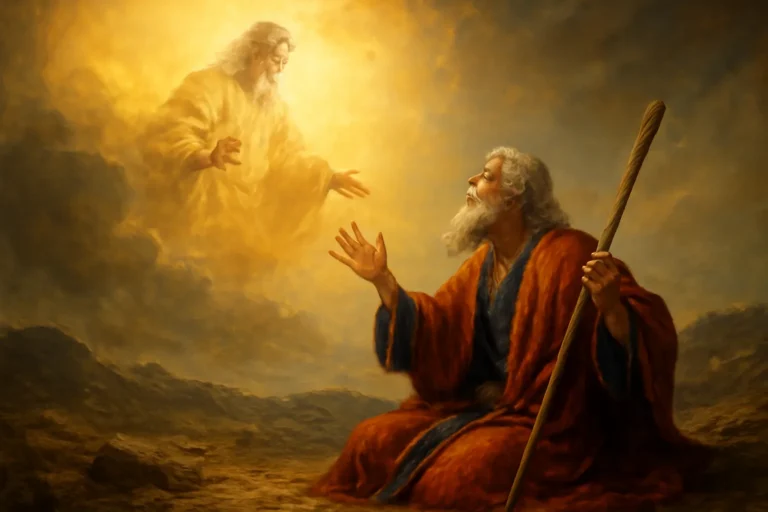
Introduction: The Call that Shaped a Nation
Across the pages of Scripture, there are moments when history pivots on a single divine summons. God’s call to Moses is one of the most foundational of these moments, a turning point that transforms a shepherd in the wilderness into a liberator, lawgiver, and patriarch of a people. This article explores the multifaceted phenomenon of the divine summons—how it arises, how it is received, and how it unfolds into mission, covenant, and transformation. We will examine the theophany of the burning bush, the name and nature of the One who calls, the human response with all its trepidation and faith, and the enduring theological and ethical implications of this ancient call for readers of several faith traditions and for anyone reflecting on vocation, leadership, and the encounter with the sacred.
The Burning Bush and the First Call: Theophany as a Classroom for Destiny
Appearance of the Burning Bush
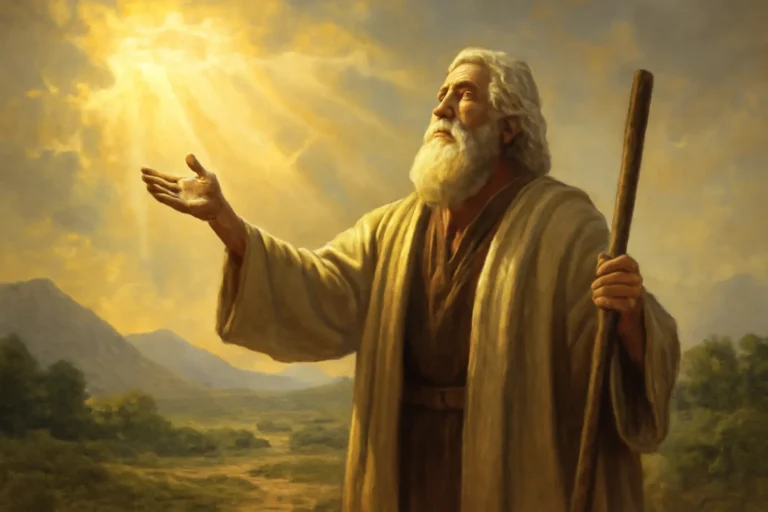
In Exodus 3, Moses is tending the flock near the mountains of Horeb when he encounters a phenomenon both ordinary and extraordinary: a bush that is aflame yet not consumed. This theophany—God’s visible manifestation in a form accessible to human perception—serves as the stage on which the divine summons will be delivered. The miracle itself is not merely a spectacle; it is an invitation to listen and respond to a voice that speaks with authority, tenderness, and purpose.
God’s Self-Disclosure: I AM WHO I AM
The encounter deepens as God speaks, revealing not only intent but identity. The divine message begins with a commission, but it is anchored in a name: I AM WHO I AM (Hebrew: Ehyeh asher ehyeh). This name, often translated as I AM or I WILL BE WHO I WILL BE, conveys a God who is present, unchanging in character, and free to act within time and history. The call is therefore not a detached command but an invitation into the divine life: to know God as the God who reveals, who calls, and who accompanies.
Grounded Presence: Holy Ground and Sacred Purpose
As Moses approaches, God declares, “Do not come near; take off your sandals, for the place where you are standing is holy ground”. The ground itself becomes a sign of divine nearness and moral seriousness. The sacred space marks a boundary between ordinary life and a mission that will require faith, humility, and obedience. This holy ground motif recurs later in Israel’s life as a pattern for encountering the divine in ordinary places transformed by vocation.
The Messenger and the Message: Moses Responds to the Divine Call
Moses’ Initial Reluctance: A Realistic Human Response
The narrative emphasizes that a true calling does not erase human limitations. Moses asks, “Who am I that I should go to Pharaoh?”, voicing a legitimate concern about personal adequacy. He also questions the authority and effectiveness of his mission: “What if they do not believe me or listen to me?”. These questions reveal a practical theodicy at work in the call: a covenantal summons must contend with hostile powers, public skepticism, and personal inadequacy.
A Divine Assurance: The Promise of Presence
In response to human fear, God offers reassurance: “I will be with you”. This promise reframes the task from a lonely endeavor to a partnership in which the divine presence sustains, guides, and empowers. The insistence on God’s presence reframes the question of success—from “Will I succeed?” to “What does faithful obedience look like under divine accompaniment?”
Signs and Symptoms: Making a Call Visible
To address the doubt about credibility, God provides tangible signs. Moses is instructed to perform three demonstrations before the people: the staff that becomes a serpent and then returns to a staff, the hand that becomes leprous and then clean, and the potential transformation of water from the Nile into blood upon the ground. These signs are not mere magic; they function as valid, communicative acts, convincing the Israelites that the call is authentic and backed by divine power. The signs serve as a pedagogy—an experiential curriculum—through which a community learns to discern God’s activity in history.
Aaron as Spokesperson: Delegating the Burden
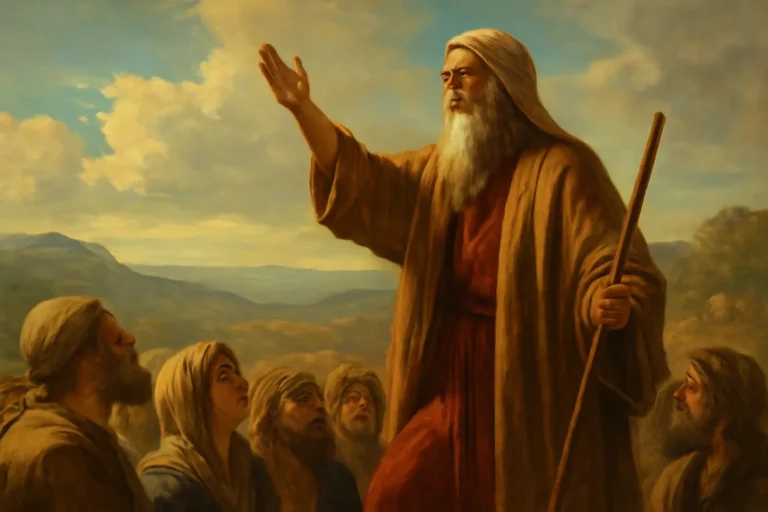
Even with signs, Moses remains uneasy about public speaking and persuasion. In mercy and strategic wisdom, God appoints Aaron, Moses’ elder brother, to be a spokesman. The partnership underscores a deeper theological truth: leadership in God’s work is not a solitary act but a communal vocation in which different gifts—prophetic charisma, eloquence, administrative skill—cooperate. The call to Moses thus unfolds within a broader network of relationships that enable the mission to succeed, while preserving the integrity of the prophetic voice.
The Content of the Call: Mission, Signs, and Covenant
The Core Mission: Liberation and Covenant
The immediate objective of the call is liberation: to deliver Israel from bondage in Egypt and to bring the people into a land promised by God. But this is not merely political emancipation. It is the formation of a people who will live under a divine covenant, learning to walk in obedience, justice, and mercy. The mission thus unfolds as a pedagogy of faithfulness, training the people to trust in God’s provision, to discern moral truth, and to become a people whose identity is rooted in the liberating power of the divine presence.
The Signs as Educational Tools
The signs given to Moses operate on multiple levels. They are concrete demonstrations of the divine’s power in history, credible to a skeptical audience, and designed to nurture faith through visible confirmation. They also function symbolically: the staff becoming a serpent and back, the healing of the leprous skin, and the cleansing of water reflect themes of transformation, renewal, and the reversal of corruption. In this sense, the signs anticipate the broader arc of salvation history, in which broken things are restored by divine action.
Law, Covenant, and the Sinai Connection
While the initial call focuses on deliverance, the longer arc of the narrative connects liberation to covenant. The event at the burning bush is the seed of a larger encounter at Mount Sinai, where the Lord gives the Law and establishes the terms of fellowship with Israel. The call to Moses thus inaugurates a process: commissioning → revelation of law → covenantal governance. The resulting legal, ceremonial, and social structures will guide the people toward holiness, justice, and communal well-being.
Steps in the Itinerary of the Call: A Brief Outline
- Initial encounter with the divine in the burning bush
- Divine commissioning to deliver Israel from Egypt
- Assessment of human readiness and divine reassurance
- Provision of signs for credibility and trust
- Appointment of a spokesperson (Aaron) to assist
- Return to Egypt to confront Pharaoh and begin the exodus
- Relationship with God that deepens through wilderness experience
- Revelation of the Law at Sinai and the formation of the covenant community
Theological Themes: The Call as a School of Faith
Election and Humility: Why Moses?
The call is often read as a striking example of divine election paired with human humility. Moses is not the most powerful, charismatic, or eloquent candidate by human standards. Yet in God’s economy, election is about divine purpose meeting human receptivity. The narrative invites readers to reflect on how God often chooses unlikely instruments to accomplish astonishing aims. The humility of Moses—his reluctance, his self-doubt, his earnest desire to obey—becomes a blueprint for faithful leadership that values dependence on God over self-assurance.
Empowerment and Speech: From Inadequacy to Agency
The dialogue between God and Moses centers on the paradox of calling: an insufficient vessel is chosen to carry a transcendent message. The problem of speech is not dismissed; it is met with divine provision. The eventual solution—delegating Aaron as spokesperson—illustrates a practical principle of ministry: God’s work often requires layered gifts, collaborative effort, and a readiness to trust divine wisdom even when personal strengths are limited. The call thus reframes weakness as a context in which God’s strength becomes evident.
Presence, Holiness, and Mission: The Ground Rules of Vocation
The sacred ground motif recurs in Jewish and Christian devotional traditions to remind believers that vocation is conducted in the presence of a holy God. The call is not a secular appointment to office; it is a sacred commissioning that requires fidelity, obedience, and spiritual discernment. The presence of God gives moral clarity, binds the people in covenant, and sustains them through difficult trials. This synergy of presence and mission remains a central theme in later prophetic and prophetic-esque call narratives.
Interpretive Perspectives Across Traditions
Judaism: The Call as Formation of a Nation
In Jewish exegesis, the Moses-call is foundational to the emergence of a people under law and covenant. The burning bush episode is read as a theophany that frames the entire Exodus narrative. The insistence on a real name of God, the hearing of a divine call, and the commissioning of a human agent all contribute to the sense that history is purposeful and directed by a personal, moral God. Midrashic interpretations often explore Moses’ hesitations to highlight his humanity, while affirming the divine purpose that makes him an instrument of liberation and a teacher in the wilderness.
Christianity: The Call as Salvation History and Ecclesial Criterion
Christian readers frequently treat the Moses-call as a foreshadowing of Christ’s mission and a paradigm for Christian vocation. The themes of liberation, covenant, and divine empowerment resonate with the broader biblical narrative of God’s salvific activity in history. Some Christian traditions emphasize typology: Moses as a type of Christ in the sense that both are deliverers whose leadership points toward ultimate redemption. The baptismal liturgy, sermons, and catechesis often reflect on the call as a model for disciples who respond to God’s summons with faith, repentance, and obedience.
Islamic Perspective: Musa’s Call and the Continuity of Prophecy
In Islam, the figure of Moses (Musa) is revered as a great prophet and leader. While the canonical Qur’anic text does not recount the Exodus in exactly the same sequence as Exodus, the motif of divine summons, patient perseverance, and the confrontation with oppression appears prominently. The call narrative is integrated into a broader theological frame: God’s guidance, signs, and the establishment of a community in obedience to God’s revelation. The continuity of prophethood across Abrahamic traditions underlines a shared conviction that the divine summons is transformative, demanding faithfulness and trust in God’s plan.
Legacy and Implications: The Call that Reshaped Scripture and Society
Leadership and Public Good
The call to Moses demonstrates how divine vocation translates into public leadership, civilizational reform, and the reformation of social ethics. Moses becomes the steward of liberation, a mediator of the covenant, and a teacher who guides a people in ethical conduct, worship, and justice. The structure of leadership—humility, reliance on divine presence, collaboration with trusted partners—offers enduring lessons for communities and institutions seeking to align with higher truths.
Law, Worship, and Social Welfare
The Moses-call is inseparable from the reception of the Law at Sinai—the framework that shapes worship, civil order, and moral responsibility. The call thus inaugurates a holistic social vision: a people governed by divine instruction, motivated by reverence, and empowered by ritual and communal life to care for the vulnerable. The ethical dimensions of the call—justice for the oppressed, protection for the stranger, fidelity to promises—become foundational ethical categories that echo through biblical legal codes and influence later religious and civic thought.
Continuity of God’s Engagement with Humanity
The divine summons to Moses is not an isolated moment but a bridge to ongoing encounter. The narrative recounts how God’s presence continues to guide the people through the wilderness, how the tabernacle becomes a dwelling place for God among the community, and how the covenant unfolds in history. The calling of a single servant thus becomes a template for how God engages with communities across generations—always calling, always sustaining, always inviting trust and faithfulness.
Practical Reflections: Discerning and Responding to a Call
Discernment in the Modern Context
How might today’s readers understand the idea of God’s call to Moses in a contemporary setting? At its core, discernment involves listening for a compelling sense of purpose that aligns with moral truth, communal welfare, and the welfare of the marginalized. It invites individuals to ask hard questions: What gifts has God given me? What is the good to which I am being summoned? What fears or objections do I bring, and how might divine provision meet them?
Ethical Implications of a Divine Commission
A genuine call carries ethical demands. The call to Moses is as much about obedience to a higher moral order as it is about rescue from oppression. Therefore, the faithful response should include practical steps: preparedness to engage with accountability, willingness to collaborate with others, and readiness to endure hardship for the sake of justice and liberation.
Vocation as a Community Experience
The Moses narrative reminds us that vocation is rarely a solitary enterprise. The emergence of Aaron, the collective journey through the wilderness, and the formation of the covenant community demonstrate that divine calls typically unfold within a web of relationships, institutions, and traditions. The sense of credibility given by signs, the test of faith through challenges, and the shared memory of salvation all sustain a people through trials.
Conclusion: The Enduring Significance of the Divine Call to Moses
The account of God’s call to Moses remains one of the most influential and enduring stories in religious memory. It frames the sense that history is guided by a purposeful divine will, that a people can be formed and transformed by covenantal relationship, and that leadership—when rooted in humility, trust, and divine presence—has the capacity to shepherd others from bondage to freedom, from fear to faith. The burning bush teaches us that God often begins with a sign that captivates attention, invites inquiry, and demands a response. The subsequent dialogue reveals that true vocation requires both courage and vulnerability, that divine empowerment often arrives through partnership, and that the ultimate aim of a calling is not personal glory but the flourishing of a people in alignment with divine justice and mercy.
As readers of sacred texts reflect on this ancient call, they encounter a timeless invitation: to listen for the voice of God in unexpected places, to accept a mission that transcends personal ambition, and to trust that the same God who spoke from the bush speaks still—calling individuals to participate in the ongoing story of liberation, revelation, and renewal.