
From Creation to Redemption: An Overview of the Biblical Narrative
The story of the Bible is often described as a single, sweeping arc that runs from the very beginning of the cosmos to the final consummation of all things. Yet within that grand trajectory there are countless narratives, voices, genres, and moments of encounter with the divine. Some call it a biblical narrative, others a Scriptural account, and still others a holy saga that unfolds through history, poetry, law, prophecy, and gospel. What unites these strands is a coherent claim: God is at work to heal a world fractured by human rebellion, and humanity is invited into that healing through faith, obedience, and participation in a divine drama of restoration.
This long-form article surveys the major movements of the biblical story, highlighting recurring motifs, interpretive lenses, and practical implications for faith, worship, and ethics. It treats the story of the Bible not merely as a repository of ancient texts, but as a living narrative that informs creeds, preaching, liturgy, and everyday life. Throughout, we will use variations and semantic equivalents—biblical narrative, Scriptural story, holy Scriptures’ arc, redemptive drama, the Bible’s storyline—to keep the discussion rich and multi-dimensional.
1. The Creation: The Cosmos as God’s First Word
The opening chapters of the Bible present creation as the deliberate act of a personal, good, and purposeful Creator. The cosmic order arises through spoken word, breath, and purpose, culminating in the creation of human beings made in the image of God. This inaugurates a foundational relationship between Creator and creature that is meant to be characterized by harmony, stewardship, and intimacy.
The opening horizons: order, life, and blessing
The biblical narrative of creation positions God as the sovereign designer who brings forth light from darkness, land from water, plants from seed, and animals from life. Human beings are given a unique vocation:
- To steward the created order with wisdom and responsibility.
- To flourish in a relationship with God and with one another.
- To manifest blessing by extending God’s care to the world.
Creation as vocation: purpose beyond mere existence
The storyline of creation emphasizes not just what exists, but why it exists. This is followed by the gift of rest—the sabbath—as a sign of relationship and trust. The biblical account suggests that the world is not a neutral stage, but a living stage for communion with the living God.
2. The Fall, the Promise, and the Beginning of Covenants
The narrative texture of the Bible is deeply shaped by emergence after unity: disobedience, consequence, and a divine promise that echoes through the ages. The fall introduces brokenness, but it also introduces a trajectory toward reconciliation and restoration that will unfold across generations.
The human choice and its consequences
In the story of the Bible, the first humans exercise freedom in a way that disrupts harmony. This turning away from trust in God introduces vulnerability, pain, and a condition that future generations must address. Yet within the disruption, the text layers in a counter-voice: the hard-earned realization that life under God’s rule remains the true path.
The proto‑evangelium and the long arc of redemption
Early in the human story, a promise surfaces that will reverberate through the pages of Scripture: the seed of the woman will conquer the serpent. The phrase is often called a protoevangelium, a first Gospel, signaling that the redemptive drama is not a fleeting idea but the abiding horizon of the biblical witness.
Key covenants that shape the narrative arc
The biblical epic unfolds through several foundational agreements between God and humanity. These covenants do not merely regulate behavior; they declare a relationship and choreograph a future fulfilled through a divine gracious action. Some of the central covenants include:
- The Noahic Covenant, which restores the broken order after judgment and calls all nations to allegiance under a humbler sky.
- The Abrahamic Covenant, in which a family line becomes a vehicle for blessing to all nations.
- The Sinaitic Covenant, which delivers a divine way of life through law and sacred instruction for a people set apart.
3. Law, Wisdom, and the Life of a People: Forming Identity
As the biblical narrative continues, the story broadens from a single family to a nation with a shared project. The law, the wisdom tradition, and the narratives of leadership shape the identity of a people who are meant to bear witness to the God who created, sustains, and redeems.
Law as a tutor and a tangible way of life
The law in the biblical account is not merely a code; it is a framework for life in the presence of God. It guides worship, social justice, and daily conduct. Read through the lens of covenant, the law becomes a means of forming a community that stands out as a beacon of integrity, mercy, and responsibility.
Wisdom literature: discerning life under heaven
The breadth of the Scriptural story includes a robust tradition of wisdom that asks hard questions about human flourishing, suffering, justice, and virtue. The wisdom tradition invites readers to seek understanding, cultivate prudence, and align their lives with a divine order beyond mere ritual.
Narratives of leadership and failure
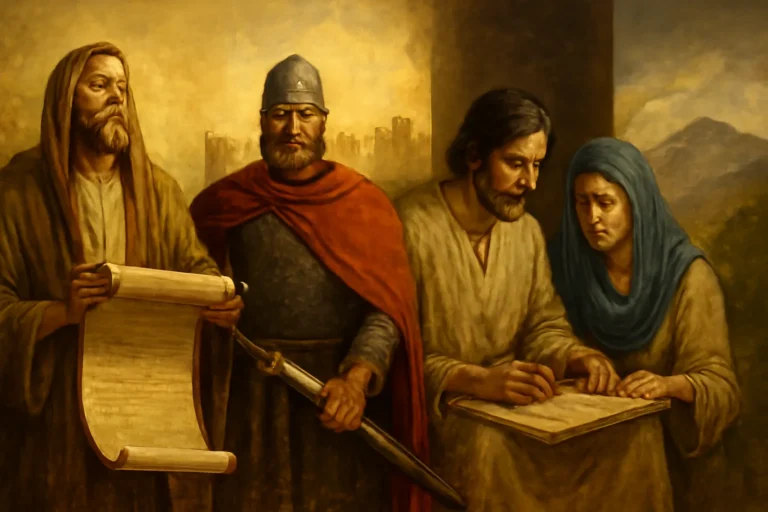
The histories of patriarchs, judges, and kings—each with moments of faith and faltering—present a realistic portrait of a people living in the tension between trust in God and the temptations of power, prosperity, and fear. These stories function as mirror and education, offering both warning and hope.
4. Prophets, Exile, and the Call to Return
The prophetic voices in the holy scriptures cut through the noise of political upheaval to proclaim a moral summons: turn back to God, repair breaches of justice, and trust in God’s promised king. The prophetic narrative is not only about judgment but also about steadfast faithfulness and the hope of restoration.
The prophetic voice: calling for justice and fidelity
The prophets speak into times of crisis with a language of indictment and invitation. They critique hollow worship, social oppression, and idolatry, while holding out the possibility of renewal rooted in repentance and trust in God.
Exile and the longing for shalom
For a people scattered abroad, the exile becomes a crucible for identity and faith. Yet even in exile, the narrative of the Bible preserves the promise that the faithful will be gathered, the nations will be blessed, and God’s purposes will endure beyond political catastrophe.
Messianic expectation: a ruler who embodies justice
The prophetic literature often centers on the figure of a coming king, a faithful shepherd who will North Star the people toward ethical renewal, social justice, and spiritual restoration. This expectation becomes a hinge that later Christian interpretation reads in light of the life of Jesus, while other traditions honor the same arc in their own ways.
5. The Life and Teachings at the Center: The Gospels
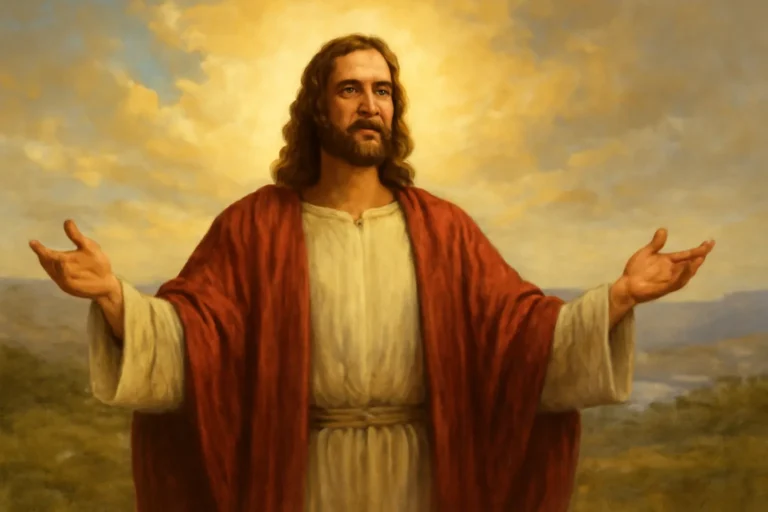
The canonical Gospels narrate the life, ministry, death, and resurrection of Jesus Christ, presenting the center point of the biblical saga. In the story of the Bible, the advent of Jesus marks a turning from a predominantly land-centered narrative to a universal invitation: God’s reign is breaking into the world in a way that rewrites destiny for individuals and communities.
Biographical portraits and the essence of the message
Each Gospel offers a distinct vantage on the same person and event. The variety of portraits contributes to a richer, more nuanced picture of Jesus and his mission. Taken together, they illuminate the core themes of the kingdom of God, repentance, faith, and love.
The central motifs of Jesus’ teaching
Across the Gospels, several motifs recur with striking clarity:
- The proclamation of the kingdom of God or the reign of God as both present and future reality.
- Forgiveness and reconciliation as foundational human dispositions toward God and neighbor.
- Ethical formation that moves from external compliance to inner transformation.
- Liberation from bondage—whether spiritual, social, or personal—as the heart of good news.
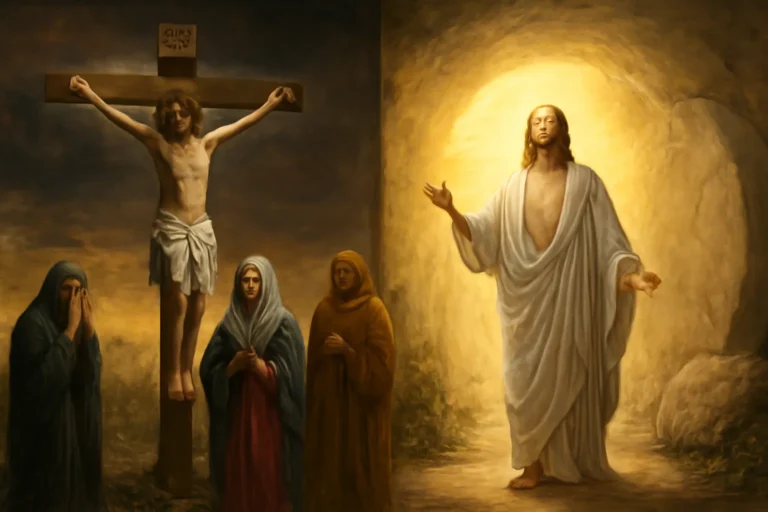
- Sacrificial love demonstrated in action and emotion, culminating in a crucifixion and a resurrection.
Fourfold witness: the Gospels as a unified testimony
The scriptural account of Jesus is preserved in four complementary narratives. Each Gospel contributes a piece of the larger mosaic:
- The Gospel according to Matthew emphasizes Jesus as the fulfiller of Hebrew scripture and the teacher of the new covenant.
- The Gospel according to Mark highlights the action and the suffering servant who goes to the cross.
- The Gospel according to Luke presents Jesus as a savior for all people, with a strong emphasis on mercy and social concern.
- The Gospel according to John foregrounds deep theological depths, presenting Jesus as the Word who reveals the Father.
6. The Church, Letters, and the Expansion of the Redemptive Mission
After the Easter and the outpouring of the Spirit, the story expands beyond a single historical moment into a living movement—the church. The Epistles (letters) and the Acts of the Apostles record how early followers interpret the life, death, and resurrection of Jesus as the basis for community, mission, and ethical formation. This is the redemptive drama continuing in new contexts and crossing cultural boundaries.
Acts: the birth of the church and the spread of the gospel
The book of Acts traces how the early church moves from a Jerusalem-centered community to a multiethnic faith that engages rulers, philosophers, tradespeople, and families. It is a narrative of mission, struggle, and perseverance under the guidance of the Holy Spirit.
Epistles: instructions, encouragement, and theological reflection
The letters written by Paul, Peter, James, John, and others address concrete communities at pressing moments: questions about doctrine, matters of church life, moral formation, and the hope of future glory. They interpret the life of Jesus as the living pattern for how believers should think, worship, and relate to each other.
The late canonical writings: wisdom and expectation
Beyond the Gospels and Epistles, the broader collection includes wisdom literature, apocalyptic writing, and other materials that shape Christian identity. These texts invite readers to worship with reverent awe, to cultivate virtue, and to anticipate the perfect consummation of all things in God.
7. Revelation, Eschatology, and the Fulfillment of the Story
The final books of the Bible present a dramatic culmination: a cosmic drama where heaven and earth are renewed, evil is confronted, and God’s purposes are sealed in everlasting glory. This apocalyptic or prophetic literature uses symbolic language to convey the ultimate victory of goodness and the restoration of all creation.
The apocalyptic frame: visions of judgment and hope
The biblical saga of Revelation employs vivid imagery to declare that history is not random but guided by divine sovereignty. It emphasizes the defeat of evil, the triumph of righteousness, and the gracious invitation to all nations to participate in the new creation.
The arc toward consummation
The redemptive drama culminates in a future where God dwells with humanity in a transformed world. The redemption described in visionary terms becomes a pattern for Christian hope: a life that looks forward with confidence to the renewal of all things, where justice, peace, and love reign in a renewed cosmos.
8. Thematic Continuities: A Coherent Narrative Across Books
A hallmark of the Scriptural story is its thematic unity despite diverse genres, authors, and historical settings. Across creation, fall, covenant, law, prophets, gospel, and apocalypse, several key motifs recur, shaping the theology of the Bible and offering a stable center for interpretation.
Key motifs and their cross-cutting influence
- Covenant as relationship and obligation that binds God and people across generations.
- Promise as a divine commitment that outlives immediate circumstances.
- Redemption as liberation from sin, fear, and brokenness, realized through divine action.
- Grace and faith as the human response that bears fruit in obedience and trust.
- Kingdom and Messiah as the central center of Jesus’ message and the community’s mission.
- Justice and mercy as ethical commitments that shape worship, policy, and daily life.
Typology and foreshadowing: reading the Bible with eyes for pattern
The holy Scriptures frequently use typology—the way events, people, or institutions in the story of the Bible prefigure future, greater fulfillments. Examples include Adam as a type of Christ, the temple as a symbol of God’s presence, and the exodus as a paradigm for liberation and faithfulness under trial.
9. The Bible as a Living Text: Interpretive Pathways for Faith Communities
The Scripture community has long recognized that the Bible is not a static museum of ancient stories but a living, interpretable corpus that speaks to new situations. Across centuries and cultures, readers have approached the Bible’s storyline with different hermeneutical methods, yet the core invitation remains the same: to know God, to follow Christ, and to participate in the Spirit-led life of the church.
Historical-critical, literary, and devotional approaches
Interpretive methods vary, including:
- Historical-critical approaches that situate texts in their original contexts.
- Literary readings that emphasize plot, character, and narrative technique.
- Devotional or spiritual readings that seek personal encounter with God through Scripture.
Each method offers insights and challenges, yet all contribute to a richer understanding of the Bible’s redemptive drama and its relevance for contemporary life.
Practical implications for worship, ethics, and life
The enduring message of the biblical narrative informs a range of practices and beliefs:
- Worship that honors the Creator, centers on Christ, and embraces the Spirit’s renewing power.
- Ethical living guided by principles of justice, mercy, humility, and integrity.
- Community life characterized by mutual care, forgiveness, and mission to the world.
- Hope-oriented living that anticipates the fulfillment of God’s promises and fosters resilience amid suffering.
10. Theological Implications: Core Doctrines Emergent from the Biblical Saga
Reading the entire Scriptural account as a coherent narrative yields several cardinal theological claims that Christian traditions often articulate in their creeds and confessions. While language may differ among traditions, the essential commitments endure: God is good and sovereign, humanity is invited into a relationship of trust, salvation is by grace through faith, and history moves toward a divine culmination in restoration.
Creation, fall, and God’s salvific action
The creation–fall–redemption arc frames not only individual salvation but the cosmos itself. God’s action is continuous: creation, calls, covenants, prophets, incarnation, and the Spirit’s work in the church all participate in the ongoing project of restoring order, beauty, and justice.
Christology and ecclesiology
The heart of the biblical narrative centers on Christ, whose life embodies both revelation of the Father and the agent of reconciliation. The church, in turn, is called to be a visible sign of that reconciliation, a community that bears witness to grace and a herald of the coming kingdom.
Eschatology and hope
The storyline’s culmination invites believers to live with a robust sense of hope and accountability. Eschatology in this sense is not merely about the end but about how the present age participates in God’s purposes. The final consummation is described as an event that reorders creation, grounds justice in love, and inaugurates everlasting communion with God.
11. Concluding Reflections: The Narrative That Shapes Life
The comprehensive story of the Bible is more than a compiled anthology of ancient texts. It is a unified narrative that invites readers to see their own lives within a larger redemptive arc. From the opening chapters of creation to the glorious future described in Revelation, the biblical saga invites trust, repentance, worship, and active participation in God’s mission.
Why this narrative matters for individuals today
For the modern reader, the Bible’s storyline offers both a map and a compass. It helps people answer fundamental questions: Who am I? What is the meaning of suffering? How should we live together in communities of justice and mercy? What is our future hope? The answers found in the Scriptural account are not abstract; they intend to form character, shape decisions, and cultivate a life oriented toward God and neighbor.
Why this narrative matters for communities of faith
In congregations, seminaries, and families, the biblical narrative is taught not as a static doctrine but as a living story that calls for response. It nurtures worship that honors God, fosters ethical imagination, and sustains communities through trials by reminding them of the promised restoration that lies ahead.
12. A Final Word: Reading the Bible as a Single, Sacred Tale
The entire story of the Bible stands as a testament to a God who creates, cares, enters human history, and promises future renewal. Its structure—begun with creation, tested by fall, reconstituted through covenant, fulfilled in Christ, and assured in the final redemption of all things—invites readers into a lifelong journey of faith, learning, and action.
Summary of the major movements in the biblical arc
- The order and dignity of creation, including the call to steward the world.
- The disruption of sin and the emergence of a hopeful promise of restoration.
- The formation of a people through covenants, laws, and wisdom that shape identity.
- Prophetic voices that call for justice, repentance, and a future king.
- The life, death, and resurrection of Jesus and the founding of a transformative community.
- The spread of the gospel and the formation of churches through the apostolic witness.
- The revelation of ultimate restoration and the fulfillment of God’s promises in a new creation.
As you read or teach the story of the Bible, you may discover that the Bible’s narrative coherence invites not mere intellectual assent but a hopeful, practiced faith. It asks you to listen, to discern, and to live in light of a God who negotiates history with mercy, truth, and redeeming love.