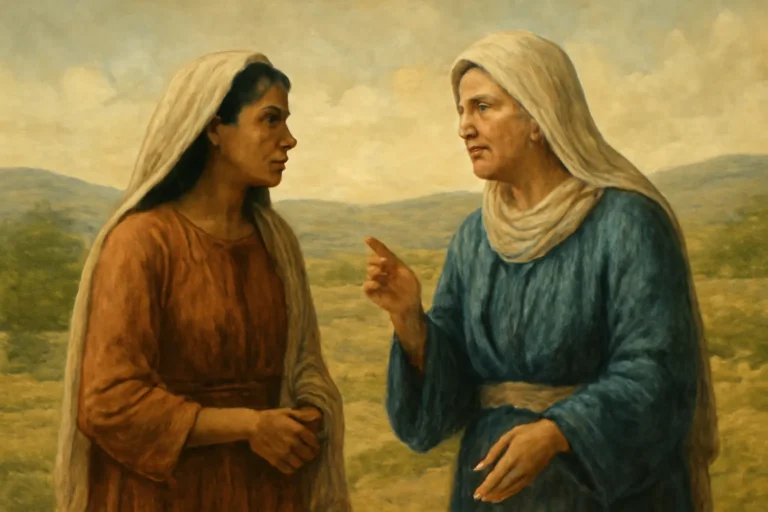
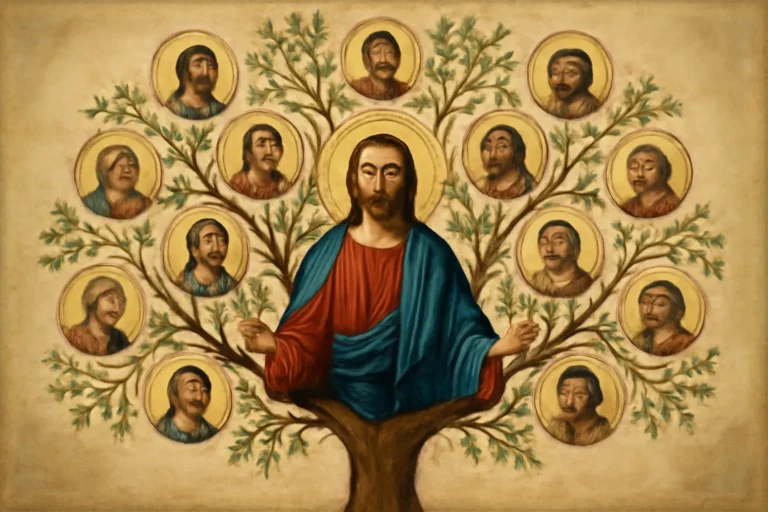
In the biblical narrative, Sarai—later named Sarah—emerges as a central figure in the unfolding drama of God’s covenant with Abraham. Across many generations and diverse literary voices, she is not only the wife of Abraham but the mother of nations, a locus of faith, patience, and witness. This article surveys the life, theology, and devotional significance of the matriarch who stands at the hinge of promise and fulfillment. Through careful study of the scriptural text, patristic interpretation, and contemporary devotional reflection, we see how Sarah embodies the paradoxes and hopes of faith: longing and patient trust, human weakness and divine faithfulness, laughter and reverence in the face of the miraculous.
Origins and Names: Sarai, the Woman of Promise
The opening chapters of Genesis introduce Sarai as the wife of Abram, the progenitor of a blessing that would extend to all families of the earth. In the ancient Near Eastern context, her role is not a mere backdrop; she is a named participant in the divine drama. The name shift from Sarai to Sarah signals a transition in identity from an ordinary wife to a figure whose life is woven into the arc of the covenant. In many Bible translations, readers encounter two forms: Sarai at first, and then Sarah after the divine appointment. The linguistic change is brimming with theological meaning: the new name is commonly understood as “princess” or “noblewoman,” a designation that reflects a calling to a royal, redemptive role within God’s unfolding purposes.
Wife of Abram (later Abraham): their joint journey is the scriptural scaffold for the promises of God to a people and through a people to the world.
Childless at an old age: a condition that becomes the stage upon which the miracle of Isaac takes place and faith is tested.
Dialogue partner in the faith journey: her responses, both silent and spoken, illuminate how belief matures under divine timing.
Throughout the biblical record, the variations of her name—Sarai, Sarah—are not mere lexical shifts; they reflect shifts in vocation and destiny. In the broader theological imagination, Sarah is the mother who bears not just a child but a covenant identity that stretches beyond her lifetime into generations unborn. In what follows, we explore the most pivotal episodes and their interpretive resonances for faith communities today.
The Covenant and the Promise: The Matriarch Enters the Divine Plan
Sarah’s life is inseparable from the covenant God makes with Abram (who becomes Abraham). In Genesis 12 and following passages, the Lord’s call to Abraham is also a call to a new family, a people through whom all nations will be blessed. The addition of Sarai to this promise is not incidental; she stands as a collaborator in the divine initiative, a co-recipient of the blessings that will be mediated through the offspring of the couple. The text expresses a theology in which human history is shaped by divine election and human response in concert with the Spirit’s work.
Important thematic threads under this heading include:
Covenant faith and the human response: The promises demand a response of trust, even when the path is uncertain or delayed.
God’s sovereignty over timing and fulfillment: The life of Sarah reveals that divine timing often exceeds human expectations, yet remains reliably faithful.
Hospitality and faithfulness in family life: The household becomes a classroom for trust, with Sarah participating in the complex dynamics surrounding the birth of Isaac.
In this light, the matriarch’s journey is not merely a biographical arc; it is a theological map for discerning God’s purposes in the ordinary and extraordinary moments of life. The narrative invites readers to consider how the faith of a family can become the seedbed for a global blessing.
The Name Change: From Sarai to Sarah
Genesis 17:15 and the Significance of Naming
One of the most theologically charged moments in Sarah’s story is the moment of renaming. In Genesis 17, God instructs Abram to rename his wife: Sarai shall no longer be called Sarai, but Sarah shall be her name. The act of renaming signals a divine appointment to a new vocation and identity. It is not a mere philological curiosity; it marks a transition from a wife living within the preliminary stages of the covenant to a matriarch who will bear the promised heir and participate in the unfolding redemptive plan.
“As for Sarai your wife, you shall not call her Sarai, but Sarah shall be her name. I will bless her, and moreover I will give you a son by her” (Genesis 17:15-16, paraphrased for emphasis).
The semantics of the name Sarah—often rendered as “princess” or “noblewoman”—points to a vocation that is royal in its dimension. The matriarch will not only bear a child; she will participate in the lineage through which kings and nations will proceed. The change also foreshadows the later description of Isaac as the child of the promise, a child who embodies the blessing that God intends to extend to the world.
From a theological perspective, the name change can be read as a pedagogy of faith: God empowers and redefines identity to align with divine purposes. In the life of faith communities today, the renaming of Sarai to Sarah can serve as a metaphor for believers who discover that their calling is larger than their own plans and that God’s naming frequently accompanies a deeper call to trust, service, and hope.
Laughter, Faith, and the Moment of Promise
The Genesis 18 Encounter: Laughter as a Frontier of Belief
One of the most vivid, humanizing scenes in the Sarah narrative occurs when the Lord promises a son in the old age, and Sarah, listening at the tent door, laughs within herself. The laughter is not merely amusement; it is a complex expression that interweaves doubt, wonder, and the piercing insight that God’s promises often press beyond human expectation. The narrative uses laughter as a symbolic language—an audible confession that the divine promise exceeds ordinary categories of possibility. Yet this moment is not a sign of unbelief that disqualifies; rather, it becomes part of the testimony that faith can grow through astonishment and reevaluation of what is possible with God.
The tension of expectation in a late-life scenario: The dream of a child becomes a test of faith that persists even when human biology might seem to rule out fulfillment.
Divine correction and assurance: The rebuke that follows—“Is anything too hard for the Lord?”—is not a condemnation but a pedagogical invitation to trust in God’s omnipotence and fidelity.
Isaac as the fruit of joy: The child’s name, Isaac, translates playfully or meaningfully as “laughter,” signaling that the divine promise carries not only lineage but a joy that pierces the ordinary course of life.
In theological interpretation, the episode invites believers to cultivate an intersection of reverent awe and honest doubt that can mature into confident trust. It is a pattern for how spiritual growth often happens: through questions that yield to deeper conviction when God’s word meets human experience.
Sarah, Hagar, and the Complications of Human Framing
The Complex Narrative: Ishmael and the Hagar Episode
The biblical account does not present Sarah as a flawless heroine of every moment. In the story of Sarai and Abraham, there is a poignant and troubling episode involving Hagar, the Egyptian maidservant. To fulfill the promise of a child, Abraham and Sarai decide upon a path that seems plausible within their cultural context: the bearing of a child through Hagar. This decision produces a complex cascade of consequences—the birth of Ishmael—that test the patience of the promise and reveal the fallibility of human planning apart from divine sovereignty. The narrative does not shy away from this human frailty; rather, it invites reflection on how God’s purposes ultimately prevail through both human agency and divine correction.
Human initiative within faith: The interplay between Sarah’s longing for a son and the cultural mechanisms available to her demonstrates how faith communities must discern between human expediency and divine timing.
Divine accommodation: God’s response to Ishmael’s presence—blessing him as well, while affirming the distinctness of the promised line through Isaac—reveals a broader vision of grace and sovereignty.
Lessons on patience: The tension between immediate human solutions and the patient waiting for the promised heir remains a central motif for generations of readers and worshippers.
From a pastoral perspective, the episode helps believers understand the dangers and possibilities of “taking matters into our own hands” and the ways in which God can work through imperfect human decisions to fulfill larger, holy purposes. It also invites communities to extend grace and caution in balancing human responsibility with divine timing.
Isaac: The Child of the Promise and the Covenant Seed
Sarah’s defining moment within the covenant narrative comes with the birth of Isaac, the child who becomes the heir of the promise. Isaac’s very name—meaning “laughter”—binds together the human and divine elements of the story: the initial laughter of disbelief gives way to a laughter of faith as the belief in God’s fidelity is concretized into a son in old age. The birth of Isaac fulfills the explicit blessing that God had promised to Sarai and Abram, and it confirms that the divine intention for a family lineage to bless all nations remains intact, even as human plans are tested and refined.
Isaac as the covenantal heir: The continuity of the Abrahamic blessing passes through Isaac, ensuring the future of the chosen line through which the Messiah would come in later Christian theology.
Testing and obedience: The narrative context invites readers to consider the ways in which faith is tested and refined through perseverance, prayer, and fidelity to God’s word.
Symbology of names: Isaac’s name links the story to the earlier laughter, offering a theological reminder that life with God often moves from bewilderment to joy as promises are fulfilled in surprising ways.
In biblical interpretation, Sarah’s role as Isaac’s mother is central to the way the New Testament frames faith. In Romans, Galatians, and Hebrews, Sarah’s example is cited as part of the larger argument about faith in God’s righteousness and the nature of promise. Her story becomes a template for a faith that receives what is hoped for but unseeable in the present moment, trusting that the God who made the promise is faithful to its fulfillment.
New Testament Perspectives: Sarah in Paul and the Letter to the Hebrews
Romans and Galatians: The Model of Faith and Promise
In the apostolic writings, Sarah appears as a figure who embodies the paradox of faith: she is both the mother of Isaac and a participant in the larger drama of the church’s mission to be “children of the promise.” The apostle Paul, in particular, uses Sarah and Abraham to illustrate what it means to live by faith rather than by sight. In Romans 4, the ancient patriarch and matriarch stand as archetypes of justification by faith—the idea that righteousness comes by trust in God’s promise rather than by human achievement. Sarah’s faith, as highlighted in Hebrews 11, is celebrated precisely because she believed that God could accomplish the miraculous even in humanly impossible circumstances.
Romans 4:16-18 emphasizes that the promise comes to those who share the faith of Abraham, and Sarah’s inclusion in this narrative underscores the universal scope of God’s blessings—extending to the faithful from every generation.
Galatians 4 uses the Sarah-and-Hagar dynamic to illustrate the difference between the “free woman” and the “bondwoman,” pointing to the eschatological truth that life under the Spirit is the true heir to the promise.
Hebrews 11 highlights Sara’s faith as part of the cloud of witnesses who believed that God would accomplish what He had promised. This places her in the litany of faith that believers are invited to imitate.
The Pauline and authorial perspectives invite contemporary readers to view Sarah not simply as a historical person but as a theological symbol of trust, invitation to righteousness, and participation in divine fulfillment. Her role in the New Testament, though not always in the forefront of the narrative, is essential to understanding how the church reads the promises to Abraham as national and cosmic blessings, realized through a people of faith.
Hebrews: “She considered Him faithful who had promised”
Within Hebrews 11, the eleventh chapter often designated as the “Faith Hall of Fame,” Sarah is listed among the luminaries whose trust in God’s promises became the fuel of their lives. The sentence that has become a meditation for many readers is that Sarah herself did not waver in her belief; rather, she considered Him faithful who had promised. This brief but potent verse invites believers to reflect on the dynamic of faith as a steadfast posture—one that holds to God’s character even when present reality defies human sense. The interpretive emphasis shifts from a simple triumphalism to a compassionate realism about the testing of faith and the eventual certitude of God’s word.
“By faith Sarah herself received power to conceive, even when she was past age, since she considered him faithful who had promised” (Hebrews 11:11, paraphrased for clarity).
For contemporary readers, this passage invites a devotional practice: cultivate a trust that can endure delays and apparent impossibilities, anchored in the reliability of God’s character. It is a discipline of the heart as well as a doctrinal insight: the Christian life is a journey of ongoing assent to the trustworthiness of God, who honors those who trust Him against all odds.
The biblical portrayal of Sarai/Sarah offers a multi-faceted template for worship, teaching, and spiritual formation. Churches, Bible study groups, and individual believers can draw several practical lessons from her story, fostering a robust faith that is emotionally honest, theologically grounded, and spiritually resilient. Below are some practical avenues for reflection, prayer, and teaching.
Faith under delay: The tension between waiting for God’s timing and pressing ahead with careful discernment is a classic spiritual challenge. Communities can create spaces to acknowledge longing while remaining oriented toward God’s promises.
Naming and identity: The significance of the name change from Sarai to Sarah invites believers to explore how God shapes identity for mission, not merely for personal self-understanding.
Trust beyond possibility: Isaac’s birth calls the faithful to trust God’s power to overcome natural limits when the heart clings to the truth of God’s faithfulness.
Grace amid human frailty: The Hagar episode reminds Christians that God can bless even imperfect turns and that human decisions do not thwart the sovereignty of divine purpose.
Prayerful reflection on joy and laughter: The motif of laughter—initial doubt and final joy—invites believers to approach prayer with candor and hope, acknowledging both fear and faith as part of the spiritual journey.
Across Christian and Jewish communities, Sarah’s story has inspired liturgical pieces, prayers, and meditative practices. Some suggested approaches include:
Lectio divina on Genesis 17-21: A slow, contemplative reading that invites participants to listen for God’s voice in the renaming, the promise, and the birth of Isaac.
Prayer of faith in delay: Prayers that acknowledge等待 (waiting) as a rightful part of spiritual formation, asking for trust like Sarah’s, without demanding immediate fulfillment.
Reflections on motherhood and vocation: Studies or sermons exploring the matriarchal vocation, family dynamics, and the responsibility that comes with leadership within a faith community.
Confessional exercises on doubt and belief: Opportunities for individuals to name their doubts and offer them to God, while confessing trust in the God who keeps promises.
The story of Sarah, from the moment of her naming in Genesis to the New Testament reflections in Paul and Hebrews, holds a unique place in religious thought. It is a narrative about how God’s plan unfolds through ordinary lives, including times of anxiety, longing, and imperfect decisions. The matriarch’s life teaches that faith is not a flawless performance but a journey marked by moments of realization, compassion, and repentance. Theologically, the arc of her life confirms several enduring convictions within the biblical witness:
Grace that surpasses human expectation: The ability of God to bring life where it seems impossible is a central claim of the biblical message.
Inclusion in the promise: The faith community is not defined by pedigree alone; it is defined by trust in God’s faithfulness, a trust that includes women like Sarah as co-participants in salvation history.
Patience as active virtue: Waiting upon God is not passive resignation but active trust in God’s purposes, even when timing remains uncertain.
Holistic witness: Sarah’s life speaks to the integration of personal devotion, family dynamics, and public faith—the whole person engaged in the life of faith.
For pastors, educators, and lay leaders, Sarah’s narrative offers a rich resource for teaching about faith, covenant, and the human-divine encounter. Some concrete applications include:
Curriculum modules on biblical faith: Include Sarah’s story in courses on the patriarchal narratives, focusing on themes of faith, doubt, and divine timing.
Women’s Bible studies: Use Sarah’s life as a lens for discussions about biblical female leadership, spiritual agency, and the complexities of family life in Scripture.
Family mentorship programs: Explore the ways in which Sarah and Abraham model partnership, conflict resolution, hospitality, and mutual support under God’s plan.
Public theology and interfaith dialogue: Use the Abrahamic narratives to discuss common roots and shared values, highlighting how faith communities can honor diverse perspectives while maintaining doctrinal integrity.
Beyond historical narrative and ethical guidance, Sarah’s story prompts deeper theological contemplation about the character of God, the nature of faith, and the meaning of the promise. The following themes emerge as especially evocative for contemplation and study:
Divine faithfulness across generations: The covenantal promise extends beyond one lifetime to shape the course of history, culminating in the cosmic purposes of the God of Israel and, in Christian readings, the coming of Christ.
Human agency within divine sovereignty: Sarah’s decisions demonstrate that human beings are not passive recipients of God’s action, but agents through whom divine purposes are realized, even when missteps occur.
Hospitality to the sacred mystery: The narratives invite believers to welcome the surprising and the miraculous into daily life as acts of faith in a gracious God.
Gendered dimension of leadership in sacred history: Sarah’s prominence within the covenant narrative invites thoughtful reflection on female leadership, spiritual authority, and the diversity of God’s messengers in sacred history.
In the tradition of biblical interpretation and faith practice, Sarai/Sarah remains a central figure whose life embodies the mutual dependence of divine promise and human response. She is not a trope but a person whose joys, fears, and acts of faith illuminate the path of those who seek to live under a covenant God. Through the changing of her name, the birth of Isaac, and the episodes of laughter, doubt, and fidelity, she teaches a comprehensive spirituality: trust in the God who makes impossible things possible; perseverance in waiting for the fulfillment of promise; humility in recognizing one’s own limitations; and courage to participate in a divine mission that far surpasses the horizon of one lifetime. For scholars, pastors, and lay readers alike, the matriarch of the promise offers a durable invitation to grow in faith, to wonder at God’s work in history, and to live as part of a community that bears the marks of grace across generations.
May the story of Sarah—the former Sarai, the fearless mother of Isaac, the royal heir to blessing—continue to inspire a living faith in which we, like her, trust the One who calls, renames, and fulfills every promise. In this light, she is not merely a figure of antiquity but a living witness to the reality that the God of Abraham, Isaac, and Jacob is faithful to the end, and that those who believe are drawn into a shared inheritance of blessing, hope, and eternal life.