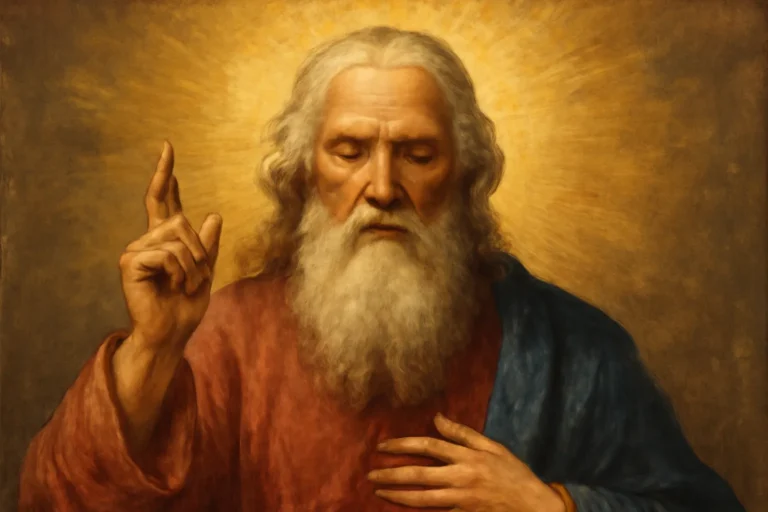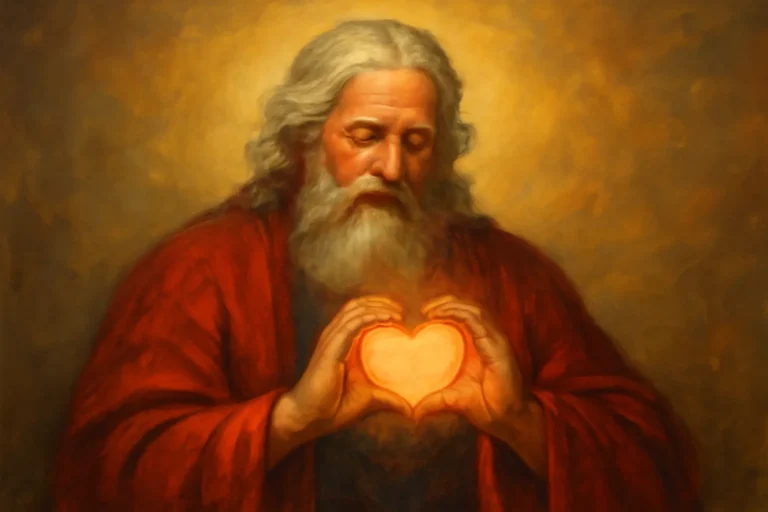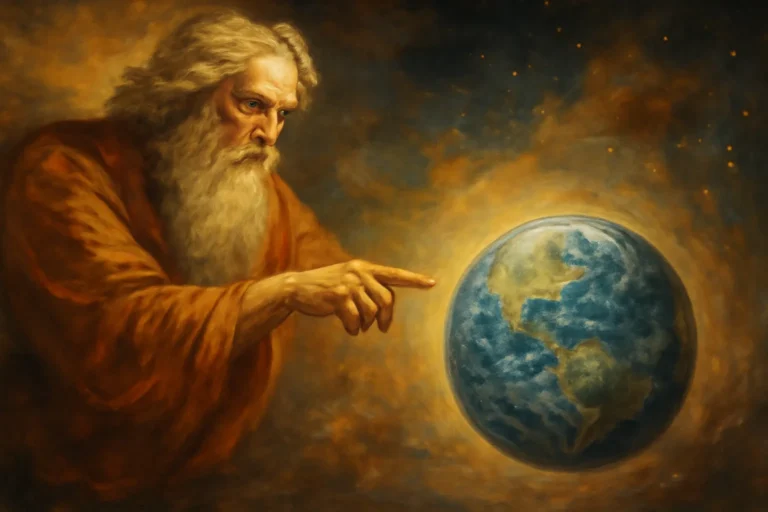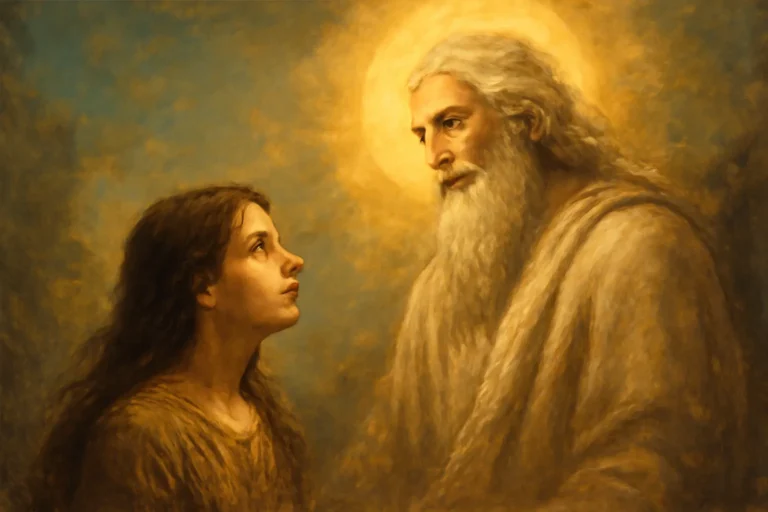

Boundless is a term that invites us to look beyond the finite confines of human experience and into the vast, often mysterious landscape of the sacred. In religious discourse, the phrase “God is without limits” functions as a provocative invitation to explore divine attributes, cosmic scale, and the ways in which transcendent reality enters into human life. Across traditions, the notion of the boundless divine appears in a multitude of forms—from the language of omnipotence and omniscience to the experience of immanence that colors prayer, worship, and daily practice. This article surveys the idea of boundlessness within the religious field, examining sources, interpretations, practices, and philosophical debates while keeping the central intuition that the Absolute cannot be captured by human categories alone. We will encounter variations such as the infinite God, the limitless divine, God without bounds, and the boundless deity, each carrying distinct nuances but sharing a common core: the divine horizon extends beyond every limit we can imagine.
Foundations: What Do We Mean by Boundless?
At its most basic level, boundlessness designates the negation of limit. When applied to the divine, it raises questions about what counts as a limit in the first place. Are limits ethical, metaphysical, linguistic, or experiential? Do they belong to human cognition or to language, not to reality itself? Across traditions, several core claims recur:
- Transcendence and immanence may coexist. A God without limits is not confined to a single mode of being, but manifests beyond every boundary while still entering into creation in a way that can be known, worshiped, and encountered.
- Infinite attributes—such as omnipotence, omniscience, and omnipresence—are often appeals to boundlessness, yet these attributes invite careful theological clarification to avoid paradoxes or misreadings.
- Mystery is not a failure of knowledge but a feature of the divine: the boundless God remains ultimately greater than any human schema.
- Love and justice are often described as infinite in scope, expressing the boundless nature of divine benevolence and righteousness.
In many traditions, the phrase God is without limits serves as a corrective to inauthentic anthropomorphism or the tendency to domesticate divinity into familiar, controllable forms. It is not merely a boast about power; it is a confession that the sacred exceeds every category, every container, every doctrine that humans might construct. The boundless God thus becomes a horizon that invites perpetual exploration, humility, and reverence.
A note on language and metaphor
Language works with metaphors when speaking of the divine. Phrases like the infinite God or the limitless divine are not literal descriptions but cognitive tools that help communities symbolize what they sense or imagine. Some thinkers distinguish between ontological limits (what exists or doesn’t exist) and epistemic limits (what we can know). In this frame, the boundless nature of the divine refers to the ultimate reality whose being cannot be exhausted by human language, even as we speak in terms that illuminate devotional or ethical meaning.
Historical and Theological Perspectives
Throughout history, theologians and spiritual thinkers have wrestled with boundlessness in diverse ways. Below is a survey of some influential currents, emphasizing how the claim that God is without limits has shaped doctrine, devotion, and ethical imagination.
In Western Christian theology
Within Christian thought, the divine attributes of omnipotence, omniscience, and omnipresence are frequently interpreted as indicators of a boundless God. The classical theist tradition asks how an all-powerful, all-knowing, and all-present God relates to creation, freedom, and evil. Two themes recur:
- Transcendent sovereignty—God’s sovereignty is not diminished by creation’s contingencies; rather, divine freedom colors all events in ways that transcend human planning.
- Creatio ex nihilo and the scope of divine creativity—Some theologians argue that the divine capacity to bring about novelty cannot be circumscribed, underscoring the boundless imaginative act by which the cosmos comes into being.
In medieval thought, thinkers such as Augustine and Thomas Aquinas discussed the infinite nature of God as the source of all being. They insisted that God’s essence is not identical to any created perfection; rather, God is ipsum esse subsistens—the act of being itself, beyond any limit that can be put on finite creatures. The phrase “God is without limits” operates as a theological reminder that the divine horizon cannot be fully captured by human systems of logic, no matter how sophisticated.
Islamic perspectives
In Islamic theology, the attribute of Allah’s infinitude is expressed through the Arabic term khayr al-khalq—the best of creators—and through attributes of ubiquity and perfection. The Qur’an often emphasizes that God’s essence is beyond human-comprehension, while divine names and attributes offer pointers to reality rather than exhaustive descriptions. The concept of God without limits in this tradition is less about power to dominate than about the absolute sovereignty of the divine will, which is sovereignly independent of human measurement. Still, the divine immanence is affirmed through guidance, mercy, and signs granted to creation, suggesting that the boundless God can inhabit spaces of human experience without being captured by them.
Hindu and Jain perspectives
In Hindu thought, the idea of boundlessness is expressed through multiple avenues: the Infinite One (Brahman), the limitless plethora of deities who paradoxically manifest a single underlying reality, and the cosmological scales that make time, space, and causation appear as expansions rather than confinements. The Upanishads speak of Brahman as sat-chi-tan-ananda—being, consciousness, and bliss—an ultimate reality without boundary. The Bhakti traditions emphasize the intimate relation between the devotee and the boundless divine in ways that human limitation is transformed by grace and love. In Jain philosophy, the concept of ahimsa and the boundless possibilities of spiritual progress point to an inner infinity of potentiality that transcends worldly limits.
Sikh and Buddhist reflections
Sikhi uses language that often echoes boundlessness through the imagery of the One Creator, the limitless Hukam and the divine light that pervades all. The Gurus describe God as the source of unity across diversity, an infinite being whose grace can transform the heart. In Buddhism, the discourse about boundlessness appears in teachings on emptiness (śūnyatā) and the ubiquitous nature of mind. The concept of the boundless Dharma suggests that the truth cannot be exhaustively captured by conventional categories; rather, it is an experiential space where perception shifts and liberation unfolds. While Buddhism is non-theistic in many forms, the sense of an infinite reality or boundless compassion remains central to practice and contemplation.
Eastern and Sufi mysticism
In Sufi thought, the divine is described as boundless love and immeasurable grace. The thresholds between self and God dissolve in contemplative practice, revealing a dimension of reality in which the limit between creator and creation becomes permeable through spiritual union. The idea that God has no end emphasizes the dynamic, ever-deepening relationship between seeker and the Source. In many Eastern Christian and Muslim mystical currents, the boundless nature of God fosters a sense of unending journey—the soul’s ascent toward a horizon that recedes as it approaches. This is, in some sense, a practical acknowledgment that the divine is not exhausted by names, rituals, or experiences, but always invites a deeper encounter.
Attributes and Implications of a Boundless God
The claim that the divine is without limits has practical, ethical, and spiritual implications. It shapes how communities think about power, justice, mercy, and the purposes of worship. Here are several recurring themes across traditions:
- Transcendent and immanent: The boundless God is both beyond all creatures and present within them. This dual posture permits awe and love to be directed toward a being who cannot be contained yet is intimately involved in the affairs of the world.
- Ethical magnitude: If God is without limits, then divine justice and mercy are measures that stretch toward every corner of reality, challenging humans to extend justice and compassion beyond customary boundaries.
- Catalyst for humility: Recognizing the infinite dimension of the divine invites humility, as human epistemic limits become clear in the face of infinite mystery.
- Ground for worship: Boundlessness translates into a form of worship that transcends routine rituals and seeks a transformative encounter with the holy, often through contemplation, art, and service.
In theological terms, the boundless nature of the divine is often linked to the conception of God’s love as inexhaustible and mercy as limitless. The claim “God without limits” can be lived as a call to care for the vulnerable, to address systemic injustice, and to cultivate gratitude for the mystery that surrounds life. It is not a license for arrogance but a summons to responsible stewardship, recognizing that the world’s fullness reflects the generosity of a boundless Creator.
Epistemic humility and doctrinal nuance
Boundlessness does not collapse into relativism. Instead, it invites a disciplined humility: we acknowledge that no finite mind will fully grasp the infinite. Consequently, theological language must be measured, while still being rich in metaphysical insight. The phrase the infinite God becomes a reminder that doctrinal formulations are provisional maps, not the terrain itself. The boundless reality persists beyond the limits of creeds, languages, and institutions, yet creeds remain valuable for guiding community life, worship, and acts of service.
Inspiration for liturgy and prayer
When worship centers on the boundless God, liturgy often emphasizes divine transcendence, grace, and mercy across time and space. Prayers may articulate gratitude for creation’s vastness, petition for justice without end, and praise for the one who sustains all things. The idea that God is without limits may inspire creative forms of praise, such as poetry, chant, and music that strive to convey what cannot be fully spoken. In this way, religious practice becomes a space where the infinite dimension of the sacred is acknowledged, celebrated, and wrestled with in community.
Practices of Encounter: How Believers Engage with a Boundless Divine
Across traditions, the sense of a boundless God shapes practical spiritual disciplines. The following examples illustrate how individuals and communities translate metaphysical claims into lived devotion and ethical action.
- Contemplative prayer: Silence, breath, and attention open seekers to the vastness of the divine. The practice seeks to experience the boundless nature of God as a living presence beyond words or concepts.
- Ritual complexity: Liturgy, sacraments, and ritual cycles often symbolize vast cosmic orders that exceed ordinary life. Through ritual, participants glimpse the unbounded order that governs existence.
- Social compassion: If God is without limits, believers are called to extend love and mercy without bounds, particularly toward the poor, marginalized, and oppressed.
- Interfaith dialogue: The recognition of a boundless divine opens space for dialogue across religious boundaries, promoting mutual respect and shared ethical commitments.
- Artistic expression: Visual art, music, and poetry become vehicles to evoke what cannot be fully captured in speech, inviting viewers and listeners into a sense of mystery and reverence.
In many devotional communities, the phrase “the boundless God” is a refrain that deepens awareness of the sacred in everyday life. For some, this manifests as a sustained practice of discernment, where choices in work, family, and civic life are oriented by the conviction that the divine horizon extends into all dimensions of life. The idea that God has no end thus becomes a theological climate in which ethical imagination and spiritual longing are continually renewed.
Language, Metaphor, and the Boundless
Language about the divine is inevitably metaphorical. The boundless God cannot be confined to a single description. The following varieties of expression illuminate different facets of the divine mystery:
- Cosmic-scope language—References to the universe, the depths of the sea, the height of the heavens symbolize the vastness of the divine realm.
- Relational language—The boundless divine is engaged with humanity through love, mercy, and companionship, highlighting the intimate dimension of transcendence.
- Temporal language—Eternal, timeless, and everlasting expressions point to a reality that surpasses every moment, yet touches every moment.
- Ethical language—Claims about justice, mercy, and generosity articulate the impact of a God whose reach is endless in shaping humane conduct.
Because of this linguistic richness, each tradition emphasizes different aspects of boundlessness. In some streams, divine immanence is foregrounded—God’s presence within creation is the primary revelation. In others, transcendence rules the imagination—God’s ultimate otherness becomes the primary anchor for awe, worship, and prayer. The combined effect is a robust sense that the boundless God creates a horizon toward which seekers move, while simultaneously infusing daily life with spiritual significance.
Boundless Reality in Sacred Texts and Tradition
What do sacred texts say about a God who is without limits? Various scriptures and doctrinal statements deploy imagery designed to point toward the infinite while guiding the faithful in concrete life. Below are select motifs from key traditions.
Scriptural motifs in the Abrahamic family
In Hebrew Bible/Old Testament and Christian Scripture, the language of infinity is linked to creation, covenant, and salvation history. Passages that celebrate the greatness of God—such as the psalms that declare the heavens declare the glory of God, or the prophetic visions of divine sovereignty—are often interpreted as testimonies to a God beyond human measure. In Christian tradition, Jesus’ teaching about the Kingdom of God expands the sense of boundlessness to include a transformative cosmic rule that embraces all ages and peoples. The phrase God is without limits in practice means that God’s salvific activity cannot be exhausted by any single nation, culture, or era, but is open to all who seek mercy and truth.
Qur’anic reflections
The Qur’an repeatedly invites believers to recognize the vastness of God’s mercy and the depth of God’s knowledge. The divine names—merciful, gracious, all-knowing, all-powerful—function as pointers to a reality that is more expansive than any human attribute. The statement that Allah’s mercy encompasses all things is frequently cited to illustrate God without limits in mercy, while the sovereignty of God remains a reminder that humans are called to respond in humility and obedience. This synthesis underscores the boundless nature of the divine as both a ground for awe and a motivation for ethical action.
Cosmological and devotional dimensions
Across traditions, cosmology and devotion meet in the conviction that the divine presence pervades the cosmos. Whether one speaks of the divine as the ground of being, the one source of all meaning, or the personal God who enters into history, the sense remains that the infinite remains more than a poetic metaphor. It is a living reality that frames worship, service, and the quest for truth. The boundless nature of the divine thereby becomes a source of inspiration for communities to tend to creation with care and to pursue justice with boldness.
Theological Challenges and Philosophical Reflections
Affirming a boundless God raises deep philosophical and theological questions. How can a limitless being relate to finite creatures? Can omnipotence be reconciled with the existence of evil? How do we speak truthfully about a reality that far surpasses human categories? The answers differ across schools of thought, but several common themes emerge.
Omnipotence and logical coherence
One challenge concerns the nature of omnipotence for a boundless deity. Some philosophers argue that divine omnipotence must be logically coherent: God cannot do the logically impossible (for instance, creating a round square). Others suggest a broader view where God’s potency does not require logical tractability in every moment of time because the divine nature transcends human categories. In both cases, the assertion that God is without limits remains a prompt to carefully articulate the scope of divine action without trivializing mystery.
Freedom, sovereignty, and free will
Another debate concerns the relationship between divine sovereignty and human freedom. If God is unlimited in knowledge and power, how can human beings have genuine autonomy? Theologians have offered multi-layered responses, including the view that divine omniscience includes knowledge of all free choices, while freedom remains real in a way that allows for responsible moral agency. The boundless God thus becomes an invitation to ethical maturity, not a denial of human responsibility. In this way, the concept God without limits supports a robust anthropology centered on dignity and accountability.
Problem of suffering and evil
Many traditions face the question of how a boundless, benevolent God relates to suffering. The discourse ranges from the claim that evil is a privation of good to the theodicies that emphasize soul-making, mystery, or the redemptive possibilities within suffering. In drawing on the idea that the divine is without limits, theologians argue that divine love or mercy is potent enough to address the deepest wounds of the world, and yet enigmatic enough that human beings may not immediately perceive the divine purposes. This tension invites faithful perseverance in prayer, community, and advocacy for justice.
Boundlessness as a Spiritual Practice: The Human Response
The recognition that the divine is without limits has transformative implications for how believers live out their faith. It influences the way communities organize themselves, the way they approach knowledge, and the way they serve others. Here are several practical manifestations of this idea in everyday life.
- Social justice and mercy without end: Acknowledging boundlessness pushes followers to act in solidarity with the vulnerable, recognizing the divine spark in all persons.
- Ecology and creation care: A cosmic sense of the divine horizon leads to reverence for creation as a sacred trust rather than a commodity to be exploited.
- Interfaith hospitality: The breadth of the divine invites openness to those who walk different paths, encouraging dialogue founded on mutual respect and shared aims for peace and justice.
- Ethical imagination: The limitless quality of the sacred challenges communities to imagine new forms of governance, education, and healing that honor the dignity of every person.
In spiritual practice, the idea that God is without limits can lead to a purification of dogma, as believers learn to hold doctrinal commitments with humility while pursuing truth in love. The boundless nature of the divine thus becomes a teacher of patience, courage, and hope, infusing daily life with a sense of purpose that transcends individual concerns.
Boundless Devotion in Creative and Educational Realms
Beyond the walls of churches, mosques, temples, and temples of learning, the concept of boundlessness has inspired religious education, art, and public theology. It shapes curriculum that invites learners to consider diverse perspectives on the divine, while maintaining a reverent posture toward mystery. This approach fosters a more capacious understanding of spirituality that remains anchored in shared ethical commitments.
Educational approaches
Curricula that explore the theme of boundless divinity often incorporate:
- Comparative religion modules that examine how different traditions express the infinite God and related attributes.
- Philosophical readings on omnipotence, omniscience, and the limits of human knowledge.
- Ethics courses that connect divine boundlessness to social justice, environmental stewardship, and human dignity.
- Interfaith dialogue labs that cultivate respectful inquiry and collaborative service projects.
Artistic explorations
Artists and writers frequently turn to the concept of the boundless as a source of inspiration. Poetry may sing of the endless sea of divine love, while music might ascend through layered harmonies that evoke infinity. Visual arts can translate the ineffable into symbolic forms—light without edge, horizons that deepen upon closer look, or figures that embody both nearness and remoteness. In all these modes, the truth that God is without limits finds expression as beauty that enlarges the heart and invites contemplation.
Case Studies: The Boundless in Personal and Communal Life
To illustrate how the concept operates in real contexts, consider these brief case studies that reflect how communities interpret and enact a boundless divine presence.
Case study one: A city-wide interfaith dialogue in a plural society
In a diverse metropolis, a coalition of faith communities convened to discuss the practical implications of believing that God has no end. The group recognized that their common ground lay in humanitarian service, ethical action, and a shared sense of responsibility for the vulnerable. They produced a joint guide on charitable work, disaster response, and education access, emphasizing that the boundless nature of the sacred invites collaboration beyond boundaries of tradition. The practice became a living example of the infinite God being encountered in the daily acts of mercy and neighbor love.
Case study two: A monastic community’s contemplative renewal
Within a contemplative monastery, a renewed emphasis on silence, ritual, and stewardship aimed to embody the truth that the boundless divine defies full capture in words. Practitioners reported a deepened sense of presence in daily chores, a heightened awareness of interdependence, and a felt sense of liberation from narrow certainties. The practice did not erase doctrinal content; rather, it reframed it, inviting a more living and dynamic relationship with the sacred, as if the infinite God were always calling the community toward greater hospitality and justice.
Case study three: Educational reform with a spiritual dimension
A university department of religious studies sought to integrate the idea that God is without limits into a critical curriculum. Students examined how boundlessness informs moral imagination, humanitarian action, and civic responsibility. The course combined rigorous biblical, Qur’anic, and philosophical texts with community service projects, encouraging students to translate abstract metaphysical claims into concrete social effect. The result was a generation of graduates who could articulate the sacred dimension of their work while maintaining critical scholarly rigor.
Conclusion: Boundless Hope and Finite Lives
Boundlessness is not a mere abstraction; it is a lived invitation to deepen humility, expand mercy, and broaden our sense of what is possible in divine-human relation. Across traditions, the claim God is without limits or its semantic kin—the boundless God, the infinite God, the limitless divine—is a provocative summons to meet the holy with reverence and responsibility. It encourages worship that is not merely formal but transformative, guiding believers to enact justice, cultivate compassion, and nurture wisdom in the face of life’s vast uncertainties. The boundless divine does not merely elude human capture; it accompanies, sustains, and invites human beings into a shared journey toward truth, love, and the common good.
As a final reflection, consider this: if the endless God is the ground of all that is, then every encounter with another person, every act of care for creation, and every moment of contemplation becomes a doorway into the boundless. The divine horizon, then, becomes not a distant far-off realm but a dynamic presence that enters into time, space, and history—an invitation to participate in something greater than ourselves and yet intimately present with us at every step. May the pursuit of this infinite dimension—this boundless reality—continue to shape faith communities, scholarly inquiry, and personal devotion in ways that honor the mystery while emboldening love, justice, and peace.