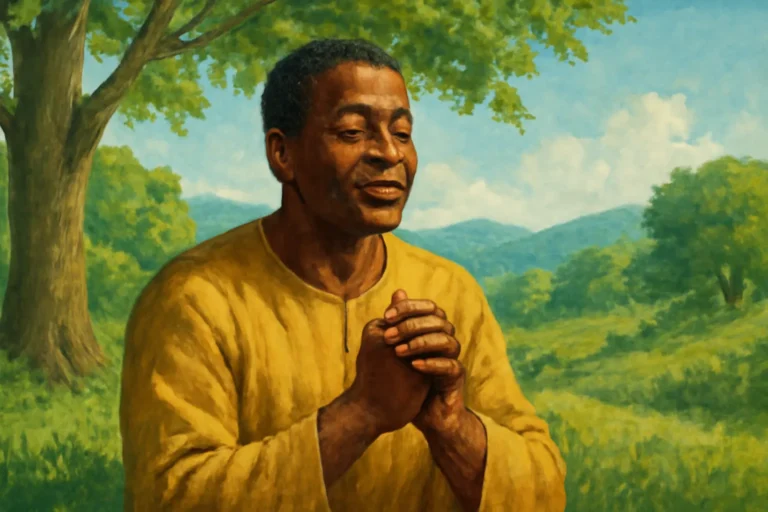
Delight in God’s Presence: A Pathway to Life, Worship, and Transformation
Delight is more than sentiment; it is a way of living in which the soul finds rest, joy, and direction in the nearness of the Divine. When we speak of delight in God’s presence, we are describing a spiritual posture that permeates daily decisions, prayer, worship, and relationships. In Christian history, the phrase psalm 1 delight in gods presence has anchored a robust meditation on how the heart should respond to God’s nearness: not merely a transient thrill, but a steady, chastened joy that bears fruit. This article invites you to explore the fullness of that experience—its biblical foundations, its practical grammar, its theological depth, and its communal expression.
Throughout the Christian tradition, the idea that the one who lives near God experiences joy in God’s presence has been a source of strength in seasons of trial and a guide for spiritual formation. We will encounter the language of delight in the light of Scripture, particularly in the wisdom imagery of Psalm 1, which speaks of the blessed person whose delight is in the law of the Lord and who meditates on it day and night. By tracing that line of thought, we can learn to cultivate an interior life that remains anchored in divine reality even when circumstances sway. This is not escapism; it is a way of living that aligns the heart with God’s purpose and makes presence with God the chief joy of life.
In this long-form exploration, we will consider the theology of divine presence, the spiritual disciplines that nourish delight, the liturgical and communal dimensions of worship, and the challenges that can test this joy. We will also weave in semantic variations of the phrase delight in psalm 1, such as delight in the presence of the Lord, joyful meditation on God’s instruction, and pleasure in divine nearness, to broaden the understanding and accessibility of this ancient yet ever-relevant invitation.
Scriptural Foundations: Psalm 1 and the Language of Delight
The biblical frame for delight in God’s presence is richly articulated in Psalm 1, a passage that presents a stark contrast between two paths and proposes a decisive orientation of the heart. Although the Psalm begins with a blessing on the person who does not follow the counsel of the wicked, it quickly transitions to describe the central life-giving habit: to take pleasure in God’s law and to meditate on it relentlessly. In important terms, the life of true blessing is synonymous with a life of near-ness to God, where the divine instruction becomes the compass and companion of daily living. Even when we speak of psalm 1 delight in gods presence in everyday language, we are echoing a deep biblical claim: proximity to God shapes perception, behavior, and destiny.
To enter into the wisdom of delight in the Lord is to acknowledge that presence is a formative reality. The one who seeks to be near to God does not merely study the divine in abstraction; rather, the one who loves God’s presence will be shaped by the rhythms of Scripture, prayer, and community. The typology of Psalm 1 suggests that meditation is not a private, solitary exercise alone but a disciplined engagement with the sacred text that turns knowledge into affection and obedience. In this sense, delight in God’s presence becomes both an inner posture and an outward trajectory—a blessing that reorients the entire life toward the good and the true as revealed by God.
Psalm 1 in Focus: A Brief Reading and Its Implications
While the imagery of the Psalm is compact, its implications are expansive. It identifies a blessed life as one rooted in relationship with God’s word, not in the shifting winds of culture or the hollow satisfactions of sin. The phrase delight is in the law of the Lord communicates a deliberate preference for divine instruction over other forms of wisdom. The accompanying line, on his law he meditates day and night, emphasizes consistent, life-shaping practice. The psalmist does not portray delight as passive pleasure but as active engagement—study, reflection, and spiritual testing that results in fruitfulness (the imagery of a tree planted by streams of water). In this sense, the core claim of psalm 1 is that true joy and flourishing arise where the soul is saturated by God’s presence and guided by God’s instruction.
Delight points to a positive orientation toward divine truth.
Meditation signifies intentional, sustained contemplation that shapes character.
Presence of God becomes the environment in which life thrives.
Fruitfulness is the natural consequence—righteous living that blesses others.
Across the diverse Christian traditions, the language of delight and presence in Psalm 1 remains a guiding frame. It invites believers to move beyond mere assent to belief and toward a lived reality in which the divine nearness is both the source and the goal of every virtue. In the broader arc of Scripture, the same theme surfaces in expressions like delight in the Lord, joy in God’s nearness, and the blessedness of resting in God, each contributing to a holistic vision of life as a continual encounter with the holy.
Several other scriptural strands illuminate what it means to experience and cultivate delight in God:
“In your presence there is fullness of joy” (a theological articulation of intimate proximity to God).
“Taste and see that the Lord is good” (experiential knowledge that deepens trust and affection).
“The Lord is near to the brokenhearted” (presence as consolation and restoration in hardship).
These threads, when read together with Psalm 1, sketch a durable grammar for the spiritual life: proximity to God as the wellspring of life, a disciplined engagement with God’s revealed word, and a transformation that radiates outward into justice, mercy, and love. The phrase psalm 1 delight in gods presence is thus not a single sentence but a living invitation to inhabit a worldview in which God is the center, and every facet of life orbits around that sacred center.
The Experiential Dimension: What It Feels Like to Be Near God
Delight in God’s presence is not a dull monotony but a dynamic experience that can be joyful, intimate, challenging, and transformative. The experiential dimension includes moments of luminous peace, bold courage, contrition, and a steady confidence rooted in divine faithfulness. In the language of Scripture and tradition, the presence of God becomes a sanctuary where the soul can breathe, be honest about pain, and discover a steadfast joy that outlasts changing circumstances.
Joy, Peace, and the Renewal of the Heart
When we speak of joy in God’s presence, we are describing a multi-layered reality. It is not merely emotional happiness; it is a renewal of the heart and a reorientation of desire that aligns with God’s goodness. In the Christian imagination, true joy rises from knowledge of God’s character—his faithfulness, mercy, justice, and love—and is sustained by intimate communion with God through prayer, Scripture, and sacraments. The heart that delights in the divine nearness experiences a kind of inner rest that cannot be fully explained by external success or circumstances, yet becomes a powerful testimony to others about the reality of God.
The Discipline of Presence: Daily Encounters with God
Delight in God’s presence grows through routine, not through serendipity. The psalmist’s pattern of meditating day and night becomes a practical template for modern life: regular time for Scripture, prayer, worship, and contemplation. The disciplined habit becomes, over time, a source of resilience. It gives the soul a vocabulary for prayer in trouble, a resource for moral discernment in foggy seasons, and a posture of welcome toward neighbors in need.
Regular time with Scripture and reflection leads to a deeper sense of God’s presence as a trustworthy reality.
Worship, both private and communal, trains the heart to recognize the divine nearness as the baseline of life.
Prayer becomes less about tactics and more about shared relationship with God.
In this sense, delight in the divine presence becomes a curriculum for character. The experiences of joy, sorrow, doubt, and triumph are reinterpreted through the lens of God’s nearness, which remains constant even when feelings waver. The spiritual life, then, is not a perpetual high; it is a steady journey toward deeper union with God, where every moment is an opportunity to delight in the Lord and to rejoice in God’s steadfast love.
Presence as Transformation
Nearness to God is transformative: it alters appetites, ideals, and aims. When the mind and heart are shaped by the reality of God’s presence, the old patterns of selfishness and fear give way to a generous, courageous, and hopeful disposition. The fruit of the Spirit—love, joy, peace, patience, kindness, goodness, faithfulness, gentleness, self-control—becomes not merely a list of virtues but a lived reality that grows from the soil of divine companionship. Thus, the phrase psalm 1 delight in gods presence carries with it a promise of spiritual nourishment that sustains life across seasons—season of plenty and season of scarcity alike.
Practices and Disciplines: How to Cultivate Delight
Delight in God’s presence is cultivated through deliberate acts that align the heart with divine reality. The following practices are not magical formulas but reliable means by which believers open themselves to the nearness of God and cultivate a durable happiness that is rooted in faithfulness rather than fluctuation. The aim is a life where the soul takes pleasure in the divine presence, and that pleasure becomes the lens through which all experiences are interpreted.
Biblical Reading and Meditation
At the core is a routine of engagement with Scripture that moves beyond knowledge to love. This aligns with the classic movement described in psalm 1—to find delight in God’s law and to meditate on it continually. Practical steps include:
Choose a passage and read slowly, aloud if possible, observing what the text reveals about God’s presence.
Pause to reflect on how the text speaks to present life—relationships, work, and worship.
Journal a short prayer or meditation that expresses gratitude or petition in light of God’s nearness.
Prayer is both petition and praise, a dialogue with the divine that invites God to shape the day. In practicing prayer, the believer cultivates a sense of being heard and held by God, which deepens the experience of presence and leads to daily readiness for God’s guidance.
Worship and Sacramental Practice
Worship—both corporate and private—refines the sense of presence as a real, reliable reality. The sacramental life, in traditions that practice them, anchors believers in the visible grace of God and reminds them that delight in the divine is not theoretical but experiential. The rhythms of confession, thanksgiving, and remembrance become constant reminders that God inhabits the praises of his people and meets us in tangible signs of grace.
Community and Accountability
Delighting in God’s presence is not a solitary fantasy; it flourishes within the community that sustains faith. Within a healthy community, believers sharpen one another, encourage perseverance, and hold one another to the higher ideal of living near to God. Practical forms include accountability partners, small groups for Scripture study, and mutual encouragement in prayer and mission.
Ethical Living as Evidence of Delight
Where there is true delight in God’s presence, ethical decisions follow more readily. The life of righteousness flows from a heart that desires to please God. This is not legalism but a joyful obedience that arises from the conviction that God’s presence is the true good and the best path for life.
Delight can also express itself in creativity, art, music, and service. When the soul is near God, it seeks to reflect that beauty in acts of compassion, hospitality, and beauty-making that glorify the Creator. The arts become a schooling in perceiving God’s presence and communicating it to others, and service becomes a conduit for the joy that comes from near-ness to God.
Common Obstacles and How to Respond
Many believers encounter dryness, doubt, or distraction on the path of delight in God’s presence. These challenges do not disqualify but deepen the journey when faced with honesty and prayer. Helpful responses include:
Addressing spiritual dryness with renewed disciplines rather than passive resignation.
Seeking mentorship and communal support to sustain faith when personal seasons obscure God’s nearness.
Engaging in lament and honest conversation with God about pain rather than suppressing it.
Theological Perspectives: Presence Across Traditions
Across Christian theological streams, presence theology centers on the conviction that God is not distant but actively present to creation through Scripture, Spirit, and sacrament. The language of delight and presence is foundational for understanding how God interacts with humanity and how humans respond in faith. Different traditions emphasize different facets, yet the core claim remains: nearness to God is the source of life and the ground of all venerable virtue.
In many theological frameworks, the Holy Spirit is the primary means by which believers experience the presence of God today. The Spirit awakens the heart to delight in God, persuades the mind of truth, and births the fruit of a life lived near to God. The Spirit helps believers to turn theoretical knowledge of God into experiential knowledge—the kind of knowledge that remains with you when words fail and silence speaks of God’s nearness in a deep way.
Presence in the Liturgy and the World
Delight in God’s presence also moves from personal devotion into liturgical and public spheres. In worship, calendar seasons, and communal rites, believers encounter God in ways that reframe the day-to-day experience of life. The church’s rhythms—Sabbath, worship gatherings, and sacraments—are designed to sustain the sense of divine nearness and to train the conscience toward justice, mercy, and humility in the world.
Historical Trajectories: From Patristic to Modern Thought
From early church fathers who spoke of the divine presence guiding moral life, to medieval mystics who described the soul’s ascent toward the unapproachable Light, to contemporary theologians who explore presence in relational terms, the tradition maintains a consistent claim: God’s near presence is the greatest good we can seek and savor. The language of delight in the Lord crosses centuries, languages, and cultures, pointing to a shared human experience of longing for intimacy with the divine.
Presence in Worship: Liturgy, Prayer, and the Arts
Worship functions as a critical arena where the believer’s longing for God’s presence is oriented, expressed, and renewed. The liturgical life of a community becomes a teacher, guiding people into a deeper awareness of God’s nearness. The phrase delight in God’s presence then becomes a lived practice, not merely a theoretical statement.
Music and the arts have long served as vehicles for expressing the inexpressible—the sense of God’s nearness that sustains the soul in both comfort and trial. Through hymns, spiritual songs, and liturgical choirs, communities rehearse the truth that presence and delight are real gifts from God that shape perception and behavior. The aesthetic dimension of worship can open spaces for gratitude, wonder, and reverence, making the reality of God more concrete and accessible to the heart.
Ritual, Sacrament, and Sacramental Living
In traditions that practice sacraments, the visible signs—baptism, the Eucharist, and other rites—become tangible reminders of the divine nearness. The faithful who approach these rites with reverence often report a reinforced sense of delight and gratitude for presence. These moments of grace anchor the daily life of faith, inviting believers to carry the sweetness and seriousness of God’s nearness into ordinary moments, work, and family life.
Pastoral Implications: Guidance for Care and Community
Pastors and church leaders are called to cultivate environments where people experience delight in God’s presence as a communal reality. Teaching, spiritual direction, and pastoral care can help people locate God in their ordinary lives, reframe their desires toward the divine good, and extend the joy of near-ness to others through acts of service, justice, and hospitality.
Challenges and Deepening: When Presence Feels Hidden
Many who pursue a life of delight in God’s presence encounter periods of dryness, doubt, or spiritual heaviness. Such experiences do not disprove the reality of God’s nearness; they are often the soil in which faith matures. The presence of God can feel obscured by pain, disappointment, or fatigue, yet traditional wisdom and biblical testimony affirm that God remains near even when visibility is low.
Lament as a Spiritual Practice
Lament is not a failure of faith but a legitimate and honest response to suffering. When the heart longs for God’s presence but experiences silence, lament provides a voice that affirms trust while naming pain. It can be a way to realign the interior life toward God, inviting a renewed sense of delight as comfort and clarity gradually return.
Reorientation and Hope
In seasons of spiritual drought, reorienting to the basics—regular Scripture, consistent prayer, and acts of love—can reestablish the environment in which God’s presence becomes perceivable again. The disciplined practices restore certainty that the divine definiteness of God does not depend on ever-flourishing feelings but on God’s unchanging character.
Faith Communities as Beacons of Presence
Communities that embody presence—through hospitality, mercy, and truth-telling—offer a compelling witness to the reality of God’s nearness. The delight in the Lord becomes contagious when believers share life in truth, grace, and mutual encouragement, becoming living testimonies of a present God who sustains the weary and invites all to draw near.
Conclusion: The Continual Invitation to Delight
To cultivate a life of delight in God’s presence is to undertake a lifelong practice: to nestle the heart in divine near-ness, to orient daily life toward the divine wisdom, and to bear fruit for the sake of others. The language of psalm 1 delight in gods presence points to a blessed life that is rooted in the daily intake of God’s word and the steady practice of meditation on God’s truth. This makes presence not a rare experience but a reliable infrastructure for living well—whether in quiet moments of prayer, in the bustle of work, or in the rhythms of worship with a community.
As you continue your journey, consider these closing invitations:
Reserve intentional time to seek God’s presence through Scripture, prayer, and worship.
Culture your heart with delight in the Lord, allowing the divine presence to shape your desires and choices.
Invite others into the experience of near-ness through hospitality, honest conversation, and shared spiritual practices.
In every season, the invitation remains the same: to find “joy in God’s presence” not by escaping reality but by embracing it with a faithful heart. The Psalmist’s counsel about delight and presence is a timeless rhythm for life—an invitation to live with spiritual depth, moral clarity, and loving generosity, grounded in the reality that God is near to all who call on him sincerely. This is the enduring gift of delight in God’s presence—a life that blossoms when the soul learns to rest in the divine nearness and to reflect that nearness in every word, deed, and relationship.
Endnote: Although this exploration has used semantic variations of psalm 1 delight in gods presence to illuminate the breadth of the topic, the central claim remains consistent: nearness to God is the ultimate ground of joy, wisdom, and life that endures. May your journey toward God’s presence be rich, robust, and deeply satisfying as you pursue a life marked by true, lasting delight.