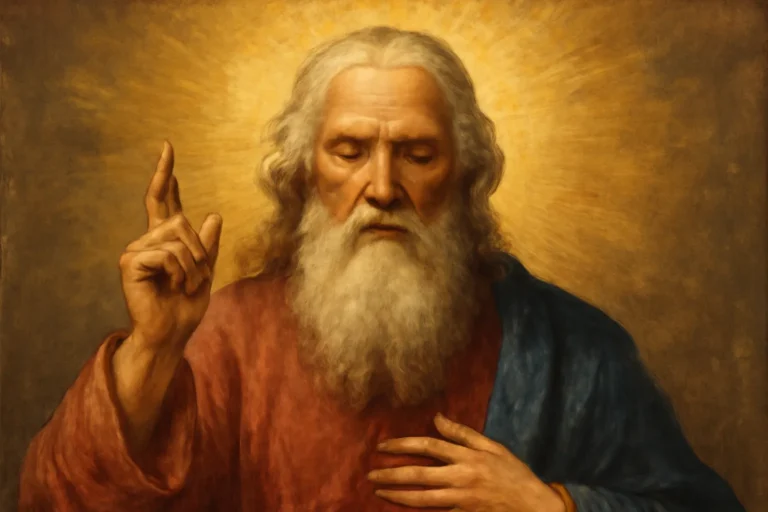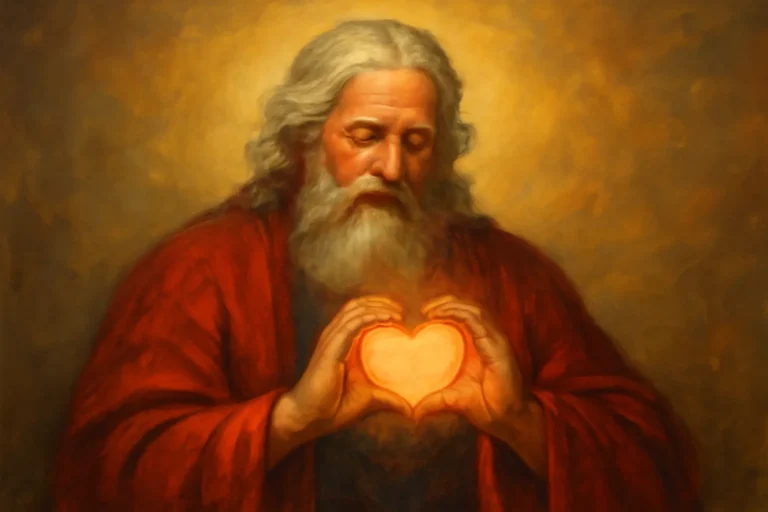

Introduction: The Triad that Defines the Divine Character
Across the scriptural witness, theological reflection, and devotional practice, humanity encounters
a God who is not easily catalogued or easily contained. The mystery is not that the divine
presence eludes comprehension, but that the God who reveals Himself consistently bears multiple
emphases at once: holiness, loving-kindness, and justice.
In many traditions these attributes are not presented as a dilemma to be solved but as a
harmonious triad in which each attribute informs and perfects the others. In this article we
explore our holy, loving, just God in depth, tracing its biblical roots, its
historical articulation, and its practical implications for worship, ethics, and communal life.
We will use variations of the phrase to emphasize different facets of the divine nature:
the holy God who loves, the just God who acts in mercy, the God of holiness and steadfast love,
and the God who embodies all three attributes in perfect completeness.
Understanding the Holiness of God
The Concept of Holiness in Scripture and Tradition
Holiness is often described as the absolute moral excellence of God, a perfection that sets Him
apart from every creature and every aspect of creation. In biblical terms, the holy
God cannot be compromised by sin, and His holiness implies both transcendent majesty and
ethical purity. When the Psalms declare, “Holy, holy, holy is the Lord of hosts” (a refrain echoed
throughout prophetic literature), the emphasis is not merely on solemn awe but on the moral
integrity that undergirds all of God’s actions. Our God who is holy is a being whose
will is untainted, whose purposes are pure, and whose presence requires reverence.
The ancient church and later theological disciplines have wrestled with questions about the
implications of divine holiness for how God relates to sinners, to creation, and to the possibility
of transformation. Holiness, in the Christian tradition, is not withdrawal from the world but
a courageous commitment to justice and truth, enacted with grace. In this sense, the holy,
loving God is not distant or punitive by nature; instead, holiness becomes the ground for
a gracious invitation: to draw near, to be purified, and to become holy in response to divine grace.
Holiness and Covenant Faithfulness
The biblical narrative often presents holiness in conjunction with covenant faithfulness. God’s
holy character is not arbitrary but bound to the promises He makes to a people, to the land, and
to a future. In this sense, our holy God acts in history to uphold integrity, even when
human beings fail. Holy judgment is not capricious punishment but the righteous response of a God
who will not tolerate injustice or idolatry in the realm He blesses.
The Love of God: From Compassion to Redemption
Love as the Shaping Force of God’s Action
If holiness refers to moral purity and transcendent majesty, God’s love describes the
redemptive motive that moves Him toward creation in grace. Theologically, love is not a softening
of holiness but an expression of the God who loves with unwavering fidelity. The language of
love in the biblical witness ranges from steadfast covenantal fidelity to incarnational self-giving.
Our Loving God is not merely a benevolent spectator; He enters into history, bears human
vulnerability, and offers a path of reconciliation.
Incarnation as the Fulfillment of Love
Central to the Christian articulation of our holy, loving, just God is the belief that the
divine Son entered the human condition. The incarnation demonstrates love in action: God takes
on mortality so that humanity might be transformed. The Gospels offer narratives of compassion and
mercy that illustrate what it means for God to be the holy, loving God in the most intimate
sense—among the poor, the outcast, the sick, and the grieving. In this sense, love becomes not
merely an attribute but a dynamic, saving force that redefines what it means to be human.
Love in the Community and Social Life
The love of God shapes ethical life, not in abstract sentiment but in concrete action toward neighbor.
To be aligned with the holy, loving God is to work for justice, to practice mercy, and to pursue
reconciliation in communities fractured by violence, poverty, or prejudice. Love, as revealed in
divine action, calls believers into solidarity with the vulnerable, a posture that extends into
social ethics, charitable initiative, and the promotion of peace and dignity for all people.
The Justice of God: Righteousness, Judgment, and Mercy
Justice as Covenant-keeping Righteousness
The attribute of divine justice in the biblical witness is inseparable from God’s
faithfulness to His promises. Justice is not merely punishment of wrong but the maintenance of the
moral order by a righteous monarch who acts consistently. When God judges, He does so with
integrity, upholding the rights of the weak and ensuring that the just order is not subverted.
Judgment and Mercy in Tension and Synthesis
A common concern is how a holy and loving God can also be just in ways that seem severe. The
biblical record suggests that God’s justice is not devoid of mercy; rather, mercy often
intersects with judgment in a way that aims at restoration. The cross, in Christian thinking, is
viewed as the moment where divine justice and divine love meet: the demands of righteousness are
satisfied while mercy is extended to sinners. In this sense, our just God acts to
bring about a reconciled order that honors both truth and grace.
Justice in the Pattern of Creation and Covenant
God’s justice, proclaimed through prophets, laws, and historical acts, is seen as upholding the image of
God in humanity and defending the dignity of every person. When ethical systems fail or when oppression
persists, the just God acts—sometimes through human agents, sometimes through divine intervention—to restore the
balance between freedom and responsibility. This dimension of the divine character invites believers
to participate in the ongoing work of justice in the world, guided by the combined wisdom of holiness
and love.
Intersections: How the Attributes Complement Each Other
Holiness as a Boundary, Love as a Bridge
The holy nature of God establishes boundaries that preserve the integrity of reality; love builds
bridges across those boundaries to bless and heal. Where holiness might seem rigid, love introduces
mercy; where love might seem indulgent, holiness calls for truth and accountability. The interplay
of the holy, loving God thus creates a dynamic tension that keeps divine action both
holy and gracious.
Justice as the Ground for Mercy and Restoration
Justice is not the end of God’s work but the ground upon which mercy operates most effectively. If
justice is severed from mercy, it becomes mere punishment; if mercy is severed from justice, it risks
licentious grace. The ideal is a justice that corrects, a mercy that forgives, and a holiness that
sustains both. In this synthesis, our God who is holy, loving, and just remains faithful in
every season—calling humanity to repentance, inviting reconciliation, and empowering transformation.
Historical and Theological Perspectives
From Scripture to Creed: A Brief Overview
Across centuries, theologians have sought to articulate the character of our holy God in
language that is both faithful to Scripture and meaningful for worship. In the patristic era, church
fathers emphasized the unity of God’s essential attributes while noting the way in which revelation
unfolds across history. Medieval theologians wrestled with the coherence of a God who is utterly pure
and yet infinitely gracious. The Reformation era added emphasis on the forensic and relational dimensions
of divine action—how God justifies the sinner and transforms the heart. In contemporary theology, the
conversation often centers on how to articulate a coherent account of divine action amid a pluralistic
world and a complex moral landscape. Throughout these developments, the phrase the holy, loving,
and just God has persisted as a reliable horizon for faithful reflection.
Key Theological Traditions and Their Emphases
Different Christian traditions have emphasized various dimensions of our holy, loving, just God
at different times, yet they converge on core convictions. The evangelical emphasis on personal
conversion and moral integrity highlights the call to imitate the holiness of God and to live out
love in society. The catholic and liturgical traditions often stress the beauty of God’s holiness
manifested in liturgy, sacramental life, and communal solidarity. The more contemplative strands
of Christian spirituality invite believers to rest in the mystery of divine love while acknowledging
the justice that grounds all truth. Across these streams, the triadic portrait remains a common
reference point: a God who is holy, loving, and just, and who invites humans to participate in that life.
Christ as the Full Disclosure of God’s Nature
The Incarnate Word and the Revelation of Holiness, Love, and Justice
For many Christians, our holy, loving, just God is most clearly disclosed in the person and
work of Jesus Christ. The incarnation reveals the fullness of God’s character in a single life:
a holy life lived in solidarity with the broken; a loving mercy extended to sinners; a righteous
judgment that exposes and defeats sin, while granting forgiveness and new possibilities for unity with God.
The narrative of Jesus—his birth, ministry, crucifixion, and resurrection—function as a revelation of
the triune God who acts in history to redeem and renew.
At Sinai, in the Gospels, and on the Cross
In the Old Testament, God’s holiness is dramatized through the theophanies and the giving of the law.
In the New Testament, the same God is portrayed as the loving Father who sends His Son. The cross
embodies the justice of God in action—sin is confronted, the rightful consequences of rebellion are
borne, and grace is offered to all who believe. In this sense, the life of Christ functions as a
bridge between the old and new covenants, showing how the holy, loving God remains committed
to righteousness while extending mercy to a broken world.
Practical Implications for Believers
Worship: Approaching the One Who Is Holy, Loving, and Just
If God is who He is, worship should reflect all three dimensions. Worship that honors His holiness
acknowledges His transcendence and moral perfection. Worship that expresses God’s love invites
intimacy, grace, and gratitude. Worship that honors justice calls believers to alignment with God’s
moral order—praising Him, prizing human dignity, and participating in justice in the world. In
practice, this means liturgy and prayer that lift up God’s glorious holiness, confess the limits of our
own righteousness, and celebrate the mercy poured out in Christ.
Ethical Living: Aligning Actions with Divine Character
The ethical life of a believer is not reduced to a set of rules but to a transformed disposition that
mirrors the triad of God’s character. To live under the holy God who loves justly is to pursue
integrity, humility, and courage in the face of injustice. It also means showing mercy to the vulnerable and
offering forgiveness to those who have wronged us, anchored in the conviction that divine justice
grounds human justice and mercy. Ethical living thus becomes a daily meditation on how to embody
holiness, love, and justice in communities, workplaces, families, and public life.
Communal Life: Building Justice, Mercy, and Unity
Communities shaped by the worship of our God who is holy, loving, and just are called to be houses
of mercy and sanctuaries of truth. They prioritize the dignity of every person and resist systems that
dehumanize. They practice reconciliation, confession, and mutually transformative accountability. In such
communities, the divine triad is not an abstract doctrine but a lived reality: worshiping the holy God,
receiving His love, and acting justly toward neighbor and stranger alike.
Challenges and Questions: Theodicy, Suffering, and Faithful Trust
Why Suffering Persists in a God Who Is Holy, Loving, and Just?
The coexistence of divine attributes with the presence of suffering invites ongoing reflection. The
problem of pain challenges believers to distinguish between God’s prerogatives as sovereign and human
suffering as a reality of living in a fallen world. A robust theology of the holy, loving God seeks
to articulate a trustworthy account of providence, freedom, and divine response to human misery. It
also points to the role of faithful community in offering hope, practical aid, and a horizon of
consummation when history is fulfilled.
Freedom, Destiny, and Accountability
Another set of questions concerns freedom under divine governance. If God is perfectly just, how does
human responsibility fit within His plan? Many theologians argue that genuine freedom is preserved within
the framework of God’s holy will and loving purposes; in this view, human choices have real consequences,
and God, while sovereign, does not coerce the moral drama but invites participation in the divine life.
For believers, this invites a posture of humility, dependence on grace, and a patient trust that the
God who is holy, loving, and just will bring about the final resolution of confusion and pain.
Theological Synthesis: Toward a Coherent Faith
Balancing Attributes in Faith Practice
A well-formed faith does not see holiness, love, and justice as competing forces but as mutually
reinforcing realities. The God who is holy must be revered; the God who is loving must be trusted; the God who
is just must be followed. The synthesis of these dimensions yields a robust spirituality that equips
believers to worship wholeheartedly, love their neighbors sincerely, and pursue justice courageously.
This is the practical fruit of recognizing that our holy God, who is loving and just, desires
a world shaped by grace that makes mercy tangible and righteousness visible.
Application: How to Engage with the Divine Triad in Everyday Life
Lectio Divina, Prayer, and Contemplation
Spiritual disciplines can help believers grow in discernment and devotion. Reading Scripture with a
mind trained to notice the attributes of God—His holiness, His love, and His justice—cultivates a
spiritual imagination that sees God at work in all of life. Prayer invites petition for mercy, for
strength to pursue justice, and for reverence before the holy presence of God. Contemplative practice
rests in the mystery that the holy, loving God is present among His people and within the heart
of each believer who offers worship to Him.
Ethical Engagement: Service, Advocacy, and Mercy
Ethical engagement in society becomes a concrete mode of worship when believers act for
justice and mercy in public life. This can include efforts to alleviate poverty, defend human
rights, protect the vulnerable, and advocate for systemic reform—all rooted in trust that God’s
justice will prevail and that human beings are invited to participate in that work. The call is not
merely to abstain from wrongdoing but to pursue active good that reflects the character of the holy,
loving God.
Conclusion: Living Under the Light of God’s Character
In the end, the portrait of our holy, loving, just God is meant to shape life in every arena. It calls
believers to worship with reverence, to love with courage, and to stand for justice with humility. The
Christian tradition reminds us that holiness without love becomes harsh; love without holiness becomes
lax; justice without mercy becomes oppressive. The divine triad, when rightly understood and humbly applied,
leads to a life of integrity and hope, a life that participates in the renewal of all things through
grace and truth.
Appendix: Responsive Readings for Groups
- Reflection on Holiness: Read Psalm 99 and meditate on God’s consistency, majesty, and moral perfection. Consider how Your life might honor God’s holiness more fully.
- Reflection on Love: Read 1 John 4 and consider how divine love is demonstrated in actions toward neighbor, especially the vulnerable and marginalized.
- Reflection on Justice: Read Isaiah 1 and Micah 6:8, pondering what it means to act justly in daily life, to love mercy, and to walk humbly with God.
The journey toward understanding and living out our holy, loving, just God is lifelong. It is a path marked by
awe before the divine, a deep commitment to the good of others, and a hopeful trust in the Creator who
sustains all things. May this exploration nourish your faith, sharpen your conscience, and energize your
witness to the transformative power of a God who combines holiness with mercy and justice with grace.