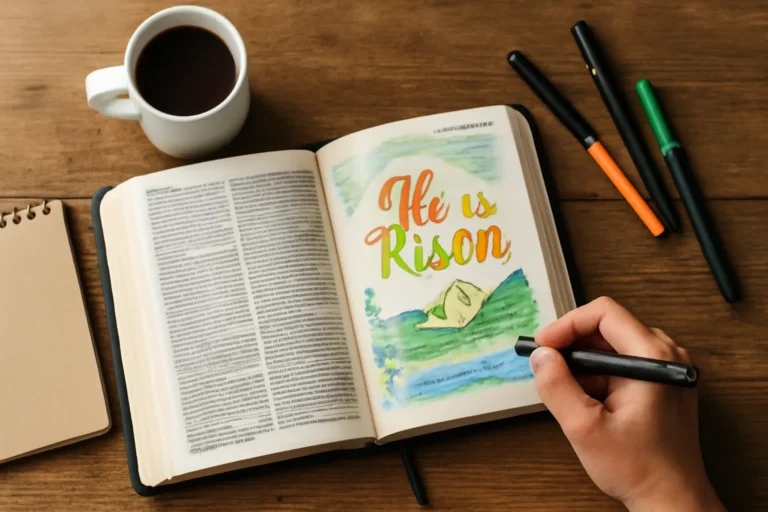
Introduction: The Year Ahead and the Call to Quiet Study
In a noisy digital age, the spiritual habit of reading the Bible can become a countercultural act of reverence and focus. The year 2025 invites believers, scholars, pastors, and lay readers to reimagine how we approach Scripture, not as a hurried checklist but as a sustained encounter with the divine text. This article presents four distraction-free Bible reading plans designed for a wide range of temperaments, schedules, and theological commitments. The aim is not to prescribe a single method but to offer practical pathways that help readers embrace distraction-free Bible reading in 2025 with intention, clarity, and spiritual fruitfulness. Throughout this exploration you will encounter variations on the core theme—an emphasis on focus, simplicity, and fidelity to the text—paired with concrete steps, community practices, and theological reflection.
The need for discipline without rigidity is real. Modern believers are tempted by notifications, endless emails, and the allure of audio-visual media that can fragment attention. Yet Scripture itself invites a posture of attentive hearing: the shepherd’s voice calling the flock to still waters, the psalmist inviting us to “wander in the night of prayer” with a lamp for our feet. By embracing distraction-free Bible reading in 2025, readers cultivate the kind of heart posture that can transform daily routine into a sacred rhythm. The following sections outline four distinct reading plans, each designed to minimize distraction while maximizing encounter with God’s Word, wisdom, and presence.
Important note: Each plan can be adopted independently or integrated into a personal system of devotion. The emphasis on focus does not deny the value of communal reading or theological reflection; rather, it seeks to create conditions where Scripture can be heard more clearly and remembered more deeply. We will explore how to set aside devices, how to structure time, and how to listen for the Holy Spirit’s prompts in conjunction with the text. The language used in this article—such as embrace, practice, and habits—is chosen deliberately to convey a lived spirituality rather than a purely intellectual exercise.
Foundational Principles for 2025: Why Distraction-Free Reading Matters
Before detailing the four plans, it is helpful to articulate the guiding principles that underpin effective distraction-free Bible reading. These are not legalistic rules, but practical norms that help readers remain faithful to the text and the God who speaks through it.
Centeredness on Scripture: The Bible remains the primary authority for faith and life. The plan centers on text, not trends.
Quiet practice: Silence, predictable routines, and minimal interruptions create a space for hearing God’s voice.
Consistency over intensity: Small, regular doses of Scripture sustained over a year yield deeper transformation than sporadic bursts of study.
Contextual engagement: Reading with attention to historical, literary, and theological context deepens understanding and reduces misinterpretation.
Community and accountability: While the plans emphasize personal devotion, they also invite partnership with a friend, group, or mentor for encouragement and correction.
With these principles in mind, the article introduces four distinct yet complementary reading tracks. Each plan is designed to be distraction-free while preserving theological integrity, pastoral sensitivity, and spiritual nourishment. As you read, you may find yourself refining the plan to fit your life, or layering elements from multiple tracks to create a customized journey.
Plan 1: The Way of Quietness — A Daily, Short-Form Bible Reading Plan
This plan is designed for busy mornings, commutes, or late evenings where time is precious but the desire for sustained engagement with Scripture remains strong. The Way of Quietness emphasizes steady, brief encounters with the text, allowing the reader to linger in a single verse or a small passage without feeling rushed toward a larger quota. The aim is consistency, not volume, and to cultivate a rhythm that makes Scripture the central reference point of daily life.
Key Characteristics
Duration: ~10–15 minutes per day
Text selections: 1–3 verses or a short paragraph from a single book per day
Reading pace: reflective, slow, meditative
Environment: quiet, away from notifications; optional use of a simple notebook for journaling
Daily Structure
Begin with a brief moment of stillness (60–120 seconds) and a simple prayer for receptivity.
Read the selected text slowly at least twice, with a pencil ready to underline or note a phrase that stands out.
Identify one takeaway or question to ponder during the day; write it in a short reflection (2–3 sentences).
Close with a short blessing or doxology to seal the encounter.
Strength: This plan minimizes friction and is highly sustainable for long-term adoption. It cultivates attentiveness to God’s voice within a manageable time frame.
Boundaries: It may not satisfy readers who desire a broad survey or complex cross-referencing in a single sitting. Consider pairing with Plan 4 (Community Journaling) for accountability or Plan 2 (Chronological Readings) on weekends for balance.
Examples of Daily Readings
Proverbs 3:5–6 and a reflective sentence about trust
Psalm 23:1–3 with a note on God’s guidance
Mark 4:35–41 and a short application for faith under pressure
This plan encourages embrace distraction free bible reading in 2025 by creating a reliable habit that anchors daily life in Scripture. It is especially well-suited for readers who are new to disciplined study, those balancing work and family, or anyone seeking a calm, steady pace.
Plan 2: The Chronological Compass — Reading the Bible in Narrative Order
Achronology-based approach invites readers to trace the unfolding of God’s redemptive plan as it appears in historical sequence. The Chronological Compass is aimed at those who wish to understand the Bible as a unified story rather than a collection of isolated books. By following historical order, readers see how events, covenants, and prophetic expectations build on one another. This track supports the idea of distraction-free Bible reading in 2025 as a sustained narrative journey rather than an isolated sermon or a topical study.
Key Characteristics
Duration: ~20–25 minutes per day
Text selections: Short passages from the same historical period across different books
Reading pace: Moderate, with occasional cross-references for context
Environment: Quiet study space; use of a simple timeline or map to visualize progression
Daily Structure
Coincide the day’s reading with a point in the timeline (e.g., Old Testament history, prophetic anticipation, or New Testament growth).
Read the assigned passages aloud once or twice, focusing on coherence and causality between events.
Make a brief note connecting two or more passages and one personal application for your day.
End with a short prayer focusing on wisdom to discern the larger story and your place in it.
The chronological approach trains the reader to recognize motifs and covenants as they develop over time, rather than isolating them in a single verse. This fosters a holistic understanding of salvation history and a more resilient faith when encountering difficult texts.
Suggested Week Structure
Monday–Wednesday: Old Testament material in historical order
Thursday: Intertestamental or prophetic material
Friday–Saturday: Gospels and Acts to see the narrative through Jesus and the church
Sunday: Reflective summary and prayer, linking the week’s readings to your life
For those seeking to embrace distraction-free Bible reading in 2025 through a continuous narrative, the Chronological Compass provides a unifying thread that can enrich both personal devotion and teaching ministry. It is particularly helpful for readers who enjoy cross-referencing across books, historical context, and the drama of redemption as a single, cohesive arc.
Plan 3: The Thematic Cycle — Reading by Core Biblical Themes
The Thematic Cycle invites readers to move across genres and books with a focus on central theological themes such as covenant, grace, righteousness, kingdom, and discipleship. This plan is designed for learners who respond well to synthesizing ideas rather than following a strict chronology. It supports the practice of distraction-free Bible reading in 2025 by giving the mind a consistent set of motifs to explore, which can reduce the lure of diversions and cultivate deeper reflection on the character of God and the rhythm of Scripture.
Key Characteristics
Duration: ~25–30 minutes per day
Text selections: Multiple books that illuminate a given theme from different angles
Reading pace: Moderate, with guided cross-book comparisons
Environment: Focused space with a theme sheet or journal per cycle
Daily Structure
Begin with a theme orientation: define the theme for the day (e.g., grace in Romans, mercy in Psalms, covenant in Genesis) and note how it appears across the chosen texts.
Read a set of passages that address the theme from at least two different books.
Record two insights: one doctrinal and one practical application for life in the church or home.
Close with a prayer that ties the theme to personal transformation and communal living.
H3 Subsections
Cross-Theme Engagement
Engaging themes across genres—history, poetry, prophecy, epistle—enhances theological memory and interpretive humility. Readers are invited to notice how different voices converge on a single truth or how tensions in Scripture invite robust faith responses.
Sample Thematic Tracks
The Covenant Faithfulness Track: Genesis → Exodus → Hebrews
The Righteousness and Faith Track: Habakkuk → Romans → James
The Kingdom and Mission Track: Isaiah → Mark → Acts
The Hope and Eschatology Track: Daniel → Revelation → 1 Thessalonians
Embracing a thematic cycle helps readers cultivate focus in variety: one day you read in the prophets about judgment, the next you see grace in the letters, all in service of a bigger picture. For believers who enjoy doctrine, worship, and Christian ethics, this plan provides a robust framework for embrace distraction-free Bible reading in 2025 while maintaining intellectual vitality and spiritual depth.
Plan 4: The Community-Journaling Path — Reading with Others for Accountability
Plan 4 centers not only on the individual encounter with Scripture but also on the social practice of reading with others. The Community-Journaling Path blends personal devotion with group discussion, shared reflections, and written journaling that records insights, challenges, and observed fruit. The premise is that collective focus can reinforce personal discipline while offering rich perspectives through discussion. The plan also foregrounds the practice of distraction-free Bible reading in 2025 as a communal art—one person’s listening can sharpen another’s hearing, and written journaling can preserve wisdom for future leaders and generations.
Key Characteristics
Duration: ~30–45 minutes per day (split between individual and group moments)
Text selections: A mix of Bible passages and brief commentary or background notes to ground understanding
Reading pace: Moderate to contemplation; group discussions occur weekly
Environment: A quiet room for personal reading; a comfortable space for small-group conversation
Daily Structure
Individual Reading: Spend 15–20 minutes in a single passage, using a neutral translation if possible, and highlight key phrases.
Journaling: Write a one-sentence summary and two questions that emerged from the text.
Group Session: In a weekly meeting, share reflections, compare insights, and offer mutual encouragement; use a facilitator guide to maintain focus and avoid digressions.
Closing Practice: End with a concise communal prayer or shared liturgy that honors the text studied.
H3 Subsections
Accountability and Grace
Accountability doesn’t mean coercion; it means companionship in the pursuit of truth. The journaling component helps track changes in perception, spiritual growth, and the practical outworking of Scripture in daily life. The plan is especially effective in church communities, small groups, campus ministries, and family devotions where a shared rhythm fosters trust and obedience.
Journaling templates with prompts such as What did I hear God saying? and What will I do about it?
Weekly discussion guides to keep conversations on track and meaningful
A simple app or notebook for recording insights without distracting notifications
For readers seeking a robust, social form of devotion, this plan emphasizes community discipline and ongoing accountability and invites households, study circles, and parishes to embrace distraction-free Bible reading in 2025 through shared life and shared scripture memory.
Practical Considerations for All Four Plans
While each plan has a distinct philosophy and schedule, several practical considerations apply across the board. The following guidelines help maintain discipline, flexibility, and spiritual fruitfulness in any of the four tracks.
Environment and Setup
Choose a dedicated space free from digital interruptions. A simple corner with a comfortable chair, good light, and minimal clutter works well.
Use a minimalist Bible, a notebook, and a pen. Consider a single, reliable translation for the year, with occasional cross-checks in other versions for clarity.
Limit device usage during reading times. Turn off notifications or use a dedicated device that is only for Scripture study.
Time Management
Schedule reading times as you would any important appointment. Consistency matters more than length.
Adjust the daily time based on the plan choice; longer plans for Plan 2 or Plan 3 are acceptable when life permits, but keep a non-negotiable daily window for reading.
Build in periodic reviews—monthly or quarterly—to assess understanding, adjust pace, and celebrate progress.
Tools, Resources, and Accessibility
Study aids: concise commentaries, maps, and timelines can be used sparingly to enhance understanding without becoming distractions.
Accessibility: accommodation for readers with reading difficulties can include audiobooks at a comfortable pace or alternative translations that preserve fidelity.
Journaling and memory: memory verses or key phrases can be highlighted to reinforce retention.
Guided Reflections for 2025: The Spiritual Rationale Behind Focused Reading
In each of the four reading plans, a common spiritual objective emerges: to hear God more clearly through Scripture, to form holy habits, and to align life with the biblical narrative. The practice of distraction-free Bible reading in 2025 is not merely a technique; it is a spiritual discipline that shapes conscience, worship, and service. Below are several reflective questions that readers may use to deepen engagement with the text, regardless of plan selection.
What sins or fears surface as I read, and how does the text invite repentance or repentance’s fruit?
Where do I see patterns of God’s faithfulness, and how can I testify to them in daily life?
What of the text challenges cultural assumptions I carry, and how should I respond with humility and truth?
What practical steps can I take this week to live more consistently with what I’m learning?
Variations on Embracing Concentrated Reading in 2025
To broaden semantic breadth and topical relevance, consider these variations on the central theme of embrace distraction free bible reading in 2025.
Embrace a distraction-free approach to Bible reading in 2025, with a focus on quiet time and minimal digital noise.
Adopt a distractionless Bible reading plan for 2025, prioritizing contemplation over rapid consumption.
Implement distraction-free Scripture study in 2025, combining personal devotion with communal accountability.
Commit to focused Scripture engagement in 2025, using one of the four plans as a backbone for spiritual formation.
Implementation Strategies: How to Start and Sustain Your Four-Plan Journey
Starting any of these plans is one thing; sustaining them is another. The following strategies aim to help readers transition smoothly into a distraction-free reading life in 2025 and remain faithful over the long term.
Step-by-Step Launch
Choose a primary plan that fits your temperament and schedule—Plan 1 for quick consistency, Plan 2 for narrative depth, Plan 3 for thematic breadth, or Plan 4 for communal accountability.
Set a predictable renewal time—daily at the same hour if possible—and prepare your space the night before.
Share your plan with a friend or family member who can provide encouragement and gentle accountability.
Begin with a two-week trial to assess fit, then commit to a three-month sprint with a formal review at the end.
Common Pitfalls and Remedies
Pitfall: Turning reading into a performance metric. Remedy: Focus on quality of engagement, not merely volume. Allow your heart to be nourished by a few verses well listened to.
Pitfall: Letting journaling become a burden. Remedy: Keep journaling simple and honest; use prompts that invite prayer and action rather than mere summaries.
Pitfall: Becoming legalistic about the method. Remedy: Remember the end goal—transformation through encounter with God—rather than perfection in procedure.
Assessing the Impact: Spiritual and Theological Outcomes
Across all four plans, several achievements can emerge if readers remain faithful and teachable. These include heightened discernment, deeper worship, and clearer understanding of Scripture’s coherence. The practice of distraction-free reading helps believers to:
Grow in discernment: With less noise, readers can better distinguish Scripture’s voice from other influences.
Cultivate humility: Engaging difficult texts in a distraction-free manner invites cautious interpretation and mutual correction within a community.
Deepen worship: Encounter with the text becomes an invitation to praise, gratitude, and devotion, not mere cognitive exercise.
Strengthen memory: Repetition, rhythm, and reflection foster long-term retention, enabling Scripture to shape character and decisions.
Ultimately, the intent of these plans—whether one is drawn to quietude, chronology, themes, or community—is to form a resilient spiritual habit that remains alive in 2025 and beyond. The ability to read with attention, to listen for what God is saying in the present moment, and to respond with faithful obedience is a gift that matures as it is practiced.
Frequently Asked Questions About Four Distraction-Free Bible Reading Plans
To support readers who are exploring these plans for the first time or who seek to adapt them for special contexts, here are concise answers to common questions. This section helps clarify the practical, theological, and liturgical aspects of distraction-free Bible reading in 2025.
Q: Can I combine elements from different plans?
A: Absolutely. Many readers find that a hybrid approach—such as Plan 1’s daily brevity with Plan 2’s chronological readings on weekends—offers the best of both worlds: focus and narrative flow. The key is to preserve the core aim of distraction-free engagement and avoid overloading the schedule.
Q: What about families with children or adolescents?
A: The four plans can be adapted to family life. Short daily readings can become family moments, with simple shared questions and a weekly family discussion. Plan 4’s journaling can be adapted into a family “grace journal” where everyone writes a short reflection or a prayer request, then prays together.
Q: How do I measure progress without becoming legalistic?
A: Use qualitative markers rather than quantitative quotas. Reflect on questions like: Have I become more attentive to God in daily life? Do I retain the key themes or narratives? Am I approaching Scripture with humility and trust? A quarterly review helps assess spiritual growth and adjust the plan accordingly.
Q: Is one translation better than another for these plans?
A: No single translation is universally best for every reader. Choose a translation that is faithful, readable, and suits your level of comprehension. Some readers prefer a more literal version for study, while others benefit from a dynamic translation for readability. The important thing is to approach the text with reverence and intention.
Conclusion: The Invitation to a Sacred Year
The year 2025 stands as an invitation to the Christian community to embrace distraction-free Bible reading in 2025 with intentionality, humility, and hope. The four plans outlined here are not rigid dictates but flexible pathways designed to accommodate diverse contexts and callings. Whether your aim is to cultivate a quiet personal habit, walk through the Bible in chronological order, engage the Word thematically across books, or join with others in journaling and accountability, there is a way forward that honors Scripture and nourishes the soul.
As you contemplate which of the four plans resonates most deeply, consider starting with a single commitment—for example, a month of Plan 1 to test the waters—before expanding into longer cycles. Give yourself grace if life interrupts; the goal is not perfection but perseverance. In all things, let Scripture be the anchor, let your heart be softened by prayer, and let your hands be active in faithful response to what you read. By choosing to embrace distraction-free Bible reading in 2025, you are joining a long line of readers who have found that quiet moments with the sacred text yield powerful transformation for individuals, families, churches, and communities at large.
May this year be a season of renewed attention to God’s word, a season of growth in grace, and a season of faithful witness to the world.