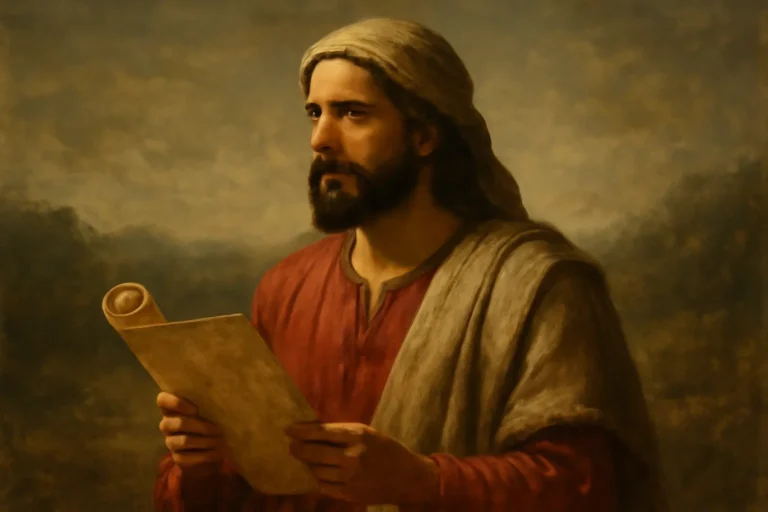
Michal: Saul’s Daughter and David’s Wife in Biblical Narrative
Michal stands at a crossroads in the biblical story: she is Saul’s daughter, but also David’s wife, and her life unfolds within the tumultuous era of the united monarchy and the shifting loyalties of early Israel. In English translations, you will encounter several transliterations of her name—most commonly Michal, but also Mikal, Mikhal, and other variants. These variations reflect the underlying Hebrew, the Greek Septuagint, and Latin traditions, all of which shape how readers encounter her in different historical moments. As a character, Michal provides a lens into questions of power, gender, faith, and fidelity in the biblical narrative, and she invites readers to explore how a single life intersects with divine purposes, political intrigue, and the worship of the God of Israel.
The aim of this article is to offer a sustained, theologically infused examination of Michal—her lineage, her story, and her enduring significance for contemporary faith communities. We will trace the name’s variants, survey the narrative arc across key biblical passages, consider interpretive traditions from Judaism and Christianity, and reflect on how Michal’s experiences illuminate larger issues about divine sovereignty, royal authority, and women’s agency in sacred scripture.
Historical and Textual Context
Placed within the broader arc of the Deuteronomistic history, Michal’s life unfolds during a time when Israel transitions from tribal leadership to a centralized monarchy. The stories of Saul and David are not merely family tales; they are political texts that encode understandings of obedience to God, kingly legitimacy, and the dangers of ambition on the part of both rulers and subjects. In this context, Michal’s roles—as Saul’s daughter, as a wife of David, and as a figure who reacts to the public worship of the Ark—are deliberately layered with significance for readers who want to think theologically about authority, fidelity, and worship.
Several textual witnesses contribute to Michal’s portrait. The Hebrew Masoretic Text presents her as a dynamic figure who engages with David in intimate settings (marriage, home life) and in political moments (the king’s ascent, the conflict with Saul). The Greek Septuagint often renders her name in slightly different ways, reflecting transliteration practices common in Hellenistic Judaism. The Latin Vulgate and later Christian traditions furthermore shape her story through interpretive lenses that emphasize moral lessons, prophetic critique, or pastoral concern. Across these witnesses, the core elements remain: Michal’s authority within Saul’s household, her intimate bond with David, and her subsequent reaction to David’s public worship before the Ark. These strands invite readers to consider not only what happened, but what a faithful response to God looks like in moments of political theater and personal vulnerability.
Name Variants and Theological Significance
Name variants: Michal, Mikal, Mikhal, and kinship of forms
- Michal (the standard English rendering in many translations): emphasizes the Hebrew root מִיכַל (Mikhal) and appears consistently in popular editions of Samuel’s narratives.
- Mikal or Mikhal (alternative transliterations found in some English Bible editions and in critical commentaries): these forms reflect phonetic attempts to capture the consonantal text without diacritics.
- Miḥal and other diacritic-inclusive renderings in scholarly editions: used to signal original Hebrew vowel patterns and to distinguish from similarly sounding names in the wider biblical corpus.
Through these variants, the semantic breadth of the name is preserved. In Hebrew, the name Mikhal can be connected to meanings surrounding ring or reign in some etymologies, but the Bible does not always offer a single, explicit etymology for this proper name. What remains clear across variants is Michal’s institutional identity: a royal daughter and a key figure within the Davidic circle. This dual status raises important questions about how women are positioned within political power structures in biblical narratives and how these positions interact with divine purposes and public worship.
Textual witnesses and translational nuance
- The Hebrew Masoretic Text presents Michal in decisive scenes—her marriage to David, her aiding of David’s escape from Saul, and her later meeting with David at the house of Obed-Edom or the Ark—depending on the synoptic tradition followed by the reader.
- The Septuagint (the ancient Greek translation) sometimes softens or rephrases certain lines, which can influence how readers interpret her actions—especially in scenes of deception or punishment.
- In the Latin Vulgate, Michal’s episodes are embedded within pastoral and moralizing rhetoric that has shaped much of Western Christian commentary on her life and on the nature of kingship.
In all these witnesses, the intentionality behind Michal’s actions—whether she acts as a protective wife or as a critic of public ceremony—receives careful attention. Readers are invited to consider how the same person can function as both a guardian of life and a critic of royal display, depending on the narrative frame and the theological questions being asked.
Narrative Arc: The Life of Michal
Family background and marriage: a strategic alliance
Michal’s first appearance in the text is as the daughter of Saul, the first king of Israel. As a princess of the tribe of Benjamin, she belongs to a royal family whose fortunes rise and fall with the will of God and the success or failure of the kingly line. David is portrayed as a formidable military leader who becomes the object of Saul’s suspicions and a rising political figure who garners popular support. The union between David and Michal is narrated in a way that intertwines personal affection with public strategy. The marriage consolidates David’s legitimacy in Saul’s court and signals the possibility of a transition in leadership that would fulfill God’s covenant with Israel. Yet this alliance also carries risk: the personal tie between Michal and David is a political asset and a potential liability in the eyes of a king who fears for his throne.
- 1 Samuel 18 recounts the early stages of this marital bond after David’s defeat of Goliath.
- Saul’s terms for granting Michal to David reveal a political calculus: she becomes a wife of a rising hero who could threaten the old regime or legitimate the new one.
- The alliance is not merely romantic; it is a political covenant woven into Israel’s history, with God’s purposes shaping the outcome.
Protective deception: Michal as shield and strategist
One of the most striking episodes involving Michal occurs when David faces elimination by Saul. In this moment, Michal plays a decisive role that blends maternal concern, political insight, and courage. When Sauls’ messengers come to take David, Michal deceives them by saying that David is ill. She then arranges a ruse to protect him—she places an idol or a talisman (the Hebrew term teraphim is often debated by scholars) in David’s bed and covers it to present a sick version of David. The cunning plan allows David to slip away through a window, while the extant narrative casts her action in a morally complex light: her deception preserves David’s life and thereby preserves the possibility of God’s ongoing plan for Israel’s leadership. This moment raises enduring questions in religious reflection: to what extent is deception permissible in service of divine purposes? And how should we understand the moral weight of protecting a life when it requires questionable means?
- The episode showcases Michal’s devotional fidelity to David, even when it entails subverting Saul’s agenda.
- Scholars often discuss the teraphim elements—whether an idol or a household object—in terms of cultural context and symbolic meaning within the household of Saul.
- From a pastoral standpoint, Michal’s decision invites readers to reflect on how communities balance justice, mercy, and safety in times of political danger.
Jonathan, Merab, and the shifting circle: Michal among allies and rivals
Michal’s ties within Saul’s household extend beyond marriage. Her sister Merab is also a figure in the surrounding narratives, and the dynamics of these relationships illuminate how family loyalties intersect with divine election and political power. Though Michal’s life is distinct from Merab’s, the two sisters together help paint a broader picture of how royal families navigate the perils and possibilities of a nation in search of true leadership. The tension between personal loyalty and public duty emerges through their interactions with David, Saul, and the evolving expectation of what it means to rule in a way that aligns with God’s purposes.
Ark, worship, and the public critique: the dance before the Ark
One of the most famous episodes involving Michal occurs in the aftermath of David’s return with the Ark of the Covenant. As the Ark enters Jerusalem, David dances before the Lord with striped garments, a display of an exuberant, unguarded worship. Michal, observing this scene from the window, voices a scornful rebuke: she questions David’s decorum and the way his public display reflects on his status and on the royal house. David’s response—“I will become even more undignified than this, and I will be humbler still”—frames the moment as a theological contest between cultural propriety and covenantal worship. The narrative’s outcome—Michal’s lifelong barrenness according to 2 Samuel 6:23 (depending on manuscript readings)—adds a tragic dimension to her critique and invites reflection on how public worship can become a site of gendered moral testing and divine judgment.
- The Ark journey emphasizes that true kingship is measured by fidelity to the God of Israel, even when it involves unconventional expressions of praise.
- Michal’s rebuke can be read as a human reaction to a radical reorientation of royal signaling; David reads it as a challenge to the moral imagination of the people and to the worship that sustains the covenant community.
- The verse about her childlessness in some textual traditions invites theological discussion about blessing, judgment, and the long arc of salvation history in which family lines matter.
Theological Significance and Interpretive Threads
Agency, power, and gender in a patriarchal frame
Michal’s life sits within a patriarchal world, yet her actions show that women could exercise decisive influence in critical moments. As a living bridge between Saul’s kingdom and David’s, she embodies a complex negotiation between fidelity to family lineage, protective advocacy, and moral critique. The biblical writers do not reduce her to a single stereotype; rather, they present a figure capable of both courage and controversy. In this way, Michal contributes to a broader biblical conversation about women’s agency in sacred history, showing that virtue, vulnerability, and voice can appear in the same life at different times and in different circumstances.
- Her actions can be read as acts of covenantal fidelity—protecting David, who is central to God’s purposes for Israel.
- Her critique of David’s public worship invites readers to consider how true worship transcends rank and status, focusing instead on alignment with divine will.
- Her eventual portrayal as childless in some passages opens interpretive space for discussions about the consequences of political and spiritual decisions within a royal family.
Worship, kingship, and the tension between private piety and public ceremony
The episodes surrounding Michal illuminate a recurring biblical tension: authentic devotion to God may manifest differently from the approved norms of royal pageantry. David’s passion for the Ark, his improvisational dance, and the accompanying public ritual mark a shift from a merely dynastic display to a theologically charged act of reverence. Michal’s discomfort—whether understood as protectiveness of lineage or as a judgment on a king’s self-exposure—highlights the moral complexity of worship in leadership. The narratives urge readers to value humility before God, even when that humility appears as vulnerability within human kingdoms that seek to consolidate power.
- Public worship in the biblical tradition is not a neutral act; it is a space where divine authority and human leadership intersect, causing tensions that are often resolved only through ongoing faithfulness to God’s covenant.
- Michal’s response to the Ark episode can be read as a cautionary tale about the risk of equating royal spectacle with spiritual legitimacy.
- The narrative invites communities today to reflect on how ceremonial practices relate to ethical conduct, justice, and mercy in leadership roles.
Rabbinic perspectives on Michal and her choices
In traditional Jewish exegesis, Michal’s character is invoked in discussions about marriage politics, wilderness survival, and worship. Classical commentators often treat her deception as a protective act that preserves David’s life, while also wrestling with the moral complexity of using deception in service to a higher good. Compare this with other biblical heroines who navigate danger to preserve life or to secure leadership that serves the community. The rabbinic imagination tends to see Michal as a figure who embodies the braided strands of human frailty and divine purpose, suggesting that God can work through imperfect circumstances to advance the larger story of salvation. The dialogues around Michal thus contribute to a broader ethical conversation about how to interpret difficult or morally ambiguous actions in sacred history.
The Christian interpretive frame
Within Christian interpretive traditions, Michal’s life is often discussed in relation to the larger arc of divine appointment of a king under God, as well as the moral education of the community regarding humility, worship, and fidelity. The scene of David dancing before the Ark is frequently cited as a pedagogical moment about the freedom of worship before God, even when it disrupts cultural expectations. Michal’s response, and the consequences that follow, are used to explore themes of reverence, judgment, and mercy in a way that resonates with pastoral concerns about how communities handle conflict between leaders and their intimates. The interplay between public piety and domestic allegiance provides a template for ethical reflection that remains relevant in churches, religious schools, and study groups today.
What can Michal’s life teach contemporary readers, preachers, and educators within the religious domain? Several themes emerge that can inform sermons, Bible study, and ethical reflection:
- Humility before the sacred: David’s permissive, exuberant worship before the Ark challenges readers to distinguish between fear of scandal and genuine devotion to God. Michal’s rebuke, though controversial, helps illustrate the tension between public leadership and private conscience.
- Agency and responsibility: Michal exercises agency in moments of danger. Her choices remind Christians and Jews alike that women and men can be active participants in God’s plan, even when their actions are placed under critical scrutiny by others.
- The moral complexity of deception: The deception that protects David’s life raises difficult questions about means and ends. Communities may use this as a case study for ethical discernment, exploring when deception might be ethically problematic and when it might be considered a lesser evil in service of a higher good.
- Legacy and diaspora of memory: Michal’s story invites reflection on how often the biblical text treats women’s lives with lasting memory, shaping later interpreters’ sense of historical continuity, lineage, and the meaning of leadership in God’s plan.
Beyond the biblical text, Michal’s figure appears in Jewish and Christian literature, art, and music as a symbol of layered identity—a royal daughter, a protector, a critic of public worship, and a potential symbol of parental or spousal fidelity under pressure. Her presence invites readers to consider how women occupy strategic spaces within sacred histories and how their experiences can be interpreted in light of moral formation and communal faith. The multiplicity of readings—from cautious cautionary tales to narratives of courageous fidelity—underscores the richness of biblical storytelling and its capacity to generate ongoing conversation about how to live faithfully in times of political upheaval.
- What makes leadership legitimate? How do the narratives of Michal, David, and Saul illuminate the relationship between human authority and divine ordination?
- How should communities read acts of protection? Is deception ever legitimate for saving life, and if so, in what limits?
- What is the role of gender in biblical power dynamics? How do Michal’s actions reflect a broader pattern of how women respond to and shape sacred history?
- What can be learned about authentic worship? When does outward display align with inner devotion, and how do communities foster humility before God while honoring leadership?
In the biblical tradition, Michal—under the variants Mikal and Mikhal in different textual traditions—emerges as a figure who embodies the complexity of life within God’s unfolding plan for Israel. As Saul’s daughter and as David’s wife, she navigates the dangerous currents of royal ambition, family loyalty, and sacred worship. Her actions provoke ongoing reflection about moral discernment, the ethics of defense, and worship that challenges social expectation. The narrative does not simplify her character into a single stereotype; instead, it leaves space for readers to wrestle with how faith, power, and obedience to God intersect in real human lives.
If we engage Michal’s story with humility and curiosity, we discover not only a historical figure but also a theological invitation: to read sacred memory in a way that honors the complexity of human decisions while remaining anchored in the conviction that God’s purposes for Israel—ultimately fulfilled in God’s redemptive work—are the compass by which all interpretations are tested. In this sense, Michal’s life continues to speak to communities of faith as a call to thoughtful discernment, courageous fidelity, and reverent worship before the God who raises up kings and judges, and who remains faithful to the covenant across generations.