
The Case for Christ: An Inquiry into Faith, History, and Truth
The question at the heart of this article is not simply a slogan for believers or a cold exercise in
apologetics. It is a sustained, rigorous engagement with where the Christian faith stands when it is
examined in light of history, literature, archaeology, philosophy, and personal experience. This work
seeks to articulate a comprehensive case for Christ that is anchored in the biblical text, its
historical context, and its transformative impact on countless lives through the centuries.
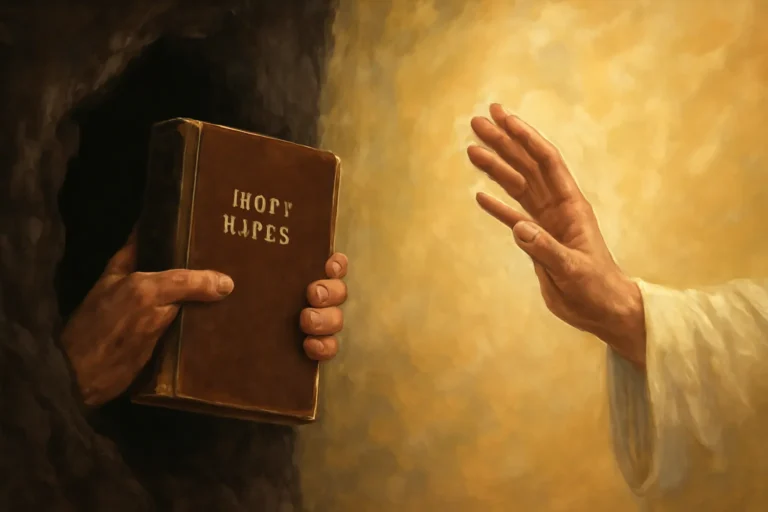
Throughout this discussion we will repeatedly encounter a standing question: how do we know the Holy Bible is true?
The inquiry can be approached from several angles—textual integrity, historical reliability, prophetic
accuracy, eyewitness testimony, and empirical corroboration—each contributing a facet to the larger
mosaic. By using variations of this central question, we can broaden the semantic field and maintain
clarity about what it means to claim that the Bible, and especially the person of Jesus, is trustworthy.
In what follows, we will proceed with an emphasis on historical inquiry, theological interpretation, and practical faith
as they converge on the figure of Christ. The aim is not merely to defend a doctrine but to illuminate
why the claim of Jesus matters in a world of competing narratives and shifting moral horizons.
Foundations for a Case Concerning the Bible
To engage the question of truth that surrounds the biblical text, we begin by clarifying what counts as
evidence in religious discourse. In the Christian tradition, Scripture is not a
disconnected library of ancient documents; it is understood as a cohesive witness to God’s action in
history, culminating in the person of Christ. The biblical texts themselves invite readers to encounter
truth through faith, reason, and community discernment.
Two complementary horizons: history and faith
The first horizon is empirical and historical: can ancient documents be trusted? The second horizon is
existential and theological: does the message produce a change in life, allegiance, and worldview? The
best case for Christ blends both horizons, showing that a credible history can give birth to a credible faith.
When we ask how do we know the Bible is true in a historical sense, we are not asking
merely whether every sentence is perfectly literal, but whether the witness of the text aligns with the
broader historical record, the memory of communities, and the experiences of generations that have
encountered the risen Christ. In this sense, the claim is both about truthful reporting and
about the transformative power that follows faith.
This article treats the Bible as a corpus that includes four primary dimensions: its historic origins, its
literary integrity, its prophetic fulfillment, and its
interpretive significance for life, worship, and ethics. The case for Christ is thus
not merely an intellectual dossier but a holistic invitation to encounter the God who reveals Himself in
history.
Historical Reliability of the Biblical Text
Textual transmission and manuscript evidence
One of the most robust strands in the case for Christ concerns the manuscript tradition of the
New Testament and Old Testament books. The question often heard is how do we know the holy bible is true?
or, more specifically, how can we trust the text that has come down to us through centuries of transmission?
The answer lies in the convergence of multiple streams of evidence:
- Manuscript abundance: The New Testament has a wealth of manuscripts—far more than are available for most other ancient works. This abundance allows scholars to compare texts and identify variants with a high degree of confidence.
- Early dating: Many early papyri and uncials date to the second and third centuries, providing windows into the original wording that help establish reliability.
- Textual variants: Most variants are spelling or minor punctuation differences; none threaten core doctrines or the narrative arc of the Gospel accounts.
In this light we can ask how do we know the Bible is true in its transmission—the answer is
that the material record demonstrates careful preservation, rigorous copying practices, and a shaping of
the text that consistently serves the message about Christ. The existence of variant readings does not
undermine the overall trustworthiness; rather, it points to the ongoing scholarly work that preserves
the integrity of the text while acknowledging human fallibility.
Archaeology and corroboration
Beyond manuscripts, archaeology provides corroboration in places where the biblical narrative intersects with
material culture. While archaeology does not prove theological claims, it does illuminate the world in which
biblical events occurred. For instance, discoveries surrounding ancient Near Eastern politics, city walls,
and inscriptions help situate biblical settings in a recognizable historical context.
A parallel line of inquiry asks what external evidence supports the biblical account? Critics often
demand citations from non-biblical sources for every event. While that standard is not always achievable, there
are several strong touchpoints:
- Inscriptions and stelae that reference kings, cities, or regions mentioned in Scripture (e.g., the Tel Dan Stele mentioning the “House of David”).
- Administrative records and inscriptions that corroborate the existence of places like Jerusalem, Jericho, and other sites.
- Cross-textual confirmation in contemporaneous literature that shows similar cultural norms, religious practices, and social realities.
When we ask how do we know the Bible is true from archaeology, the response is often that the
field offers confirmatory cues rather than a standalone proof. The biblical text and this external data
illuminate one another, creating a more coherent picture of the ancient world in which Christ emerged.
Historicity of the Gospel accounts
The four Gospels—Matthew, Mark, Luke, and John—are the central narrative witnesses to the life of Jesus. A fair
assessment asks whether these accounts reflect actual events and credible memory. The synchronization among the
Gospels, while not perfectly identical in every detail, reveals a remarkable convergence on key events, core
teachings, and the arc of Jesus’ ministry, death, and resurrection.
In response to the question how do we know the gospel accounts are historically reliable, scholars point
to criteria such as multiple attestation (similar events appearing in more than one Gospel), contextual coherence
(the events fit historical and social realities of first-century Galilee and Jerusalem), and the presence of
embarrassing or costly details that strengthen credibility rather than idealizing the narrative.
Textual integrity and genre awareness
The Bible spans multiple genres—narrative history, poetry, prophecy, parable, epistle, and apocalyptic literature.
The question how do we know the Bible is true given such diverse genres invites a method that honors
genre-appropriate interpretation. A responsible approach recognizes the intent of each book, the literary
devices employed, and the way later writers reflect on earlier events. This nuanced reading helps guard
against flat, literalist readings that distort the texture of the text while also resisting an anachronistic
skepticism that discounts any historical claim.
Eyewitness Testimony and Apostolic Witness
A central component of the case for Christ is the claim that the earliest Christians were not inventors of a
myth but bearers of eyewitness testimony about Jesus and his resurrection. The New Testament letters and the
Gospels reflect a community formed by persons who encountered Jesus in specific, historical ways and who
proclaimed the message within a shared memory of events.
Apostolic proclamation and early Christian memory
The earliest Christian confession centers on Jesus as the Messiah and as the one who was crucified and risen.
This proclamation appears in the letters of Paul and in the Synoptic Gospels within a generation of the
events themselves. The question how do we know the early Christian memory is reliable invites a
careful look at the social and cultural context of early Christian communities, their criteria for
recognized teachings, and the consistency of their witness regarding resurrection and mission.
External attestation and cross-cultural reception
Beyond the pages of Scripture, a few contemporaneous or near-contemporary sources acknowledge Jesus and the
movement that formed around him. Non-Christian writers occasionally mention Jesus in ways that, though not
exhaustive, nonetheless corroborate the historical peripheral facts: that Jesus existed, that there were
followers who spoke of his deeds, and that the movement persisted after his death.
- Non-Christian references to Jesus as a real figure who attracted followers.
- Early Christian creeds and liturgies that preserve core assertions about Jesus’ death and resurrection.
- Community consistency across diverse Christian communities that maintained a shared memory of Jesus’ life and message.
In relation to the query how do we know the apostolic witness is trustworthy, the answer emphasizes
the endurance of the core testimony through a challenging history, the care with which early communities
preserved their memories, and the way the message continues to resonate with people who encounter the risen
Christ today.
Prophecy and Fulfillment: The Case for a Coordinated Plan
A significant strand in the case for Christ rests on the sense that the life of Jesus and the events surrounding
his ministry fulfill certain biblical predictions. When readers encounter passages that Christians interpret as
pointing toward a Messianic figure, questions arise about whether these are deliberate later interpretive
insertions or genuine predictions embedded in the text.
Representative prophecies and their claims
The biblical tradition presents multiple lines of prophetic material that some readers see as pointing toward
Jesus. For example, passages that Christians interpret as Messianic in nature speak of a ruler who will come
from Bethlehem, suffer for others, and establish a new, enduring reign. The case for Christ often highlights
interpretations such as:
- Micah 5:2 and the birth in Bethlehem as a location for the Messiah’s birth.
- Isaiah 7:14 and the motif of a child-bearing sign that Christians relate to the Virgin Birth narrative.
- Isaiah 53 and the portrayal of suffering servant imagery that some read as anticipatory of Jesus’ crucifixion.
- Psalm 22 and the depiction of cruciform suffering that has been linked to Jesus’ death and its public perception.
The question how do we know the Bible is true in its prophetic dimension invites careful
exegesis, acknowledging both the interpretive framework of faith and the historical-literary milieu. In
evaluating fulfilled prophecy, readers often distinguish between precise, verifiable prodigies and thematic
or typological correspondences that illuminate a broader theological narrative. The strength of the case
rests not on a single verse but on a pattern that aligns multiple texts toward a consistent christological
trajectory.
The Resurrection: A Historical Key to the Christology of the Bible
The resurrection of Jesus is frequently presented as the pivotal claim that gives coherence to the Gospel
accounts and the overall Christian hypothesis about God’s redemptive justice. While believers regard it as a
divine act witnessed by communities, many scholars approach it as a historical claim that warrants
consideration within the framework of historical-method inquiry.
Minimal facts and historical plausibility
A common strategy in the discussion of the resurrection is to appeal to what historians call the minimal facts
approach: focusing on a small set of claims that most scholars across traditions tend to agree upon, such as:
- Jesus died by crucifixion under Pontius Pilate.
- Early followers reported experiences of Jesus alive after death.
- The disciples’ willingness to face persecution and martyrdom for their testimony.
The question how do we know the resurrection is true in historical terms centers on how these
minimal facts are explained. Proponents argue that a historical crisis best accounts for the sudden
transformation of a dispersed group into a bold, mission-driven movement centered on Jesus’ tomb
being empty and on post-crucifixion appearances. Critics may propose alternative explanations, such as
legend development or spurious sightings. The challenge, then, is not only to weigh competing theories
but to assess which explanation yields the most coherent narrative given the known data.
Eyewitnesses and communal memory after Easter
The early Christian community anchored its proclamation in a sequence of remembered events: the Resurrection
appearances, the empty tomb, and the ongoing ministry of the risen Christ in the life of the church. For many
readers, the consistency of this memory across multiple independent sources is persuasive in the sense that
it reflects a common experience—one that believers insist was transformative and enduring.
When we ask how do we know the holy bible is true in relation to the resurrection, the discussion
turns to how the New Testament writers present the event, how they interpret its meaning, and how the
earliest churches transmitted that interpretation through time. The claim is not merely about a single miracle
but about a pattern of experience that catalyzed a movement that continues to bear witness across cultures.
External confirmation and philosophical resonance
Some argue that the resurrection resonates with broader questions about meaning, justice, mercy, and the
purpose of human life. In this sense, the claim bears weight not only as a historical datum but as a
philosophical hinge for a life oriented toward God. The question how do we know the resurrection is true
is therefore answered not only by evidence but by the way the claim shapes the imagination and moral
intention of readers and communities.
Jesus’s Historicity and the Core of Christian Credibility
The historicity of Jesus—the claim that Jesus of Nazareth lived, taught, performed acts understood as
miraculous by his contemporaries, was crucified, and appeared after death—serves as the hinge on which
the Christian claim turns. The case for Christ rests on a combination of textual evidence, historical
plausibility, and the interpretive weight of the risen Jesus for communities across generations.
Non-biblical sources and historical memory
While non-biblical references to Jesus are not exhaustive, they provide a scaffold for understanding Jesus’
place in history. Writers from the ancient world occasionally mention Jesus or early Christians in passing,
offering a corroborative backdrop to biblical testimony. The question how do we know the historical Jesus is credible
invites careful examination of these sources, their purposes, and what they can reliably tell us about the
social and political world in which Jesus lived.
Criteria for judging historicity
Historians employ methods such as contextual coherence, multiple attestation, and dependency analysis to
evaluate ancient records. When applied to the Gospel accounts, these criteria suggest a convergence toward
a historically grounded portrait of Jesus, even as interpretive layers reflect the faith commitments of
early Christian communities.
The overarching question how do we know the Bible is true in light of Jesus’s historicity invites
a balanced assessment that honors the historical data while acknowledging the theological claims that arise
from faith in Christ. The credible historical portrait of Jesus is often paired with a robust claim about
who Jesus is, a claim that is tested anew in every generation by study, prayer, and communal discernment.
Interpretive Frameworks: Reading Sacred Text with Care
Interpreting the Bible well requires more than proof-texting. It calls for a responsible hermeneutic that
respects genre, historical context, and the reader’s own situatedness. Different Christian traditions may
emphasize different aspects of Scripture, yet there remains a shared conviction that the Bible provides a
trustworthy account of God’s activity in the world.
How do we know the Bible is true when we consider its message and its message’s fruits?
The question shifts from a narrow inquiry about factual accuracy to a broader assessment of
truthfulness in life. If a text consistently forms communities that embody love, justice, mercy,
and integrity, many readers will judge that text to be true in a practical, living sense. This experiential
dimension does not negate historical claims but enriches them, inviting readers to test the claims in
everyday life.
Scripture’s unity without uniformity
The Bible spans centuries and multiple genres, yet believers often speak of its unity as a coherent
witness to God’s plan. The case for Christ involves appreciating how diverse authors, audiences, and
literary forms converge around the figure of Jesus and the meaning of his life, death, and resurrection.
- Canon formation: How the books came to be recognized as authoritative within the faith community.
- Early creedal statements: Short, memorable summaries that preserve core beliefs about Jesus.
- Continued retelling: The way stories about Jesus were told and retold in diverse settings while retaining essential features.
Practical Faith and Transformative Power
The test of any religious claim is not only its historical coherence but also its moral and spiritual
fruit. The case for Christ often highlights personal transformation—lives changed by the
encounter with the message of Jesus, the grace it proclaims, and the community it forms. The biblical text
speaks not only to the head but to the heart, inviting readers into a relationship that reshapes priorities,
desires, and commitments.
Stories of change and communal witness
Across cultures and centuries, countless people report profound changes: newfound purpose, a deeper sense of
forgiveness, and a renewed commitment to love others, even when that love comes at a personal cost. The
narrative of Christ, then, is not merely an abstract proposition; it represents a living invitation to a
different kind of life.
Ethical coherence and the call to justice
A credible case for Christ also includes consideration of ethical teachings attributed to Jesus and how they
align with the witness of the biblical text. The Sermon on the Mount, for example, has provided a long-standing
framework for evaluating social ethics: mercy, purity of heart, peacemaking, and accountability to God.
- Love of neighbor and opposition to violent retaliation
- Humility and service for the vulnerable
- Truth-telling within personal and public life
In evaluating the truth claims of Scripture and their implications for life, readers are invited not only to
assent to propositional statements but to participate in a way of living that embodies the beliefs they confess.
Objections, Challenges, and Thoughtful Responses
A robust case for Christ anticipates questions and objections. Rather than avoiding difficulty, thoughtful
engagement seeks to address concerns with charity, clarity, and careful argument. The aim is not to
crystallize certainty at the expense of charity but to maintain intellectual honesty while inviting a deeper
spiritual exploration.
Contradictions and harmonization
Critics often point to perceived inconsistencies within the biblical text. Proponents argue that many such
tensions arise from differences in genre, perspective, and emphasis rather than from intentional falsification.
A careful approach distinguishes between straightforward factual claims, literary devices, and theological
interpretation. The question how do we know the Bible is true when faced with alleged contradictions
is best answered by careful exegesis, consultation of scholarly resources, and humility about the limits of human
translation and memory.
Science and biblical interpretation
Some readers worry about apparent conflicts between biblical accounts and scientific understanding. A
responsible approach holds that science seeks to explain natural phenomena, while biblical texts primarily
address questions of meaning, purpose, and the moral ordering of creation. The question how do we know the holy bible is true
can be reframed as: how do we interpret sacred literature in a way that respects scientific methods while
honoring the theological claims it presents?
Morality and divine commands
Debates about moral instruction in Scripture—especially where ancient norms differ from contemporary values—are
a persistent site of discussion. The ongoing task for readers is to distinguish between timeless moral principles
and culturally conditioned practices, applying enduring ethical commitments to modern contexts in ways that are
faithful to the broader Biblical witness.
Paths for Engaged Study and Personal Inquiry
A case for Christ is strengthened by disciplined study, guided reflection, and community conversation. Below are
practical avenues for pursuing a credible understanding of the Bible’s claims.
Guided reading plans
- Historic-first approach: Read the Gospels and Acts with attention to the early Christian community and its
preaching about Jesus. - Thematic approach: Trace themes such as kingdom, forgiveness, faith, and salvation across both Testaments.
- Prophecy-to-fulfillment approach: Follow prophetic passages and their New Testament interpretations to see how
early Christians read their scriptures in light of Jesus.
Engaging with scholarship
Virtuous inquiry involves listening to a range of perspectives, including those within orthodox Christian
traditions and those from critical scholarship. An open-minded reader can encounter a richer portrait of
biblical reliability by weighing arguments on textual, historical, and theological grounds.
Practical exercises
- Compare a New Testament gospel with parallel accounts to notice similarities and differences in details.
- Analyze a prophecy-related passage and track its use in subsequent Christian writings.
- Discuss how the ethical teachings of Jesus translate to contemporary social issues with humility and curiosity.
Throughout the process, readers should ask themselves: how do we know the Bible is true in practice?
The aim is not to close the question with a single verdict but to keep the doors of inquiry open to evidence,
interpretation, and personal encounter with the message of Christ.
Conclusion: A Cohesive Case for Christ
The case for Christ is not reducible to a single argument or merely to proof of historical events. It is a
multifaceted undertaking that invites rigorous examination of textual integrity, historical reliability,
prophetic interpretation, and experiential transformation. The question how do we know the holy bible is true
is answered in multiple registers: by the corroborative strength of manuscript and archeological evidence, by the
coherence of apostolic testimony, by the perceived fulfillment of ancient prophecies, and by the enduring power
of Christian faith to shape lives for good.
For many readers, engaging with the biblical narrative about Christ leads to a distilled, robust faith that is
both reasonable and hopeful. The journey toward truth in this domain is not a sterile intellectual exercise;
it is a spiritual adventure that invites trust, discernment, and a courageous openness to what God may reveal
through Scripture, through history, and through the ongoing witness of the church.
In the final assessment, the question how do we know the Bible is true persists as a guiding
inquiry. The answer, at its best, points toward a text that bears consistent witness across ages, a life-altering
message embodied in Jesus, and a community that continues to seek truth with humility and hope.
May this exploration not end with certainty alone, but with a continued pursuit of truth, a deepened love for God,
and a renewed commitment to live out the implications of Christ’s life, death, and resurrection in service to
others. The Case for Christ remains an invitation to listen, learn, and respond—faithfully, thoughtfully, and with
a hopeful anticipation of what God might reveal next in the story.
Endnote: While the discussion above emphasizes a broad, integrative approach, readers are encouraged to
consult diverse sources, engage respectfully with differing viewpoints, and practice discernment as they explore the
claim that the Holy Bible is true in its witness about Christ and God’s saving work in the world.