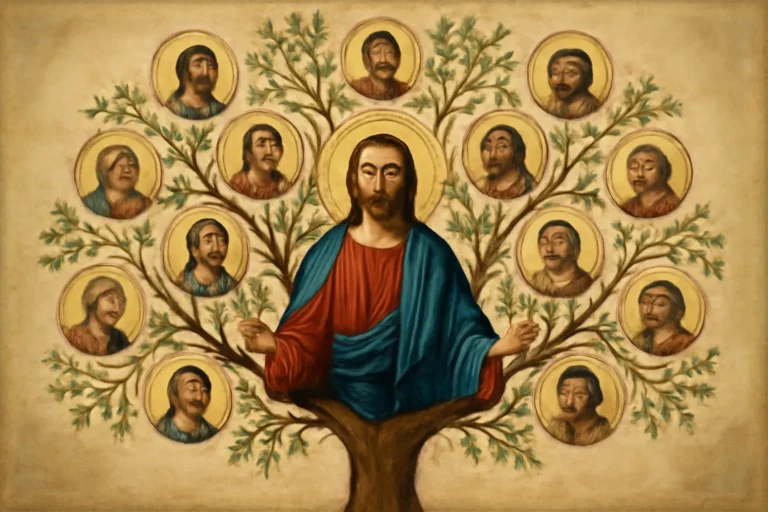

Introduction: Mary as a Teacher of the Heart
In the tapestry of Christian devotion, Mary—Mother of Jesus—appears not merely as a figure of veneration, but as a living teacher whose life embodies
spiritual truths that can be studied, reflected upon, and lived out in everyday faith. This article explores Mary’s Three Life Lessons: Believe, Treasure, and Let Go.
Each of these lessons operates within a distinct yet deeply connected spiritual arc: the call to trust in God’s plan, the discipline of valuing what is most sacred,
and the courageous practice of releasing control in surrender to divine will. By examining Mary’s biblical narrative, her liturgical role, and the
theological interpretations that have grown around her, we gain a richer understanding of how faith matures when these three dispositions are cultivated in
tandem.
The aim of this article is educational and theological, offering interpretive insights, historical context, and practical
invitations for personal growth within a religious life. We will travel through the scriptural foundations of belief, the Marian practice of treasuring the
things of God, and the contemplative art of letting go—each framed as a life skill that can strengthen prayer, deepen obedience, and nurture a more
generous and compassionate discipleship. Throughout, the focus remains on Mary’s example as a model for believers who seek to ground
their trust in God, to prize what God prizes, and to surrender their own plans to the divine wisdom that guides history, salvation, and daily living.
The Call to Believe: Mary’s Faith in the Annunciation and Beyond
Belief as receptivity to God’s invitation
The Gospel of Luke presents Mary at the threshold of a leap of faith. The Annunciation narrates the moment when the angel Gabriel declares that she
has found favor with God and will conceive a Child by the Holy Spirit. In this moment, Mary does not presume to understand all the details. Instead, she responds
with a concise, radical act of assent: Let it be to me according to your word (Luke 1:38). This is not a naïve credulity but a mature
willingness to entrust her life to the divine plan, even when the reasons appear beyond comprehension. Her reply embodies the core of belief as
trust anchored in God’s goodness, a trust that does not demand a diagram of the future but rests in the fidelity of the One who calls.
In Marian devotion, belief is often interpreted not merely as mental assent but as an ongoing posture: listening, pondering, and choosing again
to align one’s will with God’s will. Mary’s belief is tested and deepened not only in the moment of the annunciation but across the arc of her life—at the
visitation, in the song of Magnificat, at the presentation in the temple, and most starkly at the cross. The Christian tradition emphasizes that
true belief endures through doubt, adversity, and the private questions that arise when the path of faith takes a person through sorrow as well as joy.
For readers today, the call to believe invites a set of practices that cultivate faith as a living habit rather than a transient feeling:
- Engage in daily listening to Scripture and prayer, inviting the Holy Spirit to illuminate truth in one’s heart.
- Invite honest dialogue with God about fears, questions, and hopes—as Mary did by carrying both the message and the human struggle within her.
- Seek community cues from the Church’s memory and teaching, allowing faith to be nourished by liturgy, sacrament, and the witness of others.
- Practice acts of obedience that may not be fully understood in the moment, trusting that the divine plan carries a purpose that surpasses
human comprehension.
The broader theological project surrounding belief in Mary also includes understanding her role as Theotokos, the God-bearer,
which underscores that belief in the divine plan does not negate human dignity but elevates it. The Marian narrative thus becomes a classroom for
faith that encounters mystery with reverence, questions with candor, and action with courage.
Treasure: What Mary Treasured in Her Heart
Treasuring as valuing what God values and holding sacred memory
The Gospel of Luke repeatedly uses the language of memory, contemplation, and treasured signs in Mary’s experience. Luke 2:19 notes that Mary pondered
these things in her heart. In that line, treasure is not a mere feeling of affection but a deliberate, interior keeping—an act of
custody over divine revelations, word-fringed moments, and the Spirit’s movements in ordinary life. The Mary who treasures remembers her experiences,
repeats their meaning in song, and refrains from rash public judgments. The Magnificat itself is a field of treasured revelations: God’s mercy is shown
to the lowly, the hungry are fed, the rich are sent away empty, and the promises made to Abraham and his descendants are extended to all generations.
Within Marian theology, treasure can be read as a reciprocal discipline: God’s treasures become the believer’s own, shaping values and
priorities. If belief focuses on assent to divine invitation, treasure centers on the internal appraisal of what is most precious in life. The saints
often describe treasure as the treasure of grace—unearned gifts of divine presence, forgiveness, and call. In Mary’s case, the treasure is twofold:
- Divine presence: the awareness of God’s nearness in moments of vulnerability and obedience.
- Divine purpose: the sense that a life given to God’s plan has significance that transcends ordinary outcome.
Practical expressions of treasure in daily faith include:
- Keeping a journal of moments where grace appears, spiritual insights, or unexpected consolations that illuminate one’s path.
- Carrying in memory the lessons of Scripture and the Church’s tradition, so that decisions are conditioned by the longer vision of God’s
salvation history. - Valuing modest, faithful service as a treasure worth more than status, wealth, or prestige, echoing Mary’s own preference for hidden,
humble obedience.
The practice of treasure also invites believers to examine what “counts” as wealth in a spiritual sense. To treasure what God treasures is to align
one’s ambitions with divine economy—where mercy, justice, and spiritual fruit bear a greater weight than personal achievement or possession.
Let Go: The Pattern of Detachment, Surrender, and Open Hands
Letting go as trustful relinquishment of control to God
A fourth dimension of Mary’s life—often highlighted in devotional writing and spiritual theology—is the art of letting go. This is not passivity but a
decisive form of faith that recognizes the limits of human planning in light of God’s sovereignty. Mary’s life embodies a concrete path of release: she
accepts the divine summons, she carries the burden of social judgment, and she confronts the gaping sorrow of the crucifixion with unwavering fidelity.
In each moment, she models an open-handed receptivity to God’s will, an attitude that can be examined and emulated by believers who long to live in
greater interior freedom and trust.
The Gospel narrative often presents letting go as a release from fear, control, or ego-centered ambitions. When Mary visits Elizabeth, she is not
apportioning blame or defending her status; she is aligning with God’s gracious intervention in human history. In the later events, at the foot of the
Cross, Mary’s faithfulness becomes a form of costly fidelity. She does not cling to a desired outcome but remains present to God’s plan, even when
it leads into pain. This is why letting go in the Marian tradition is understood not as resignation but as courageous fidelity to love
and truth.
Theological reflection on Let Go is often linked to the call to detachment in Christian spirituality. Detachment does not imply indifference;
it means freedom from the dominion of possessions, status, or personal safety as ultimate goods. It enables the soul to receive grace, to act with
humility, and to trust that God’s purposes will unfold in ways that surpass immediate human comprehension. In Mary’s case, detachment is tied to
the willingness to say “yes” to God’s plan, even when that plan requires a life of uncertainty, humility, and sacrifice.
Marian doctrine, devotion, and the interpretive tradition
Across the centuries, the veneration of Mary has been a fertile ground for reflecting on belief, treasure, and let go.
The early Church Fathers emphasized her unique role in salvation history, while medieval and modern theologians have explored the moral and spiritual
implications of her responses to God. The title Theotokos, affirmed at the Council of Ephesus in 431, anchors belief in Mary’s intersection with the
mystery of the Incarnation—the moment when God took human form in Christ. This doctrinal stance shapes devotional practices that invite the faithful
to imitate Mary’s faith, to honor what she treasured, and to adopt a posture of surrender before God.
In liturgical life, Marian feasts and prayers form a living catechesis on the three lessons. The Magnificat, often celebrated in Marian
canticles, expresses a theology of treasure as the inversion of worldly values—God’s mercy to the humble and the exaltation of those
who trust in divine promises. Marian devotion also cautions against misrepresenting Mary as a rival to God; rather, she is a model of
transformative discipleship who guides believers toward a deeper, more authentic relationship with the Lord.
Theological discussion frequently distinguishes between Mary’s unique maternal vocation and the universal call to faith. It is crucial to note that
belief in Mary does not supplant belief in Christ but often points to the Word made flesh. The Marian tradition invites believers to
contemplate how to hold together a reverent veneration with Christ-centered worship, recognizing that Mary’s life offers a particular lens through
which the mysteries of faith can be contemplated and lived.
Practical Paths for Belief, Treasure, and Letting Go in Daily Spiritual Life
Guided practices to cultivate the three life lessons
The following practical paths are designed to help a reader integrate the lessons of Believe, Treasure, and Let Go
into daily rhythms, community life, and personal reflection. They balance doctrinal understanding with experiential spirituality, so that the teachings
become tools for ongoing conversion.
- Belief in daily life:
- Begin each day with a simple act of assent to God’s benevolent plan—even if the mechanism of that plan is not yet clear.
- Keep a fidelity journal where moments of grace are recorded, prayers are refined, and questions are named with honesty.
- Engage in a weekly faith conversation with a mentor, friend, or small faith group, sharing how belief is shaping choices and attitudes.
- Treasure in heart and memory:
- Identify a daily or weekly moment to reflect on what has been a source of grace, and write a short reflection on why it matters.
- Practice discernment in finances, time, and resources by prioritizing acts of mercy, generosity, and service—treasures that endure beyond material wealth.
- Keep sacred spaces—an icon corner, a prayer chair, or a shrine of personal meaning—as places to pause, treasure, and listen.
- Let Go in practical detachment:
- Practice open-handedng with plans and possessions, deliberately releasing one thing each week to seek freedom for God’s purposes.
- Develop a contemplative routine that invites silence, so that one can discern God’s voice amid competing demands.
- Engage in acts of surrender through obedience to a community’s discernment, especially when the path requires humility, patience, or risk.
To help integrate these paths, communities can design programs around Marian themes. A parish might offer a Belief track focusing on scriptural
foundations for trust, a Treasure track exploring Marian memory, contemplation, and the value of grace, and a Let Go track
emphasizing discernment, detachment, and compassionate action in service. In educational settings, teachers and students can examine biblical passages,
patristic writings, and contemporary theologians who illuminate Mary’s example in constructive ways.
Historical and Liturgical Perspectives on the Three Life Lessons
Marian feast days, catechesis, and the shaping of belief, treasure, and surrender
Marian feasts such as the Immaculate Conception, the Assumption, and the Nativity, among others, offer liturgical occasions to reflect on the life
lessons. The liturgy invites believers to adopt Mary’s posture—receptivity, contemplation, and fidelity—within the rhythm of prayer, sacraments,
and communal worship. In preaching and catechesis, pastors often anchor sermons on “believing,” “treasuring,” and “letting go” to guide the
faithful toward deeper spiritual formation.
Theological educators frequently emphasize that Mary’s uniqueness does not isolate her from the human condition. Rather, her responses to God’s
invitations demonstrate what faith looks like lived out: a concrete decision to believe when reason cannot fully justify; a choice to treasure God’s
promises in the face of ordinary life and extraordinary events; a courageous letting go that trusts God’s design for salvation, history, and
personal vocation. In this sense, Mary’s life becomes an accessible model for anyone seeking to practice virtue in a world marked by complexity and change.
Integrating the Lessons into Spiritual Formation
Building a curriculum for personal and communal growth
For individuals seeking to internalize these lessons, the following integrative approach can be helpful:
- Believe as a daily discipline: commit to a habit of listening for God’s voice and responding with courage even when clarity is scarce.
- Treasure as a spiritual anthropology: examine what you prize, aligning your inner treasury with grace and charity.
- Let Go as a liberating practice: cultivate freedom from fear and attachment, embracing a gospel-shaped perspective on planning and
outcomes.
Communities can accompany individual journeys by offering retreats centered on Marian contemplation, small groups for mutual encouragement, and public
worship that consistently foregrounds the themes of belief, treasure, and surrender. Educational programs may include lectures on Marian theology, the
biblical foundations for Mary’s role, and case studies of how saints throughout history have embodied these life lessons in times of crisis, joy, or
everyday faithfulness.
Frequently Asked Questions About Mary’s Life Lessons
How do these lessons relate to Jesus and Christian discipleship?
Mary’s life is deeply intertwined with the person and mission of Jesus. Her example of belief helps believers trust in God’s plan for
the Incarnation and in the broader arc of salvation. Her treasure reflects how the early Church valued the mysteries of God’s action in the
world, prompting a memory of grace that informs present faith. Her let go—her surrender to God’s will—parallels Jesus’ own exemplar of
obedience in the Garden and on the Cross. Collectively, these lessons illuminate Christian discipleship as a rhythm of belief, gratitude, and surrender
that bears fruit in love for neighbor and fidelity to God.
What are some practical signs that a person is growing in these three areas?
Signs of growth might include a more consistent habit of prayer and reflection (belief), a sharpened discernment about what matters most (treasure),
and a greater willingness to relinquish control for the sake of divine purposes (let go). A mature devotional life may show a growing alignment between
actions and the values of the Gospel, a readiness to serve in humility, and a posture of gratitude that recognizes God’s initiative in daily events.
Can these lessons be taught to children and youth?
Yes. Age-appropriate narratives, activities, and family faith practices can introduce the core ideas. For example, stories of Mary’s courage, her
contemplation of God’s word, and her faithful presence at pivotal moments can be translated into moral and spiritual lessons for younger audiences.
Visual arts, songs, and interactive catechesis can help children grasp the concepts of believing, treasuring, and letting go in concrete, relatable ways.
Conclusion: Living Mary’s Three Life Lessons in Modern Faith
Mary’s example remains a gift to believers who seek to cultivate a life shaped by Belief, Treasure, and
Let Go. By meditating on the Annunciation, revisiting the memory of what God has done, and practicing discernment and surrender,
Christians today can deepen their relationship with God, strengthen their witness in the world, and participate more fully in the mystery of salvation.
The three life lessons—Believe, Treasure, and Let Go—form a coherent spiritual pedagogy that invites
believers to respond to God with faith, to prize what matters most in God’s economy, and to release what hinders the freedom of love. In Mary’s life,
these are not abstract ideals but concrete acts that shape a person’s heart and shape a community’s life. As you reflect on her story, may you be helped
to foster a deeper belief in God’s promises, a more faithful treasure for divine gifts, and a freer letting go
that allows grace to work through your hands, your words, and your days.
Note: This article uses variations and semantic expressions of the three core life lessons—believe, treasure, let go—throughout the text to enhance topical breadth
and maintain a cohesive focus on Marian theology and practice. The aim is to provide a robust, interconnected meditation on how Mary models these virtues in
a way that can be adopted by individuals and communities seeking a more integrated spiritual life.