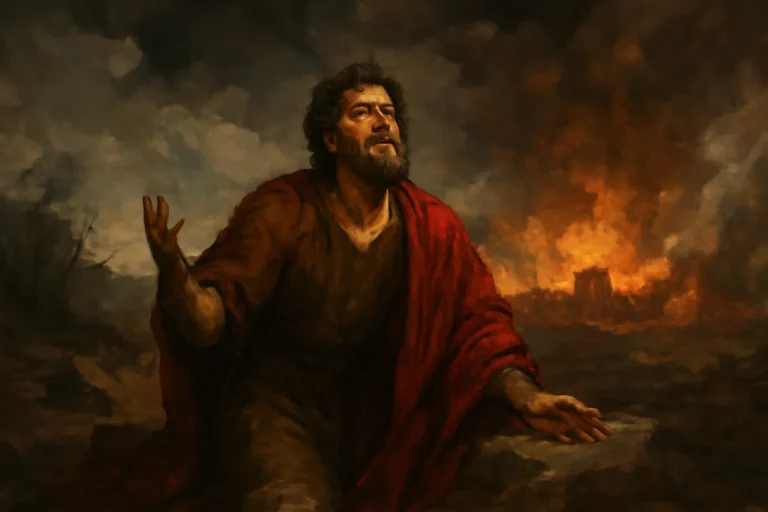

Introduction: The Vital Call to Hope in God
Across centuries and cultures, the language of hope has repeatedly risen as a countercurrent to fear, despair, and uncertainty. Yet in the religious landscape, a distinctive form of hope emerges—hope in God. This is not mere optimism or wishful thinking; it is a theologically robust confidence grounded in the character, promises, and faithfulness of the Almighty. In Scripture, hope in God is described as an active posture of the heart—an anticipation that shapes present life while casting a future-oriented light on suffering, injustice, and human finitude. It anchors the soul, sustains faithful obedience, and invites a patient expectancy that God will fulfill what He has declared.
This long-form exploration intends to be comprehensive yet accessible, drawing from biblical texts across the canon, weaving interpretive threads from theology and liturgy, and offering practical ways to cultivate hope in God in daily life. We will consider the semantic breadth of hope—how it is expressed in various idioms of Scripture, the relationship between hope, faith, and love, and how hope functions within suffering, justice, and eschatology. By surveying both Testaments, we can appreciate the unity of this virtue and its transformative potential for individuals, communities, and the world at large.
Biblical Foundations: The Grounding of Hope in God
Old Testament foundations: Hope rooted in covenantal faithfulness
The Hebrew Bible presents hope as a trusting expectation built upon God’s covenantal commitment. The people of Israel learned to anchor their souls in the faithfulness of Yahweh, who is described as a rock, a fortress, and a steadfast God who remembers His promises. In the texture of Hebrew poetry and prophetic books, hope is often woven with lament, praise, and obedience, but its source remains the same: God’s own character and redemptive purposes.
- Hope in God as refuge: The psalmist invites the weary to wait for the Lord, who will renew strength and grant renewed courage (for example, Psalm 27:14; Isaiah 40:31 echoes this living stance).
- Hope as anticipation of deliverance: The faithful expect divine rescue from oppression, exile, and peril because God has shown mercy in the past and promises future faithfulness.
- Hope as assurance amid suffering: The prophetic voice often reframes present pain through the lens of God’s ultimate restoration and justice (e.g., Lamentations, parts of Isaiah and Jeremiah).
New Testament foundations: Hope realized in Christ and extended to all
In the New Testament, hope in God expands and intensifies as the gospel revelation comes through Jesus Christ and the spreading of the Spirit. Hope is not diminished by difficulty; instead, it is clarified through the person and work of Christ, laying the groundwork for a robust Christian anthropology that understands suffering, faith, and the world under God’s sovereign lordship.
- Living hope is proclaimed in 1 Peter 1:3, where believers are described as born into a living hope through the resurrection of Jesus Christ.
- The God of hope is named in Romans 15:13, inviting believers to abound in hope by the Holy Spirit’s power.
- Hope and faith are related but distinct: faith rests on present realities and unseen futures; hope anticipates what faith expects as already certain in God’s economy (Hebrews 11; 1 Corinthians 13).
The apostolic writers often pair hope with endurance, patience, and joy, suggesting that hope is not a passive sentiment but a dynamic trust that bears fruit in a life oriented toward God’s purposes. The Christ-event becomes the focal point of hope in God, because it reveals God’s ultimate plan for reconciliation, justice, and new creation.
Dimensions of Hope: Theological Streams and Semantic Varieties
Hope as virtue: The theological architecture of confident trust
In Christian theology, hope is commonly treated as one of the theological virtues alongside faith and love. It is not simply optimism; it is a virtue that orders the heart toward God’s promises and aligns desires with divine ends. The virtue of hope empowers believers to persevere in obedience, even when present realities are painful or ambiguous.
- Expectation rooted in promise: Hope rests on God’s promises and is sustained by patient anticipation.
- Endurance through trial: Hope gives resilience, enabling believers to press forward when outcomes are uncertain.
- Future orientation with present obedience: Hope motivates current acts of justice, mercy, and worship as a response to what God has declared and will accomplish.
Hope as assurance and confidence: The anchor for the soul
The metaphor of the anchor of the soul appears in Hebrews, suggesting that legitimate hope holds fast in the face of stormy seas. This image is not merely comforting; it describes a substantive confidence in God’s faithfulness, especially when circumstances threaten to erode certainty. Hope, in this sense, acts as a stabilizing force that enables believers to maintain integrity, pursue righteousness, and worship with sincerity.
Esoteric to practical: Eschatological hope and day-to-day life
Eschatology often provides the horizon for hope in God. Believers are invited to live with a posture of expectation regarding the culmination of God’s redemptive plan—new heavens, new earth, and the full revelation of justice and peace. Yet this future-oriented hope must be translated into ethical living now: acts of mercy, advocacy for the vulnerable, and a worshipful use of time and resources reflect an already-not-yet reality.
Hope in Suffering: Navigating Pain with God-Centered Expectation
Biblical case studies: Job, David, Jeremiah, and Paul
Suffering is a ubiquitous human experience, and the Bible meets it with a robust vocabulary of hope in God. Job’s lament is deeply honest about pain, yet the narrative ultimately returns to God’s sovereignty and wisdom. The psalms of lament, like those of David, model how to carry sorrow while clinging to God’s goodness. The prophets hold out a vision of restoration that shuttles the heart from despair toward trust. The apostle Paul, in the New Testament, speaks of hardships that cannot separate believers from the love of God and how such trials refine hope and perseverance.
- Honest lament as discipline of hope: Lament acknowledges reality while maintaining confidence in God’s character and purposes.
- Hope as memory: Remembering God’s past faithfulness sustains present trust.
- Hope as perseverance: Trials produce endurance that deepens spiritual maturity.
Lament and praise: The liturgical rhythm that sustains hope
The biblical tradition often intertwines lament with praise, teaching that authentic hope is not a denial of pain but a reframing of it within the larger narrative of God’s steadfast love. In worship, believers cultivate a language of trust that can articulate sorrow while simultaneously confessing confidence in God’s purposes. This dynamic rhythm guards against cynicism and invites God into the furnace of experience.
Spiritual disciplines that nurture hope
Hope is cultivated, not merely acquired. Below are practical avenues that help align the heart with God’s promises and open space for grace to work within difficulties.
- Scripture engagement: Regular reading of biblical passages that declare God’s faithfulness, His promises, and the reality of salvation.
- Prayer of trust: Prayers that acknowledge pain while requesting God’s presence, wisdom, and strength.
- Communion with community: Shared worship and mutual encouragement cultivate collective resilience and confidence in God’s plan.
- Worship and music: Songs and hymns that proclaim God’s faithfulness fortify the heart against despair.
- Service and justice: Engaging in acts of mercy and advocacy often energizes hope by witnessing God’s work through others.
Practical practices: Stepping stones for hopeful living
- Make a virtue of patient waiting: Practice waiting in quiet trust, especially in times of uncertainty.
- Keep a record of God’s faithfulness: A journal of answered prayers and moments of grace helps nourish future hope.
- Set hopeful, achievable goals: Small, meaningful commitments aligned with the gospel can sustain momentum in difficult seasons.
- Share hope with others: Testimonies and encouragement build a web of resilience within a community.
Synonyms and related concepts: Trust, confidence, anticipation
The biblical vocabulary offers a spectrum of terms that illuminate what it means to place hope in God. These semantic nuances enrich our understanding and help us convey the richness of biblical hope.
- Trust in the Lord (Proverbs 3:5-6): A declaration that confidence in God replaces reliance on human wisdom.
- Confidence in God: A firm assurance that God is able to fulfill His promises.
- Anticipation of deliverance: Looking forward to God’s acts of salvation in time and history.
- Expectation of salvation: A forward-looking trust in God’s saving work through Christ.
Representative verses and phrases that illustrate semantic breadth
The following compact samples reflect how hope in God is articulated in various biblical genres. Each phrase underscores a different facet of hope, from personal trust to cosmic expectation.
- “Why are you cast down, O my soul? Hope in God; for I shall again praise him, my salvation and my God.” (Psalm 42:11; 42:5; a refrain that recurs in times of distress).
- “May the God of hope fill you with all joy and peace in believing.” (Romans 15:13).
- “We have this as a sure and steadfast anchor of the soul.” (Hebrews 6:19).
- “In your distress you call and I will answer.” (Isaiah 58:9, echoed in prophetic consolation).
- “Christ in you, the hope of glory.” (Colossians 1:27).
Hope that shapes communities: Ethics, mercy, and justice
Hope in God has social implications. A community saturated with hope should be a space where justice, mercy, and truth flourish. The biblical vision includes care for the poor, protection of the vulnerable, and advancement of truth and peace. When a faith community embodies hope, it becomes a beacon of integrity and a signpost pointing toward God’s future restoration.
Hope and mission: Proclaiming good news in a weary world
The apostle Paul describes a missionary impulse born out of hope: the urgency to bring the gospel to every nation, to invite others into a relationship with the God who reigns over history. Mission, then, is not only a program but a lived expression of hope in God, a conviction that the message of Jesus can transform lives, communities, and even structures of power for the common good.
Myth: Hope means ignoring reality or pretending everything is fine
A robust biblical hope does not deny pain or reality. Rather, it acknowledges hardship with honesty while insisting that God’s promises remain true. Hope includes lament, not as resignation but as a disciplined trust that yields to the presence and activity of God.
Myth: Hope is primarily a personal, interior feeling
While hope is a heart disposition, it is consistently expressed in outward action: prayer, worship, neighbor-love, and justice. The biblical portrait treats hope as both inner assurance and outward commitment that manifests in community life.
Myth: Hope is a passive waiting for God to fix everything
Biblical hope is active faith in motion. It invites believers to engage responsibly with the world—to do justice, to act mercifully, to pursue truth, and to participate in the healing work God is already carrying out. Hope is a dynamic partnership with God’s ongoing redemptive mission.
Faith, hope, and love: A triadic order that sustains the Christian life
The New Testament places faith, hope, and love in a triadic relationship, each bearing its own weight while mutually supporting the others. Faith apprehends what is unseen; hope anticipates what God has promised; love animates both faith and hope into a life of service. When these three are properly ordered, the Christian life becomes a coherent whole—deep trust in God that yields patient endurance and outward acts of sacrificial love.
Christ as center: Hope grounded in the gospel
The person of Jesus Christ anchors Christian hope. The gospel proclaims that in Christ, God’s promises are yes and amen; salvation has begun and is moving toward completion in the fullness of time. This center draws believers into a shared story that transcends personal experience and aligns with God’s cosmic purposes.
Prophetic hope: Vision of renewal and justice
Biblical eschatology envisions not only an end of history but a new creation in which justice, peace, and God’s presence fill the earth. This vision fuels ethical living in the present and an expectant longing for the consummation of all things. It is not a sterile futurism; it is a lived hope that shapes decisions, communities, and relationships here and now.
The already and not yet: Living with tension
Christian hope acknowledges an inherent tension: some aspects of God’s promised future are already present in Christ, while others await fulfillment. This tension invites believers to live with gratitude for present blessings while maintaining longing for what is still to come. In life and worship, this creates a rhythm of praise and prayer that sustains faith.
Hope in God is not a fleeting sentiment but a disciplined, theologically informed posture toward God, the world, and the future. It is a virtue that grows through encounter with Scripture, participation in the life of the church, and faithful obedience to God’s commands. By embracing the biblical streams of hope—rooted in covenant faithfulness, realized in Christ, and oriented toward the coming restoration—believers can endure trials, embody justice, and bear witness to a God who loves the world with a redeeming passion.
In closing, consider this guiding thought: when the heart rests in the God who is faithful, the mind is calibrated toward truth, the will is ripened for service, and the hands are moved to acts of mercy. In such a life, hope in God becomes a lived reality—one that shines in moments of quiet perseverance and radiates as a sign of the gospel to a world in need of upright hope.
Appendix: Quick Scripture References on Hope
- Psalm 27:14 — “Wait for the Lord; be strong, and let your heart take courage; wait for the Lord.”
- Psalm 42:5 — “Why are you cast down, O my soul? Hope in God; for I shall again praise him, my salvation.”
- Romans 5:5 — “