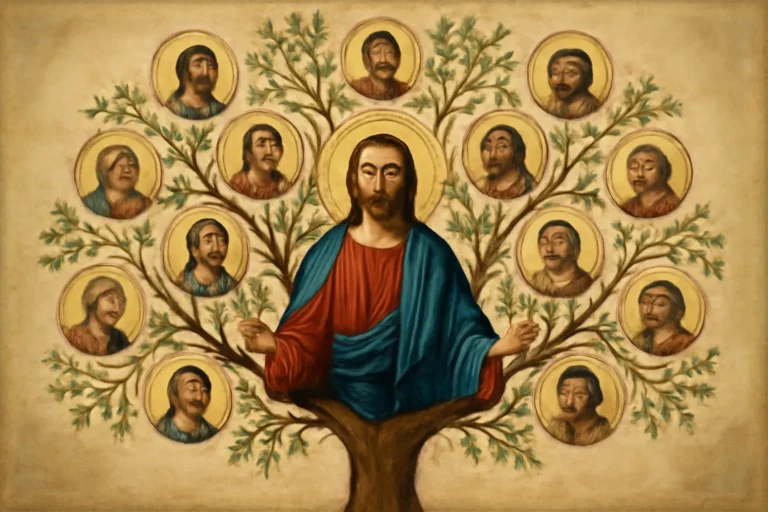
Seven surprising aspects of Abraham’s story in the Bible invite readers into a life where faith, covenant, and humility intersect with human frailty and divine faithfulness. This article explores the biblical narrative not merely as a sequence of ancient events, but as a coherent theological drama that continues to illuminate questions about calling, promise, obedience, and community today. What looks like a personal journey turns out to be a large-scale story about blessing, justice, and the shaping of a people for the world.
Overview: Seven surprising aspects, seven angles on a transformative story
In this overview, we outline the seven remarkable episodes that will frame the rest of the discussion. Each aspect challenges some common assumptions about Abraham while offering rich material for teaching, study, and devotion. Along the way we will use semantic variations to emphasize the breadth of the topic—from the surprising call to the surprising mercy that unfolds in a family saga and in the wider history of faith communities.
Aspect 1: The call that resettles the map—a global blessing beyond one man
Genesis 12 and the scale of the invitation
The call of Abram in Genesis 12 is often read as a personal relocation, but the text boldly reframes it as a vocational summons to participate in a grand mission: “I will make you into a great nation, and I will bless you; I will make your name great, and you will be a blessing.” This is not merely a personal promise; it is a theological program for world history. The blessing intended for Abram is explicitly designed to reach “all peoples on earth” (Genesis 12:3), a purpose that transcends geography and ethnicity and foregrounds a covenantal vocation.
What makes this surprising or counterintuitive?
The call does not start as a triumphal national project but as a responsibility to become a conduit of blessing to others.
The promise is anchored in a future tense—a hope that presses beyond immediate circumstance, especially for a man who will become a family patriarch.
The narrative foregrounds hospitality, trust, and obedience as the primary modes of moving toward that global mission, rather than political power or military conquest.
Key takeaways for interpretation
The religious vocation here is communal and relational: Abraham’s descendants carry a mission to bless, not merely to possess land.
God’s sovereign initiative calls for a responsive faith that translates divine promises into concrete steps—leaving, journeying, and blessing others along the way.
Aspect 2: Faith before the law—righteousness counted by belief, not by works
Genesis 15 and the articulation of trust
One of the most surprising theological moves in the Abraham story is the way faith is counted as righteousness long before the Mosaic law takes shape. Genesis 15:6 says, “Abram believed the LORD, and it was credited to him as righteousness.” This statement, later echoed in the letters of Paul, becomes foundational for Christian and Jewish understandings of how people are made right with God. It is countercultural in several ways: it places the priority on belief and relationship rather than ritual correctness or lineage alone, and it situates the ground of divine acceptance in God’s promise rather than human performance.
It occurs before circumcision—the outward sign that later marks Abraham’s people as distinct—signaling that faith precedes the sign.
The narrative suggests that covenantal life begins in trust, not in perfected obedience; the trajectory from belief to obedience then unfolds as a response to grace.
Implications for interpretation and teaching
Readers are invited to consider how trust in God’s promises shapes daily decisions, long before particular laws or customs.
This aspect invites modern readers to reflect on the relationship between faith, trust, and ethical living within a community of faith.
Aspect 3: The covenant sign as a communal marker—circumcision and the identity of a people
The Genesis 17 covenant and its social meaning
While the faith of individual patriarchs is central, the Genesis 17 covenant introduces a distinctive mark that binds families and nations into a recognizable community. Circumcision becomes not only a physical sign but a social contract that names belonging and responsibility. It is a surprising structural hinge in the Abraham narrative because it elevates an intimate ritual into a communal identifier that persists through centuries of history and across diverse cultures that intersect with Israel’s story.
What makes this surprising or counterintuitive?
The sign is intimate and personally painful, yet it serves a communal purpose—marking a people chosen to model divine justice and mercy.
The sign is given to all male descendants, including those born in the family but born to non-Israelite partners; it broadens the sense of who belongs to the covenant people.
Broader theological and practical implications
The covenantal sign represents a corporate identity—a shared memory that binds generations and shapes ritual life, ethics, and worship.
Scholars and teachers often explore how this sign prefigures later New Testament debates about inclusion and invitation beyond traditional boundaries.
Aspect 4: Hospitality and divine revelation—the sacred encounter with strangers
The visit of the three visitors (Genesis 18)
A surprising feature of the Abraham story is the way hospitality becomes a divine encounter. In Genesis 18, Abraham welcomes three visitors who turn out to be divine messengers. The host’s readiness to feed, serve, and receive these travelers becomes a conduit for revelation: God reveals his plans for Sarah’s long-awaited child, and the visitors set in motion a complex dialogue about justice, mercy, and mercy’s timing. The episode elevates hospitality from a cultural courtesy to a theologically significant act that helps shape the contours of God’s interaction with humanity.
Why is hospitality effective in this narrative?
It models an ethical posture toward strangers that has measurable consequences for communities—hospitality as a form of worship and trust in God’s provision.
The narrative uses a common ancient Near Eastern motif—the host’s welcome of travelers—as a setting where divine intent can be disclosed and debated.
Aspect 5: The test of faith and the perilous cost of obedience—the binding of Isaac
Genesis 22 as a turning point in the Abraham narrative
Perhaps the most stirring and debated moment in Abraham’s life is the akedah—the binding of Isaac. In Genesis 22, God commands Abraham to offer his long-awaited son as a sacrifice. The narrative is startling for its clarity about obedience and its quiet, decisive conclusion in God’s provision of a ram instead of Isaac. This episode is widely read as a precise test of faith—yet it is more than a single trial; it reveals how trust in God is lived out amidst human longing and moral complexity. The episode has profound implications for theology, ethics, and pastoral care, inviting readers to wrestle with the tension between obedience and mercy.
What makes this surprising or counterintuitive?
The command to sacrifice Isaac—an heir through whom the promises were to be fulfilled—appears to threaten the very basis of divine commitment, yet ends with a divine provision that foreshadows future acts of salvation.
The narrative refrains from offering a neat resolution; it instead concentrates on the inner life of Abraham’s faith—trust, fear, and surrender—within a framework that remains deeply moral and theological.
Lessons drawn from the episode for faith and life
Discipleship involves a costly trust that asks: will I withhold nothing from God when the path is hard to discern?
God’s provision and fidelity appear in moments of crisis, reinforcing that divine mercy is present even when the route is not fully understood.
Aspect 6: The intercessor and the mercy of God—bargaining for the righteous in Sodom and Gomorrah
Genesis 18 and the negotiation for mercy
Another surprising dimension of Abraham’s life is his role as intercessor. In Genesis 18, Abraham engages in a bold dialogue with God, negotiating for mercy for the cities of Sodom and Gomorrah. The exchange—“Would you destroy the righteous with the wicked?”—models a form of theological dialogue in which the integrity of God’s justice and mercy is not merely a distant abstraction but a matter of living concern for a single interlocutor who stands in for a broader community. The dialogue culminates in a provocative test: how many righteous people would it take to avert divine judgment? The passage invites readers to reflect on mercy, justice, and the responsibility of the faithful to plead for mercy on behalf of others.
What makes this surprising or counterintuitive?
God’s initial plan of judgment is tempered by a human intercessor who argues from the ground of justice and mercy, showing a dynamic relationship between divine prerogative and human petition.
The bargaining reveals that righteousness sometimes resides not only in individuals but in a community’s capacity to advocate for the vulnerable and the just before God.
Broader implications for theology and ethics
Intercession is portrayed not as passive prayer but as a substantive engagement with God’s purposes for the world.
This episode informs discussions about communal responsibility, social justice, and the ethics of leadership within faith communities.
Aspect 7: The complex family and the expansion of promise—Ishmael, Isaac, and the growth of inclusion
The family dynamic as a site of divine intention
Abraham’s household is not a simple portrait of a single lineage but a bustling convergence of promises, tensions, and leadership challenges. The birth of Ishmael to Hagar and later the birth of Isaac to Sarah present competing lines of descent within the same covenant story. The later encounter with Ishmael’s role in God’s plan—“he will be a wild donkey of a man; his hand will be against everyone” (Genesis 16-17, paraphrased)—and the political and familial complexities that follow illustrate a widening horizon: the promise is not constrained solely to a single clan but begins to include a broader family and, by theological inference, a wider humanity drawn toward blessing.
The narrative acknowledges human improvisation—Abraham and Sarah’s decision to help God fulfill the promise—yet God’s loyalty remains unbroken and creatively reframes the outcome.
The blessing that began with a personal call expands to include divergent lines of descent, suggesting a vision of lineage that anticipates later biblical themes of inclusion and universal blessing.
Contemporary reflections on lineage, promise, and inclusion
Scholars and teachers often use this aspect to discuss how communities navigate competing hopes and how divine fidelity remains steadfast amid human error.
For believers today, this serves as a reminder that God’s promises can unfold through imperfect means while still achieving the intended good for all.
Conclusion: A living narrative—seven surprising angles that shape faith today
The seven surprising aspects of Abraham’s story remind readers that biblical narratives are not static lists of events but dynamic calls to faithfulness in changing contexts. From the global blessing promised in the call to the tension between faith and works, from the covenant sign of circumcision to the hospitality that reveals divine intent, the life of Abraham provides a rich inventory of themes for preaching, teaching, and personal devotion. The interview of God with humanity, the testing of trust, the intercession for mercy, and the expansion of blessing beyond one family—all these elements cooperate to present a holistic portrait of what it means to follow the God of promise.
As we engage with these seven surprising angles—each a window into a larger story—we gain a renewed sense of how God works through human history. The narrative invites communities to reflect on their own calling, their own moments of testing, their own acts of hospitality, and their own commitments to mercy and justice. It also challenges readers to recognize that the Abraham story, while anchored in ancient settings, continues to offer relevant insights for contemporary faith—the ongoing work of discerning how to live as a people blessed to be a blessing to others.
In this exploration, we have used a variety of semantic variations—“seven astonishing facets,” “seven remarkable episodes,” “seven surprising angles,” and more—to emphasize that the topic is broad and rich. If you are teaching this material in a classroom, a study group, or a personal devotional, consider using the seven sections as a framework for discussion: each aspect invites questions about faith, covenant, identity, and social responsibility that remain meaningful today.
Notes for further study: readers may wish to turn to cross-references in how Paul and others interpret Abraham’s faith, how Jewish and Christian traditions read the covenant, and how later biblical writers weave Abraham’s story into larger narratives about blessing, justice, and redemption.
In closing, the seven surprising aspects of Abraham’s story invite us to consider the following enduring questions: What does it mean to live by faith before the law? How can a community bear witness to blessing in a world marked by conflict? And where do hospitality, mercy, and intercession fit in our own journeys of trust in God?
May this sevenfold lens enrich your study and deepen your devotion, as you reflect on the Father of many nations and the God who makes and keeps promises across generations.