The life of Mary, the mother of Jesus, occupies a uniquely central place in Christian devotion, theology, and sacred history. Across traditions and centuries, her response to the divine invitation is presented not merely as a personal moment, but as a hinge upon which salvation history turns. In this grand arc, the assertion that God honors Mary’s faithfulness appears repeatedly as a theological claim, a narrative emphasis, and a spiritual invitation. This article explores how divine honor comes into view through Mary’s fidelity, obedience, and trust, and how that honor echoes in the church’s teaching, liturgy, and ethical imagination.
The Annunciation: A Moment When God Honors Fidelity
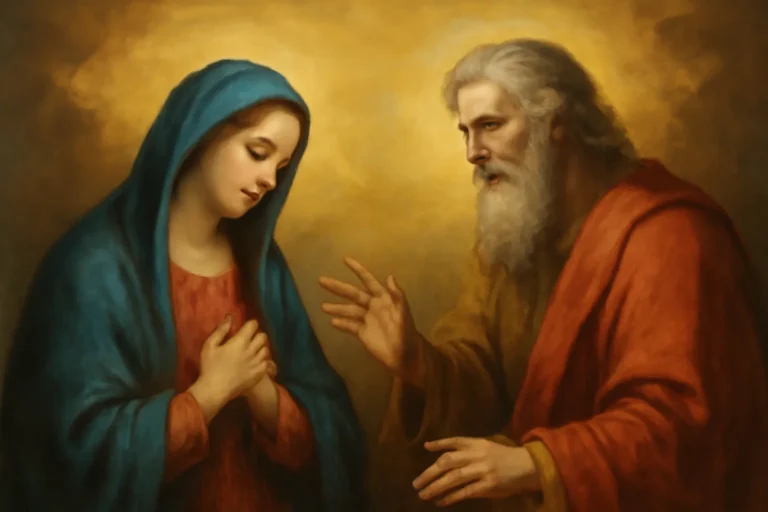
The opening scene in which Mary encounters the message of the angel Gabriel is treated in Scripture as a decisive encounter between human responsiveness and divine initiative. In the moment of the Annunciation, the Creator Orchestrator invites a young woman to participate in the mystery of the Incarnation. The angel’s greeting—full of wonder and blessing—frames Mary not as passive recipient but as a co-laborer in the plan of God. The narrative communicates a powerful truth: God honors Mary’s faithfulness by entrusting her with a mission that transcends ordinary expectation and alters the course of human history.
This moment centers on trust, humility, and the capacity to consent to a divine will that may seem overwhelming to human perception. The text emphasizes Mary’s courage to say yes, even before fully comprehending the consequences. In a concise, seismic gesture, Mary yields to the divine initiative: Be it to me according to your word. This response is often described in theological terms as a model of obedient faith, a response that demonstrates that true discipleship includes the willingness to bear the unknown with confidence in God’s goodness.
- Key dimensions of this moment include unexpected vocation, radical trust, and a submission that preserves personal agency within divine sovereignty.
- The Annunciation demonstrates how divine communication calls forth human agreement. In this sense, God honors Mary’s readiness to receive instruction from above.
- The event anticipates the larger drama of the gospel—an incarnate Word chosen to dwell among people and to redeem creation through a path marked by humility.
From the perspective of biblical theology, the Annunciation does more than announce a birth. It reveals a pattern: when faithful individuals respond with openness to God’s plan, the divine response is to elevate the vocation and to expand the scope of divine action through human cooperation. In Mary’s case, the honor comes with a dual fruit: personal sanctity (her own faithfulness) and cosmic significance (the Word becoming flesh). The idea that Mary’s fidelity is blessed by God reverberates through later reflections on her role within the mystery of Christ’s work.
Mary’s Fiat: A Faithful Yes That Reshapes Salvation History
The term fiat, often summarized as “let it be,” captures the hinge of Mary’s response. It is more than a single word; it is a posture of assent, a readiness to participate in God’s salvific project even when the path is unclear. Theologically, the Fiat is celebrated as a supreme example of trustful obedience and virtuous submission to divine will. When Mary utters her consent, she affirms not merely a future event but a vocation that redefines the boundaries of possibility for the human person.
Understanding Fiat in a Theological Key
The Fiat is often interpreted in three interlocking dimensions:
- Personal consent—Mary freely accepts God’s invitation, preserving her human agency while aligning it with God’s purpose.
- Humility in action—Her response embodies a posture of lowliness, recognizing God’s sovereignty over all things.
- Participation in salvation—By consenting, Mary becomes a conduit through which grace enters the world, enabling the Incarnation and the revelation of God’s mercy to all nations.
Scriptural echoes of the Fiat invite believers to reflect on the meaning of assent in their own lives. The saints and teachers of the Church have often drawn a line from Mary’s yes to the daily yeses of ordinary believers. In this sense, God honors Mary’s faithfulness not merely by historical events but by establishing a pattern of divine-human cooperation that continues to shape faith communities.
- Mary’s courage is depicted as a model of courageous trust in circumstances that are not fully understood.
- The response is framed as participation in God’s mission rather than mere obedience to a distant command.
- The implications extend to how communities discern their own vocations in light of God’s call.
Magnificat: A Song of Faith and Humility
The Magnificat—Mary’s canticle in Luke 1:46-55—speaks as a prophetic hymn that interprets God’s action in history through the lens of fidelity, reversal, and mercy. The song acknowledges God’s mercy toward the humble and the weak, the exalting of the lowly, and the faithfulness with which God remembers his promises. In the Magnificat, the divine response to human faithfulness is articulated as a broad and transformative mercy that renews the social and cosmic order.
Theological Themes in the Magnificat
Several themes illuminate how this canticle enlarges the understanding of God’s honor toward Mary and toward all who trust God:
- Reversal of fortune—The mighty and the proud are brought low, while the humble and the hungry are lifted up, demonstrating that God honors faithful humility.
- Mercy across generations—Mary’s own generation and future ones are beneficiaries of divine steadfast mercy, indicating a continuity of God’s favor toward those who trust him.
- God’s faithfulness to promises—The Magnificat frames Mary as a witness to the long arc of God’s faithfulness to Abraham’s offspring and to all who fear him.
The Magnificat is not merely a personal hymn of Mary but a theological testament: God honors Mary by enlarging the scope of mercy and grace to the world. Her faithfulness becomes a lens through which believers see how divine fidelity operates in history, in households, and in the life of communities seeking justice and mercy.
- Mary models a prophetic stance that recognises God’s sovereignty over human trials and social structures.
- Her words challenge the powerful to align with God’s purposes and invite the afflicted to hope in divine deliverance.
- Mary’s Magnificat thus becomes a liturgical memory that shapes prayers, hymns, and pausing reflections in the liturgies of many Christian traditions.
God’s Historical and Theological Perspective: Patristic and Scholarly Readings
Across the centuries, church fathers, theologians, and biblical scholars have pondered how God honors Mary’s faithfulness in relation to Jesus, the Church, and the salvation of humanity. The intersection of Mary’s fidelity with divine action has produced a wealth of interpretations that illuminate both the person of Mary and the meaning of faithfulness in God’s economy.
Patristic Reflections on Mary’s Role
Early Christian writers often welcomed Mary into a framework that sees her as a unique and indispensable participant in the incarnation. The Church Fathers did not reduce Mary to a peripheral figure; rather, they situated her within the drama of redemption as the mother of the Savior and as a model of obedient faith. This perspective emphasizes that divine honor is shown toward Mary through her crucial role in the mystery of Christ.
- Irenaeus and Justin Martyr are cited for affirming Christ’s real humanity and the necessity of the Virgin Birth for the integrity of salvation history, in a way that records Mary’s participation as essential rather than incidental.
- Athanasius highlighted the wonder of the Incarnation, in which Mary’s consent becomes the human response that makes possible God’s self-revelation in human form.
- Augustine and Jerome offer meditative readings that connect Mary’s obedience to the broader arc of salvation, highlighting how her faithfulness aligns with God’s mercies toward all generations.
As theologians reflected on these questions, Mary’s fidelity was not treated as a private virtue but as a communal pattern for understanding how God’s grace works in predictable and surprising ways. The language of honor used in patristic sources often points to the paradox that God’s choice to work through Mary brings glory to God’s own name, while simultaneously conferring a distinctive dignity upon Mary as the vessel of the Incarnate Word.
Orthodox and Catholic Traditions: Theotokos and Venerable Vocation
In the theological languages of East and West, Mary is accorded a high place, not because she needs human exaltation, but because the divine plan requires a faithful vessel. The title Theotokos, affirmed at the Council of Ephesus (431), anchors the truth that Mary bears God-in-flesh. This doctrinal stance elevates the creaturely response to God’s action as worthy of honor when it bears fruit in salvation. From this perspective, God honors Mary’s fidelity by entrusting to her the mission to bear and rear the Savior, and by inspiring generations to contemplate the mystery of the Word made flesh.
- Mary’s vocation is interpreted as an example of sanctified receptivity to God’s will.
- The church’s liturgical and devotional forms often celebrate her trust, particularly in feasts such as the Annunciation, the Nativity, and the Assumption.
- Theological discourse emphasizes the synergy between divine initiative and human consent, a Christian anthropology that venerates free will in the economy of grace.
Mary in the Tradition Across Denominations: Perspectives on Honor and Veneration
Across Christian traditions, Mary’s faithful reception of God’s plan has been a source of inspiration, doctrinal development, and spiritual practice. While different communities articulate their reverence in distinct ways, a common conviction persists: ventures of faith that align with divine purposes are celebrated and revered because they reveal something essential about God’s character and about human vocation.
Catholic and Orthodox Emphases
In Catholic and Orthodox contexts, Mary’s faithfulness is often celebrated in liturgical life, Marian prayers, and doctrinal statements that underscore her exemplary obedience and trust. These traditions teach that God honors Mary’s faithfulness by embracing her as a context of God’s gracious action in history, and by inviting believers to imitate her steadfast trust. The feasts, icons, and devotional practices are designed to remind the faithful that faithfulness to God, expressed in humility and receptivity, is a mode through which divine glory is made visible in the world.
Protestant Reflections
In many Protestant traditions, Mary’s role is acknowledged with deep reverence for her faith and obedience, while worship is directed to God through Christ. The emphasis often remains on Mary’s exemplary response to God’s invitation as a model for believers: God honors Mary’s faithfulness in a way that serves as an invitation to trust, to listen, and to respond with words and actions that reflect God’s mercy and justice.
- Mary is frequently held forth as a paradigm of obedience within the boundaries of sola scriptura, with attention to Scripture as the primary source for understanding her role.
- Devotional practices may emphasize Marian liturgies and biblical texts, while keeping the focus on Christ as the center of salvation.
- The question of Marian titles or doctrines is often debated, but the underlying affirmation—that the divine plan honors human fidelity—remains a shared theological ground.
Immaculate Conception and Assumption: Doctrinal Contexts Related to Faithfulness
Doctrines such as the Immaculate Conception and the Assumption provide particular theological frameworks that, for believers, relate to God’s honor toward Mary. These doctrines do not define Mary’s worth by human standards alone; rather, they illuminate how God’s saving grace operates in a way that honors Mary’s fidelity and preserves her uniquely for mission.
Immaculate Conception: Purity by Grace and Faithfulness
The teaching of the Immaculate Conception holds that Mary was preserved free from original sin from the moment of her conception. This is often understood as a unique grace that prepares her to bear the Incarnate Word. In this sense, God honors Mary’s faithfulness by equipping her for an extraordinary vocation, ensuring that the vessel of the Word remains pure in order to fulfill the divine plan faithfully.
- The doctrine reflects a conviction that grace prepares and sustains faithfulness throughout Mary’s life.
- It signals the extraordinary nature of her role in salvation history and the seriousness with which divine mercy intends to unfold through human participation.
Assumption: Honor and Motherly Communion
The Assumption—believed by many traditions to be Mary’s departure to heaven body and soul—further signals that God honors faithful service with ultimate exaltation. For believers, the Assumption testifies to the comprehensive care with which God sustains those who have trusted in him. It is a revelation of divine justice and mercy sustained by Mary’s ongoing fidelity to God’s purposes in her life and in the life of the church.
- The Assumption serves as a symbol of the final reward for steadfast fidelity in a world of changing fortunes.
- Across traditions, it invites contemplation of divine glory and the consummation of God’s plan in which Mary plays a uniquely honored role.
Mary as Model for Believers: Practical Implications of Faithfulness
If Mary’s faithfulness is a sign of how God acts toward faithful response, then her example provides a set of practical implications for contemporary faith communities. Her life invites believers to cultivate discernment, courage, and fidelity under pressure, and to recognize that genuine trust in God may lead to outcomes that are both surprising and transformative.
Discernment, Trust, and Action
A key takeaway is that discernment involves listening to God’s word and preparing one’s heart to respond with an affirmative yes. This is not merely a matter of emotional assent but a decision rooted in trust. The pattern of Mary’s life shows that God honors Mary’s faithfulness when individuals respond to divine initiative with concrete action, even when the path ahead is unclear.
- Discernment practices encourage prayerful reading of Scripture, communal conversation, and attentive attention to inner movements of grace.
- Acts of service, justice, and care for the vulnerable reflect the fruit of a faithful response to God’s invitation.
- Obedience is not blind; it is informed by love, knowledge of God, and fidelity to the moral law as interpreted by the church’s tradition.
Humility and Courage in Everyday Life
The virtue of humility shines through Mary’s life as a witness that courage and meekness can coexist. In a world that prizes assertiveness, the example of Mary demonstrates that a faithful person can undertake bold tasks while remaining dependent on God’s grace. The assertion that God honors Mary’s faithfulness becomes an invitation to communities to cultivate humility as a wellspring of strength, enabling people to undertake difficult paths with confidence in God’s providence.
- Humility does not erode ambition; it places ambition under the sovereignty of divine purposes.
- Courage grows when believers align personal goals with God’s kingdom, trusting that the Father’s plans are wiser than human calculations.
- Communal life in churches, families, and ministries can be strengthened by a shared commitment to faithful response, even when outcomes are uncertain.
Common Questions and Debates: Clarifying Misunderstandings
As Mary’s role has been explored and celebrated, questions naturally arise about how to interpret her faithfulness in relation to divine honor. Debates often center on Marian devotion, doctrinal boundaries, and the practical implications of Mary’s example for believers.
Clarifying Misconceptions
- Mary is not divine—She is human, profoundly faithful, and chosen for a singular vocation within God’s redemptive plan. Her faithfulness is the object of admiration, not worship.
- Mary’s obedience does not replace Christ—In Christian theology, Jesus remains the Savior; Mary’s role is a conduit for the Incarnation, not a substitute for the divine work.
- Honor and worship are distinct—While Mary is venerated in many traditions, worship is due to God alone in the worship life of the church.
Debates about doctrinal formulations occasionally center on how best to express Mary’s role without compromising core Christological claims. Yet the shared consensus across traditions remains that Mary’s faithfulness is a remarkable exemplar of fidelity that God honors by enabling the salvific mission to come to fruition and by inviting believers into a trusting relationship with God’s plan.
Conclusion: The Continuity of Divine Affirmation
The arc of Mary’s life—from the Annunciation to the Magnificat, from her Fiat to her presence at the cross and beyond—offers a sustained meditation on how God honors faithful responses. The claim that God honors Mary’s faithfulness is not merely a historical or doctrinal statement; it is a living invitation to believers to examine their own reception of God’s word, their readiness to cooperate with divine grace, and their willingness to endure uncertainty for the sake of a greater good. In Mary’s example, faithfulness does not lead to a private piety; it becomes a public integrity that shapes families, churches, and communities, guiding them toward justice, mercy, and hope.
In daily life, this model translates into a few enduring practices:
- Listening attentively to God’s word in Scripture and prayer, seeking to discern how God invites one to participate in the divine plan.
- Responding with a substantive “yes”—not only in grand decisions but also in ordinary moments of service, patience, and fidelity.
- Carrying forward Mary’s example of humility, gratitude, and mercy, especially toward the vulnerable and marginalized.
- Engaging in communal discernment that honors God’s call and supports one another in faithful living.
The theological claim that God honors Mary’s faithfulness thus remains a dynamic and multi-dimensional invitation. It calls readers to consider not only the historical person of Mary but also the ongoing work of grace in the life of the church and in personal spirituality. As a symbol of trust, obedience, and divine hospitality, Mary’s fidelity becomes a compass for believers who seek to live in a way that honors God’s purposes and manifests the values of mercy, justice, and love in the world.