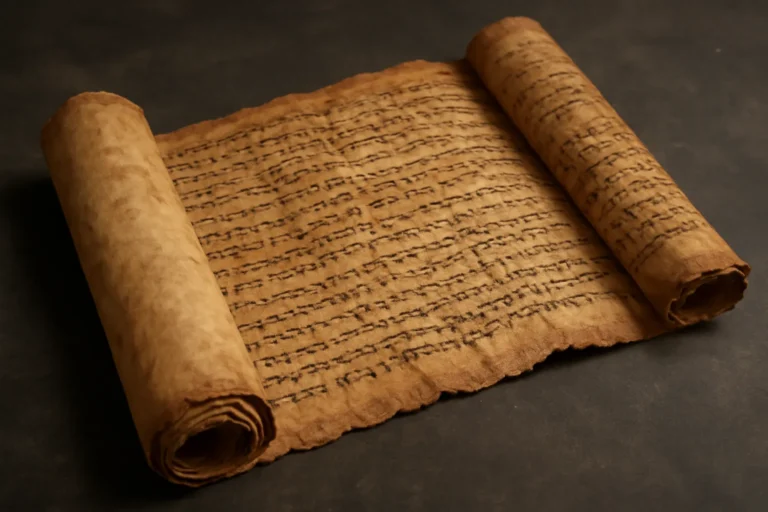
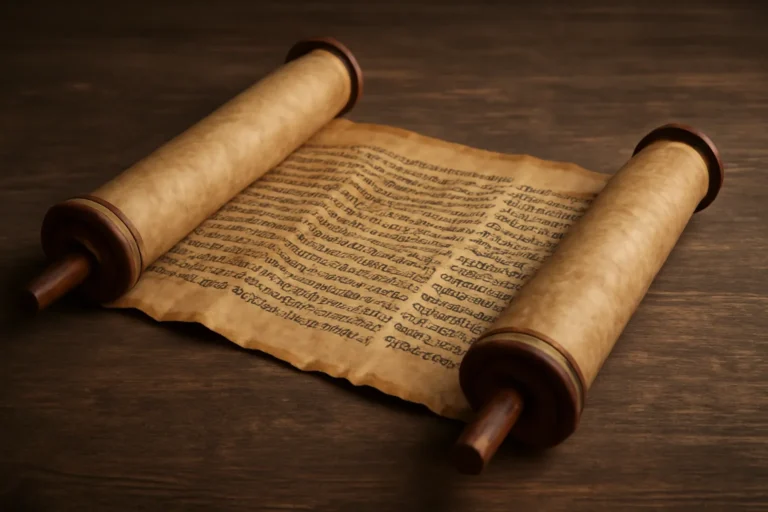
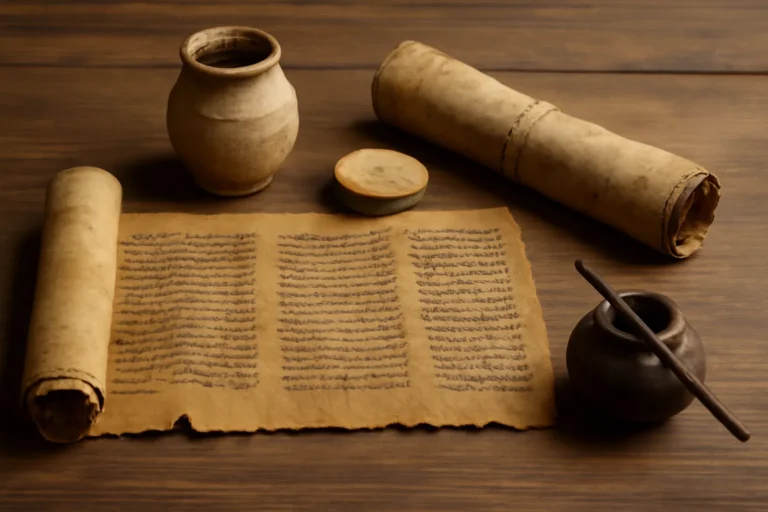
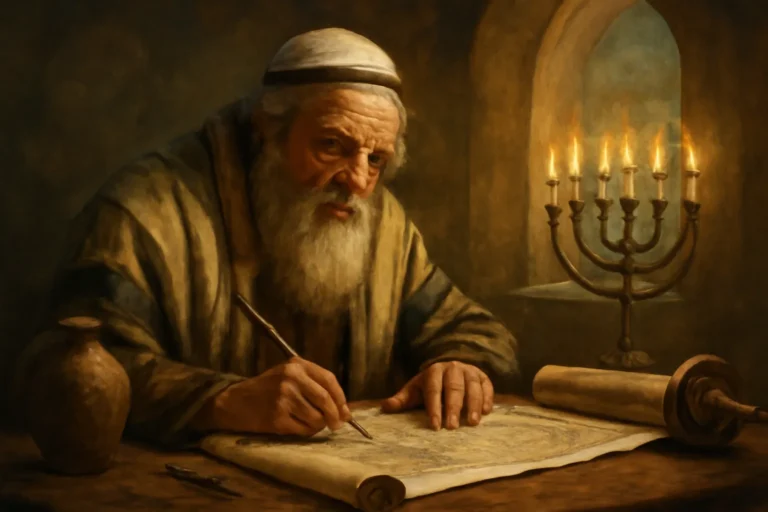
The Dead Sea Scrolls, also known as the scrolls from Qumran, represent one of the most remarkable religious and philological discoveries of the modern era. This vast collection of ancient manuscripts, dating from the third century BCE to the first century CE, offers unparalleled access to the religious life, ritual practice, and textual history of Second Temple Judaism. Many scholars describe these documents as the most significant manuscript discovery of the 20th century because they illuminate how Jewish communities lived, prayed, and interpreted sacred scripture in a diverse and dynamic religious world.
Overview: What the Dead Sea Scrolls Are and Why They Matter
The term Dead Sea Scrolls is a conventional label that covers a spectrum of writings found near the ancient fortress of Qumran, along the northwest shore of the Dead Sea. The scrolls include biblical texts, apocryphal works, pseudepigrapha, liturgical documents, community rules, and teasers of sectarian thought. While not every fragment is complete, the corpus as a whole provides a window into the religious imagination, expectations, and ethics of a community or communities that coexisted within and beyond the Israelite tradition.
Discovery, Context, and the Making of a Corpus
Historical background and the terrain of Qumran
Qumran is a plateau settlement overlooking the Dead Sea. It became a focal point for studying ancient Judaism because the site yielded a stratified archive that can be linked at times to monastic or priestly circles, and at other times to lay or scribal groups. The material culture—caves, jars, and the careful preservation of texts—suggests a deliberate effort to safeguard sacred writings. The scrolls from the Judaean Desert are not a single library but a constellation of texts produced, copied, and circulated in a religiously charged landscape.
Distribution and sequence of the discovery
The initial find in 1947 sparked a wave of scholarly and public interest that intensified with subsequent expeditions. Due to the fragmentary nature of many manuscripts, researchers speak of a corpus with hundreds of manuscripts and thousands of fragments. The discovery process spanned decades and involved local Bedouin communities, scholarly institutions, and eventually major research centers around the world. The result is a sprawling archive that includes both biblical scrolls and a wide array of sectarian documents that shed light on the theology and practice of the time.
Contents of the Dead Sea Scrolls: What is in the Qumran Manuscript Collection?
Major categories in the scrolls from Qumran
Biblical texts or biblical scrolls, including portions of almost every book of the Hebrew Bible in some form, as well as variants that illustrate textual transmission and editorial processes.
Apocrypha and pseudepigrapha, such as works not included in the canonical Jewish or Christian scriptures but held in high theological or liturgical regard by some groups of the time.
Rewritten biblical texts that retell or reinterpret canonical scriptures, often with interpretive aims or liturgical purposes.
Sectarian writings that articulate the rules, regulations, beliefs, and eschatological expectations of a specific community, possibly the Qumran sect.
Liturgical and ritual documents that illuminate the prayer life, seasonal observances, and temple-related practices of ancient Jewish communities.
Commentaries and interpretive traditions offering exegesis, harmonization, or expansion of biblical passages, often in a highly theological idiom.
Representative texts and what they signify
Among the most widely studied texts are the War Scroll (Milhama), the Community Rule (Shemittot or 1QS), the Hodayot (Songs of Thanksgiving), the Isaiah Scroll (1QIsa or Isaiah), the Genesis Apocryphon, the Damascus Document, and the Temple Scroll. Each of these works reveals something distinctive about the religious life of an ancient Jewish community—whether it be ritual purity, messianic expectation, temple theology, or ethical conduct for devotees. The collection as a whole demonstrates that scriptural interpretation in late Second Temple Judaism was diverse, iterative, and deeply meaningful for worship and identity formation.
Language, Script, and Scribal Practices
Languages and scripts in the Dead Sea Scrolls
The Qumran manuscripts reveal a multilingual environment. Hebrew remains the dominant language for most texts, but Aramaic is well represented, and Greek appears intermittently in glossaries, loanwords, or embedded phrases. The script ranges from the archaic forms of Paleo-Hebrew in certain manuscripts to the more standard square Hebrew script used later. The presence of Aramaic and occasional Greek phrases illustrates the cross-cultural currents of the period and how communities navigated linguistic diversity while preserving sacred meanings.
Scholars emphasize that the scrolls display sophisticated scribal practices, including the use of scroll format, the arrangement of texts, and careful attention to paleography and orthography. Some sections reflect careful textual criticism—the practice of comparing variants and choosing readings that better preserve theological or liturgical intent. The interplay of source criticism and textual criticism in the study of these documents reveals that the redaction and transmission of sacred texts were dynamic processes, not static transmissions. This has important implications for how readers understand the authority and integrity of biblical texts in the ancient world.
Theological Themes in the Dead Sea Scrolls
Eschatology, covenant, and the end of days
The Dead Sea Scrolls are suffused with eschatological language and expectations about the kingdom of God, the coming of a Messiah or messiahs, and the cosmic struggle between forces of light and darkness. These motifs intersect with debates about the proper observance of the covenant and the interpretation of prophetic writings. For readers, the eschatological themes in the Qumran corpus provide a textured picture of how some Jewish communities anticipated divine intervention in history, how they distinguished the righteous from the wicked, and how they framed a path of ethical conduct in view of imminent judgment.
Ritual purity, law, and community discipline
Several documents emphasize communal rules, purity codes, and ritual discipline. The sectarian writings often present a communal life organized around shared meals, purity practices, and strict observance of sabbath and festival calendars. The theological logic here links ritual purity with moral uprightness and the pursuit of fidelity to the covenant. Through these texts, readers encounter a religious world in which law and devotion are inseparable parts of worship and identity.
Scripture interpretation and hermeneutics
The authors or editors behind the Dead Sea Scrolls frequently interpreted existing biblical texts through new lenses. Some texts rework canonical passages to address current concerns, while others claim fresh readings that address present circumstances. In this way, the scrolls contribute to a long-standing conversation about how Scripture should be read, applied, and morally charged in the life of a worshiping community. The hermeneutical patterns observed in the Qumran corpus have influenced modern understandings of biblical interpretation in the ancient world.
Judaism in the Second Temple period: diversity and dialogue
The Dead Sea Scrolls underscore the diversity of Judaism in the centuries before and after the Common Era. They show a spectrum of beliefs and practices, including differing views on priesthood, temple service, ritual purity, and scriptural authority. This mosaic helps scholars envision a Continuum of Judaism in which rival groups—such as those at Qumran—coexisted with sages at the centers of rabbinic life and with sedentary lay communities. The scrolls thereby illuminate the broader religious ecology from which later Rabbinic Judaism emerged.
Connections and contrasts with early Christian thought
While the scrolls themselves do not constitute Christian texts, several themes resonate with early Christian ideas—such as expectations of a messiah, ethical renewal, and a redefined temple spirituality. Some scholars highlight intriguing parallels with early Christian communities, particularly in areas like eschatology, communal meals, or apocalyptic imagery. Yet the evidence remains complex and contested: the Dead Sea Scrolls illuminate Jewish religious life in a way that helps us understand the milieu in which early Christianity arose, without assuming direct textual ties or canonical status for their contents. This nuanced view respects both continuity and distinction between Judaism and the emergence of Christianity.
The Scrolls and Jewish Law: Halakhah, Canon, and Practice
Law, righteousness, and liturgical life
Several documents articulate what it means to live in accordance with divine commandments. The Dead Sea Scrolls present an intensive focus on ritual purity, purity in communal life, and the observance of ritual and ethical laws. The concept of halakhah—the way of walking before God—appears in diverse forms, reflecting debates about how to apply ancient statutes in daily life. The community’s approach to law is both protective and aspirational: to maintain fidelity to tradition while confronting real-world realities of worship, sacrifice, and communal integrity.
In the biblical scrolls, readers encounter readings of canonical texts that sometimes differ from later textual traditions. The variants between the Dead Sea Scrolls and the Masoretic Text, the Septuagint, or other manuscript traditions illuminate how scripture was maintained, copied, and sometimes reinterpreted for communal needs. This has methodological implications for Jewish biblical scholarship and for Christian textual criticism alike, as scholars examine how early readers understood the authority and meaning of sacred texts.
Physical preservation and the desert archive
The physical conditions of the Judaean Desert created a natural archive that preserved minute fragments over two millennia. The clay jars, cave alcoves, and mineral-rich air contributed to the survival of parchment, leather, and papyrus. These conditions also posed challenges: many fragments survive only as their edges and letters, requiring meticulous reconstruction and careful academic inference. The materiality of the scrolls—ink on parchment, the fragility of text blocks, and the fragility of the cave environment—speaks to a broader history of how religious communities safeguarded sacred knowledge.
Radiocarbon dating, paleography, and digital accessibility
Modern science has added a robust layer to our understanding of the Dead Sea Scrolls. Radiocarbon dating helps frame the age of manuscripts, while paleographic analysis places the texts within specific scribal traditions. In recent decades, digital technologies have democratized access to the scrolls. High-resolution images, searchable databases, and virtual libraries enable scholars, students, and lay readers to engage directly with the texts. The digital facsimile revolution makes it possible to study script, layout, and variants with unprecedented clarity, while preserving fragile physical originals for future generations.
Textual criticism and its significance
Textual criticism—an academic discipline focused on reconstructing original texts—has been central to Dead Sea Scrolls scholarship. By comparing variants across repeatedly copied passages, scholars can infer how communities understood divine revelation and how they reconciled conflicts in transmission. The result is a more nuanced view of scriptural authority in antiquity: revelation is cherished and safeguarded, yet it is not static but living through successive interpretive layers.
Scholarly debates and interpretive frameworks
Scholars bring various interpretive frameworks to the scrolls, including textual criticism, form criticism, and redaction criticism. Debates persist about the identity of the Qumran community, the exact dating of particular manuscripts, and the degree to which sectarian literature reflects a unified group versus a broader intellectual milieu. Regardless of the disagreements, the debates themselves demonstrate the vibrancy of scholarship surrounding the scrolls and their relevance to questions about religious authority, community life, and scriptural interpretation.
Museum displays and public understanding
Today, the Dead Sea Scrolls are held in several prestigious institutions, with the Shrine of the Book in Jerusalem hosting some of the most iconic scrolls. Public exhibitions offer educational insights into the religious life of ancient communities, the process of discovery, and the meanings of the texts for both ancient readers and modern believers. The scrolls’ public presence raises important questions about accessibility, interpretation, and the ethical stewardship of sacred material.
Educational implications
For educators and theologians, the scrolls present a valuable resource for teaching about the diversity of Judaism in late antiquity, the relationship between scripture and community life, and the historical context of religious development. Teachers can use the scrolls to illustrate how ancient communities understood covenant, ritual practice, and messianic expectation, all while modeling approaches to sensitive religious material in a responsible, scholarly way.
Impact on religious thought and devotion
For many believers, the Dead Sea Scrolls deepen the sense that sacred tradition is a living dialogue across generations. The texts demonstrate that ancient religious communities wrestled with questions about divine justice, ethical behavior, and the meaning of covenant faithfulness. The scrolls invite contemporary readers to approach sacred literature with humility, asking how ancient insights can illuminate present-day worship, moral decision-making, and communal life.
Interfaith and ecumenical reflections
Because the scrolls shed light on the broader Jewish world of Jesus’ era, they have a place in interfaith dialogue. By examining shared scriptural heritage and divergent interpretations, scholars and theologians can discuss how religious communities articulate theology, law, and hope. The Dead Sea Scrolls thus contribute to a more nuanced conversation about Judaism, Christianity, and the historical roots of belief in a single God who acts in history.
What these documents teach about religious identity
The Dead Sea Scrolls reveal that religious identity in antiquity was multifaceted, dynamic, and deeply scriptural. The idea of belonging to a community shaped by shared texts, rituals, and ethical expectations emerges clearly from the scrolls. They invite readers to consider how communities form themselves around sacred literature and how those formations influence memory, tradition, and spiritual aspiration.
Theological significance for modern readers
For contemporary followers and students of religion, the artifact-rich legacy of the Dead Sea Scrolls offers a compelling case study in how ancient communities understood divine revelation, covenantal obligation, and the moral life. They remind us that sacred literature often exists in tension with ordinary life, that interpretation evolves, and that devotion demands both fidelity to tradition and ongoing moral reflection in light of new insights.
Dead Sea Scrolls — a collective designation for ancient Jewish manuscripts discovered near Qumran, spanning biblical, apocryphal, and sectarian writings.
Qumran — the archaeological site near the Dead Sea associated with the scrolls’ production or storage and often linked to a particular Jewish group.
Sectarian scrolls — texts that articulate the beliefs, rules, and practices of a specific community, potentially at Qumran.
Temple Scroll — a particularly long and detailed document describing a vision of temple law and liturgy.
Hebrew Bible variants — textual differences between scrolls and later canonical versions, illuminating transmission history.
Paleography — the study of ancient handwriting, used to date manuscripts and identify scribal practices.
Masoretic Text — the authoritative Hebrew text of the Jewish Bible, which is compared with Dead Sea Scrolls variants to understand textual history.
Apocrypha and Pseudepigrapha — works not included in the canonical Hebrew Bible but preserved in various Jewish and Christian traditions.
Eschatology — a theological focus on the last things, such as the end times, final judgment, and divine intervention in history.
In summary, the Dead Sea Scrolls constitute a watershed for religious studies, biblical scholarship, and the study of ancient Judaism. They offer a rare, grounded glimpse into how people of faith in the ancient world read scriptures, fashioned communities, and anticipated the movement of God in history. They also encourage contemporary readers to approach sacred texts with both reverence and rigorous inquiry, recognizing that the past continues to shape present understandings of what it means to belong to a spiritual tradition. The scrolls from Qumran—whether viewed as a library, a shrine, or a workshop of interpretation—remain a living archive that invites ongoing study, discernment, and dialogue across generations.
Visit museum exhibitions or online digital resources to view high-resolution images and scholarly notes about the manuscripts.
Explore introductory texts on Second Temple Judaism to contextualize the scrolls within broader Jewish history.
Study a selection of key texts in parallel translations to observe how language shapes theological ideas.
Participate in courses or lectures that address textual criticism, archaeology, and religious development in the ancient world.
Reflect on the ethical and spiritual questions raised by the scrolls’ emphasis on covenant, ritual purity, and communal life.
In a word, the Dead Sea Scrolls from Qumran invite us to understand a historical moment where faith, law, hope, and worship converged in a distinctive religious milieu. Their preservation and study continue to illuminate the diversity within Judaism of late antiquity and its rich traditions of interpretation, devotion, and communal identity. As scholars refine their methodologies and new digital tools enable broader access, the scrolls will likely reveal still more about how ancient communities lived by their convictions and how those convictions can inform present-day religious reflection.
For readers seeking a compact takeaway: the Dead Sea Scrolls are not only ancient manuscripts but a gateway to understanding how sacred texts were interpreted and lived within a community that valued purity, order, and expectation of divine action. The Qumran manuscripts illuminate the complexity of Jewish religious life in the centuries surrounding the emergence of Rabbinic Judaism and early Christianity, offering enduring insights for theologians, historians, and laypeople alike.