Introduction: The Dead Sea Scrolls and the Religious Landscape They illuminate
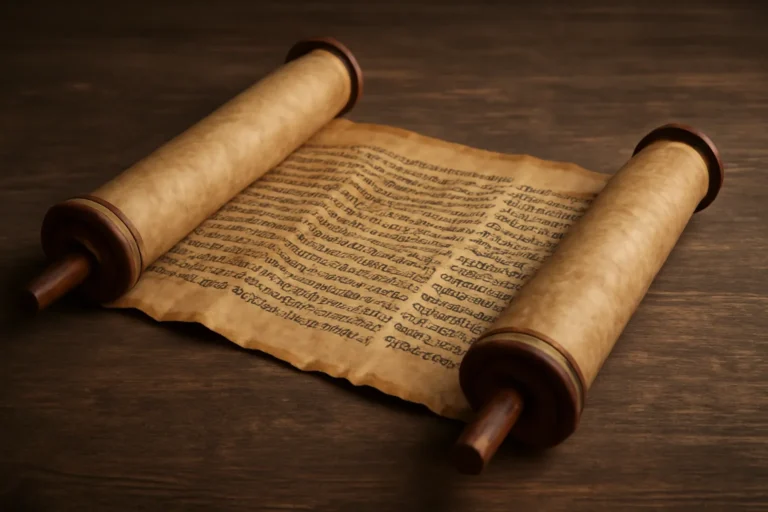
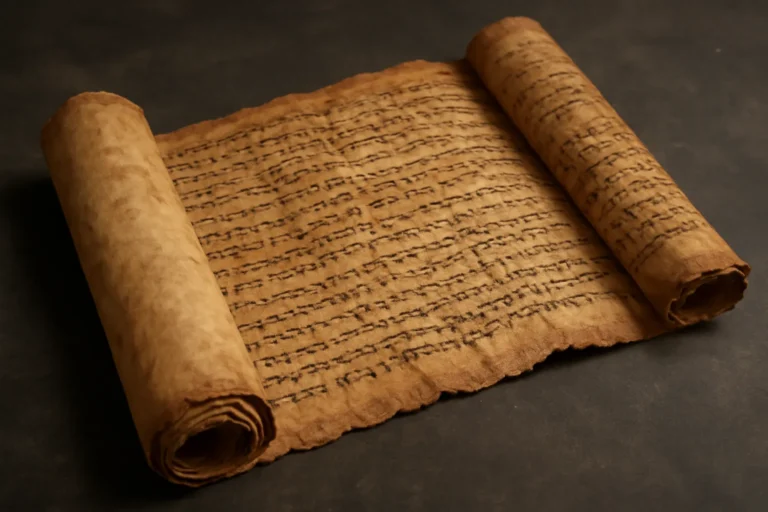
The Dead Sea Scrolls are among the most important archaeological and religious finds of the modern era. Discovered beginning in the late 1940s in caves near Qumran along the northwestern shore of the Dead Sea, these manuscripts opened a window onto Second Temple Judaism and the diverse religious currents that pulsed through ancient Israel. They include a mix of biblical manuscripts (copies of books that later appeared in the Hebrew Bible), apocryphal and pseudepigraphal writings, liturgical texts, hymns, sectarian rules, and documents that reveal how various communities understood law, purity, temple practice, messianic expectation, and the covenant with God.
For many readers, the Dead Sea Scrolls are a bridge between ancient worship and modern faith. They invite humble reflection on how religious communities remember scripture, interpret divine instruction, and live out their covenants in daily life. Yet as with any major discovery, a handful of persistent beliefs—often stated as crisp, sensational claims—have taken root in popular imagination. In this long-form article, we examine the six myths about the Dead Sea Scrolls that recur in scholarly discussions, popular media, and religious discourse. By unpacking each misconception, we uncover the nuanced realities that scholars across disciplines—textual criticism, history, theology, and liturgical studies—have long argued for. The aim is not to polarize but to deepen understanding: to see how these ancient documents actually function within a broader religious and theological conversation.
Myth 1: The Dead Sea Scrolls contain a new Bible that would replace or overturn the canonical Hebrew Scriptures
What the myth claims
A durable, provocative belief is that the Dead Sea Scrolls present a rival canon or a brand-new set of scriptures capable of displacing the traditional Hebrew Bible. Some versions of this myth suggest that the scrolls propose readings that contradict canonical verses, or that they reveal a different collection of sacred writings that should be the source of religious authority in place of what later generations accepted as Scripture. The implication is that the Scrolls inaugurate a radical rewrite of faith and practice.
What the evidence actually shows
The overwhelming majority of biblical manuscripts among the scrolls are copies or variants of books already present in the Hebrew Bible, particularly texts from Genesis through Chronicles. The most famous of these is the Isaiah Scroll (1QIsaa), whose text is remarkably close to the Masoretic Standard for much of the book, with some notable, but not system-wide, textual variants.
The non-biblical texts inside the collection—such as the Rule of the Community (1QS), the Damascus Document, the War Scroll (1QM), and the Psalms Scroll—are instructive for understanding religious life, communal law, and liturgical practice, but they do not form a competing, officially recognized Bible. They illuminate how diverse groups understood holiness, purity, messiah, and covenant language within the broader biblical framework.
Scholarly consensus emphasizes the textual plurality of Second Temple Judaism, not the invention of a completely separate scriptural corpus. The Dead Sea Scrolls reveal that communities with different interpretive emphases read, recited, and valued scripture in ways that occasionally diverged—yet they were not seizing control of the canon itself.
The process of establishing a canon—what later came to be known as the biblical canon—emerges from a long, evolving conversation among various Jewish communities, not from a single discovery that flips everything overnight. The scrolls, in other words, shed light on the textual world in which canonical boundaries were debated, not on a moment when those boundaries were decisively set.
For religious communities today, the fear that a new Bible would overturn faith can be compelling but often misdirected. The Dead Sea Scrolls, instead, offer a richer portrait of biblical interpretation, showing how sacred texts were cherished, argued over, and reread in a variety of ways. They invite believers to consider how their own communities read and apply scripture, how they relate to the covenant, and how prophecy was understood within different Jewish traditions. In theological terms, the Scrolls encourage humility about authoritative interpretation while affirming the central conviction that scripture remains a living, interpretive conversation between the faithful and God.
Myth 2: The Dead Sea Scrolls prove a single, monastic Essene sect authored most of the manuscripts and thus reflect a uniform, isolated worldview
What the myth asserts
Another common misconception is that the Dead Sea Scrolls belong to a single, tightly knit community—the Essenes—whose members controlled every text and whose practices define the entire collection. This myth paints a uniform portrait of religious life at Qumran, implying that all the texts came from one source and that the religious life described therein represents a monastic ideal, rigid rules, and a single calendar.
What the evidence actually shows
The diversity of authorship is evident in the linguistic styles, theological emphases, and ritual vocabularies across the scrolls. While some texts clearly resonate with Essene-like themes—ritual purity, communal meals, strict observance of Sabbath and purity laws—other texts reflect beliefs and practices associated with broader Jewish groups that scholars call Pharisaic, Sadducean, or temple-centered. The picture is one of a complex religious landscape with overlapping communities nearby and shared concerns.
Texts such as the Rule of the Community and the Damascus Document illustrate internal rules and communal discipline, but other documents, including several psalms, hymns, and prophetic writings, indicate a broader religious imagination that cannot be reduced to a single sect’s perspective.
Archaeological and textual evidence points to a multi-community environment around the Dead Sea region during the late Second Temple period. The scrolls likely reflect a network of groups exchanging ideas, contesting practices, and negotiating authority—rather than a single enclave issuing a monastic, exclusive code.
Implications for religious interpretation
The truth about the scrolls’ authorship history invites a more nuanced theology of the period. A monastic, isolated Essene model risks flattening a rich, pluralistic religious atmosphere into a single narrative. Instead, the scrolls encourage contemporary readers to recognize how diverse questions about law, purity, worship, temple legitimacy, and social responsibility circulated in multiple Jewish communities. This broader view can deepen how modern faith communities understand authority, tradition, and the divine call to holiness within a shared humanity.
Myth 3: The Dead Sea Scrolls are a fringe discovery with little relevance to mainstream Judaism or early Christianity
What the myth suggests
Some readers lament that the Dead Sea Scrolls belong to a distant fringe of Jewish history and thus have minimal bearing on the Judaism that existed in Jesus’ era or on the formation of early Christianity. The belief implies that the scrolls are exotic artifacts with scant religious value for contemporary faith communities.
What the evidence actually demonstrates
The scrolls illuminate a shared religious vocabulary and imagery—concepts like covenant, Messiah, anointed leader, the temple, priesthood, and purity—that appear across the Second Temple milieu. This shared language helps scholars map how early Judaism interacted with emerging Christian thought.
Many texts reveal eschatological hopes and rituals that resonate with early Christian concerns about the end times, the coming kingdom, and moral accountability before God. While the details differ, the underlying eschatological imagination is part of a wider religious conversation in which both communities participated.
The scrolls offer important light on the way Jews of the period understood scripture and tradition, and they clarify the historical backdrop against which early Christian communities formed their own identities, practices, and interpretive methods.
The liturgical and devotional texts—hymns, thanksgiving prayers, and psalms—provide a window into how religious communities worshipped, offered gratitude, and wrestled with the divine presence, all of which bear on Christian worship and articulation of faith in the first centuries.
Why this matters for religious education
For congregations, pastors, and teachers across faith traditions, the Dead Sea Scrolls offer a powerful reminder that Judaism in the Second Temple period was dynamic, diverse, and deeply engaged with scripture. They show that scriptural interpretation was not static but debated within communities that sought to live in fidelity to God. This is a theological invitation to approach sacred texts—whether Jewish or Christian—with humility, curiosity, and a sense of historical imagination that respects the voices of those who wrestled with divine revelation long ago.
Myth 4: The Dead Sea Scrolls undermine the reliability of the Hebrew Bible or canonical tradition by showing widespread textual corruption
What the myth asserts
A persistent claim is that the scrolls reveal widespread corruption or instability in the ancient biblical text, implying that the Masoretic Text or the canonical Bible we use today is unreliable as a faithful witness to the biblical past.
What the evidence shows
The scrolls do contain numerous textual variants, and some of them are meaningful; others are minor—typographical differences, orthography, or phrasing. The presence of variants does not equate to wholesale corruption. Rather, they reveal a living transmission culture in which scribes and communities preserved, copied, and sometimes interpreted sacred literature.
In many instances, the scrolls align closely with the later Masoretic tradition, or with the text families that are found in the Samaritan Pentateuch or the Septuagint. Rather than showing a single corrupted line of transmission, the evidence highlights a rich manuscript ecosystem in which multiple text-types circulated.
Some variants are of interest for theology and liturgy, offering insight into how early communities understood divine promises, prophetic speech, and the moral demands of covenant life. Yet even these cases often preserve the essential theological contours that later Jewish and Christian interpreters would also recognize.
The broader academic consensus is that the Dead Sea Scrolls provide a crucial, corroborative perspective on how scripture was treated in antiquity, rather than a demolition of textual authority. They illuminate the process by which the Bible’s forms—scriptural order, chapter-and-verse usage, and harmonization strategies—developed over time.
Theological reflection on canon and authority
Rather than viewing the scrolls as a destabilizing force, many religious thinkers consider them a reminder that sacred literature emerges from communities that value fidelity to revelation while acknowledging the fallible, human nature of transmission. The discipline of canon formation includes debates, committees, and interpretive traditions that would shape Judaism and Christianity for centuries. The Dead Sea Scrolls thus invite believers to honor the text’s sacred authority while remaining attentive to the historical processes that shaped its transmission.
Myth 5: The Dead Sea Scrolls seal off direct connections to early Christianity and thus have little to say about Christian origins or theology
What the myth asserts
Some narratives imply that because the Scrolls come from a Jewish milieu, they have nothing to contribute to Christian theological reflection or to understanding the roots of Christian faith. This view can lead to a misleading sense that the early Christian movement developed in a vacuum, apart from the broader religious world of late Second Temple Judaism.
What the evidence actually reveals
The Scrolls illuminate a shared religious atmosphere in which ideas about Messiah, the covenant, temple worship, and divine judgment were debated, redefined, and expressed in ways that provided a backdrop for early Christian speech and practice.
Passages and concepts—such as expectations of a coming king or anointed savior, discussions about purity and law, and the use of prophetic scriptural interpretation—appear in both the Scrolls and early Christian literature. This does not mean they copied one another, but that they spoke a common religious language inherited from the same historical and theological milieu.
The Psalms and liturgical writings within the scrolls offer devotional frameworks—prayers, hymns, and thanksgiving compositions—that mirror the religious sensibilities seen in early Christian worship materials. These similarities can foster a richer understanding of how early Christians learned to pray, sing, and teach about God’s action in history.
For theology students and clergy, studying the Dead Sea Scrolls helps contextualize the Jewish religious world that shaped Jesus’ milieu—clarifying how evangelists and early Christian writers interpreted Old Testament prophecies, how they viewed ritual purity, and how they described the nature of God’s kingdom.
The practical value for faith formation
The claim that the Dead Sea Scrolls are irrelevant to Christian origins underestimates the depth of influence that ancient Jewish religious thought exerted on the earliest followers of Jesus. Far from discrediting Christian claims, the scrolls provide historical nuance for interpreting New Testament passages, understanding early Christian messianic expectations, and recognizing how early communities navigated questions of obedience, temple fidelity, and covenant fidelity in a contested religious landscape.
Myth 6: The Dead Sea Scrolls are linguistically and intellectually inaccessible, offering little practical value for faith communities today
What the myth suggests
A final belief asserts that these scrolls belong to a scholarly ivory tower—an artifact of textual criticism that has no bearing on modern religious life. Skeptics may feel that difficult languages, fragmentary manuscripts, and the historical distance render them irrelevant to present-day faith and practice.
What the evidence shows
While many scrolls are in ancient Hebrew and Aramaic, scholars have made them accessible through careful philology, paleography, and translation work. The results are published in established scholarly journals and books that reach beyond specialist circles.
The liturgical materials (such as psalms and hymns) provide a vivid window into worship and prayer life, offering models for personal devotion, communal prayer, and liturgical imagination that can inspire contemporary practice.
The non-biblical texts describe early communities wrestling with ethical questions—how to live in covenantal faithfulness, how to care for the needy, how to organize communal life, and how to interpret prophetic words for present-day decisions. These are questions many faith communities continue to face.
For theologians and educators, the Scrolls are a resource for teaching about the diversity of late ancient Judaism, the formation of scripture, and the historical context of Christian origins. They enrich sermons, lectures, and curricula by providing tangible links to the ancient world behind shared faith texts.
An honest encounter with the Dead Sea Scrolls involves recognizing their complexity and nuance, while also acknowledging their spiritual vitality. The documents invite believers to engage with questions about how covenant faith is lived, how communities discern divine instruction, and how gratitude, prayer, and hope shape religious life. The practical value is evident in how these ancient voices inform modern ethics, worship, and biblical interpretation—reminding us that faith is not static but a living conversation across generations.
The Bigger Picture: How the six myths about the Dead Sea Scrolls fit into religious study
Across the six myths addressed above, a common thread emerges: the Dead Sea Scrolls are not a single, simple artifact with a single message. They are a multifaceted collection that illuminates a dynamic period of religious history. They reveal continuity with the Hebrew Bible, diversity within Jewish practice, and a contextual framework for thinking about the emergence of Christian faith and early rabbinic Judaism. They are a resource for preaching, teaching, and scholarship alike—one that requires careful, nuanced engagement rather than sensational reduction.
Why this matters for schools, churches, mosques, synagogues, and study groups
Educational programs can use the Scrolls to illustrate how sacred texts are transmitted, interpreted, and lived out in real communities, helping students appreciate how religious belief interacts with culture, law, and social ethics.
Pulpit and classroom applications can draw on the eschatological and covenant language found across the Scrolls to illuminate how faith communities today understand divine promises and human responsibility in history, ethics, and public life.
Interfaith dialogue can benefit from a shared recognition of the Scrolls’ role in shedding light on the religious milieu of late antiquity, thus fostering mutual respect for the Jewish roots of Christian and Islamic reverence for scripture and prophecies.
Pastoral engagement may be enriched by exploring how congregations approach textual variance, authority, and community memory—areas where ancient manuscripts can inform contemporary ethical discernment.
Conclusion: The six myths about the Dead Sea Scrolls debunked, and a richer religious imagination revealed
The six myths discussed here—whether framed as concerns about canonical authority, sectarian monoculture, fringe status, textual corruption, Christian origins, or modern irrelevance—do not withstand close scrutiny. When read with careful attention to linguistic variety, manuscript history, and the social worlds of Second Temple Judaism, the Dead Sea Scrolls emerge not as a challenge to faith but as a companion text to it: a set of ancient voices that speak to devotion, communal life, ethical reflection, and interpretive responsibility before God.
As we engage with the Dead Sea Scrolls, let us hold in tension two commitments: to scholarly integrity and to the reverent use of sacred texts. The goal is not to settle every debate or to force a single reading, but to listen to the complexity of a spiritual world that sought to discern the will of God in an era of political upheaval, ritual revolution, and social transformation. In that listening, believers—across religious traditions—can discover patience, humility, and a more expansive sense of what it means to live in covenant with the divine.