
Rooted by the Waters: Psalm 1
Rooted by the Waters invites readers into a compact yet expansive doorway into the Psalter. Psalm 1 stands at the threshold, offering a concise invitation to discernment, a clear portrait of two ways of living, and a rich reservoir of imagery that invites meditation across generations. In this article, we explore Psalm 1 as a theological map, a poetic symbol of trust, and a practical guide for personal formation and communal life. We will trace its patterns, attend to its imagery—especially the emblem of a tree planted by streams of water—and examine how this text has been interpreted, applied, and prayed within Jewish, Christian, and broader religious discourses.
Context and Literary Architecture
Psalm 1 is a compact composition, precisely crafted in terms of form, diction, and consequence. Though brief in length, it functions as a deliberate programmatic statement for the entire Psalter. Its design rests on a fundamental dichotomy: the path of the righteous versus the path of the wicked. The psalm does not narrate a single life story; instead, it presents a portrait of two alternative modes of existence. The blessed life is defined by orientation to God’s will and to a sustained engagement with divine instruction, while the unrighteous life is characterized by deviation, transgression, and eventual instability.
The structure can be sketched as follows:
- Verse 1: A beatitude in negative form—blessing is located in what one avoids: counsel, company, and posture that leads away from integrity.
- Verse 2: A positive commitment—delight and meditation on the law of the LORD, with a cadence that points toward regular, daily practice.
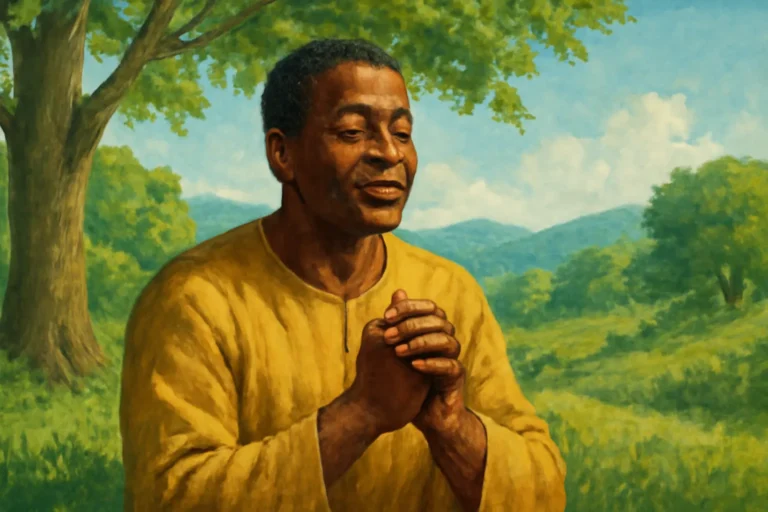
- Verse 3: The emblem of flourishing—one’s life is likened to a tree planted by streams of water bearing fruit in due season.
- Verse 4–5: A contrastive judgment—the wicked are like chaff blown away by the wind, lacking stability and enduring substance.
- Verse 6: A closing note of divine knowledge: the LORD knows the way of the righteous, while the way of the wicked perishes.
This architecture—beatitude, meditation, flourishing, contrast, and divine awareness—frames a broad array of interpretive questions. How is blessing defined? What kinds of “meditation” are intended in a text that is centuries old? Why does the Psalm insist on a naturalistic image of growth and seasonality for human life? The answers to these questions are not merely historical; they offer a living vocabulary for worship, ethics, and spiritual formation today.
- Literary devices such as parallelism, antithesis, and imagery are central to Psalm 1’s power. The paired opposites—“walk,” “stand,” and “sit” in verse 1—create a ladder of behavior that moves from conduct to stance to association.
- The law or Torah language in verse 2 should not be reduced to a legal code. In the broader biblical sense, delight in the law means delight in the relationship, wisdom, and covenant framing that God’s instruction embodies.
- Natural imagery (streams, fruit, leaves) anchors spiritual truths in the observable world, making the message accessible across generations and cultures.
The Imagery of Water and Planting
Perhaps the most memorable image in Psalm 1 is the tree planted by streams of water. This is not merely a horticultural metaphor; it is a theological statement about vitality, resilience, and effect. The psalmist imagines life as a living organism with roots that reach into a nourishing, sustaining source. In a landscape of scarcity and shifting weather, a tree with deep, well-placed roots can endure droughts and storms while continuing to bear fruit.
The Water as Source and Covenant Sign
Water in ancient Near Eastern poetry often connotes life, covenant, and divine provision. In Psalm 1, the streams of water are not merely physical irrigation; they symbolize the presence and provision of God’s own guidance. The planted tree does not thirst because its roots descend into a source that is constant and life-giving. This imagery echoes the biblical pattern where blessing follows obedience; the water supply is not a solitary natural fact but a sign of a relationship with the One who hosts the life-giving stream.
The Fruit in Season and Leaf that Does Not Wither
The verse continues with the promise that the tree bears fruit in its season, and its leaf does not wither. This language stresses two dimensions of vitality: productivity and endurance. The ever-green vitality of the faithful person is not a magical guarantee of perpetual ease but a fruitfulness that aligns with divine timing. The seasons become a teacher: fruit in the appropriate season signals a life that has learned to trust, wait, and persevere.
In the broader biblical canon, similar imagery recurs to describe the righteous person as a source of blessing for others. When a person’s life resembles a tree planted by streams, the community around them experiences shade, shelter, sustenance, and a model of trust. This is not a solitary metaphor; it sees the individual as part of a shared ecology—human beings living in reciprocal dependence with God and with one another.
Comparative Imagery in Ancient Texts
While Psalm 1 anchors its imagery in a distinctly Israelite covenant framework, the broader ancient world contains parallel motifs. Imagery of trees, rivers, and seasons appears across Near Eastern poetry and wisdom literature to convey divine blessing, fertility, and moral order. Yet Psalm 1 anchors the tree image within a distinctive theological architecture: the blessing of the righteous is not the byproduct of mere natural abundance; it is a sign of fidelity to God’s instruction and a life oriented toward divine purposes.
In practical terms, readers who adopt the “tree by the water” motif may be invited to reflect on what nourishes their own spiritual life. What streams sustain you? How deep are your roots in shared worship, community accountability, or practices of reflection? The metaphor invites a contemplative practice: to examine where one’s roots wind downward and whether those roots lead toward life-sustaining sources.
Theological Significance: Righteousness, Law, and Covenant Life
Psalm 1’s theological thrust moves beyond a single psalm’s counsel into a framework for understanding righteousness, the place of God’s law, and the nature of covenant relationship. The poem’s two pathways—righteousness and wickedness—map onto a broader biblical anthropology: human life is oriented toward or away from God, and that orientation bears consequences in this life and in the eschaton.
The Blessed Life and Covenant Faithfulness
The opening blessing, “Blessed is the man”, is not merely a feeling of happiness. In biblical terms, blessedness often designates a comprehensive well-being that flows from alignment with God’s purposes. The blessed person is not isolated from society; rather, they become a source of moral orientation and stability for others. The phrase invites us to consider how a life grounded in divine instruction can become a stabilizing, hopeful influence in communities that often struggle with fragmentation.
Delight, Law, and Mediation
Verse 2 centers delight and meditation on the LORD’s law. This is not a legalistic, sterile compliance but a living engagement with divine wisdom. The word delight signals affection, longing, and motivation. The practice of meditation—in the biblical sense—encompasses contemplation, reflection, and the deliberate turning of the mind toward God’s instruction in daily life. The repetition in verse 2—delight and meditate “day and night”—emphasizes a rhythm of ongoing formation rather than episodic piety.
Righteousness as a Living Ecology
The image of a rooted life extends beyond personal piety. In biblical thought, righteousness is ecological: it affects the soil of relationships, economic fairness, hospitality, and the care of the vulnerable. The tree proverb suggests that a life ordered by God’s wisdom will influence the air around it—the social climate will be healthier, the community more resilient, and the poor and marginalized more supported.
Consequences for the Wicked
The contrast with the wicked—who are “not so”—and the image of the chaff swept away by the wind, introduces a strong note of moral causality. These lines do not merely threaten punishment; they articulate a realistic anthropology: when life is not rooted in God’s wisdom, it lacks enduring substance and direction. The wind analogy invites reflection on volatility, emptiness, and disposability in human striving that is severed from the Source of life.
Covenant Knowledge: The LORD Knows the Way
The final verse grounds the entire poem in the divine perspective: the LORD knows the way of the righteous. Knowledge here implies intimacy, care, and providential oversight. The knowledge of God is not merely cognitive; it is relational and ethical. To be known by God is to live within a divine sponsorship that shapes choices, affections, and life’s trajectory. Conversely, the wicked, in their chosen path, walk toward perishing—the language of moral consequence that resonates through prophetic and wisdom literature alike.
Practical Applications: Spiritual Disciplines and Community Life
Psalm 1 speaks in concise terms to the interior life and to the outward practices of faith communities. The call to be “planted by streams” translates into disciplines and commitments that shape daily living. Below are several avenues through which readers today can translate this ancient image into present-day formation.
Discerning Company: Who Composes Your Circle?
The opening beatitude invites caution about associating with those who lead away from integrity. A practical translation is the cultivation of a chosen circle of influence—friends, mentors, and communities that encourage virtue, truth-telling, and accountability. The question arises: whose counsel shapes your decisions? Building a life that is rooted by waters includes seeking communities where honesty, mercy, and courage are valued.
Delighting in God’s Law: A Daily Rhythm
The second key practice is the deliberate delight in God’s instruction. This can be expressed through daily Bible engagement, communal study, and reflective reading that invites transformation rather than mere knowledge. The practice of meditation on the text becomes a way to align desires with divine intention, allowing God’s voice to reorder priorities, ambitions, and affections.
Sustainable Fruitfulness: Bearing in Season
The image of bearing fruit “in your season” encourages believers to cultivate patience and trust in divine timing. Fruitfulness is not a measure of outward success alone; it encompasses acts of mercy, justice, generosity, and communal flourishing. The metaphor of the leaf that does not wither invites persistent vitality—not as achievement by human strength but as growth nurtured by ongoing dependence on the Spirit of God and the Spirit’s gift of life.
Hydrating Prayer: Turn to the Water
Prayer becomes the psalmist’s water table—an ongoing conversation with God that maintains the roots. A life that is “planted by streams of water” can learn to bring its thirst into a posture of prayer, asking for renewal, wisdom, and courage to endure seasons of drought. Such prayer-rooted living fosters resilience without cynicism and hope without escapism.
Practical checklist for a rooted life:
- Identify two or three trusted companions for regular accountability and encouragement.
- Commit to a daily or weekly study habit that includes meditation and application.
- Design a rhythm of service or justice-oriented action that aligns with your gifts and community needs.
- Keep a journal of fruit-bearing moments—small acts of mercy, renewed hope, or steadfast faith—over the course of a season.
Psalm 1 in Jewish and Christian Interpretive Traditions
Across centuries, communities have read Psalm 1 within larger prayer life and theological reflection. The image of the planted tree resonates with core biblical motifs—trust in God’s instruction, fidelity to covenant, and the possibility of flourishing within divine order. Below, we survey some traditional perspectives and ways these interpretive voices have engaged the text.
Jewish Interpretive Angles
In Jewish interpretation, Psalm 1 is often read as an introductory lens into the entire Psalter. The blessing associated with obedience and the contrast with the wicked are understood within a framework of covenantal fidelity and wisdom. The law (Torah) is not rejected but honored as a gift that shapes daily life. The image of rootedness by water can be aligned with the covenantal streams that sustain the people of Israel—water as a sign of divine presence, deliverance, and ongoing nurture in the wilderness and beyond.
Christian Theological Readings
Christian readings frequently emphasize the Christological and eschatological dimensions of Psalm 1. The figure of the Christ, the faithful Israelite, or the righteous one who fulfills God’s will, may be read as foreshadowing the perfect life. The “delight in the law” is often reframed as delight in God’s revealed will in Christ and in Scripture interpreted through the lens of the gospel. The tree planted by streams has also been read as a symbol of Christ’s followers united to the living water of the Spirit, bearing the fruit of the Spirit in due season.
Patristic and Scholarly Perspectives
Early Christian writers frequently treated Psalm 1 as a seedbed for ecclesial life—the indispensable prerequisites for a healthy church: right teaching, steadfast discipline, and a community oriented toward God’s wisdom. Modern biblical scholarship often emphasizes the psalm’s literary precision, noticing how the movement from negative to positive, from individual piety to communal consequence, makes Psalm 1 a model for how wisdom literature can function within Scripture. The text invites readers to see righteousness not as a private virtue but as a social and cosmic orientation toward the Creator.
Psalm 1 in Worship and Liturgy
The immediacy and succinctness of Psalm 1 have given it a resilience in liturgical use across traditions. It is well-suited for opening prayer, catechesis, and seasons of prayer that call congregations to reexamine foundations. In many worshiping communities, Psalm 1 serves as a preparatory terrain for experiencing the Psalter as a coherent whole—an invitation to choose life in the presence of God rather than life apart from God’s wisdom.
Liturgy of Reading and Reflection
In a contemporary worship context, Psalm 1 can function as a meditative reading that primes heart and mind for more expansive psalms. A brief liturgical pattern might include:
- Reading of Psalm 1 with a focus on a single verse each round of reflection.
- Silence or contemplation for listening to God’s word, especially the call to delight in the law of the LORD.
- Short response prayers highlighting the imagery of rootedness, streams, and fruitfulness.
The imagery of a tree planted by streams of water can be a visual anchor in visual art or congregational banners, reinforcing a communal memory of steadfastness in God’s presence.
Comparative Readings: Psalm 1 and Related Biblical Texts
Psalm 1 does not exist in isolation; it echoes, refracts, and resonates with other biblical passages. Several related texts expand upon the same themes—blessing, righteousness, wisdom, and the moral order that God intends for creation.
- Psalm 37:3–6 speaks to trust in the LORD and conduct of righteousness, reinforcing the idea that the way of the righteous is known by God and that integrity leads to a flourishing life.
- Jeremiah 17:7–8 presents the image of a person who trusts in the LORD and is like a tree planted by water—deeply rooted, bearing fruit, and resilient in drought.
- Proverbs 3:5–6 teaches trust in the LORD with all heart and the inescapable relationship between submission to wisdom and a life that experiences divine guidance.
Reading Psalm 1 alongside these texts highlights a recurring biblical logic: fidelity to God’s instruction yields stability, fruitfulness, and blessing, whereas turning away from God’s ways yields instability and vulnerability.
Conclusion: Living as a Tree, Rooted by the Waters
Psalm 1 presents a compact, crystalline vision of human flourishing under God’s design. To be rooted by the waters is to place trust in the life-giving provision of God, to cultivate a daily rhythm of listening and obedience, and to anchor one’s personal and communal life in the steady, nourishing flow of divine wisdom. The planted tree is not merely a pastoral image; it is a political and ethical metaphor with enduring relevance. It calls communities to resist the erosion of moral clarity, to resist the temptation to rely on windborne innovations that lack a living source, and to choose a path of character, resilience, and hope.
In contemporary devotional practice, Psalm 1 can guide both private formation and public witness. It asks us to consider where our roots go deepest, what streams sustain us, and how our lives bear fruit in the seasons ordained by God. It invites us to imagine faith communities that grow not by coercion or speed but by patient growth, solidarity, and faithfulness to the law of the LORD. And it declares a timeless truth: those whose life is anchored in God’s instruction—whose roots reach into living water—will not wither, even when heat or drought test the soil.
As a closing reflection, let us consider the opening verse anew: Blessed is the man, that walketh not in the counsel of the ungodly, nor standeth in the way of sinners, nor sitteth in the seat of the scornful.
May we be led, by grace, into the second verse: But his delight is in the law of the LORD; and in his law doth he meditate day and night.
And may our lives, like a steadfast tree planted by streams of water, bear observable fruit in every season, to the glory of God and for the blessing of neighbors near and far.
In sum, Psalm 1 is a seed of wisdom—a compact primer on the moral ecology of faith. Its message remains relevant: steadfast rootedness in God’s word yields stability, fruitfulness, and enduring life. May we, too, be planted by the streams, nourished by divine word, and committed to a life that thrives in the light of God’s presence.