
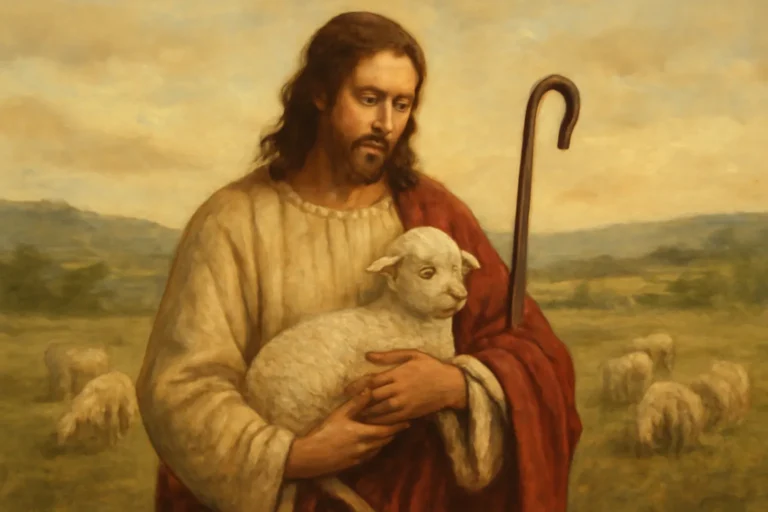
The Good Shepherd in Depth: Jesus, the Guide of Souls
Jesus, known in the Christian tradition as the Good Shepherd, stands at the intersection of revelation, pastoral care, and ethical life. In the Christian imagination, the figure of the shepherd—an ancient archetype with deep roots in the Hebrew Bible and Mediterranean culture—becomes a living person in whom guidance, protection, and sacrificial love are embodied. This article explores the multifaceted image of Christ the Good Shepherd, tracing its biblical foundations, its theological expansions, its practical implications for church life and personal faith, and its enduring relevance for contemporary spiritual formation.
Introduction: A Timeless Metaphor for Divine Guidance
Pastoral imagery is among the oldest frames through which people have understood divine care. In an agrarian world, shepherds were trusted to lead, protect, and nourish flocks. The biblical authors saw in this service a microcosm of God’s relationship with Israel and, later, with all believers. When the Gospel writers and early Christian theologians present Jesus as the Good Shepherd, they are weaving together two strands: the historical reality of shepherding and a theological claim that God’s own presence among humanity is intimate, personal, and accessible to the vulnerable. The Good Shepherd is not distant royalty; he is a caretaker who knows his own, who calls them by name, who lays down his life for the sheep, and who seeks out the lost sheep until he finds it.
Scriptural Foundations: The Good Shepherd in the Gospels and the Old Testament
Old Testament Foundations: The Shepherd’s Language and God’s Covenant Faithfulness
Long before the earthly ministry of Jesus, the shepherd motif appears in Scripture as a concrete symbol of God’s protective presence. In the prophetic and psalmic imagination, God is portrayed as a shepherd who sustains, guides, and disciplines. The 23rd Psalm, often read at funerals and in times of distress, proclaims that “the Lord is my shepherd; I shall not want” and describes guidance through green pastures and still waters. The shepherd’s rod and staff become tools of protection and correction, conveying both mercy and discipline. In Ezekiel 34, the shepherd imagery is more explicit about responsibility: God condemns careless leaders and promises that a true shepherd will come—one who will feed, bind up the injured, and seek the lost. This prophetic frame supplies the ground from which the New Testament application of Jesus the Good Shepherd emerges. The shepherd metaphor thus moves from God’s covenant faithfulness in the Old Testament to a Christ-centered fulfillment in the life and work of Jesus.
New Testament Realization: Jesus as the Good Shepherd in the Gospels
In the Gospel of John, Jesus directly frames his mission with shepherding language. He declares, “I am the good shepherd. The good shepherd lays down his life for the sheep” and he emphasizes intimate knowledge: “I know my own and my own know me” (John 10:11–15). This self-identification situates Jesus within the ancient imagery while redefining it through the lens of his mission, death, and resurrection. The Good Shepherd motif also includes care for the sheep who hear his voice, the protection against wolves, and the seeking of the lost sheep. The Gospel writers use these images to express not only a personal trust in Jesus but a corporate hope: a flock under a single shepherd, a people gathered into one fold under one guardian, with Jesus as both guardian and gate.
Theological Dimensions: Who Is the Good Shepherd?
Christology: The Incarnate Shepherd
The identification of Jesus as the Good Shepherd carries robust Christological claims. It presents him as the incarnation of divine care—God made flesh who does not abandon the flock but joins it, guides it, and ultimately sacralizes the shepherd’s vocation in the salvific act. The figure of the Great Shepherd (a title used in 1 Peter 5:4 and Hebrews 13:20 in other scriptural frames) sees the shepherd not merely as a human caretaker but as one who embodies divine authority and mercy. The shepherd’s authority, in this sense, is not coercive but restorative: leadership that adorns service, humility, and sacrificial love. The Good Shepherd is thus the perfect integration of lordship with care, command with compassion, and power with vulnerability.
The Shepherd and the Sheep: Relationship and Community
In theological anthropology, the shepherd/sheep relationship models a dynamic of trust and mutual belonging. The shepherd knows the sheep by name; the sheep recognise the shepherd’s voice and follow him. This personal knowledge implies a relational depth: God’s people are not abstract masses; they are individuals and a cohesive community. The Good Shepherd’s authority is exercised through invitation, not coercion; his voice is listened to and obeyed by those who belong to him. This relational frame carries ethical implications for the church: it invites intimate pastoral ministry, attentive care for the vulnerable, and a willingness to leave the ninety-nine to seek the one who is lost. It is precisely this dynamic that shapes Christian communal life, liturgy, and discipleship in communities that bear the mark of Christ the Good Shepherd.
Pastoral Ministry: Jesus as the Good Shepherd in the Gospels
Care, Guidance, and Protection: How Jesus Shepherds the Flock
The New Testament narrative presents Jesus the Good Shepherd as a model of pastoral care in action. He leads the crowd to green pastures metaphorically by teaching with authority, healing the sick, and feeding the hungry—acts that nourish both body and soul. His miracles of multiplication—the feeding of thousands with a few loaves and fishes—can be read as shepherding acts: providing sustenance for the journey, ensuring the welfare of the flock, and demonstrating that leadership under divine guidance results in abundance rather than scarcity. As the shepherd, he also guides through dangerous terrain: fishing through storms, steering the disciples away from paths that would lead them astray, and preparing them for the cross. The Good Shepherd’s leadership is inseparable from humility, vulnerability, and self-giving love, culminating in the ultimate shepherd’s act: laying down his life for the sheep.
Discipleship and the Call to Follow
A crucial aspect of the Good Shepherd motif is the call to discipleship. Those who hear Jesus’ voice and follow him become part of a sheepfold that transcends ethnic and social boundaries. The image of the shepherd gathers a diverse community—people from different backgrounds brought into one fold under one shepherd. This unity under the Good Shepherd shapes Christian identity: a people not defined by independent pursuits but by their orientation toward the shepherd and their participation in the shepherd’s mission. The ethical life that flows from this call emphasizes care for the vulnerable, forgiveness, and communal accountability, all rooted in trust in the shepherd’s guidance.
Pastoral Implications: How the Good Shepherd Invites, Guides, and Protects
Invitation: The Voice that Calls and Names
One of the most intimate facets of the Good Shepherd is the way he knows and calls each sheep by name. This personal address is more than a literary device; it is a theological claim about divine recognition and relational presence. The Good Shepherd does not treat the flock as a faceless collective. He speaks to each individual, affirming their dignity and inviting a living response of trust. This invitation to relationship undergirds pastoral care in congregational life: pastoral workers must learn each member’s name, history, and needs, and respond with a combination of truth, compassion, and discernment. For believers, this means the practice of listening for the shepherd’s voice in Scripture, prayer, and community discernment, discerning tendencies that mislead and directions that sustain life in abundance.
Guidance: The Breadth of the Shepherd’s Path
The Good Shepherd leads through both calm and storm. Guidance here includes moral formation, communal discernment, and practical decision-making that align with the shepherd’s heart for justice and mercy. The shepherd’s path is not a private itinerary but a common way for the flock, with shared disciplines such as worship, service, and evangelism. The Good Shepherd’s guidance also involves correction and discipline when the flock wanders or when leadership errs. In Christian ethics, this is expressed through accountability structures, humility, and a willingness to repent. The shepherd’s path, therefore, is a path of loving leadership that respects the dignity of each member and aims for the health and flourishing of the whole body.
Protection and Sacrifice: The Rod, the Staff, and the Cross
Protection is a core feature of the shepherd’s work, symbolized by the rod and staff in Psalm 23. In the Christian imagination, these tools point forward to the shepherd who protects the flock through vigilance and, ultimately, through sacrifice. The Good Shepherd’s protective love culminates in the cross, where Jesus lays down his life for the sheep. This self-giving act becomes the definitive expression of care: it is the ultimate demonstration that love in leadership does not demand self-preservation at the expense of others. Christian communities often meditate on this paradox—that true security is found not in dominion but in sacrificial service. The Good Shepherd’s protection thus becomes not only about safety from physical danger but about spiritual integrity, moral truth, and freedom from fear in the presence of God.
Historical and Cultural Context: The Shepherd Motif in Early Christianity
In the early Christian world, the shepherd motif resonated with the social and religious life of many believers. Shepherds were common figures in the agrarian economies of the Eastern Mediterranean, and their imagery would be immediately familiar to audiences hearing these texts. The use of the shepherd metaphor also allowed early Christians to articulate a distinct identity: a people formed around a single leader who embodies God’s own care for the vulnerable. The image of the shepherd was flexible enough to translate across cultures while retaining a clear Christological center. Understanding this context helps modern readers appreciate why the Good Shepherd figure endured and why it remains a central lens through which to read Jesus’ ministry, death, and resurrection. It is a metaphor that binds together leadership, compassion, vulnerability, and divine fidelity into a coherent spiritual vision.
Liturgical and Devotional Uses: Prayer, Hymns, and the Good Shepherd Motif
Prayerful Reflections on the Shepherd’s Care
Across Christian liturgy and private devotion, the Good Shepherd image provides a rich framework for prayer. Prayers often ask for the shepherd’s guidance, protection, and mercy, echoing Psalm 23 and John 10 in a form that invites intimate communion with the divine shepherd.devotional practices may include meditative reading of the 23rd Psalm, contemplation of the Good Shepherd’s voice, and intercession for the vulnerable who need protective care. In many Christian communities, prayer services around Good Shepherd Sunday in the liturgical calendar recall the tender care Jesus provides for his flock and invites believers into a deeper sense of belonging within the church as a sheepfold under divine leadership.
Hymns and Theological Songs
Throughout church history, composers have celebrated the Good Shepherd with hymns that invite trust, gratitude, and moral courage. Psalms, paraphrases of John 10, and ancient canticles have been woven into congregational life in ways that keep the shepherd imagery present in daily worship. The music itself often dramatizes the shepherd’s compassion—portraying gentle voices, abundant pasture, and safe shelter as the believer’s lived experience within the faith community. In hymnody, the Good Shepherd becomes a pastorally powerful symbol that sustains hope even amid trouble and sorrow.
Contemporary Theological Reflections: The Good Shepherd in the Modern Church
Pastoral Leadership in a Pluralistic World
In contemporary theology, the Good Shepherd agenda interacts with issues of justice, inclusion, and social responsibility. The shepherd’s care expands beyond the boundary of a local congregation and invites believers to participate in public mercy—addressing poverty, oppression, and displacement. The Good Shepherd invites leadership that is both prophetic and pastoral, a combination of truth-telling and healing presence. Modern interpreters emphasize that Jesus as the Good Shepherd leads with humility and solidarity with the vulnerable, and that churches are called to embody this model in their outreach, advocacy, and social ministry.
Ecclesiology: The Church as a Shepherded Community
From an ecclesiological perspective, the church is understood as a shepherded assembly—an organized flock—under the care of Christ the Good Shepherd. The leadership structures, pastoral care teams, and community disciplines reflect the shepherd’s heart for each member. In this vision, bishops, elders, pastors, and lay leaders share in the pastoral duties of the Good Shepherd: guiding, protecting, feeding, and nurturing the flock toward fullness of life in God. The idea of the church as a unified herd led by one shepherd anchors a cohesive identity and mission, even as diverse communities locally express that mission in culturally specific ways.
Practical Applications for Personal Faith and Community Life
To live under the sign of the Good Shepherd is to cultivate practices that reflect his leadership. Here are practical pathways drawn from the broader biblical witness and medieval to contemporary Christian thought:
- Prayerful listening: Regularly listening for the shepherd’s voice in Scripture, prayer, and community discernment; distinguishing the true voice from competing calls.
- Care for the vulnerable: Engaging in acts of mercy, hospitality, and social service that reflect the shepherd’s protective love for the weakest members of the flock.
- Community accountability: Embracing structures of accountability that keep leadership aligned with the Good Shepherd’s ethic of humility and service.
- Discipleship and formation: Prioritizing spiritual formation that nurtures trust in the shepherd and fosters integrity of life according to his example.
- Hope in suffering: Interpreting suffering and challenge through the shepherd’s presence, recognizing that even the valley of darkness can be traversed with the rod and staff of divine guidance.
Variations on a Theme: The Breadth of the Synoptic and Johannine Portraits
Across biblical literature, the image of Jesus the Good Shepherd resonates with several overlapping but distinct motifs. In the Gospel of John, the shepherd motif merges with imagery of divine life and ultimate sacrifice. In the Synoptic Gospels, while direct “I am the good shepherd” statements are less prominent, Jesus’ actions—teaching with authority, healing, feeding, and guiding—mirror the shepherd’s heart. The shepherd-textual tradition also interacts with other metaphors for Christ’s leadership, including the Gate, the Light of the World, the Cornerstone, and the Shepherd-King who rules with mercy. Taken together, these strands illuminate a coherent portrait: a Savior whose authority is exercised as a shepherd’s care, and whose care is expressed in life-giving acts, compassionate listening, and a cross-centered commitment to the flock’s ultimate good.
Ethical and Ecological Reflections: The Good Shepherd and Creation
Some modern readers extend the shepherding metaphor into considerations of creation care. If the flock belongs to a shepherd who tends it with wisdom, then human beings have a responsibility as stewards of the created order. The Good Shepherd’s concern for vulnerable life—whether human, animal, or ecological systems—invites believers to practices of sustainable living, justice for the marginalized, and reverent stewardship of natural resources. This ecological dimension of the Good Shepherd narrative resonates with contemporary concerns about climate justice, biodiversity, and the moral duty to safeguard God’s world for future generations. In this sense, the Good Shepherd becomes a model for integrated spiritual and ecological leadership, where care for people and care for the environment are intertwined expressions of faithful following.
Historical Canon and Theological Debate: Debates About Authority and Mercy
Throughout church history, theologians have debated the relationship between authority and mercy in the figure of the Good Shepherd. Some stress the fidelity aspect—God’s faithful presence among a people through a trustworthy shepherd. Others emphasize the radical, radical, self-giving mercy that leads the flock to life abundant. The tension between authoritative governance and tender pastoral care has produced a rich tradition of leadership models in Christian communities. What remains constant is the central claim that the shepherd’s heart is a form of love that sustains, reforms, and redeems. Contemporary theologians often explore how this model translates into governance structures, education, and spiritual formation, aiming to preserve both integrity and compassion within the life of the church.
Cross-Religious and Interfaith Perspectives: Shepherd Imagery Beyond Christianity
Shepherd imagery is not unique to Christian scripture. In many religious and philosophical traditions, leaders take on shepherd-like roles—as guides, protectors, and caretakers of a community. Interfaith discussions illuminate how various traditions interpret shepherding as a symbol of service and ethical leadership. The Christian emphasis on Jesus as the Good Shepherd provides a distinct interpretation—one that centers on redemptive self-sacrifice, intimate personal knowledge, and an ultimate salvific goal. Such cross-cultural comparisons can enrich theological reflection by highlighting our shared longing for wise and compassionate leadership and by offering fresh ways to speak about care, responsibility, and community formation.
Conclusion: The Everlasting Shepherd
In the Christian narrative, the figure of the Good Shepherd is not a static emblem but a living reality that calls believers into relationship, service, and hope. The Shepherd of Israel who guided the people of old becomes in Christ the Good Shepherd who leads with tenderness, protects with unwavering fidelity, and secures life through self-giving love. Jesus as the shepherd-king embodies the paradox of strength in vulnerability and authority expressed through service. In this sense, the Great Shepherd is not distant from the flock but intimately present—in every act of care, in every pastoral conversation, and in the eschatological hope that gathers the faithful into an eternal fold where no one is lost. Reflecting on this enduring image invites Christians to embody shepherd-like virtues in daily life: to listen for the shepherd’s voice, to provide nourishment for the soul, to stand with the vulnerable, and to trust in the shepherd’s unending faithfulness. The Good Shepherd remains a powerful invitation to follow, not merely to admire; to be guided, not only to be guided, and to participate in the shepherd’s mission of gathering, healing, and transforming the world in the light of God’s love.
In sum, the Lord who is described as the Good Shepherd is a resource for faith, a model for leadership, and a pattern for community life. The variations on this name—Jesus the Good Shepherd, Christ the Shepherd, the Shepherd and Guardian, the Great Shepherd, the shepherd of the sheep—each illuminate a facet of this profound biblical truth. Across ages, cultures, and languages, the Good Shepherd remains a compelling invitation: to know him, to follow him, and to let his care shape every dimension of life.