
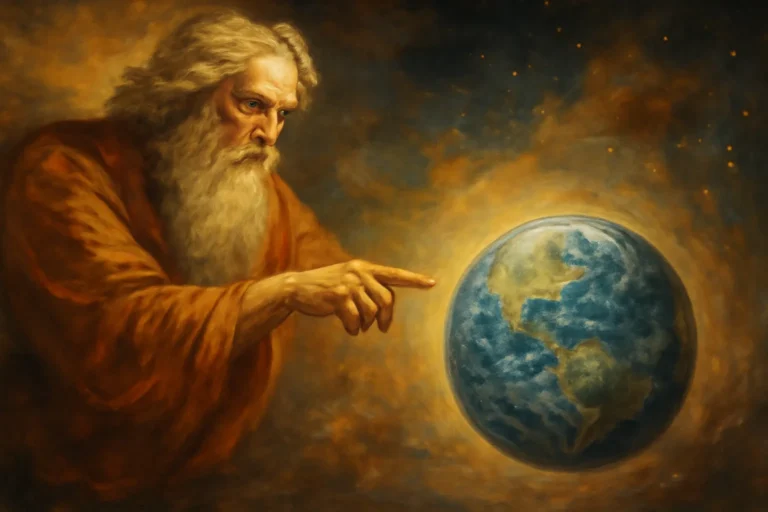
Introduction: The Claim of a God Who Acts
The theme of God actually involved in the world sits at the crossroads of faith, history, and imagination. Across centuries and continents, believers have asked how a transcendent reality can be intimately present within time-bound human experience. This article offers a panoramic, theologically informed survey of divine involvement in creation, from ancient narratives to contemporary reflections. We will consider what it means for the God who acts in history to be both metaphysically transcendent and personally present, and how that belief shapes prayer, ethics, worship, and public life. The phrase God truly engaged with the world is not merely a slogan; it is a claim about power, purpose, and relationship that has consequences for how communities read signs, respond to suffering, and participate in the quest for justice.
Historical Sketch: How Traditions Speak About God in an Active World
Throughout history, communities have expressed the conviction that divine involvement in creation is not passive but timely, purposeful, and—even at times—counterintuitive. In ancient prophetic literature, the God of Israel is portrayed as a God who calls, judges, and restores. In the Christian tradition, the life, death, and resurrection of Jesus center the claim that God has acted decisively to redeem creation. In many streams of Islam, Judaism, Hinduism, and other world traditions, the sense of God implicated in human history takes on specialized forms—yet the common thread is a conviction that the divine operates within the world rather than apart from it.
Historical theology helps map these variations without collapsing them into a single framework. For some, the emphasis is on divine providence—a steady governance by God over natural processes and human events. For others, the emphasis is on personal revelation and incarnate mediation in which God enters the human story in a particular moment. Still others highlight ethical responsiveness—the conviction that God’s active involvement summons human beings to justice, mercy, and solidarity with the vulnerable. Across these perspectives, the claim that God is not distant but present has shaped rituals, moral injunctions, and educational aims.
Theological Frameworks for Divine Action
To speak of an actively involved God is to engage a spectrum of theological models. Each framework attempts to honor the mystery of divine action while offering intelligible language for human experience.
Classical Theism and Providence
In many streams of classical theism, providence denotes God’s governance of the world, including the guidance of history and the sustenance of life. Proponents argue that God sustains all beings and governs contingencies through purposeful regularities, while respecting creaturely freedom. The key claim is not domination but intimate ordering: God remains transcendent but is actively at work in daily events, guiding the arc of history toward a telos that aligns with goodness. In this sense, the world is not an autonomous machine but a stage on which the divine drama unfolds.
Open Theism and Relational Freedom
A contrasting approach, often labeled open theism, highlights genuine future openness and a dynamic knowledge of events contingent on human choices. Advocates insist that the God who acts in history is not coercive but persuasive, inviting trust and response. This view preserves meaningful human agency while affirming that God remains profoundly involved with the world—yet in a way that accommodates surprise, dialogue, and evolving relational depth.
Process Theology and Creative Becoming
In the process tradition, divine involvement in the world is described as processive and co-creative. God is not imagined as unilaterally determining every outcome but as a partner who persuades, valorizes novelty, and works through evolving processes. This perspective foregrounds moral persuasion, emergent possibilities, and the conviction that God’s activity often manifests through creaturely responses—human and non-human—within the unfolding history.
Incarnation, Emmanuel, and Mediational Action
The incarnation—God dwelling with humans in Jesus Christ—is a decisive articulation of active involvement. The claim is that divinity is not distant or abstractly perfect but accessible, vulnerable, and transformative in the crucible of human experience. If God is truly present in a concrete history, then religious life, social life, and political life acquire a new shape: they become arenas in which the divine presence is recognized, tested, and enacted through love, service, and justice.
Biblical Foundations for a God Who Intervenes
The most sustained articulation of a God who is actively involved arises within sacred Scripture. The biblical record presents a tapestry of divine actions: creation, liberation, covenantal formation, prophetic exhortation, incarnate presence, and ongoing Spirit-inspired empowerment. Across these strands, the claim remains: God is not distant but engaged, shaping outcomes and inviting response.
Old Testament: God with and for Israel
In the Hebrew Bible, God’s engagement is frequently described in terms of presence and mission. The exodus narrative presents a God who hears the cries of a marginalized people, acts in judgment on oppressive powers, and leads the community toward a land of promise. The language of divine intervention becomes a living grammar: God parts seas, rains down manna, and raises up leaders at critical moments. Yet the biblical text also emphasizes the moral parameters of intervention: faithfulness, obedience, repentance, and the possibility of collective failure followed by renewal.
New Testament: Jesus as the Center of God’s Active Presence
The New Testament weaves a narrative in which the God who acts in the world enters history in a radical and transformative way. The life and teachings of Jesus reveal a God who heals, forgives, confronts injustice, and inaugurates the kingdom of God. The resurrection is read as the definitive sign of divine victory over the powers that threaten life. The Acts of the Apostles and the epistles then articulate how this active involvement continues: God’s Spirit empowers communities, guiding discernment, moral courage, and missionary energy.
Philosophical Perspectives on God’s Engagement with Reality
Beyond confessional boundaries, philosophers and theologians have engaged the question of how the divine acts within the world can be coherent with human freedom, the problem of evil, and the reality of natural processes. The discussion often turns on whether divine action is contiguous with natural law or supracausal, and on how divine permission relates to human responsibility.
Freedom, Evil, and Divine Action
A central challenge is reconciling God’s active involvement with the existence of moral evil. The dominant answer in many traditions is that God’s providence respects creaturely freedom while offering grace, mercy, and corrective intervention. The belief that God can intervene in history does not require that God micromanages every outcome; rather, it allows for meaningful cooperation with divine aims through human decision and communal discernment.
Miracles, Signs, and Epistemic Limits
The topic of miracle and sign raises questions about epistemology and the credibility of experiential claims. Some readers interpret extraordinary events as evidence of direct divine action; others propose that miracles function as symbolic or transformative events that point beyond themselves. In any view, the interpretation of miracles shapes how believers understand God actively involved with the world—either as a direct disruption of natural order or as a meaningful disclosure within ordinary life.
Modes of Divine Involvement in the World
A robust account of the God who acts in history can be organized around several recurring modalities. These modes are not mutually exclusive; they often intersect in the lived experience of faith communities.
- Providence and sustainment: God maintains the order of the cosmos, supports life, and arranges circumstances for growth and flourishing.
- Guidance and revelation: God communicates through scripture, conscience, community discernment, and prophetic voices to steer the moral imagination.
- Incarnation and mediation: God enters the human story in a particular form, revealing divine character and inviting trust and imitation.
- Judgment and mercy: God addresses wrongdoing and injustice with corrective love, while offering mercy to the repentant and hope to the afflicted.
- Empowerment by Spirit: God equips individuals and communities with gifts, courage, and bold imagination for service and witness.
To speak of divine engagement is to affirm that sacred presence informs public life as well as private piety. When communities pray for justice, mercy, and peace, they are not merely petitioning an abstraction; they are calling upon the God who actually intervenes in the world to align human affairs with divine purposes.
Practical Implications: Prayer, Worship, and Everyday Ethics
If God is actively involved in the world, there are concrete implications for how people pray, worship, teach, and act. The belief translates into a confident expectation that prayers can participate in shaping outcomes, while also acknowledging that divine timing and wisdom may differ from human preferences.
Prayer as Dialogue with a Living God
Prayer becomes more than a wish list. It serves as a space of encounter, listening, and commitment. The faithful seek to discern the gentle, persistent voice of a God who is present and listening, while offering gratitude for divine mercy at work in ordinary life. Prayer is also a means of aligning one’s will with the divine will, cultivating patience, humility, and courage.
Worship as Participation in Divine Action
Worship can be understood as participation in the divine life, a communal practice that rehearses the story of God’s engagement with the world. Through liturgy, song, ritual memory, and sacramental life, communities rehearse the conviction that the sacred has not departed from the world but remains present, shaping values and relationships.
Ethics, Justice, and Social Imagination
When God is involved in the world, ethical reflection becomes missional. Believers are called to recognize the image of the divine in every person, to pursue justice for the vulnerable, and to resist structures that degrade human dignity. The conviction that the divine acts through people can empower courage to advocate for peace, reconciliation, and equitable public policy.
Interreligious Reflections: Common Ground and Distinctives
Many religious traditions affirm some form of the divine presence in creation and history. While the language and emphasis differ, a shared intuition animates these perspectives: the sacred is not distant but accessible, calling humanity toward truth, compassion, and responsibility.
Convergences and Divergences
A key area of dialogue concerns how God’s action is described. Some traditions emphasize immanence—the divine within creation—while others stress transcendence—the sacred beyond the created order. Yet across traditions, acts of compassion, healing, and transformation are often cited as evidence of a greater reality at work in the world.
Ecumenical and Interfaith Opportunities
The claim that God is actually involved with the world invites interfaith conversation about how communities discern guidance in a complex global era. Dialogues may focus on shared commitments to human flourishing, care for the vulnerable, and ethical governance. At the same time, distinctive theological formulations remind us that the sense of divine action is rooted in particular narratives—narratives that shape identity, worship, and mission.
Contemporary Challenges and Mysteries
In modern times, believers confront difficult questions about the scope and timing of divine action. Suffering, natural disasters, and systemic injustice can challenge confidence in a benevolent and active God. The conversation often explores whether divine action is best understood as immediate intervention, long-term transformation through human agency, or a combination of both. The humility embedded in this inquiry acknowledges that mystery remains a faithful companion to belief.
The Problem of Pain and Suffering
How can a benevolent, actively involved God permit pain? The traditional responses include the refining power of trials, the moral necessity of free will, and the hope of ultimate restoration. Others stress that God’s action may be redemptive in ways that are not immediately perceptible, inviting future clarity in light of a larger divine narrative.
Historical Catastrophes and Ethical Reassessment
When wars, famines, or genocides devastate communities, the idea of a God who acts with the world is tested. The faithful often respond by emphasizing solidarity with victims, advocacy for justice, and a renewed emphasis on nonviolent means of transformation. The insistence remains that God, in some sense, remains involved in the world by sustaining memory, enabling resilience, and delivering hope in dark seasons.
Concluding Synthesis: Living with a God Who Acts
The claim that God actually involved in the world is a lived conviction that invites ongoing inquiry, worship, and ethical action. It is a conviction that shapes how individuals interpret signs, how communities educate younger generations, and how societies organize for the common good. It does not collapse into a simple, finite doctrine; rather, it remains a dynamic, sometimes paradoxical, insistence that the divine presence is nearer than we suppose and more transformative than we often realize.
Practical Takeaways for Faith Communities
– Embrace humble confidence in God’s active presence while acknowledging mystery.
– Cultivate discernment practices through prayer, scripture reading, and communal listening to better notice how the divine action shows up in concrete life.
– Channel the sense of divine involvement into justice-oriented service, helping communities respond to suffering with tangible care.
– Foster an atmosphere of reliant hope that invites ongoing conversation about how God’s engagement shapes personal and public decisions.
Selected Key Concepts in a Compact Reference
- Divine providence as sustaining order and guiding history.
- Incarnation as God’s definitive self-disclosure in human life.
- Revelation as a primary means by which God communicates with creation.
- Miracle as a possible sign of intervention that calls for interpretation.
- Spirit empowerment as the ongoing presence of the divine act in communities.
Frequently Encountered Phrases and Semantic Variants
For readers exploring the breadth of this topic, it helps to recognize the semantic landscape surrounding the idea of a God actively involved in the world.
- The God who actually acts in history
- The divine presence that engages with creation
- God’s ongoing involvement in daily life
- The God who intervenes in human affairs
- Divinity as active sustainer and moral sponsor
- Immanence with divine agency in ordinary moments
- Theos as intervening benevolence in crisis
Each articulation emphasizes a different facet of the larger claim: action, presence, relationship, and ethical direction. Taken together, they sketch a cohesive vision in which the sacred is not a distant principle but a lived reality that invites response, worship, and responsibility.
Final Reflections: The Adventure of Faith in a World Where God Acts
The question of whether a God actually involved in the world exists is ultimately a trust question as well as an intellectual one. A robust, nuanced understanding recognizes that divine action, when confessed, is best grasped in the language of hope, accountability, and care for all creatures. If the God who acts is truly present, then every act of justice, every act of mercy, and every act of truth-telling becomes part of a larger pattern in which the divine work unfolds through human hands and sacred imagination.
In closing, God’s active involvement in the world is not a single, static doctrine but a living invitation: to listen, to learn, to love, and to labor for a more just and compassionate order. Whether one frames the faith in terms of covenant, incarnation, Spirit, or providence, the core intuition remains much the same: the divine presence is not far away; it is near, it is relational, and it is mobilized for healing, justice, and transformation. May this understanding deepen curiosity, sustain humility, and empower courageous action in communities seeking to bear witness to a God who truly engages with the world.