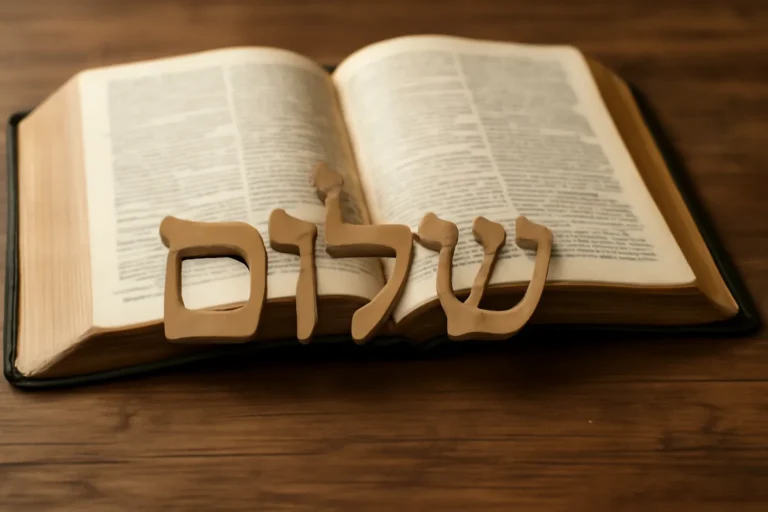
Shalom is a Hebrew word that has resonances beyond a simple English translation. In the biblical corpus, it names a state, a process, and a vocation—a holistic peace that binds God’s purposes to human flourishing. This article offers a wide-ranging exploration of shalom in the Bible, tracing its etymology, its theological freight, and its practical implications for worship, community life, and spiritual formation. By weaving linguistic insight with biblical interpretation, we aim to show how shalom functions as a comprehensive vision of peace, justice, and wholeness within the divine plan.
Defining Shalom: Peace as Wholeness, Not Simply Absence
In biblical usage, shalom embraces more than the absence of violence. It denotes a state of completeness, soundness, and prosperity that covers an entire life—physical, relational, spiritual, and communal. While many modern translations render shalom as “peace,” the semantic field includes well-being, welfare, safety, harmony, and even salvation in particular contexts. The concept functions as a blessing, a covenantal promise, and an aspirational aim that the people of God are called to pursue and embody.
Several key dimensions frequently co-occur within shalom discourse:
Relationship with God—a right, restored fellowship with the Creator; peace with God as the foundational premise of all other peace.
Relationship with neighbor—equity, fairness, and reconciliation in social interactions; peace with others as evidence of inner transformation.
Creation and safety—the absence of threat and the flourishing of life within a secure order, including health and abundance.
Ritual and worship—peace is experienced in the liturgical life of the community, in the rhythms of worship and sacrificial life.
Throughout Scripture, shalom is active and relational. It is not a passive state but a dynamic movement toward a future hope—often described as the restoration of all things under God. This means that the pursuit of peace in the biblical sense requires ethical action, covenant fidelity, and communal generosity. In every era, the people of God are summoned to work toward a shalom that includes the vulnerable, the marginalized, and the stranger.
Root Meanings: Shalem, Shalom, and Completeness
The Hebrew root ש-ל-ם (sh-l-m) undergirds several related words, including shalem (whole, complete), Shalom (peace), and shelom (completeness achieved through reconciliation). This linguistic family reveals a theology of harmony rooted in integrity and wholeness. When a person or a community is said to be in shalom, it signifies that every domain of life—bodily health, economic security, social trust, and spiritual fidelity—exhibits balance and right ordering before God and neighbors.
In the biblical worldview, shalom is not merely a private feeling of calm; it is the social and cosmic order aligned with God’s purposes. The peace that comes from God is redemptive in character, often requiring repentance, righteousness, and fidelity to divine law. Thus, the idea of shalom combines ethical mandate with a vision of cosmic renewal.
In the Pentateuch and the Prophets, shalom appears as a covenant blessing, a gift that accompanies fidelity to Yahweh. For example, the blessing formula often connects shalom to faithful living within the land, stable households, and durable peace between neighbors. The patriarchal narratives present shalom as a sign of God’s protection and favor, while the Law provisions laws of justice, Sabbath rest, and care for the vulnerable that sustain shalom in communal life.
Shalom thus becomes a social good: a community where justice is administered, where debts are forgiven in the Year of Jubilee, and where the poor and immigrant find a hospitable, secure space. When these conditions are met, the land bears fruit, households flourish, and the nation enjoys a durable peace.
Shalom in the Land: Geography, Temple, and the Covenant
The Old Testament also ties shalom to the people’s use of land and the rhythms of worship. The geography of the Promised Land becomes a theater in which God’s peace is experienced or endangered. When the people honor their covenant duties—justice for the vulnerable, honest weights, fair business practices, generous gleaning laws—the social fabric remains intact and shalom endures. When they fail, internal conflict, injustice, and foreign domination threaten the harmony that God intends.
The temple, as the focal point of worship, is a symbol and locus of shalom—where the offerings point toward reconciliation with God and the people live in right relationship with one another. The sacrificial system teaches that peace with God requires sacrifice, faith, and an ordered life. Even when sacrifices ceased in the prophetic sense after the exile, the longing for peace remained central to Israel’s identity.
Shalom and the Prophets: Hope in Restoration
Prophetic Vision: From Restoration to Universal Peace
In the prophetic literature, shalom expands beyond national peace to include universal harmony under God’s rule. The prophets speak of a future when swords are beaten into plowshares, and nations once at war discover a shared peace that radiates from righteousness and justice. In this sense, shalom becomes eschatological—pointing toward an age when God’s reign brings enduring reconciliation, healing, and joy to all creation.
Key prophetic motifs include:
The restoration of David’s line and the reestablishment of a just and inclusive governance that protects the vulnerable.
The universal invitation to know the Lord, with knowledge of God transforming social relationships and economic life.
The reversal of fear, where people live without threat because God’s justice guards the land.
Isaiah’s poetry, in particular, speaks of peace as a gift rooted in righteousness: “The effect of righteousness will be peace, and the result of righteousness, quietness and confidence forever” (paraphrase of Isaiah 32:17). This union of ethical conduct and communal serenity lies at the heart of the prophetic shalom agenda.
Shalom in the New Covenant: Christ as the Prince of Peace
Jesus and the Fulfillment of Shalom
In the New Testament, the concept of shalom continues to function as a deep, Christ-centered peace that reconciles humanity to God and to one another. The title Sar Shalom (Prince of Peace) for Jesus in Isaiah 9:6, interpreted through Christian tradition, frames Jesus as the one who mediates the ultimate peace between God and humanity and initiates a new human community marked by justice and joy.
New Testament writers expand the scope of shalom by presenting Jesus as the source of reconciliation, the one who creates a new humanity in which Gentile and Jew share one Spirit and one covenant. In this light, peace is not only personal calm but corporate peace—peacemaking as a marker of following Christ and as a sign of the in-breaking kingdom of God.
Several New Testament themes illuminate the Christ-centered understanding of shalom:
Peace with God through justification by faith and union with Christ.
Peace with others through reconciliation, unity in the body, and the cross-work that removes enmity.
Inner peace as the fruit of the Spirit, enabling believers to endure trials with hope and joy.
The church as a community of shalom called to practice generosity, hospitality, and care for the vulnerable.
Several passages articulate the New Testament trajectory of peace as a lived reality in Christ:
The apostolic claim that Christ’s death and resurrection creates a new peace between God and humanity, abolishing hostility and enemies within the community.
The instruction to pursue peace and holiness, recognizing that holiness without peace yields a fragile community.
The emphasis on peacemaking as a calling for disciples who embody mercy, forgiveness, and reconciliation in daily life.
Practical Theologies of Shalom: How to Live the Biblical Peace in Contemporary Contexts
Shalom as Daily Practice
Living out shalom in the modern world involves concrete practices that reflect the Bible’s multi-dimensional peace. Communities that seek peace work toward justice, mutual trust, and healing across divides of class, race, and culture. The biblical call to welcome the stranger, care for widows and orphans, and address exploitation demonstrates that shalom is not a private virtue but a public obligation.
Key practices include:
Fostering forgiveness and reconciliation in broken relationships.
Promoting justice and fair treatment in economic life, including honest labor, fair wages, and protection from exploitation.
Nurturing community health through mutual aid, care for the vulnerable, and shared resources.
In this sense, shalom becomes a test of faithfulness: do we pursue a just peace that honors God and serves the neighbor, even when it costs us personally?
Worship, Prayer, and Shalom
Worship in the biblical frame is not merely ritual activity but the actualization of shalom in liturgical life. Prayer, corporate blessing, and ritual confession are means by which the community seeks God’s peace and aligns its life with divine order. Psalms of thanksgiving frequently celebrate God as the source of peace, while prophetic and wisdom literature teach that true tranquility flows from moral living and fidelity to God’s covenant.
In liturgy, the refrain “the Lord blessing you and keeping you” (a form of the Aaronic blessing) resonates with the wish for shalom—a blessing that covers every domain of life: health, security, prosperity, and harmony within the community and with God.
Shalom Ethics: Justice, Mercy, and the Common Good
Ethical Imperatives Embedded in Shalom
From the earliest scriptures to the later apostles, shalom ethics insist that peace is inseparable from justice. A community bent toward peace must address social inequalities, protect the vulnerable, and cultivate genuine hospitality. In this sense, shalom also involves restorative justice—repairing harm, restoring dignity, and rebuilding trust after injury.
Examples of ethical commitments associated with shalom include:
Prohibitions against oppression, extortion, and deceit that disrupt communal harmony.
Practices of mercy, such as care for foreigners, orphans, and widows, who are most vulnerable to disruption of peace.
Economic justice through fair dealing, equitable distribution, and the cancellation of debts in jubilees of mercy.
Thus, the shalom project in the biblical imagination is not an inward feeling alone, but outward action that transforms structures and systems so that life can flourish in the presence of God.
Shalom in Worship and Community Life
Ceremony, Covenant, and Community Peace
In the biblical narrative, worship experiences are often oriented toward the promotion of shalom. Festivals, sabbatical rest, and common meals foster a reciprocal peace within the community, reinforcing the memory of God’s faithfulness and generating solidarity across generations. The peace offerings in Leviticus, for example, exemplify how communal meals function as symbols of reconciliation and shared blessing, reinforcing social bonds and mutual trust.
In Christian communities today, these patterns translate into:
Inclusive worship that welcomes strangers and creates spaces where diverse voices are heard.
Forgiveness rituals, confession, and reconciliation ceremonies that restore broken relationships.
Mutual aid networks and biblically grounded social outreach that demonstrate tangible peace to the world.
Thus, a shalom-shaped church life integrates liturgy, ethics, and service into a coherent witness of peace that testifies to God’s reign.
Semantic Variants: Breathing Room for Meaning Across the Bible
Variations Across Texts and Traditions
Scholars frequently note that shalom bears semantic breadth across Hebrew Bible and the New Testament world. In some contexts, the term emphasizes personal interior calm; in others, social justice and political stability take center stage. Even within a single text, the concept can shift from personal blessing to communal safety, from the blessing of a household to the renewal of a whole nation. Readers are wise to attend to context, as the nuances of shalom shift with genre, audience, and covenantal frame.
To aid understanding, here is a spectrum of shalom-related meanings you may encounter in biblical study:
Personal peace—inner assurance, confidence, and rest in God’s presence.
Relational harmony—peace with neighbors, reconciliation, and reconciliation through forgiveness.
Social justice—economic fairness, care for the vulnerable, and just governance that sustains peace.
Covenantal fidelity—alignment with God’s law as the ground of peace, especially in the Psalms and Prophets.
Cosmic renewal—a future dimension where peace extends to the entire created order in eschatological hope.
Challenges in Reading Shalom Today
Interpreting shalom within a modern, pluralistic setting requires humility and careful discernment. Some questions to consider include:
How do we translate a biblical concept of peace into contemporary diplomacy and conflict resolution?
What does it mean to pursue shalom for people with different faith commitments or for those who are marginalized because of culture or identity?
How do we navigate the tension between justice and mercy when they seem to pull in different directions?
Despite these challenges, the biblical vision remains compelling: shalom calls believers to be peacemakers who labor for a society where justice and mercy flow together, under the sovereignty of God.
Conclusion: The Ongoing Quest for Shalom
Shalom as a Lifelong Pursuit
The biblical shalom is not a static state but a lifelong pilgrimage toward a divinely ordered good. In every era, communities are invited to participate in God’s work of reconciliation, healing, and renewal. The peace that Scripture speaks of is inextricably linked to justice, righteousness, and the presence of God among his people.
As Christians and Jews alike seek to embody shalom, they engage in a hopeful practice: to live with integrity in a world marked by brokenness, to extend mercy where violence seems easier, and to cultivate relationships that honor God’s design for human flourishing. The biblical call to pursue peace—to live in harmony with God, with neighbors, and with creation—remains a vibrant, demanding, and transformative vocation in the life of faith.
Ultimately, the biblical message about shalom invites us to a broader horizon: a reconciled, just, and joyful world in which God’s peace pervades every dimension of life. Whether one approaches the topic from the angle of theology, anthropology, ethics, or pastoral care, the meaning of shalom remains a robust invitation to participate in God’s work of healing and renewal. The Bible’s teaching on peace is not merely about quiet moments of rest but about a rightful ordering of life under divine sovereignty—a shalom that sustains, inspires, and transforms communities through generations.