Bible journaling stands at the intersection of faith and creativity, inviting believers to encounter the living Word in fresh, tangible ways. This article explores biblе journaling in its many forms—often called scripture journaling, journaling the Bible, or biblical journaling—and offers a comprehensive map for readers and practitioners who want to cultivate a devotional habit that is both disciplined and imaginative. Through historical reflection, practical methods, theological reflection, and communal practice, this guide surveys how creative paths through Scripture can deepen understanding, foster worship, and nurture spiritual formation. Whether you are a long-time practitioner or a curious newcomer, you will find in devotional journaling both a personal companion and a participant in a broader tradition of sacred text engagement.
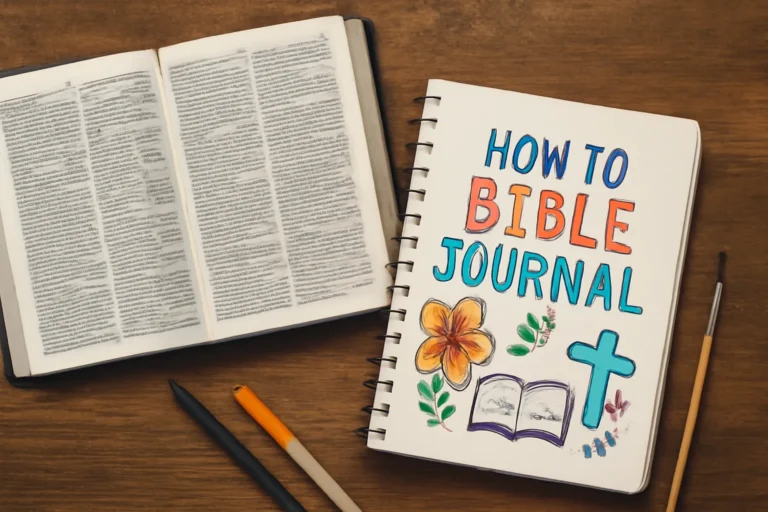
At its core, Bible journaling is a practice that blends reading, reflection, and creative expression. It treats Scripture not merely as a textbook to be studied, but as a living conversation partner with whom the believer is invited to speak and listen. The activity often involves writing notes, doodling, painting, lettering, or collaging within a journal or annotated Bible. Yet the true aim goes beyond aesthetic appeal; it seeks to translate the message of the biblical text into lived faith. In this sense, the practice is both pedagogical and spiritual, a way to process what one reads and to worship through what one creates.
Throughout church history and in contemporary communities, scripture journaling has taken many forms. Some adherents pursue a quiet, meditative approach—scribbling brief prompts, reflecting on a single verse, and praying through it. Others embrace a more expansive method—verse mapping, visual storytelling, or multi-media art that interprets themes such as grace, justice, or covenant. The field is broad enough to welcome both structured study plans and free-form exploration, and the range of materials—from simple notebooks to richly illustrated Bibles—reflects the diversity of the practice.
Historical and Theological Context
The idea of engaging Scripture with pen and image is ancient in impulse, though its contemporary manifestations are diverse. Early Christian readers encountered sacred texts within liturgical settings where calligraphy, illumination, and ornament accompanied the Word. In medieval and Renaissance contexts, manuscripts combined careful script, decorative initials, and illuminated borders—an incarnational approach in which the Word shared space with beauty. In the modern era, bible journaling emerged as a personal, lay-led discipline, sometimes within parish classrooms, youth groups, or solitary devotional life. Across these moments, the unifying thread is habituated encounter—the belief that repeated, meaningful exposure to Scripture can transform perception, memory, and action.
Theologically, Bible journaling sits within several converging streams:
Hermeneutical openness: Journaling invites readers to wrestle with the text’s meaning, asking questions and tracing interpretive pathways that reveal its relevance for today.
Formational spirituality: The practice aims to shape character as readers respond to divine revelation with fidelity, gratitude, lament, or praise.
Creedal and communal learning: While intimate, journaling can also be a shared discipline when groups compare insights and encourage accountability.
Modalities and Techniques: Varieties of the Practice
One of the most appealing aspects of Bible journaling is its adaptability. There is no single correct method; instead, a spectrum of modalities accommodates different temperaments, denominations, and goals. The following subsections highlight common paths, each with practical considerations and theological rationale.
Verse Mapping and Thematic Tracing
Verse mapping is a technique that invites readers to trace terms, ideas, and motifs across a passage or book. A map might connect the divine promises in the book of Genesis to their fulfillment in the New Testament, or it might track the theme of mercy through a psalm, a prophetic oracle, and a gospel parable. The process typically involves:
Selecting a core verse or theme
Annotating key words and cross-references
Creating a visual diagram that represents relationships
Summarizing insights in a concise, repeatable format
The outcome is a visual theology—a map that makes explicit how biblical ideas interconnect and how they might apply to contemporary life.
Scripture Art Journaling
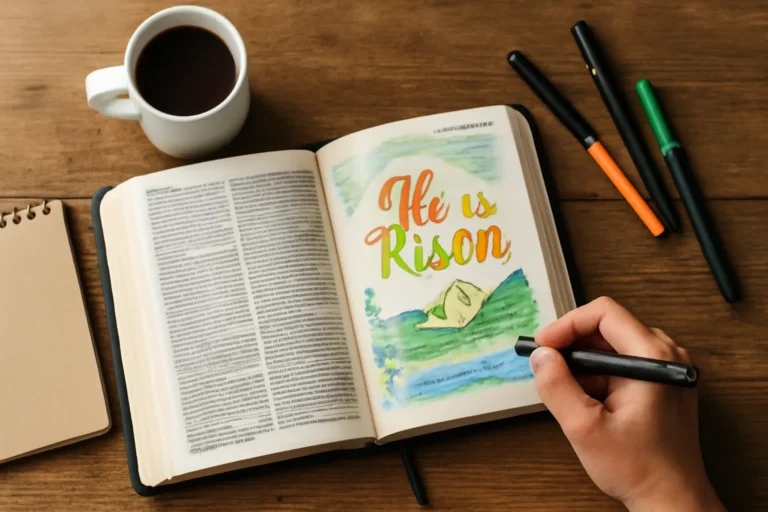
In scripture art journaling, visual expression carries meaning alongside words. Elements may include watercolor washes, brush lettering, collage, or symbolic imagery that conveys a passage’s emotional or spiritual resonance. Some practitioners pair a verse with an abstract background that evokes the text’s mood; others illustrate scenes from the passage with careful iconography. The advantage of this method is that it can deepen affective engagement—reading becomes a multisensory encounter rather than a purely cognitive exercise.
A straightforward, written reflection approach emphasizes personal response to Scripture. Journal entries may take the form of prayer, confession, gratitude, or petition, anchored by a selected verse or passage. This mode aligns well with devotional traditions that emphasize a heart-to-heart dialogue with God. It also creates a record of spiritual growth—an ongoing conversation that can be revisited to remind a believer of how God has acted in the past.
Guided Prompts and Structured Journaling
For beginners or groups, guided prompts can scaffold the practice. Prompts might include questions such as:
What does this passage reveal about God’s character?
What does it reveal about the human condition or moral obligation?
How does this text call me to respond today?
What obedience or action might flow from this reading?
Such prompts help maintain focus and prevent the process from becoming purely aesthetic. They also support discipleship-oriented journaling that leads to concrete actions in daily life.
Diagrams, Typography, and Creative Lettering
Some practitioners enjoy exploring typography and layout as a form of creative lettering. By varying typefaces, sizes, and color, the reader emphasizes key phrases—such as names of God, covenant promises, or exhortations. Spacing, margins, and margins’ margins can become intentional rhetorical devices, organizing ideas visually and inviting meditation on phrasing and cadence.
Process and Practice: Getting Started with Confidence
A successful path into Bible journaling begins with clear aims, comfortable materials, and a sustainable rhythm. The following concrete steps offer a practical workflow that can be adapted to personal preference or group context.
Choose a framework: Decide whether you want a long-form journal, a compact devotional notebook, or a hybrid journal that combines art and text. Consider whether you prefer a physical Bible with margins or a separate journal for notes and art.
Set a regular cadence: Aim for a realistic schedule—daily, weekly, or biweekly—that fits life rhythms such as work, family, and worship commitments.
Select materials thoughtfully: Gather basic supplies (a notebook, pens, pencils, or a small watercolor set). If you wish to include imagery, assemble magazines, stickers, or digital tools for design. The goal is simplicity and consistency, not perfection.
Begin with a select passage: Start with a short, meaningful portion that invites contemplation. It could be a psalm, a gospel verse, or a prophetic oracle that speaks to you personally.
Read, reflect, respond: Read the passage slowly, note questions, identify promises or commands, and then respond in writing or art.
Close with prayer or contemplation: Conclude the session with a short prayer, blessing, or moment of stillness, inviting God to continue guiding your understanding and actions.
Maintaining a Habit Without Burnout
Sustainability is more important than intensity. It helps to pair journaling with a routine—perhaps after a particular prayer time, or alongside a weekly Bible study. Allow margins for life’s interruptions; even a small, consistent practice yields growth over time. Remember that the journal is a spiritual instrument, not a trophy. Each entry can be a step forward in discipleship, even when the page looks imperfect.
The practice of Bible journaling sits at the heart of several theological convictions. It affirms the authority of Scripture while acknowledging the necessity of human responsiveness. It embraces the belief that God speaks through text and that the Spirit can illuminate meaning across cultures, ages, and personal circumstances. It also recognizes that emotion, imagination, and imagination can be legitimate channels for encountering the divine, provided they remain anchored in the core truths of the Christian faith.
The following theological strands illuminate why creative engagement with Scripture can be fruitful:
Imago Dei and imagination: Humans are created in the image of a God who reveals himself through beauty, symbol, and story. Journaling honors this capacity to wonder and create as a response to revelation.
Incarnational Word: The Word became flesh; thus, approaching the Bible with tangible media—ink, color, and texture—can be a way of honoring the Word’s concreteness in history and in our lives today.
Transformation through encounter: Repeated, meaningful engagement with Scripture—whether through reading alone, study, or journaling—cultivates transformation of thought, affections, and will.
hermeneutical humility: Journaling invites readers to hold intention and ambiguity with care, allowing room for the Spirit to guide interpretation while remaining anchored to Scripture’s core testimonies.
Engagement Across Traditions
Across denominations, the practice of creative engagement with Scripture can take distinct forms, yet it often centers on the same aims: to know God more deeply, to be formed in love and justice, and to bear witness to the grace of Christ. Some traditions emphasize liturgical color and visual symbolism, while others highlight personal testimony and pastoral care. Regardless of the exact expression, the underlying principle remains: devotional journaling can mediate divine truth to daily life in meaningful ways.
Different groups may approach Bible journaling with distinct goals. Below are practical guidelines tailored to several contexts, emphasizing accessibility, spiritual nourishment, and responsible interpretation.
Personal Practice for Individuals
For a private practice, consider these steps:
Pick a theme you want to explore—grace, faith, hope, justice, mercy, or renewal.
Set a sensible time frame (15–30 minutes) and choose a technique that feels natural for you—worded reflection, simple verse map, or a gentle illustration.
Keep a short glossary of terms you encounter in the text and your own responses, so you can revisit insights later.
Seal each session with a brief prayer, asking for clarity, courage, and application.
Family and Youth Programs
In family or youth settings, journaling can be collaborative and imaginative. Approaches include:
Group prompts that link Scripture to everyday life, such as kindness, honesty, or stewardship.
Shared scrapbooks where participants contribute simple drawings or one-line reflections.
Role-play or storytelling activities that translate biblical narratives into contemporary scenarios.
Church Educators and Small Groups
For educators and groups, consider structured programs that integrate journaling with study:
Verse-by-verse journaling paired with commentary excerpts or catechetical questions.
Artistic interpretive sessions that encourage participants to present insights through media if comfortable.
Peer sharing circles that cultivate respectful listening, constructive feedback, and accountability.
Materials and Tools: Choosing What Supports Your Practice
The right tools can enhance focus without becoming a distraction. A practical setup balances simplicity with the opportunity for expression.
Journaling options: A dedicated notebook, a Bible with wide margins, or a digital note-taking app with print-friendly exports.
Art supplies: Pencils, pens, markers, colored pencils, watercolors, brushes, and basic glue or scissors for collage.
Reference resources: A concordance or lexicon, a concise Bible dictionary, and access to reliable commentaries for orientation.
Organization aids: Bookmarks, tabs, color-coding for themes, and a simple filing system for cross-references.
Digital and Hybrid Approaches
Technology offers additional avenues for Bible journaling. For some, digital journaling or hybrid formats (analog notes supplemented by digital art) provide flexibility, searchability, and easy sharing in a community. If you explore digital journaling, consider backing up work, preserving data, and maintaining accessibility for personal devotion. The core aim remains unchanged: a faithful, thoughtful encounter with Scripture.
Careful Engagement: Ethics, Boundaries, and Respect for Scripture
While journaling expands creative expression, it also invites careful handling of sacred text. Practitioners should maintain respect for the integrity of the canonical text, avoid using imagery or language that could misrepresent doctrines, and remain vigilant against over-interpretation or sensationalism. A healthy journaling practice includes:
Requiring alignment with the text’s core message and historically supported interpretations
Acknowledging the limits of one’s own perspective and inviting communal discernment when appropriate
Balancing personal insight with fidelity to the Christian tradition’s creeds, confessions, and ethical commitments
Common Misconceptions and Challenges
Several myths about bible journaling persist, and addressing them helps practitioners avoid frustration and misapplication. Here are some common misunderstandings and practical responses.
Misconception: Journaling replaces Bible study. Reality: It complements study by enabling personal processing and reflection, not by circumventing the need to study the text carefully.
Misconception: Art must be skilled. Reality: The value is in intention, not technique; even simple marks can carry deep meaning when rooted in Scripture.
Misconception: Only certain people can do this. Reality: Anyone can begin with modest tools and grow in their practice over time.
Misconception: It is only for formal church settings. Reality: Personal devotion and family or group practice alike benefit from creative engagement with Scripture.
When adopted in churches or small communities, Bible journaling can become a powerful vehicle for mutual encouragement, spiritual accountability, and catechetical instruction. Some communities design journaling curricula around seasonal themes—advent, lent, or ordinary time—integrating prompts with weekly sermons or worship services. In addition, journaling can foster intergenerational dialogue: children, youth, and adults share insights, learning to listen to diverse perspectives while remaining anchored in the same text.
For pastors, mentors, and leaders, encouraging a faith journaling habit can support pastoral care by offering a venue for expression during times of doubt, sorrow, or decision-making. It can also function as a diagnostic tool, helping leaders observe how congregants encounter Scripture, where misunderstandings arise, and how truth shapes everyday ethics.
Bible journaling intersects fruitfully with other spiritual disciplines. The following outlines show how journaling can supplement prayer, meditation, worship, confession, and service.
Prayer: Journaling can turn reading into petition, intercession, or thanksgiving, crystallizing prayer into concrete language derived from Scripture.
Meditation: Reflective reading followed by contemplative margins invites silence and openness to God’s voice.
Worship: Artistic expression can become an act of worship—praising God through color, line, and form that echo biblical revelations.
Confession and repentance: Journaling can document honest assessments of heart and behavior in light of biblical teaching, fostering accountability and grace.
Service and outreach: Insights from Scripture can translate into concrete acts of service and mission, captured in the journaling record for accountability and encouragement.
Insights from Diverse Traditions
Across Christian traditions, the practice of journaling the Bible takes on varied flavors, yet all share a common conviction: Scripture is a doorway to encounter with the divine. Some traditions emphasize liturgical readings paired with reflective notes, while others prioritize personal testimony and experiential interpretation. In Catholic, Protestant, Orthodox, and evangelical contexts, the discipline can be adapted to fit theological emphases, ecclesial norms, and cultural contexts. What remains essential is a posture of reverence toward the text, humility before God, and a willingness to allow Scripture to shape intention, speech, and action.
Case Studies: Illustrative Examples of Practice
The following brief vignettes illustrate how people have integrated biblical journaling into their lives in meaningful ways. They are fictional composites, designed to highlight practical approaches rather than to critique any particular denomination.
Case Study A: A Quiet Morning Notebook
A university student uses a compact notebook for a 15-minute routine. Each day begins with a verse such as Psalm 23, a quick verse map identifying imagery of shepherding and provision, followed by a one-paragraph personal reflection and a small doodle of a shepherd’s crook. The journal becomes a steady anchor during exam weeks, reminding the student of God’s guidance amid stress.
Case Study B: Family Scrapbook Journal
A family creates a shared journal where parents and children contribute a short verse, a drawing, or a caption that summarizes the day’s reading. The activity is designed to be inclusive for different ages: younger children might paste a sticker; older members might craft a concise verse explanation. The practice reinforces routine, conversation, and mutual encouragement in faith.
Case Study C: Church Small Group Verse Mapping
A small group studies a gospel passage and uses verse mapping to trace key terms (light, life, belief, love) across the text. They create a large, collaborative diagram on a poster board, then each member writes a personal takeaway in their journals. The exercise links cognitive understanding with embodied expression, deepening communal comprehension and care.
Conclusion: The Transformative Potential of Creative Scripture Engagement
Bible journaling, in its many forms—whether described as scripture journaling, journaling the Bible, or biblical journaling—offers a robust pathway for encountering God through Scripture. It invites believers to move beyond passive reading to active engagement, where words become images, insights become prayers, and understanding translates into daily life. The practice is not a mere hobby but a spiritual discipline with the potential to shape how a person loves God, loves neighbor, and understands the world through the lens of God’s Word. By embracing varied modalities—verse mapping, art journaling, written reflections, prompts, and tactile creativity—readers can discover a personalized, sustainable, and theologically grounded way to grow in grace.
Final Encouragement: Making a Personal Commitment
If you are drawn to creative paths through Scripture, consider choosing one or two modalities to begin with. Allow the practice to mature gradually: experiment with a month of verse mapping, then add a week of art journaling, and later incorporate guided prompts as you feel ready. Remember that the purpose is not to produce a perfect page but to cultivate a posture of listening, contemplation, and obedient response to God’s Word. In the end, the greatest reward of this spiritual technique is not a beautiful journal, but a transformed life—one that bears witness to the reality of God’s kingdom as revealed in Jesus Christ.
Glossary of Key Terms and Concepts
Bible journaling
The broad practice of engaging Scripture through writing, art, and reflective expression within a dedicated journal or annotated Bible.
Scripture journaling
Another term for this discipline, emphasizing the sacred text as the central focus of reflection and expression.
Verse mapping
A technique of tracing words, themes, and cross-references across passages to reveal connections and deeper meanings.
Devotional journaling
Journaling focused on daily devotion, often blending prayer, meditation, and Scripture readings with personal response.
Creative lettering
Using typography and hand-lettering to emphasize key phrases and theological motifs within journal entries.
Hermeneutics
The study of interpretive methods and principles for understanding biblical texts in their historical and literary contexts.