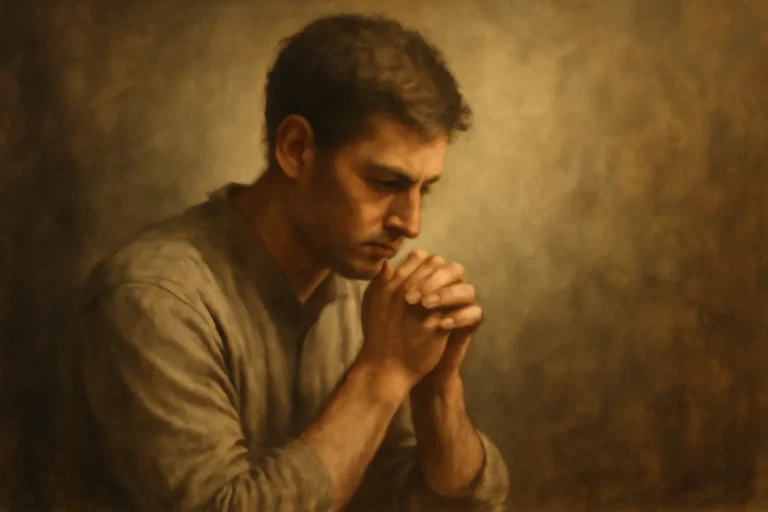
Prayer often begins as a conversation with God, but when we let God’s Word shape our prayers, prayer becomes a dialogue anchored in revelation, promise, and truth. This long-form exploration examines why we should let Scripture guide and transform our prayer life, how to do it well, and what transformative outcomes God intends for us when we interweave prayer with the living Word. The aim is not to replace prayer with quotation, nor to reduce prayer to a formula, but to invite Scripture to inform our petitions, align our desires with divine will, and deepen our relationship with the God who speaks.
Praying Scripture means using passages from the Bible as catalysts, content, and framework for our conversations with God. It is not a literal recitation devoid of meaning, but a living engagement with sacred text that invites the Spirit to apply Scripture to our circumstances. The practice rests on the conviction that the Word of God is alive, that it has authority beyond human opinion, and that it can shape our hearts as we offer our requests back to the Father. When we pray Scripture, we:
Center our prayers on the revealed will of God rather than merely on our preferences.
Ground our petitions in biblical promises, statutes, and narratives that reveal God’s character and purposes.
Learn a language for prayer that expresses awe, longing, confession, supplication, thanksgiving, and intercession with biblical depth.
Open space for the Spirit to illuminate truth in fresh situations, making ancient words contemporarily relevant.
The Biblical Basis for Scripture in Prayer
Scripture itself provides a robust foundation for praying in light of God’s Word. The Bible repeatedly models a praying people who meditate on, speak aloud, and rely on God’s promises as they request his intervention. In this section, we explore the scriptural rationale for letting the Bible shape our prayers.
Key Promises and Models
Psalm 119:105 – “Your word is a lamp to my feet and a light to my path.” This metaphor shows how Scripture guides discernment and decision-making in prayer.
John 15:7 – “If you abide in me, and my words abide in you, ask whatever you wish, and it will be done for you.” Here, the quality of answered prayer is linked to an ongoing relationship with Christ and his teachings.
Colossians 4:2 – “Continue steadfastly in prayer, being watchful in it with thanksgiving.” Scripture encourages perseverance and gratitude in prayerfulness.
Philippians 4:6–7 – “Do not be anxious about anything, but in everything by prayer and supplication with thanksgiving let your requests be made known to God.” The pattern of thanksgiving and supplication aligns with a Scriptural frame for prayer.
Hebrews 4:12 – “For the word of God is living and active.” This verse underscores the transformative power of Scripture when prayed over in faith.
2 Timothy 3:16–17 – “All Scripture is breathed out by God and profitable for teaching, for reproof, for correction, and for training in righteousness.” The purpose of Scripture informs how we shape prayer and practice.
Joshua 1:8 – “This book of the law shall not depart from your mouth, but you shall meditate on it day and night.” Meditation on Scripture is a prerequisite to prayer that reflects God’s will.
In addition to these verses, many biblical books model the practice of praying the Psalms, prophetic prayers, and prayers for wisdom. The Psalms themselves provide a vocabulary for the range of human experience—praise, lament, confession, gratitude, intercession—and demonstrate that God welcomes honest, scripturally shaped prayers. The apostolic and early church pattern of Scripture-saturated preaching and prayer also demonstrates how the Word should shape the church’s petitions, worship, and intercession.
Theological Rationale: Word and Spirit
The motivation to let Scripture shape prayer rests on a robust theology of the Word and the Spirit working together. The Bible is not merely a treasury of good ideas; it is a living, active instrument by which God speaks and works in the heart of the believer. At the same time, the Spirit enables us to understand, desire, and respond to what we read as living truth. The interplay between Scripture and Spirit safeguards prayer from being either rote or purely subjective, guiding us toward God’s purposes rather than merely our own needs as felt in the moment.
Two Allies in Prayer: Scripture as a Mirror and a Map
As a mirror, Scripture exposes the motives, fears, sins, and loyalties that shape our requests. It invites confession and alignment with divine standards.
As a map, Scripture directs our prayers toward God’s promised future and his redemptive plans for the world, not just toward personal satisfaction.
Word and Spirit working together means that Scripture provides content and truth, while the Spirit applies that truth to our conscience, affections, and will. When we pray with Scripture, we do not manipulate God with the Bible; rather, we open ourselves to God’s own words and his Spirit’s guidance so that our desires become more like Christ’s. This synergistic relationship is a hallmark of mature prayer life in many Christian traditions.
How Scripture Shapes the Tone and Content of Prayer
Content: Scriptural prayers center on God’s character, purposes, and promises, not merely on our needs in isolation.
Disposition: Scriptural prayer cultivates humility, repentance, gratitude, and steadfastness as fruits of encounter with the Word.
Direction: Scripture reframes our requests to align with God’s redemptive plan, sometimes reframing our desires to reflect his will.
Practical Paths: How to Pray Scripture
Praying Scripture can be practiced in a variety of ways, depending on temperament, tradition, and the season of life. The goal is to cultivate a durable habit where the Word informs prayer in a way that is natural, meaningful, and transformative. Below are practical pathways, each with steps you can adapt to your devotional rhythm.
Guided Scriptural Prayers: A Simple Method
Choose a passage that speaks to your current need or situation. This could be a Psalm, a passage about God’s character, or a teaching of Jesus.
Commit to reading aloud a portion of the passage, allowing its imagery and language to shape your thoughts.
Translate the text into prayer by paraphrasing its ideas as direct statements to God, using your own words while preserving the meaning.
Respond in faith by concluding with praise, repentance where needed, and a request for God to enact his will.
Imaginative Use of Scripture: Reflective and Intercessory Prayer
Reflective prayer invites you to sit with a verse or passage, letting its imagery evoke a response—wonder, confession, or gratitude.
Intercessory prayer involves praying Scripture for others, blessing them with biblical promises and affirmations drawn from the text.
Corporate practice often includes responsive readings or shared prayers based on a chosen Scripture, strengthening communal faith and unity.
Praying the Psalms: A Time-Tested Path
The Psalms uniquely lend themselves to scriptural prayer because they are prayers offered to God themselves. You can pray the Psalms in various modes:
As a direct prayer: read a Psalm aloud and then speak it back to God in your own words (e.g., Psalm 23 as a request for divine guidance in daily life).
As a posture of lament: bring your sorrows to God, trusting his goodness even when life feels confusing or painful.
As praise and thanksgiving: respond to God’s character with explicit expressions of gratitude and worship.
Modes and Methods: Practical Variants of Scriptural Prayer
Different traditions emphasize various methods of weaving Scripture into prayer. Here are several accessible variants that can be adapted to individual or communal practice.
Scripture-Cilled Prayer: Thematic Readings
In this approach, you select a biblical theme—such as grace, mercy, justice, or guidance—and gather related Scriptures. Then you compose prayers that weave these verses into reflective statements, petitions, and vows to live in obedience to God’s word.
Prayerful Scripture Journaling
This method invites you to keep a journal where you note verses that capture your attention, record insights about their meaning, and write prayers that apply the text to your day-to-day life. Journaling can deepen memory and increase the likelihood of recall in future prayer times.
Lectio Divina in Prayer
Lectio Divina, rooted in ancient monastic practice, involves four steps: reading, meditating, praying, and contemplative resting. When adapted to praying Scripture, each step centers on noticing what God is saying through the text and responding in prayerful surrender.
The Transformative Power: Spiritual Formation through Scripture-Shaped Prayer
Letting God’s Word shape our prayers yields deep spiritual formation. The process often produces changes in attitudes, habits, and affections that align more closely with Christ. The transformative effects can be described in several dimensions:
Affection: Prayer anchored in Scripture fosters a growing love for God and a greater desire to witness his beauty in the world.
Discipline: Regularly praying Scripture strengthens spiritual disciplines, grounding routine life in biblical truth rather than transient feelings.
Humility: The Word continually disciplines our self-centered requests, inviting us to desert the illusion of control and trust in God’s sovereignty.
Discernment: Scripture provides a framework for evaluating decisions, shaping how we pray for guidance and how we interpret outcomes.
Hope: Biblical promises infuse prayer with a forward-looking hope anchored in God’s faithfulness to his purposes.
In practical terms, spiritual formation through praying Scripture may manifest as a deeper patience in trials, a sobering realism about sin, or a more consistent practice of intercession for others. It can lead to a more integrated life where beliefs, prayers, and actions align with the character of God as revealed in Scripture.
Some readers may raise questions or concerns about praying Scripture. Addressing these helps clarify how to practice responsibly and spiritually.
Objection: Isn’t Scripture too rigid for personal prayer?
Response: Scripture is not a rigid cage but a trusted framework. The biblical text invites honest conversation with God, including questions, laments, and expressions of personal longing. The aim is to bring personal life under the sovereignty of God’s Word, not to flatten the individual voice of the believer. If anything, prayer shaped by Scripture enhances authenticity by compelling the believer to engage with God on terms that reflect his revealed will.
Objection: Couldn’t this become mere repetition or ritual?
Response: Repetition can be meaningful when it returns us to truth with fresh faith. The danger lies in mechanical recitation without attending to God’s presence. Practicing Scripture-based prayer with intentional reflection helps maintain the vitality of prayer, turning repetition into meaningful recollection of God’s character, promises, and works.
Objection: How do we avoid misinterpreting Scripture in prayer?
Response: Sound interpretation matters. It helps to use reliable translations, consult reliable commentaries, and maintain humility before God as the interpreter. Prayer should be guided by the intent of Scripture and the broader witness of the church, not by opportunistic readings. When in doubt, ask for the Spirit’s illumination, seek counsel in community, and prayerfully submit to God’s overarching revelation in Scripture.
Praying Scripture Across Traditions: Ecumenical and Local Practices
Different Christian traditions have distinct ways of embracing Scripture in prayer, yet the core conviction remains: the Word and the Spirit shape prayer. Below are broad contours of how some traditions approach this practice.
Liturgical traditions often embed Scripture into daily offices, morning and evening prayers, and seasonal rituals, creating a rhythm of hearing and responding to the Word in worship.
Charismatic and Pentecostal streams may emphasize the Spirit’s leading in praying Scripture, welcoming spontaneous prayer that arises from the Word and is empowered by ongoing spiritual renewal.
Evangelical and Reformed communities frequently highlight doctrinal clarity and personal devotional practice, encouraging readers to meditate on Scripture and articulate prayers that reflect biblical truth.
Orthodox practice often centers on a contemplative discipline where Scripture is honored within a broader framework of worship, silence, and iconographic prayer that directs seekers toward God’s presence.
Regardless of tradition, the central idea remains: Scripture should inform prayer so that believers approach God with content that reflects his character and purposes, while being open to the Spirit’s application in daily life.
The Role of Community in Praying Scripture
While personal prayer is essential, communal prayer promises additional depth and accountability. When a community prays Scripture together, several benefits emerge:
Mutual accountability—the community helps ensure that prayers reflect biblical truth rather than private biases.
Collective memory—sharing Scripture-based prayers keeps the faith anchored in the church’s common confession and hope.
Spiritual encouragement—witnessing others engage with Scripture invites perseverance and inspires growth in others’ prayer lives.
Liturgical unity—structured readings and responses unify diverse voices into a harmonious, shared petition and praise.
In a local church, Scripture-based intercession might include a weekly prayer meeting, a time of guided reading, or a season of corporate lament or praise. Families and households can adopt a family devotional that uses a Bible passage as a springboard for prayer across generations, modeling a lived faith for children and neighbors alike.
Historical Perspectives: Saints, Reformers, and the Continuity of Praying Scripture
Historical theologians and spiritual mentors have consistently championed the practice of letting Scripture shape prayer. From the early church to the Reformation and into contemporary practice, believers have recognized that the Word is a reliable instructor for prayer. Notable perspectives include:
Augustine spoke of the Word shaping desire and the will, guiding prayer toward grace and conversion.
Thomas Cranmer helped articulate a reformed but liturgically engaged approach to Scripture, guiding Anglican prayer with Scriptural precedence.
John Calvin highlighted that prayer without Scripture is misdirected and that the believer’s dialogue with God must be governed by the Word.
Contemporary theologians continue to affirm that Scripture provides not only content but a hermeneutic for how to pray in all seasons of life, including suffering, celebration, and mission.
These voices remind us that praying with Scripture is not novelty but continuity; it is a tradition that connects present believers with a long line of faithful prayer grounded in the Bible’s living word.
The Ethics of Scriptural Prayer: When Scripture Shapes Our Prayer, Not Our Demands
There is an ethical dimension to praying Scripture that must be acknowledged. The Word does not function as a vending machine for our desires. Rather, it invites a humble alignment with God’s will, ways, and timing. A biblical approach to Scriptural prayer respects:
God’s sovereignty—our requests should be offered under the conviction that God is sovereign and good, even when outcomes differ from our preferences.
God’s character—prayers should reflect knowledge of God’s holiness, mercy, justice, and love rather than using Scripture to justify self-centered aims.
Pastoral sensitivity—the practice should nurture the spiritual well-being of others and avoid manipulation or coercion through selective use of verses.
Scripture’s integrity—we must interpret and apply Scripture responsibly, avoiding out-of-context readings that distort prayer or lead to harm.
Ethics in Scriptural prayer also encourage accountability—sharing prayers with trusted mentors, engaging in community discernment, and using the Word to cultivate generosity, forgiveness, and reconciliation rather than merely personal advantage.
Frequently Asked Questions about Praying Scripture
Below are common questions with concise clarifications to help practitioners move forward with clarity and integrity.
How long should a Scriptural prayer last?
There is no fixed duration. Some days you may spend a few minutes, others longer, depending on the passage and your season. The aim is quality engagement over measured length, ensuring you listen as well as speak.
Can I pray Scripture if I am not literate in the Bible?
Yes. Use a translation you understand or listen to audio versions. The goal is to encounter the Word, even if you are new to biblical literacy. Community worship and guided devotion can help you learn as you pray.
What if a verse seems to contradict my current circumstances?
Scripture should shape our prayer, not be weaponized to press God into a preferred outcome. In such cases, approach with humility, seek counsel, and allow the Spirit to illuminate how God’s broader revelation—such as his love, justice, mercy, and plan for redemption—applies to your situation.
Is praying Scripture compatible with private devotion and contemplative prayer?
Absolutely. Scriptural prayer can enrich contemplative practice by providing a source of truth that orients contemplation toward God, while still leaving space for silent listening and worship.
Closing Reflections: The Enduring Value of Scriptural Praying
Praying Scripture is not merely a discipline for theologians or pastors. It is a practical, accessible path for believers at every stage of life to draw near to God with confidence, humility, and hope. When we let God’s Word shape our prayer, we invite the Spirit to renew our hearts, align our desires with the divine will, and press us toward Jesus—our model in conversation with the Father.
In the end, the goal is not to master a technique but to cultivate a life that remains rooted in God’s revelations while remaining open to the Spirit’s ongoing work. Praying Scripture invites us into a dynamic relationship with a God who speaks, who calls us to respond, and who promises to hear. The Bible becomes a lifeline—an enduring source of guidance, courage, comfort, and transformation as we approach God in prayer.
As you embark on or continue this practice, consider these four practical exhortations to sustain momentum and growth:
Daily engagement—set aside time each day to read a passage, reflect, and pray. Consistency builds a robust spiritual memory and a dependable framework for life.
Multigenerational sharing—involve family, friends, or a small group in praying Scripture. Shared reflections deepen understanding and accountability.
Scripture variety—alternate between prayers drawn from the Psalms, the Gospels, prophetic books, and epistles. This broadens the language of prayer and ensures a comprehensive biblical horizon.
Humility and patience—be patient with the process. God may reveal things gradually, and your prayers may evolve as you grow in likeness to Christ.
May your practice of praying Scripture become a wellspring of strength, wisdom, and worship. May you experience the living Word shaping not only your requests but your entire life as you seek to know, love, and obey the God who speaks.