Introduction to the Parable of the Sower
The Parable of the Sower, also known in various circles as the parabola of the soils or the seed and soils parable, stands as one of the most influential teaching units within the Christian canon. It is a narrative that operates on multiple levels: it is a simple story about a farmer distributing seed, yet it functions as a sophisticated teaching tool that invites listeners to examine not only the nature of faith but also the conditions that foster or hinder spiritual growth. In this long-form engagement, we will explore the seed-sowing parable from historical, literary, theological, pastoral, and practical angles. We will trace the strands of meaning that run through the Parable of the Sower across the synoptic gospels, examine its core symbols—the seed, the soil, and the sower—and consider how believers, churches, and scholars interpret its message in diverse cultures and eras.
The task of describing this parable is itself an interpretive act. When we speak of the seed planted in the heart or the soil of the human psyche, we begin to map a broader anthropology: what kind of person receives the message, what kind of life gives it space to flourish, and what kinds of obstacles repeatedly hamper spiritual fruitfulness. The parabolic form invites readers to move beyond opaque doctrine toward experiential understanding. The tale of a sower scattering grain invites reflection on receptivity, faith formation, and the communal responsibility for nurturing growth in the field of human souls. In this article, we will treat the Sower parable as both an ancient scriptural text and a living instrument for interpretation, pedagogy, and worship.
Historical and Textual Context
The setting of the Parable of the Sower is the world of first-century Palestine, a landscape of agricultural cycles and seminomadic patterns that would have made the imagery immediately intelligible to its original hearers. The parable appears in the gospels of Matthew, Mark, and Luke—the synoptic gospels—where it is placed within a larger section of teaching known as the kingdom of God discourse. While the core narrative remains consistent across these Gospels, each author supplies edges, emphases, and interpretive cues that reveal distinct theological aims.
In preparing this study, it is helpful to note a few textual features:
- The seed is universally described as productive given the right conditions
- The soil typology is the central interpretive device, serving as a mirror for human reception of divine truth
- The sower may be understood as Jesus in the primary transmission, or as any messenger of the Word who sows the seed of truth in human hearts
- There is a dynamic expectation of growth and harvest, signaling eschatological vindication and the fruitful expansion of the Kingdom
Across time, Christian interpreters have read the Parable of the Sower through lenses of prophecy, grace, mission, and pastoral care. Some key questions have persisted: What kinds of soil does the human heart represent? How does one create or sustain good soil in a world of distraction and conflict? What does the rhythm of sowing and harvest imply for the church’s own life and its outreach to the world?
The Four Soils: An Integral Symbolism
The most memorable feature of the seed and soils parable is the fourfold division of soil types. Each soil represents a different receptivity to the message of the Kingdom. The emphasis is not on the seed’s intrinsic power alone but on the interplay between seed and soil. This is why the story continues to be cited in discussions about spiritual formation, evangelism, and the ethics of ministry.
Soil 1: The Pathway (Wayside) Soil
The first soil type is often termed the wayside or trampled path. In Mark 4 and parallel accounts, hearers notice that the seed lying on this hard ground is quickly snatched away by birds. The symbolism here is robust: the heart is unprepared, resistant to the Word, and vulnerable to distraction and denial. Interpreters frequently describe this soil as a heart that is closed, indifferent, or prejudiced, where the seed does not take root because the soil is compacted by skepticism, self-reliance, or indifference.
- Key features: hardness, refusal to engage with the message, immediate external opposition
- Theological significance: freedom and responsibility, the need for softening grace, and the danger of spiritual deafness
Soil 2: The Rock-Face (Rocky) Soil
The second soil is described as rocky ground, where there is initial superficial enthusiasm yet a lack of depth that prevents enduring faith when trials arise. The root system is shallow, and when persecution or tribulation comes because of the word, the plant withers. This soil type has long been read as a caution about flaring enthusiasm without durable character formation. The interpretation emphasizes the need for a faith that endures, rooted not merely in emotional receptivity but also in disciplined spiritual formation—prayer, study, community, and service.
- Key features: immediate response, surface depth, fragility under pressure
- Theological significance: the sufficiency of rootedness in God’s promises
- Pastoral implication: cultivate resilience in discernment, mentorship, and sustained disciplines
Soil 3: The Thorns (Cares and Riches) Soil
The third soil is the thorny ground, where the seed sprouts but is gradually choked by worldly cares, deceitfulness of wealth, and the desires for other things. This is perhaps the most complex symbol in the parable: the seed does grow, but growth is stymied by competing loyalties and anxieties. Theologically, this soil represents the competition between the Kingdom and the ordinary claims of life—ambition, fear, distraction, and the pursuit of comfort can overshadow spiritual fruitfulness.
- Key features: sprouting life overshadowed by competing concerns
- Theological significance: the need for guarding heart allegiance against idolatrous attachments
- Pastoral implication: nurture a Church life that helps believers prioritize the reign of God amid daily duties and pressure
Soil 4: The Good Soil
The final soil is the good soil, where seed flourishing results in a robust harvest—yielding fruit “thirty, sixty, or a hundredfold” depending on the context. This soil symbolizes receptivity that leads to enduring transformation and fruitful obedience. The good soil is not idyllic or exceptionless; rather, it reflects a heart prepared by grace, cultivated by faith, and sustained by community. The good soil is characterized by receptivity, perseverance, and generosity, producing a harvest that extends beyond the self into families, churches, and neighbors.
- Key features: depth, perseverance, productive fruitfulness
- Theological significance: the fruit of the Spirit in communal life, mission, and social witness
- Pastoral implication: cultivate congregational environments where believers can grow in wisdom, love, and service
Across the four soils, the parable emphasizes that reception of the Word is not automatic. The divine seed has transformative potential, but the soil conditions determine outcomes. This is central to the seed-sowing parable: it invites a humility about our own receptivity and a responsibility to cultivate soil that will support spiritual growth.
The Sower and the Seed: Core Imagery and Theological Resonances
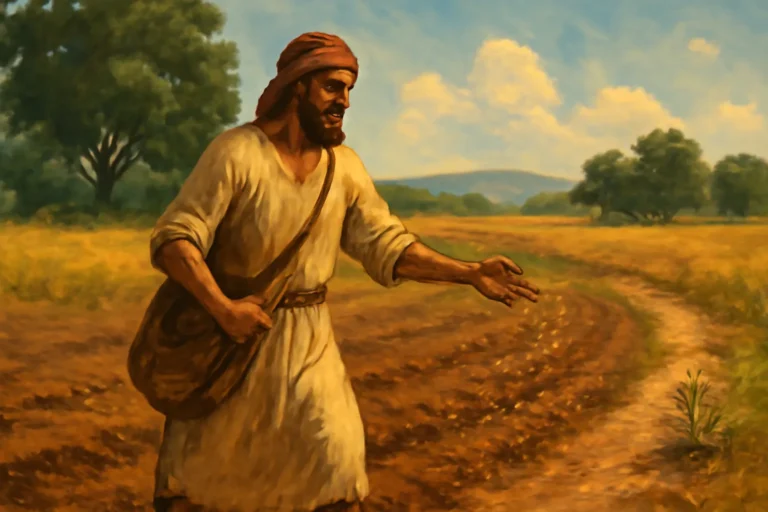
The visuals of the seed and the sower are deliberately plain, inviting listeners to imagine themselves in the scene. The sower represents the messengers of the Word, and the action of scattering seed highlights both abundance and risk: seed is cast widely, not just to sure recipients, because the gospel is offered to all. The seed itself embodies life and potential. In Christian reflection, the seed is often linked to the Word of God—effective, powerful, and transformative—yet its effect depends on the soil that receives it.
A parallel phrase often encountered in Christian meditation is seed growing secretly, a reference to the surprising, inward development of the Kingdom. Though we might not always see visible outcomes immediately, theSeed has a hidden life that expands, matures, and eventually manifests in a harvest. The paradox of visible fruit emerging from hidden growth is a recurring theme in biblical parables, and the Parable of the Sower is a principal example of this pattern.
Canonical Variants: Parable in the Synoptic Gospels
The Parable of the Sower is shared by three Gospels: Matthew, Mark, and Luke. Each gospelwriter preserves the core scenario but supplies distinctive framing, description, and after-teaching commentary that reflect their theological priorities.
Matthew’s Version
In the Gospel according to Matthew, the parable sits within Jesus’ broader discourse about the kingdom. Matthew tends to connect the parable directly to the fulfillment motif of Israel’s story and emphasizes the reception of the Word as a condition for entering the kingdom. The emphasis in Matthew is often on the responsibility of the community to cultivate a receptive spiritual environment and to interpret the parable in light of Old Testament expectations of maturity and fruitfulness.
Mark’s Version
The version in Mark is renowned for its brisk pace and sense of immediacy. Mark’s account stresses urgency, with the parable followed by a private explanation to the disciples. The narrative pace and the inclusion of the explanation in Mark emphasize the disciples’ role in understanding and then carrying forth the message to others. The seed’s reception among the four soils in Mark foregrounds the theme of perseverance despite temporary setbacks and obstacles.
Luke’s Version
In Luke, the parable sits within a larger matrix of parables about hearing, responding, and bearing fruit. Luke’s edition often brings attention to those who are marginalized and to the universality of the invitation to discipleship. The Lukean version can be read as a social critique that calls communities to examine how wealth, status, and worry may impede growth. Luke’s careful attention to marginalized audiences makes the parable relevant to readers concerned with justice, mercy, and inclusive belonging.
While each gospel presents a slightly different flavor, all three convey a consistent core message: the Word of God is potent and fertile, yet spiritual growth requires a receptive soil—one that is prepared, cared for, and oriented toward harvest. The variations across Matthew, Mark, and Luke invite theologians to notice how preaching, pastoral care, and mission are intertwined, and how parabolic teaching models can shape communal life.
Interpretive Frameworks: Theological and Ethical Readings
The Parable of the Sower invites a spectrum of interpretive frameworks. Below are several influential lines of inquiry that scholars, pastors, and lay readers have employed to draw out meaning, application, and ethical instruction from the parable.
Theological Readings
- Grace and Human Responsibility: The parable presents a paradox: the seed has power to grow, but the soil’s receptivity is essential. Theologue readers have argued that this parable honors both divine sovereignty and human responsibility. Grace is offered openly; receptivity is cultivated by spiritual disciplines and communal nurture.
- Kingdom Ethics: The fruitfulness of the good soil becomes a microcosm of the ethical life in the kingdom. The image of abundant harvest calls believers to generosity, stewardship, and social transformation—values that extend beyond the church into daily life.
- Missional Theology: The sower’s wide distribution frames mission as a broad invitation. The parable supports a posture of proclamation that is bold yet patient, confident in the seed’s capacity to germinate even when outcomes are not immediately visible.
- Eschatological Expectation: Harvest imagery points toward final judgement and consummation. The four soils show that not all will respond in the same way, but the ultimate aim remains the gathering of a bountiful harvest for the Creator.
Ethical and Social Dimensions
Beyond doctrinal concerns, the Parable of the Sower has been a touchstone for ethical reflection. It has been used to discuss educational access, economic disparity, and community resilience in the face of social fragmentation. By naming the internal obstacles—perseverance, fear, and distraction—the parable can guide practical pastoral care and social advocacy, inviting communities to cultivate soils that promote justice, mercy, and truth-telling.
Pastoral and Personal Application
- Pastoral care should consider how to cultivate soil in individuals and communities through spiritual direction, mentorship, and nurturing environments.
- Preaching and catechesis can use the parable to teach discernment, emphasizing that growth is a cooperative process between God’s Word and the human heart.
- Churches can develop programs that help believers overcome thorny distractions—e.g., Sabbath practices, simplification, and service to others—to retain the seed’s vitality.
Parabolic Method and Teaching Skills
As a teaching device, the Parable of the Sower models several classic features of biblical parables. It employs concrete, everyday imagery to convey deep spiritual truths. It also uses a two-tier structure: a narrative layer that presents the scene, and an interpretive layer where the meaning is revealed (either implicitly or through direct explanation). The two-tier design encourages hearers to move from a surface reading to a deeper, transformative understanding.
Scholars have highlighted several educational advantages of this parable:
- Engagement through narrative: A story draws listeners in and invites imaginative participation.
- Self-reflection: The four soils encourage self-scrutiny about one’s own receptivity and growth.
- Communal discernment: The parable can guide church communities in evaluating spiritual climates and ministries that cultivate fruitfulness.
Symbolism Breakdowns: Seeds, Soils, and Sowing
The imagery in the seed parable is densely symbolic. Some central motifs include:
- Seed as divine truth, potential life, and the Word of God
- Soil as the heart or temperament of listeners, shaped by experience, culture, and grace
- Sower as the messenger, teacher, and partner in mission
- Harvest as the visible fruit of faithfulness and the expansion of the Kingdom
Each of these symbols can be unpacked in a variety of ways. The seed is not a magical contract with guaranteed results; rather, it is a living Word that can germinate and mature under the right conditions. The soil, conversely, is not a fixed category; it can be cultivated through spiritual practices, communal accountability, and culture-shaped pedagogy. The sower is both exemplary and exemplary of the church’s call to participate in the divine project of gathering and growing a people for God.
Historical Reception and Theological Debates
Throughout church history, the parabolic teaching about sowing and soil has been invoked in debates about faith formation, missionary strategy, and social ethics. Some early church fathers used the parable to discuss the different kinds of hearers who encounter the gospel in a diverse world. Later theologians drew on the same parable to argue that a healthy church must attend to the conditions that allow faith to mature, rather than simply judged by outward reports of success.
A recurring debate concerns whether the emphasis should be placed more on the seed (the Word of God) or the soil (the human receptivity). The most fruitful readings, in my view, treat the parable as a synthesis: the seed is powerful and life-giving, but its effect is mediated by the soil through which it passes. The interplay between God’s initiative and human response is where the moral and spiritual drama unfolds.
Contemporary Relevance: The Parable of the Sower in Modern Faith Communities
In contemporary religious life, the seed and soils parable is not merely an ancient narrative. It has practical resonance for how churches plan outreach, how communities foster spiritual growth, and how individuals navigate the challenges of faith in a pluralistic and rapidly changing world. Key modern applications include:
- Discipleship and formation: institutions can design programs that tend the soil so that the Word can take deeper root.
- Evangelism with sensitivity: the parable calls for sowing broadly while being attentive to recipients’ contexts, avoiding coercion, and honoring conscience.
- Social mission: a good soil ethic includes care for the vulnerable, justice, and community resilience, recognizing that the harvest flourishes where people are nurtured in truth and love.
- Interfaith and intra-faith dialogue: the parable’s broad metaphor invites respectful discussion about receptivity, belief, and the impact of diverse spiritual soils on communal life.
The Parable of the Sower can function as a spiritual diagnostic instrument in churches today. When congregations reflect on which soils best describe their members and neighbors, they can design more effective ministries—seasoned with compassion, clarity, and accountability. It also challenges communities to examine whether their spiritual climate is too brittle, too enamored with openings that do not yield durable fruit, or too entangled with worries that choke the Word.
Practical Exercises for Study and Reflection
To deepen understanding and application of the seed parable, readers and groups can engage in several practical exercises. These activities are designed to foreground experiential learning, critical reflection, and communal discernment.
- Textual study: Compare the Markal, Matthean, and Lukan versions side by side, noting shared phrases and distinctive emphases. Create a chart that highlights the four soils in each Gospel and identifies interpretive notes in a margin.
- Soil assessment: Reflect personally and within a group on which soil best describes your own receptivity and growth. Use a private journal or guided questions to explore why certain conditions support or hinder your spiritual life.
- Mission planning: Design a community outreach project that intentionally recognizes diverse soil types. Plan for ongoing cultivation, not merely one-time sowing, emphasizing sustainability and relationships.
- Prayer and contemplation: Use the seed parable as a focus for contemplation on God’s Word and personal readiness to receive and bear fruit. Pray for softened hearts, rooted faith, freedom from distraction, and generous fruitfulness.
Conclusion: A Living Parable for Faithful Living
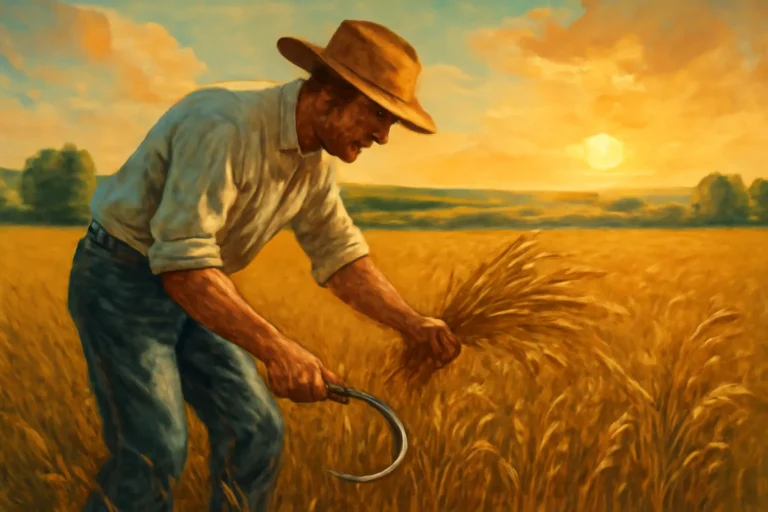
The Parable of the Sower remains a living text not because it provides a single formula for growth, but because it invites the seeker to participate in a dynamic process. It challenges readers to consider the conditions of their hearts and the environments in which their faith grows. It calls communities to become soils that nourish the Word, transforming lives and cities through faith, hope, and service. By naming the four soils—wayside, rocky, thorny, and good soil—the parable offers a concrete framework for diagnosing spiritual health and envisioning a path toward abundant harvest. Through this lens, the farmer’s act of sowing becomes emblematic of God’s generous outreach to the world: seed is scattered widely, growth occurs in cooperation with grace, and a harvest emerges in season and measure that only God can determine.
In the end, the parabolic wisdom of the Sower teaches both humility and agency: we don’t control the growth process, but we do influence the soil. We cultivate, listen, and respond; we sow again when the soil is hard or shallow; we adjust our methods to better align with God’s work in creation. The difference between a seed that withers and a seed that yields a great harvest lies not in the seed alone, but in the soil’s willingness to receive and nurture life. In this ancient narrative, the future of faith is inseparable from the ongoing work of cultivation—of hearts, churches, and communities—so that the Kingdom may flourish in every season.
Glossary of Key Terms and Phrases
To aid ongoing study, here is a concise glossary of terms frequently used in discussions of the seed parable.
- Parable: a concise story told to illustrate a moral or spiritual truth, often with a hidden or layered meaning.
- Seed: symbol for the Word of God, divine life, or the gospel message.
- Soil: symbol for the receptive heart, spiritual disposition, or life conditions that affect growth.
- Sower: the one who proclaims or conveys the Word, as well as Christ or the church’s mission in the world.
- Harvest: the culmination of growth, fruitfulness, and the realization of God’s promises.
- Discipleship: the process of growing in following Jesus, often through cultivation of spiritual disciplines and communal life.
- Grace and Responsibility: theological tension between God’s initiative in salvation and human role in spiritual formation.
Whether you read the Seed and Soil Parable as a theological treatise, a pastoral manual, or a scriptural invitation to mission, its enduring power lies in its capacity to illuminate the inner terrain of faith and the outer field of ministry. The Parable of the Sower is not simply a story about agriculture; it is a map of spiritual possibility, a reminder that a single seed can become a life-giving harvest when sown into soil that longs to become a home for truth, growth, and love.