Overview: The Sheep and Goats Parable in Context
The narrative commonly titled the parable of the sheep and the goats sits within the Gospel of Matthew as one of the clearest
demonstrations of Jesus’ teaching on judgment and ethical accountability. This is not merely a
story about a distant, cosmic verdict; it is a theological mirror that presents what
it means to live in solidarity with the vulnerable, to identify with the needy, and to discern what counts
as true righteousness in the sight of God. In various translations and traditions the name of the story shifts—
sometimes called the judgment of the nations, sometimes the Great Separation, or
simply the sheep and the goats narrative—yet the core message remains: deeds of mercy are the
visible signs of authentic faith, and neglect of the vulnerable reveals a different spiritual posture altogether.
This long-form study surveys the parable from multiple angles: textual background, interpretation across
historical eras, ethical implications for individuals and communities, and practical applications in
worship, catechesis, and social action. The aim is not to resolve every debate but to illuminate how
this story of discernment has shaped Christian ethics and continues to challenge
readers to examine how their beliefs translate into concrete acts of mercy.
The Narrative Frame: Setting and Structure
The sheep and goats parable appears in the Olivet Discourse, when Jesus speaks about the final
judgment and the eschatological age to come. The imagery is stark and memorable: a king comes in glory,
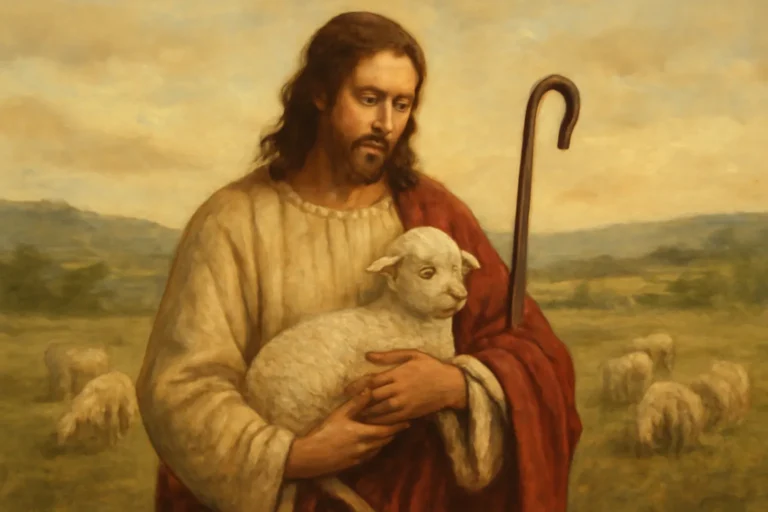
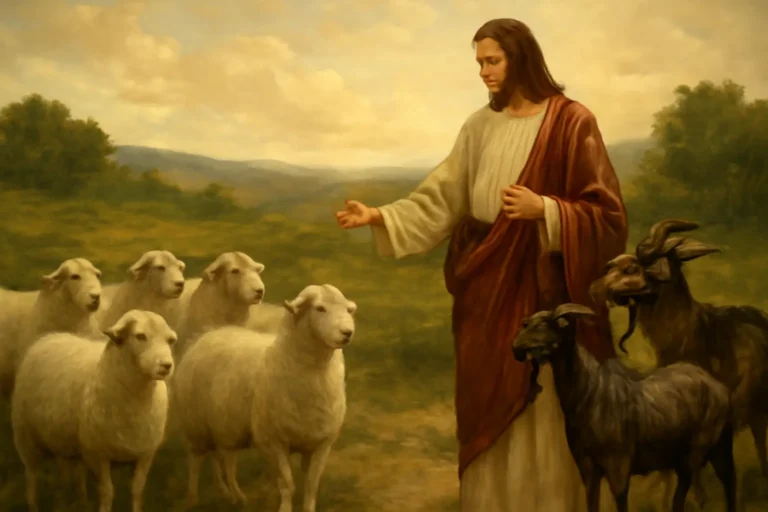
separates people as a shepherd separates sheep from goats, and then pronounces judgment based on acts
of mercy performed—or neglected—toward the hungry, the thirsty, the stranger, the sick, and the imprisoned.
Context within Matthew
In its canonical placement, this story follows other eschatological admonitions and prior parables that
prepare listeners for a future reckoning. The audience is invited to recognize that the reign of God
breaks into the present by the concrete care offered to those who lack power and status. The emphasis
is not on abstract doctrine alone but on lived righteousness—a righteousness that is proved in time through
works of mercy and hospitality.
Textual considerations and translations
Across major English translations and many others, the wording of the passage shifts slightly, but the
essential features endure. Some translations emphasize “the least of these my brothers”,
while others render a broader sense such as “the hungry and thirsty, the stranger, the naked,
the sick, and the imprisoned.” The Greek terminology—though nuanced—conveys a concrete, embodied form
of mercy rather than an abstract spiritualized act. This has led to a robust tradition of interpreting the
parable as a call to social ethics, communal responsibility, and cross-cultural hospitality.
Literary form and imagery
The story is a parable in the classic sense: it uses vivid, memorable images to teach a higher
truth. The imagery of sheep and goats is not merely pastoral scenery; it is a symbolic syntax that
communicates categories of reception before the divine throne. The king’s pronouncement—“whatever you did
for one of the least of these my brothers and sisters, you did for me”—frames the entire moment as a
revelation of who belongs to the community of mercy and who does not.
Key motifs to track in study
- Judgment by concrete deeds rather than by ritual purity alone
- Identification with the vulnerable as central to discipleship
- The king’s presence in the faces of the hungry, thirsty, stranger, and imprisoned
- Accountability for neglect and accountability for mercy
- Justice with compassion at the heart of the eschatological vision
Characters and Imagery: Who Are the Sheep and Who Are the Goats?
The parable introduces two groups—sheep and goats—as unmistakable symbols
of two responses to human need. The distinction is not meant to be a trivial classification but a radical
diagnostic of the heart. The sheep are those who enact mercy; the goats are those
who ignore it. Yet the terms “sheep” and “goats” also invite a deeper meditation: the audience is invited to
see themselves in the mirror of compassionate action, and to ask whether their faith is a living, relational
practice or merely an affirmation of belief.
The symbolic significance of the sheep
In ancient agrarian culture, sheep symbolized reliability, nurture, and daily dependence on a caretaker. The
“sheep” hear the shepherd’s voice, follow the flock, and produce wool and meat that sustain communities. In
the parable, the sheep represent those who actively notice people in distress and respond with
generous hospitality, meeting tangible needs. The ethical posture of the sheep is not passive pity but
intentional action: feeding the hungry, giving drink to the thirsty, welcome to the stranger, clothing the
naked, comforting the sick, and visiting prisoners.
The symbolic significance of the goats
Goats, by contrast, are often associated in ancient symbolism with independence, stubbornness, or even
marginality in a social sense. In this parable, the goats symbolize indifference to human need and failure
to recognize the inherent dignity of the vulnerable. The turning point comes when the king calls attention to
deeds—or the absence of them—as the measure of right standing before God. The goats’ failure is not simply a
private sin; it is a public judgment that reveals a broken relationship with the vulnerable and with the
divine image in every neighbor.
Who is “the least of these”?
A central interpretive question is the reference to “the least of these my brothers and sisters.”
Some voices read this as a direct reference to Jesus’ own followers, while others interpret it more broadly as
indicating all who bear God’s image in their need—strangers, marginalized people, refugees, prisoners,
the sick, and the poor. Depending on tradition, the brothers may be read as specific disciples or as a
broader group of vulnerable humanity. This open-ended phrasing invites readers to consider the scope of mercy
across history and across communities.
Ethical relevance beyond the church walls
The shepherd and goats imagery translates easily into life outside ecclesiastical settings. Even when one is not in a
formal church environment, the parable calls for a living ethics of neighbor-love that manifests in social
justice, charitable institutions, and public policy that protect the vulnerable. The parable becomes a mirror
for civic life as well as personal piety, reminding believers that authentic faith persists when it is willing
to act justly, love mercy, and walk humbly with others, especially those with the least social standing.
Theological Readings and Their Implications
Eschatology and judgment
A classic reading sees this parable as a window into eschatological judgment—the moment when
God’s justice is publicly revealed. The timing, whether immediate or ultimate, is less important than the
moral logic: deeds of mercy bear witness to the presence of the Kingdom in the here-and-now and constitute
a criterion by which people are welcomed or rejected in the final reckoning.
Christology: the Son of Man and divine presence
The figure of the king who judges the nations is also compelling theologically because it foregrounds the
title “Son of Man” in Matthew’s Gospel. This title, drawn from a deep scriptural tradition, refers
to a messianic figure who embodies divine sovereignty and humanity simultaneously. The parable therefore links
Christology (who Jesus is) with ethics (what Jesus expects from his followers). The divine presence is not abstract;
it is carried in acts of mercy that meet humans where they are.
Justice and mercy in tandem
A distinctive feature of this narrative is its insistence that justice is not mere retribution; it is mercy that
is concretely enacted. The text invites readers to recognize the divine presence in feeding the hungry, giving
water to the thirsty, welcoming strangers, clothing the naked, healing the sick, and visiting prisoners. In many
theological traditions, mercy is not separate from justice; rather, mercy is the visible expression of
justice in action.
Faith and works: a theological conversation
Throughout church history, theologians have debated the relationship between faith and works. The sheep and goats
parable contributes a persuasive angle to this debate: it presents a scenario in which genuine faith is evidenced by
concrete deeds. Some readers interpret this as confirming the necessity of works as the fruit of true faith; others
stress the primacy of grace and faith while acknowledging that such faith, when real, inevitably yields merciful works.
The balance is nuanced and remains a central topic in soteriology and practical theology.
Pastoral and ecclesial consequences
In pastoral care and church practice, the parable encourages communities to evaluate their ministries by their impact on
the vulnerable. It underscores the dignity of service and suggests that church life should be measured not only by liturgy
and doctrine but also by how the hungry are fed, the stranger welcomed, and the imprisoned visited. This has informed
initiatives in food banks, shelter programs, refugee support, prison ministry, and healthcare outreach.
Historical and Cultural Background
First-century Palestinian context
Understanding the parable benefits from a look at its historical milieu. In first-century Palestine, hospitality
and care for strangers were not merely generous options; they were social expectations with tangible consequences
for family, community standing, and risk management. The vulnerable—widows, orphans, foreigners, the sick, and
prisoners—were often dependent on the mercy of others. The imagery of meeting basic needs would have resonated deeply
with a hearer who lived day by day with scarcity, risk, and social disruption.
Economic and social categories
The parable also appears in a world where basic resources—food, water, shelter, clothing—were tightly linked to
status and survival. The measures of mercy described in the text are practical thresholds: feed the hungry,
give drink to the thirsty, welcome the stranger, clothe the naked, care for the sick,
and visit prisoners. These are actions that communities could evaluate and replicate, making the story
both ethically accessible and theologically rich.
Reception in early Christian communities
In the early church, the narrative shaped how believers organized charitable practices. It reinforced the habit of
collective care: congregations pooled resources to feed the hungry, offered hospitality to travelers, cared for
the ill, and supported those who were imprisoned or marginalized. The parable’s clarity contributed to a strong
moral imperative within the Christian movement that social justice and spiritual devotion belong together.
Interpretive Traditions: From Patristic to Modern Theologies
Patristic voices
Early Church Fathers often read the sheep and goats parable as a vivid reminder that genuine
discipleship manifests in social ethics. Figures such as Augustine and Chrysostom emphasized that faith is tested
in the love shown to neighbors and that the mercy shown to the vulnerable is, in a sense, the love shown to God.
Medieval and Reformation perspectives
In medieval theology, the parable reinforced the sacramental economy of mercy—almsgiving, hospital care, and the
relief of the poor were seen as sacred duties. During the Reformation, reformers wrestled with the question of whether
salvation is by faith alone or by faith manifested in obedience. The sheep and goats narrative provided a powerful
case for the inseparability of faith and action, while some reformers cautioned against equating works with personal merit.
Catholic social teaching and contemporary ethics
In Catholic social thought, this parable aligns with the broader tradition that faith must be incarnated in the world in
just and compassionate action. Modern Catholic teaching continues to highlight the preferential option for the poor
and the obligation to challenge structures of injustice. The narrative remains a touchstone for debates about healthcare,
immigration, poverty alleviation, and the humane treatment of prisoners and refugees.
Liberation theology and social justice readings
In liberation theology contexts, the parable is often read as a prophetic call to structural transformation. The
migrants, the excluded, and the oppressed are central to the interpretive horizon. The story becomes not only a
personal moral exhortation but a critique of socio-economic systems that create and perpetuate vulnerability.
In this frame, mercy becomes justice in action, and the church is urged to bear witness in the public square.
Eastern Orthodox and other Christian traditions
The parable has a canonical resonance in Orthodox spirituality as well, where compassion, hospitality, and care for
the needy are integral to deification—that is, the process of becoming more like God. Across traditions, the central
motif remains: true righteousness is evidenced in service.
Liturgy, Catechesis, and Practical Implications
Preaching and homiletic uses
In preaching, the parable of the sheep and goats is frequently used to anchor sermons on charity,
hospitality, and social responsibility. It provides a concrete framework for
discussing how a faith community translates doctrine into acts that benefit the marginalized.
Catechetical and educational uses
In catechesis, learners explore the meaning of the parable through guided questions about identity in Christ, the
nature of discipleship, and the responsibility toward neighbors. Activities might include service projects, storytelling,
and reflective journaling about personal encounters with need.
Forms of mercy and concrete practice
The parable invites a range of concrete practices, including:
- Food programs and meal ministries
- Water and sanitation projects for communities in need
- Hospitality to strangers and welcome ministries for immigrants and travelers
- Clothing drives and sustainable living initiatives
- Visitations and counseling for the sick and the imprisoned
- Advocacy for justice and policy work that protects the vulnerable
Ecclesial implications
Churches can use this parable to assess mission statements, budgets, and program emphases. If
mercy-centered service is at the core, a community’s life will model generosity, partnership, and
solidarity with those on society’s margins. The parable thus serves as both a diagnostic and a spur for
institutional reform.
Comparative Perspectives and Interfaith Reflections
Parables and accountability in other traditions
While distinct in detail, many religious traditions emphasize accountability before God and the
ethical obligation to care for the vulnerable. In Islam, zakat and acts of charity reflect a social ethic that
resonates with the spirit of mercy in the sheep and goats narrative. Jewish ethical literature consistently
highlights deeds of loving-kindness (chesed) and hospitality as core aspects of righteousness.
Comparative engagement with these themes can deepen appreciation for the universal longing for justice, mercy,
and communal responsibility that transcends denomination.
Interfaith applications of mercy and social action
Interfaith dialogue can draw on the parable’s emphasis on concrete mercy to foster collaborations in humanitarian work.
When communities work together to feed the hungry, shelter the homeless, and support the marginalized, they
enact a shared moral vision that points toward the transcendent dimension of human dignity.
Faith, works, and salvation: ongoing conversations
A perennial question concerns whether works alone save, or whether deeds exhibit salvation already
given by grace. The sheep and goats parable does not offer a tidy, single-line solution to this debate, but it
emphasizes that genuine faith manifests in tangible love. In many traditions this is read as a synergistic
relationship: grace initiates, sustains, and perfects a life that inevitably bears fruit in mercy.
Universalism and particular judgment
Some readers worry about universalist interpretations—claims that all people are saved regardless of deeds. The parable
itself, with its explicit language of judgment and separation, challenges such universalism by presenting a clear
criterion rooted in mercy. At the same time, many theologians stress God’s mercy as exceeding human comprehension, while
maintaining a call to accountability.
Ethical implications for public theology
In contemporary public theology, the parable informs debates about social policy, poverty alleviation, criminal justice reform,
and care for refugees. It invites believers to engage the public square not merely with ideological positions but with
a posture of sustained mercy and practical service. The story becomes a framework for evaluating institutions, schools,
and governments through the lens of how the vulnerable are treated.
Living the Message Today: Practical Disciplines Emerging from the Parable
Practices of mercy in daily life
The parable’s legacy invites the believer to cultivate daily disciplines of mercy. These are not mere episodic acts but
a way of life that frames common errands—shopping, work, school, and family—as opportunities to serve those in need.
A few guiding practices include:
- Meal ministry and sharing food with neighbors and travelers
- Water stewardship and support for clean drinking water initiatives
- Hospitality to strangers and creating inclusive spaces
- Clothing and shelter programs that meet basic human needs
- Prison ministry and compassionate outreach to those who are incarcerated
- Public advocacy for policies that uplift the most vulnerable
Spiritual formation and community life
The parable also shapes spiritual formation by calling communities to examine how they care for the less
fortunate as part of discipleship. In worship, liturgy, and prayer, believers declare that mercy is a true sign of
allegiance to the King. In small groups and families, the narrative becomes a catalyst for discussing concrete acts of
mercy and evaluating how each person can contribute to a shared mission of compassion.
Education, catechesis, and youth engagement
For younger generations, this narrative can be a powerful catechetical tool. Stories, service projects, and
reflective discussions help young people connect creed with conduct, memory with action, and belief with
responsibility. The parable can be used to teach empathy, leadership in service, and the joy of giving.
Conclusion: The Enduring Relevance of the Sheep and Goats Parable
The parabolic portrayal of sheep and goats continues to illuminate a fundamental dimension of
religious life: genuine faith is inseparable from compassionate action. Across historical eras and within diverse
traditions, the core message remains consistent—true righteousness is practiced in mercy toward others, particularly
toward those who are most vulnerable. In a world filled with competing ideologies, the parable offers a simple,
demanding, and transformative criterion: you will be known by what you do for the least of these.
Whether approached as an eschatological judgment, a Christological revelation, or a practical manifesto for social ethics,
the story of the sheep and the goats invites every reader to ask, with honesty and generosity:
Where do I stand in relationship to the marginalized? How does my faith translate into daily acts of justice, mercy,
and hospitality? The answer, in the end, shapes not only individual souls but communities, cultures, and the broader
human story.
Appendix: Quick Reference — Key Terms and Phrases
- The sheep — those who perform mercy-led works; the righteous.
- The goats — those who neglect mercy; the unrighteous.
- The least of these — the vulnerable and the marginalized, including neighbors in need.
- King — the exalted figure who evaluats the actions of all nations at the final judgment.
- final judgment — the eschatological act of God in which deeds of mercy are weighed.
- hospitality — receiving strangers with generosity and care.