
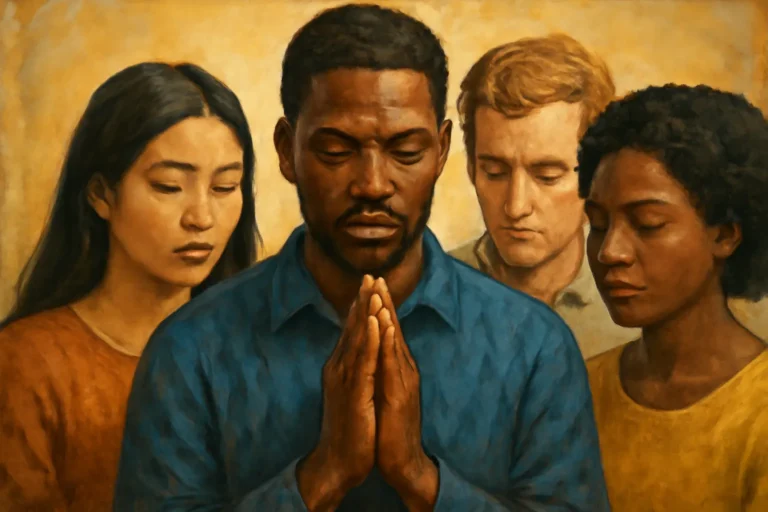
Introduction: The Universal Call of the Gospel for Unity
In a world marked by division, the gospel’s concern for every person becomes a radical invitation to imagine and enact a world where differences do not become impediments to dignity or justice. The phrase “gospel hope for racial unity” is not merely aspirational; it is a vocation rooted in sacred narrative, prophetic memory, and the transformative power of love. Across the ages, communities formed by faith have wrestled with how to translate the good news of salvation into concrete reconciliation among peoples who were once separated—by ethnicity, language, class, and history. This article explores the gospel of unity as a living tradition: a stream of interpretation, practice, and hope that insists that racial reconciliation is not an optional extra but a core insistence of the gospel.
The aim here is to offer a theological scaffolding, historical awareness, and practical pathways for individuals, churches, and faith-based organizations seeking to embody the gospel’s unity-centered trajectory. We will travel through biblical foundations, historical awakenings, diverse theological interpretations, and present-day applications. The central claim remains: true faith, as proclaimed in the gospels and nourished through the Christian tradition, generates a gospel-centered hope for racial harmony that is both personal and communal, both spiritual and social.
Theological Foundations: What the Gospel Says About Unity
The concept of unity in the gospel is multifaceted. It is not a sentiment detached from doctrine; rather, it rests on the conviction that God desires communion with humanity and that humans are called to live in solidarity with one another. This section surveys biblical roots, ethical imperatives, and the ecclesial imagination that together constitute the gospel of unity.
Biblical roots: Creation, Fall, and Restoration in One Narrative
At the heart of the Christian proclamation is a narrative arc that begins with the creation of a world that is good and diversely made. The biblical witness speaks of a unity grounded in the image of God, who creates humans in multiplicity and yet calls them into harmony. The gospel’s hope for racial unity emerges from the conviction that differences are not accidents to be erased but economies of divine wisdom to be celebrated and redeemed.
- Imago Dei: Every person bears the divine image, which implies inherent dignity and equal worth, regardless of race or ethnicity.
- One humanity: The New Testament presents a reconciled people drawn from every nation, tribe, and language.
- Reconciliation: Christ’s work is described as a work of division-breaking peace—binding enemies into kin by the Spirit.
In this biblical schema, the gospel hope for racial unity is not merely social cohesion; it is a participation in the divine life, where enemies become neighbors and neighbors become family in the Spirit.
Historical memory: the ethical turn from division to reconciliation
The apostolic church inherited a world divided along lines that mirrored many societies today. Early Christians faced the challenge of how to live out a faith that held together Jews and Gentiles, slaves and free people, men and women, in one community. The gospel’s hope for racial unity grew out of this historical crucible, where communities learned to recognize salvation as universal, not tribal, and to practice hospitality as a sign of the in-breaking of God’s reign.
- Recognizing common ground in baptism, table fellowship, and shared worship.
- Expanding hospitality beyond ethnic borders to include strangers and foreigners.
- Transforming power structures that perpetuated segregation, exclusion, or discrimination.
A key ethical claim is that justice and unity are not merely outcomes of faith but indispensable expressions of the gospel itself. The gospel of unity thus calls believers to both worship and work—adoration of the divine Source of life and a commitment to acts of mercy, justice, and truth-telling.
Theological principles: love, justice, and the comprehensive peace of God
Several principles underpin the robust claim of the gospel of unity as a force for racial reconciliation:
- Love as the primary ethic: The command to love God and neighbor binds all other ethical directives and serves as the soil in which unity grows.
- Justice as a gospel issue: Racial justice is not a political optionality but a biblical imperative grounded in the character of God and the treatment of the vulnerable.
- Peace as holistic shalom: Reconciliation involves interior transformation, social healing, and structures of governance that reflect equity and care for creation.
- Hospitality and common life: The church is called to model a shared life across racial and cultural boundaries, testing and refining what it means to be one body.
When the gospel’s hope for racial unity is rightly understood, it becomes a confession that diversity is not a barrier to unity but a divine gift that enriches the body of Christ and expands the reach of the reign of God.
Scriptural Mandates for Unity Across Races
The question of how the gospel calls believers to respond to race and difference is answered in scriptures that articulate God’s desire for the nations to be blessed through justice, mercy, and intimate fellowship. This section highlights the gospel’s universal scope and how it translates into concrete action.
New Testament horizons: reconciliation as participation in divine life
The New Testament broadens the scope of who belongs to the people of God and how they relate to one another. It presents a community that has been reconciled to God and therefore must live out that reconciliation in visible, social forms.
- Inclusion at the table: The breaking of ethnic barriers around shared meals and worship demonstrates that God’s people are called to a new kind of fellowship.
- One new humanity: The text speaks of a reconciled humanity in which former categories of difference no longer determine worth before God or behavior within the community.
- Cross-shaped solidarity: The cross becomes the pattern for how believers relate to one another—a willingness to bear one another’s burdens and to seek justice together.
The gospel hope for racial unity in the New Testament is not a utopian dream; it is a lived reality that grows as communities practice reconciliation, confess biases, and pursue reform together.
Old Testament echoes: creation-centered unity and a future promise
While the Old Testament often speaks within a particular historical and covenantal frame, its underlying trajectory points toward a future where nations stream to the light and the earth is renewed. The gospel’s unity message is prefigured in stories of inclusion, renewal, and the celebration of diverse gifts within a single people of God.
- Judah and Ephraim in harmony: The prophetic vision of a united people among northern and southern tribes foreshadows the inclusivity proclaimed in the gospel.
- Ethical justice: Prophetic calls to care for the vulnerable frequently intersect with concerns about social and ethnic harmony.
- Worship without barriers: The end-time vision includes a universal worship that gathers from every tribe and tongue.
The gospel hope for racial unity thus resonates with an overarching biblical arc: from creation through redemption to restoration, God intends a world where all peoples are welcomed into a common life that reflects divine wisdom and love.
Historical Perspectives: Movements Toward Reconciliation in Faith Communities
Across centuries, Christian communities have wrestled with how to embody the theological claim of unity in the midst of racial and ethnic strife. This section surveys a spectrum of movements, emphasizing how the gospel’s unity imperative has repeatedly inspired reform, critique, and renewal.
Early ecumenical movements and inclusive invitations
In the earliest centuries, the church faced the challenge of defining who belongs. As it grew, the church often confronted questions about cultural inclusivity and the scope of the gospel’s social reach. The gospel hope for racial unity emerged in moments when communities chose shared confession, hospitality, and mission that crossed boundaries.
- Ecumenical councils and the affirmation of one baptism and one shared faith beyond ethnic lines
- The practice of hospitality to strangers as a sign of the kingdom
- Missionary movements that carried the gospel across borders and built cross-cultural communities
Reformation and its complex legacies
The Reformation era intensified questions about authority, scriptural interpretation, and church structure. Within some reforming communities, debates about church unity and social order intersected with issues of race and status. The gospel’s unity message was both a critique of exclusion and a call to reimagined ecclesial life.
- Translations and literacy as means for wider access to the gospel across social strata
- Advocacy for the marginalized as a theological obligation
- Emerging networks of reform that valued diversity of gifts and cultures
Modern civil rights and faith-anchored reconciliation
The twentieth century witnessed powerful expressions of faith-led activism aimed at racial justice. The phrase “gospel hope for racial unity” often served as both critique and compass for movements seeking to address systemic inequality while centering love, truth-telling, and nonviolence.
- Public witness that names sin and seeks repentance
- Community organizing rooted in faith communities
- Educational and cultural initiatives that cultivate mutual understanding
Across these historical moments, the core message remains: the gospel is not satisfied with individual piety alone; it requires a social transformation that binds people across racial lines into a shared history, memory, and hope.
Theological clarity without practical application risks becoming a distant ideal. The following pathways describe how the gospel’s call to unity can be translated into daily life, congregational life, and public witness. Each pathway is infused with the conviction that the gospel’s unity invitation is a persistent, workable, and hopeful project.
Worship and liturgy as a unifying practice
Worship is not merely personal piety; it is a public act that shapes how communities see each other. The gospel’s unity impulse finds tangible expression when congregations diversify leadership, incorporate multilingual songs, and center prayers for justice and reconciliation within the liturgical calendar.
- Inclusive leadership structures that invite voices from diverse communities
- Multilingual and multicultural music and readings in worship
- Liturgy that explicitly witness to reconciliation through confession, lament, and hope
Education, dialogue, and memory work
Knowledge and memory are critical for breaking cycles of prejudice. The gospel hope for racial unity is advanced when churches commit to robust education about historical injustices, constructive dialogue across differences, and memory practices that honor the experiences of marginalized groups.
- Curricula that address the biblical basis for equality, justice, and solidarity
- Dialogues that center listening, humility, and accountability
- Public memory projects and testimonies that acknowledge pain and celebrate resilience
Social action and justice ministries
Faith communities have a long tradition of serving vulnerable neighbors. The gospel’s unity narrative compels engagement with social structures that perpetuate inequity, while offering practical care, advocacy, and reform.
- Partnerships with ministries addressing poverty, housing, education, and health
- Advocacy for policy changes toward systemic equity
- Community organizing that elevates marginalized voices in leadership roles
Pastoral care that names bias and nurtures reconciliation
The work of reconciliation begins in intimate spaces—homes, classrooms, and small groups. Pastoral care that speaks honestly about bias, fear, and trauma is essential to healing relationships and building trust across racial lines.
- Pastoral listening teams trained in cultural competence
- Guided conversations that explore experiences of discrimination and grace
- Healing rituals that honor pain while affirming dignity
Across Christian traditions, the gospel’s unity message is interpreted in diverse ways. Some communities emphasize reconciliation as primarily a spiritual reality that then informs social action; others foreground justice as an essential expression of faith that flows from a transformed heart. Both views share a conviction that the gospel’s unity imperative is non-negotiable, even as they differ in emphasis, methods, and vocabulary.
Catholic and Orthodox perspectives on unity and social justice
In Catholic and Orthodox contexts, liturgical life often foregrounds sacramental unity as the basis for social harmony. The gospel hope for racial unity is nourished through sacramental participation, Marian and ecclesial prayers for human solidarity, and solidarity with the marginalized as a concrete witness to the gospel’s universality.
- Shared sacraments and feast practices as signs of communion
- Ecumenical dialogues that extend beyond doctrinal agreement to social realities
- Charitable ministries that cross cultural boundaries
Protestant, evangelical, and Pentecostal emphases on mission and justice
In many Protestant and evangelical communities, the gospel’s unity message is expressed through mission, evangelism, and social witness. A focus on transformation in the public square often accompanies an emphasis on personal conversion and spiritual renewal, yet the best expressions of unity emerge when evangelism goes hand in hand with justice and reconciliation initiatives.
- Cross-cultural church planting that prioritizes local leadership
- Community-improvement partnerships linked to gospel proclamation
- Advocacy for the vulnerable as a faith-based obligation
Independent and charismatic traditions: unity in diversity
In some independent and charismatic contexts, unity is expressed through the power of encounter with the Spirit, with an emphasis on kinship that transcends ethnic lines. The gospel’s unity aspiration invites communities to cultivate environmental and social stewardship that reflects divine generosity and care for all people.
- Inclusive worship services featuring diverse leadership
- Healing and reconciliation ministries that address racial trauma
- Communal prayers for justice and mercy in public life
Across these variations, the core claim remains consistent: the gospel opens a path toward racial reconciliation that is both the fruit and the sign of God’s coming reign.
To ground the discussion in lived experience, consider examples of congregations and faith-based organizations that articulate and enact gospel-centered hope for racial unity. These case studies illustrate how theology translates into practice, how communities address conflicts, and how they nurture durable relationships across difference.
Case Study A: A city church forming intercultural worship and leadership teams
In a diverse metropolitan context, a regional church reoriented its leadership structure to reflect the community’s demographics. This shift allowed voices from multiple cultural backgrounds to shape preaching, prayer, and service projects. The gospel’s unity message became a daily practice: shared meals, bilingual liturgical elements, and joint service agencies addressed local needs with a holistic sense of mission.
- Leadership rotation and shared governance as a norm
- Joint service projects that target housing density, food security, and education
- Mutual mentorship programs pairing long-time members with newcomers from different backgrounds
Case Study B: Interfaith and intercultural partnerships at a neighborhood scale
Another example involves a faith-based coalition that includes multiple Christian communities and partners with secular organizations. The coalition pursues racial reconciliation through dialogues, joint community improvement efforts, and shared advocacy on issues such as criminal justice reform and school equity. The approach emphasizes listening, accountability, and transparency as essential to healing trust.
- Regular forums for narrative sharing across races and cultures
- Collaborative projects that produce tangible public goods
- Public statements and policies that reflect a unified stance on justice
Case Study C: Theologians and laypeople cultivating a “gospel of unity” vocabulary
In another setting, scholars and lay leaders co-create a shared vocabulary that makes explicit the semantic breadth of the gospel’s unity. This includes discussions about bias, repentance, and structural sin, as well as practical steps toward inclusion in worship, education, and leadership. The gospel hope for racial unity is operationalized through a language of kinship, hospitality, and shared risk in pursuing a more just social order.
- Glossaries and glossary-led workshops on race and religion
- Public lectures and panel discussions with voices from diverse communities
- Curricular resources for families and schools embedded in church life
No vision of unity emerges without facing obstacles. The path toward racial reconciliation in religious life often requires honest acknowledgment of historical complicity, ongoing biases, and the pain of communities that have been marginalized. The gospel’s call remains: confess, repent, learn, and engage in courageous acts that bear lasting fruit.
Resistance and fear: how to respond pastorally
Fear of loss, discomfort with change, or a sense of threatened identity can impede movement toward unity. The gospel’s unity call invites pastoral care that identifies fears, validates experiences, and offers safe spaces for repentance and growth.
- Coaching on intercultural communication and conflict resolution
- Structured spaces for apology and reconciliation, followed by concrete deeds
- Policies that protect vulnerable communities while inviting broader participation
Power dynamics and leadership diversity
Structural inequities within institutions may resist diversity and inclusive leadership. The gospel’s unity imperative challenges communities to audit power arrangements, invite critical feedback, and reconfigure governance so that leadership reflects the breadth of the community it serves.
- Transparent decision-making processes
- Equitable representation across committees and boards
- Accountability mechanisms that address misconduct and bias
Measuring progress: indicators of a living gospel of unity
A healthy journey toward gospel-inspired racial reconciliation can be assessed through multiple lenses: worship life, education, social impact, and relational health. Indicators might include increased cross-cultural collaboration, reduced incidents of bias, and growing mutual trust between communities.
- Participation metrics showing cross-cultural engagement in worship and leadership
- Shared community projects with measurable social outcomes
- Testimonies of transformed relationships and patterns of justice
The journey toward Gospel unity and racial reconciliation is ongoing. As communities listen to testimonies, study sacred texts, and engage with one another in vulnerable ways, they participate in the Spirit’s work of renewal. The vision is not a static achievement but a living process—an ongoing invitation to grow in love, justice, and truth.
Emerging theological reflections
Contemporary theologians continue to press the boundaries of how the gospel of unity interacts with culture, politics, and science. The gospel’s unity aspiration intersects with concerns for ecological justice, digital spaces, and global interdependence, inviting believers to imagine and pursue a more expansive and inclusive kinship.
- A robust doctrine of creation that honors diversity as God’s design
- Ethics of hospitality that extend beyond national borders
- Interpretive openness to the Spirit’s work in other traditions while maintaining fidelity to core gospel headings
Community formation in a global neighborhood
In a truly global and interconnected era, the gospel’s unity message translates into solidarity that crosses continents. Mission and mercy, when centered in the gospel, become vehicles for learning from different Christian communities about what it means to love neighbors near and far, while also naming and addressing the specific harms of racism wherever they appear.
- Cross-cultural exchanges and residency programs that foster mutual learning
- Joint advocacy for human dignity, religious freedom, and justice
- Mutual empowerment through shared educational initiatives and leadership development
The invitation of the gospel of unity and its gospel-centered hope for racial unity remains a compelling horizon for communities of faith. It is a call to honest reflection, courageous action, and patient endurance as individuals and congregations seek to align belief with practice. The gospel’s hope for racial reconciliation is not a soft sentiment; it is an unapologetic summons to justice, to love that crosses boundaries, and to worship that embodies unity. In this sense, the gospel’s unity impulse is the church’s true mission: to be a sign of God’s coming kingdom where every tribe, language, and people is welcomed into shared life, shared worship, and shared service.
As we close, let us carry forward a robust and dynamic confidence in the Gospel of Unity—a confidence rooted in Scripture, sustained by tradition, tested in history, and renewed through everyday acts of solidarity. May the gospel’s hope for racial unity be heard in sermons that name injustice, in classrooms that teach history honestly, in families that choose hospitality, and in communities that pursue justice with humility. If we hold fast to this hope, then the church will continue to be a living witness to a world where difference becomes a source of richness rather than a cause of fracture—where God’s dream of universal kinship is slowly, joyfully realized in our time.